The Underwater Waterfalls Hidden In The Ocean
Some of the world’s most remarkable waterfall-like flows are hidden beneath the ocean. In the Denmark Strait, dense water descends across the seafloor in the largest known underwater cataract. Similar overflows occur in the Faroe Bank Channel and Mediterranean submarine canyons, while Mauritius offers a famous illusion created by moving sediment and changes in depth.
How Do Underwater Waterfalls Form

Real underwater cataracts depend on differences in water density and seafloor topography. Water made denser by temperature or salinity flows beneath lighter water and descends over ridges, shelf edges, or submarine canyons under gravity. The Mauritius feature follows a different process because it is an optical illusion created by sediment and contrasting water depths.
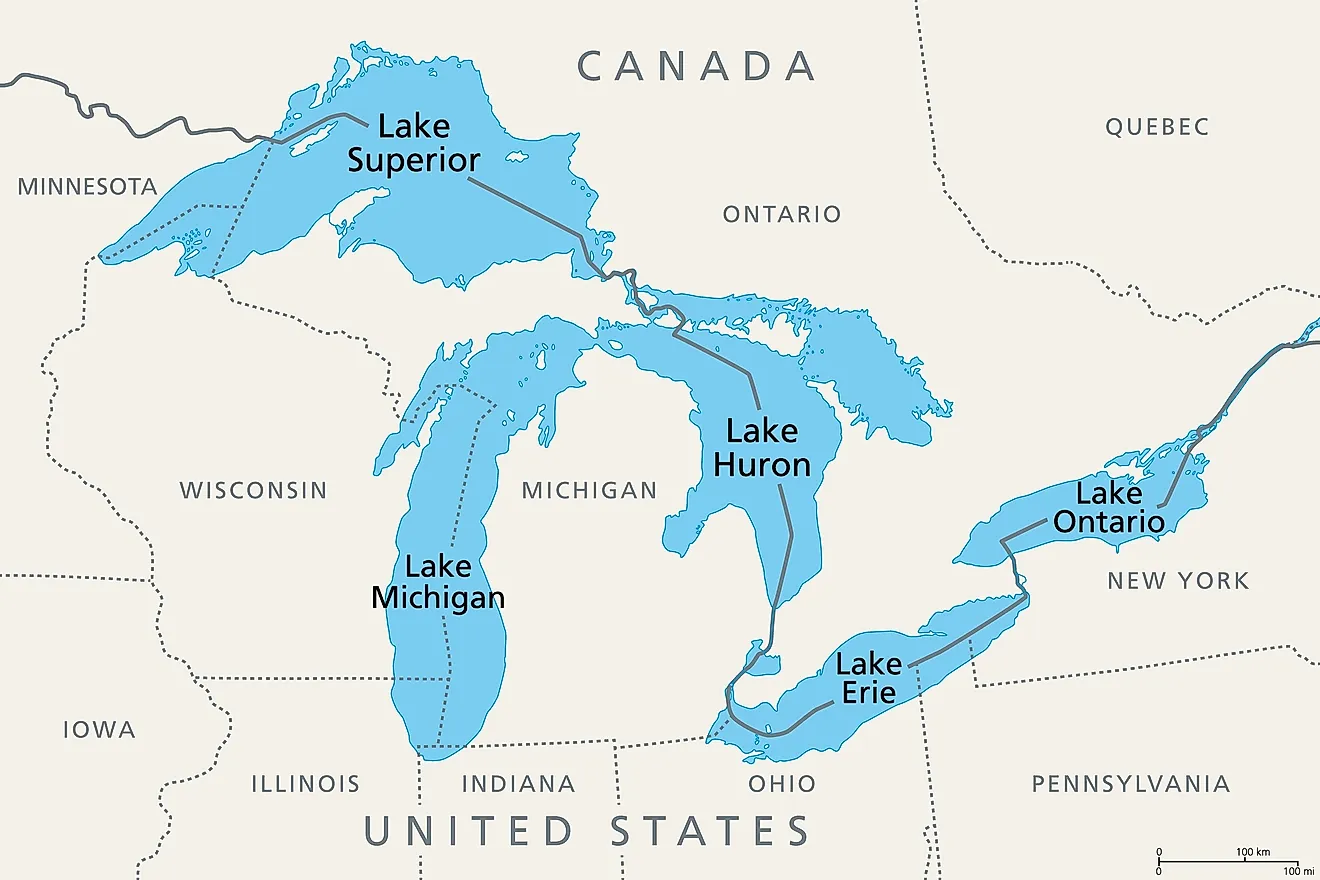
An example of a true underwater cataract is found in the Denmark Strait, a roughly 300-mile stretch of water connecting the Greenland Sea with the North Atlantic Ocean between Iceland and Greenland. Cold and dense water flowing south from the Nordic Seas passes beneath warmer Irminger Sea water and descends across the Greenland-Scotland Ridge, creating the Denmark Strait cataract.
The World's Largest Waterfall Is In the Denmark Strait

Beneath the Denmark Strait is a series of cataracts, with NOAA estimating the system's total height at approximately 11,500 feet. At that height, the Denmark Strait cataract is about 3.6 times as high as Venezuela's 3,212-foot Angel Falls, the world's tallest uninterrupted waterfall.
As the cold, dense water sinks below the warmer water and flows over the huge drop in the ocean floor, it creates a downward flow estimated at well over 123 million cubic feet per second. It is completely undetected without the aid of scientific instruments because it flows beneath the ocean surface. The overflow feeds the deep North Atlantic and contributes to the Atlantic Meridional Overturning Circulation, the large system of currents that redistributes water and heat through the Atlantic Ocean.
Other Underwater Cascades Exist

The Denmark Strait cataract is the largest known example, but it is not the ocean's only density-driven cascade. Other overflows carry dense water across underwater ridges or down continental slopes, although oceanographers do not always call them waterfalls.
The Faroe Bank Channel Overflow
Another major overflow crosses the Greenland-Scotland Ridge through the Faroe Bank Channel south of the Faroe Islands. Cold and dense water from the Nordic Seas passes through the channel and enters the deeper North Atlantic. Along with the Denmark Strait overflow, this current supplies deep water to the lower portion of the Atlantic's overturning circulation.
The Faroe Bank Channel overflow does not have one clearly defined waterfall height because the water follows a deep channel and continues down the continental slope. Its density-driven movement nevertheless follows the same basic principle as the Denmark Strait cataract.
Dense-Water Cascades in the Mediterranean
Dense shelf water also descends through submarine canyons in the northwestern Mediterranean Sea. During some winters, cooling and evaporation make water on the Gulf of Lion shelf dense enough to flow over the shelf edge and down the Cap de Creus and Lacaze-Duthiers canyons.
Intense events can carry this water to depths approaching 2,000 meters. These Mediterranean cascades are episodic and much smaller than the Denmark Strait overflow, but they demonstrate that density-driven underwater descents occur in several ocean settings.
The Illusion of The Waterfall in Mauritius
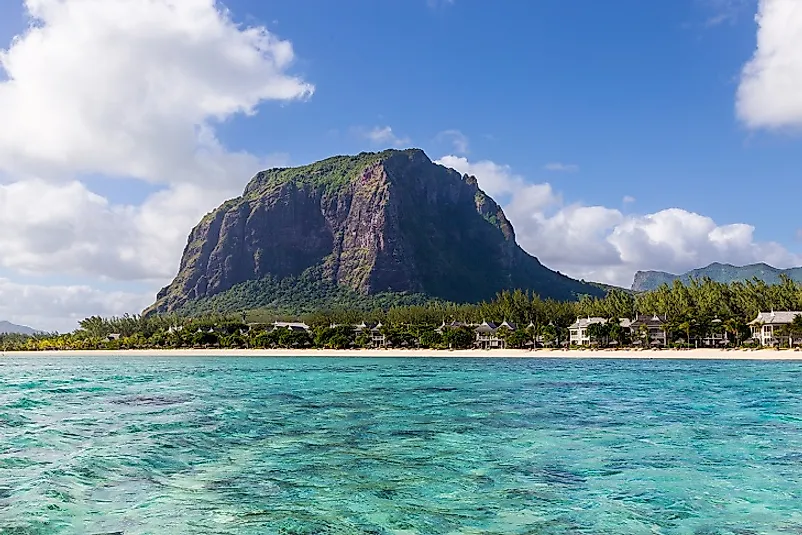
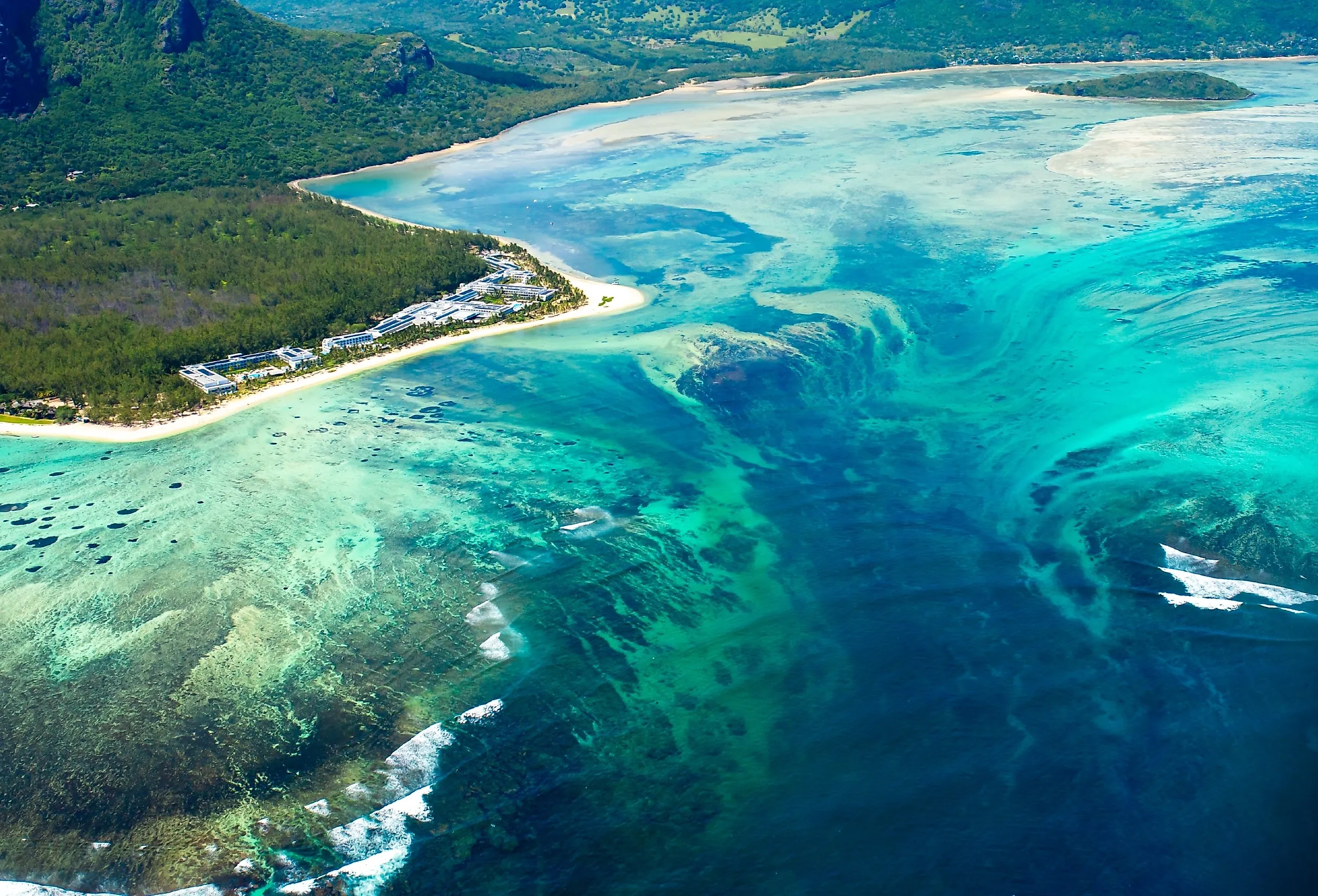
The underwater waterfall of Mauritius Island is not an actual waterfall. The optical illusion lies offshore of Le Morne Peninsula on the southwestern coast of Mauritius.
The effect is produced by pale sand and silt moving across a submarine shelf no deeper than about 150 meters toward a drop-off that descends beyond 4,000 meters. Seen from above, the sediment trails and shallow turquoise water contrast with the darker offshore depths, making the seabed appear to plunge like a waterfall into the Indian Ocean.
The changing pattern is better understood as an active sediment feature than as an ancient fixed formation. Aerial and satellite views reveal the complete illusion because its color and depth contrasts are difficult to recognize at sea level.
How You Can See These Underwater Waterfalls

Real underwater cataracts occur within the surrounding ocean, while the Mauritius waterfall is a visual effect that depends on viewing angle. These differences determine how each phenomenon can be observed.
Unlike a surface waterfall, a real underwater cataract cannot normally be recognized with the naked eye because the flow occurs within the surrounding water. The Denmark Strait cataract lies far below the surface and is measured with moorings, current profilers, and other scientific instruments rather than viewed from an aircraft.
The full Mauritius illusion is best seen from a helicopter or seaplane, although a rough outline can be visible from the summit of Le Morne Brabant. It can also be seen in satellite imagery.
Why Hidden Ocean Cascades Matter
The ocean's underwater waterfalls do not all follow the same process. The Denmark Strait and Faroe Bank Channel contain genuine density-driven overflows, while submarine canyons in the Mediterranean carry smaller and more episodic cascades. Mauritius offers a different spectacle created by moving sediment and the contrast between shallow and deep water.
Although most real underwater cataracts remain invisible from the surface, they can transport enormous quantities of water into the deep ocean and influence major circulation systems. These hidden flows show how density, gravity, and seafloor topography keep the ocean moving far below the waves.