The Ocean Animals That Can Regrow Body Parts
A human who loses an arm never grows it back, and the body's regenerative work stops at hair, nails, and a portion of the liver. A starfish can regrow a severed arm, and in some cases that lone arm can rebuild the rest of the animal. An octopus rebuilds a lost limb complete with nerves, muscle, and working suckers. A sacoglossan sea slug can shed its whole body and grow a new one from the neck down. These abilities trace back to a mix of stem-cell reserves, defenses against predators, and evolutionary history, and they set a handful of ocean animals apart from nearly everything on land.
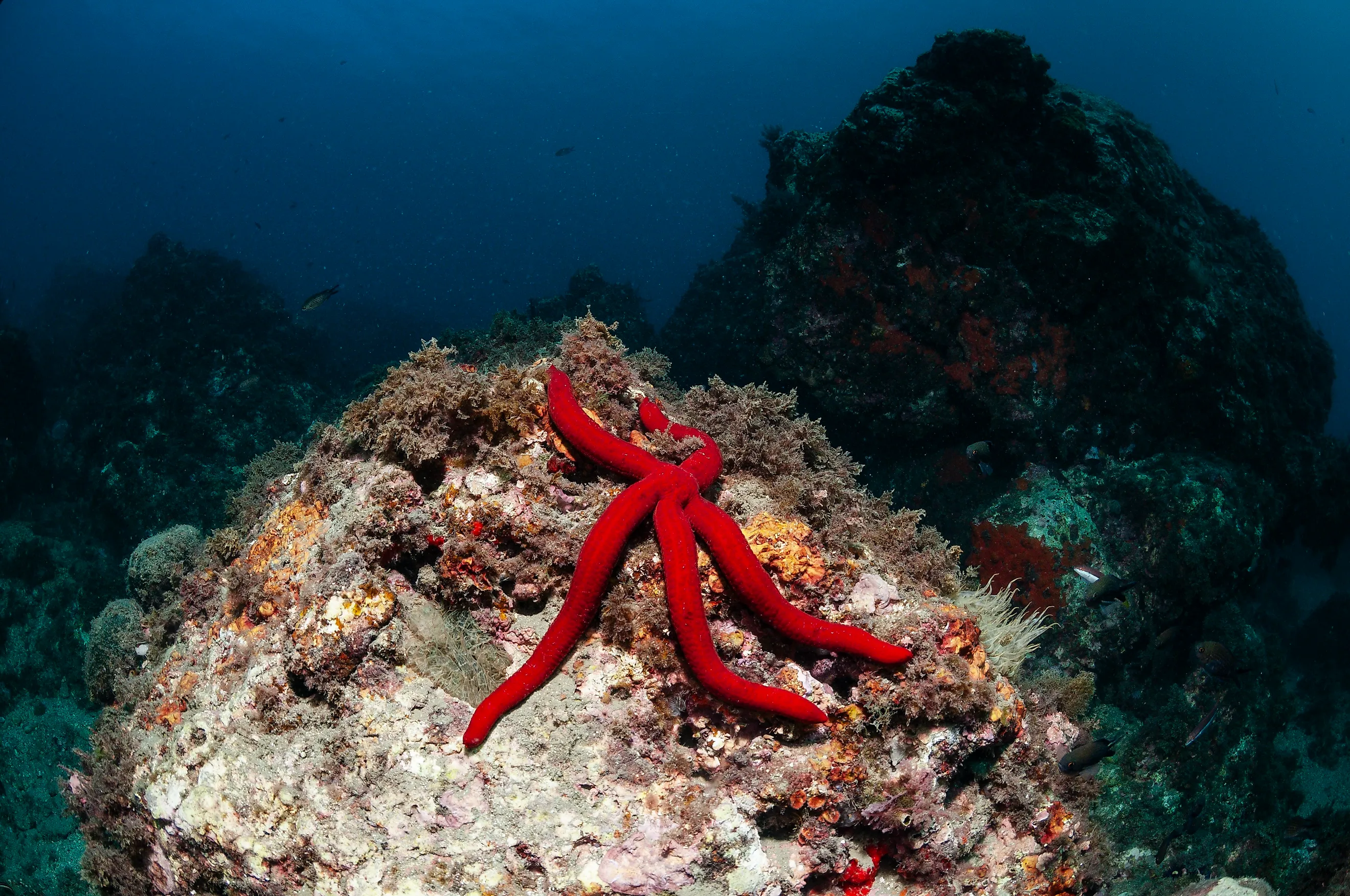
Starfish

Starfish, also known as sea stars, are marine invertebrates with around 2,000 species throughout the world. Known for their ability to regenerate, their unique bodies make the biological process possible. Unlike fish, they do not have backbones, fins, brains, or even red blood. They move around with tiny tube feet, pushing their stomach out of their mouth to eat and digest food. Vital organs, like the stomach and intestine, are packed inside their central body disc. Their bodies contain stem cells capable of turning into skin, nerve, or muscle tissue. These stem cells are used to regrow body parts within several months or a full year.
Octopuses

Octopuses are eight-limbed mollusks, known for their intelligence and survival abilities. A huge asset to their ability to survive lies in regeneration. When an octopus is injured, they are able to completely regrow functional replacements for skin, muscles, nerves, and suckers. After a direct hit, the body seals the injury with skin cells to block the infection. Then, blood cells, called hemocytes, quickly clean debris and create a cellular mass. After that, the wound undergoes several stages, developing from a small bump to a functional organ or limb in just a few months. Once complete, the regenerated area connects to its neural network and functions just like the original. Circumstances like warm temperatures, injury location, and young age can speed up growth. Even under less favorable conditions, the process remains remarkable.
Lobsters

Lobsters are marine crustaceans that regenerate claws, antennae, and even walking legs. When in danger, the large crustaceans can drop limbs in a process called reflex amputation. During molting, they shed the hard exoskeleton and form small limbs at injury sites that grow larger over time. Their regenerative ability could be due to high levels of telomerase activity throughout their cells. Telomerase helps repair chromosomal telomeres, preventing cellular aging and extending lifespans. Though their ability to regenerate leads to long lives spanning nearly 100 years, their bodies do have limits. The regenerative molting process eventually slows due to exhaustion, shell rot, and stress from the tiring biological process. They also cannot regenerate the heart, eyes, or several other major organs. Still, they are biological marvels thanks to their ability to regenerate despite their large size and biological needs.
Sea Cucumbers

When it comes to regeneration, sea cucumbers may be the coolest of the bunch. The marine invertebrates are known for their rubbery bodies. Close relatives of starfish, they often live on shallow coastal flats and feed on sand and mud. Interestingly, they lack a hard shell, depending on their flexible body wall and regeneration to survive. When they are threatened, they eject their own internal organs and respiratory tracts through their anus to distract attackers. After the attack, they regrow the lost organs in as little as a month, and the replacements function just like the originals, with little sign of injury or scarring. According to a Science Advances study, severed pieces of sea cucumber tissue can heal and continue growing in seawater for more than three years.
Brittle Stars

Brittle stars are unique marine animals known for their round central disks and five thin, snake-like arms. Their name, brittle star, stems from brittle arms breaking off when they are threatened or stressed. To escape danger or being eaten, they drop their arms when predators grab them. As long as their central disk is safe, they will survive and regrow new arms in just 4 weeks. This is done through special cells that rebuild bones, skin tissue, and specialized nerves. There are even some brittle star species who split their entire bodies in half to make copies of themselves and regrow missing organs and limbs.
Zebrafish

Zebrafish are freshwater animals native to South Asia. The small, striped minnows share up to 70% of genes with humans. This makes them important for research purposes, especially their unparalleled ability to regenerate. These small fish can regrow and repair several organs and tissues, such as the heart, spinal cord, brain, and fins. When they experience an injury, their cells gather at the wound and form a mass, called blastema. The blastema multiplies and creates a pattern to rebuild missing body parts. In special cases, like the heart, mature cells can even reprogram into active progenitor states and rebuild functional tissue. This extraordinary ability can rebuild heart to a certain extent and fully regrow complex fins and tails in just a few weeks, all without scarring.
Sacoglossan Sea Slugs

Sacoglossan sea slugs are the only known sea slugs capable of complete whole-body regeneration after self-decapitation. While most sea slugs can heal minor wounds or regrow tentacles, only sacoglossans shed their entire bodies and grow new ones. Researchers first documented the behavior in two Elysia species and are still unsure what triggers it, though slugs carrying internal parasites appear more likely to do it. Using solar-powered kleptoplasty, they steal chloroplasts from algae and photosynthesize to keep up their energy while headless. The neck wound closes within days, the heart starts to regrow within a week, and the full body takes shape in about three weeks.
Wrapping Up
The oceans hold immense biodiversity, yet only a small number of species can regrow lost organs and tissues. For those that can, a predator's bite or a severe injury is survivable rather than fatal, and some, like the lobster and the sea cucumber, live for decades as a result. Researchers study the biology of animals such as the zebrafish and the sacoglossan sea slug precisely because their regenerative tricks point toward what might one day be possible in human medicine.