The Most Predator-Dense Ecosystems in North America
The word ‘predator’ naturally instills fear. Apex predators, big and small, live off the land or in the air, swooping down with precision to attack their prey, seen or unseen, beneath the vast, unexplored water, or under surfaces where our eyes can’t see them: all these ideas make us feel uneasy.
Still, traversing predator-dense landscapes can be perfectly safe, with the proper precautions. There are a multitude of predators across the land. Mammals, birds, reptiles, fish: every species has predators that feed upon those weaker than them. Some predators use speed, some use brute strength, and others are cunning, using tactics to trick their prey. These are the most predator-dense ecosystems in North America where you don’t want to be caught unawares.
The vast Arctic tundra landscape in Canada with polar bears.
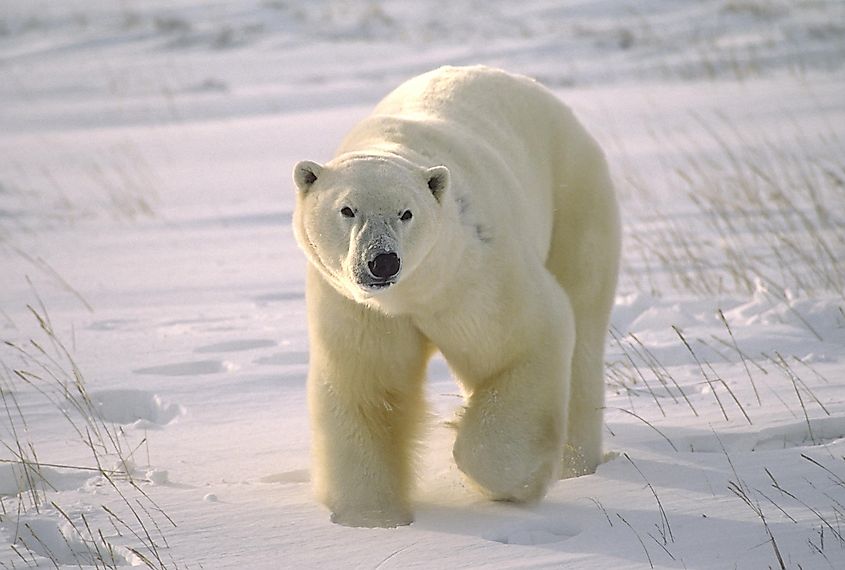
In the context of how we view dangerous ecosystems, the Arctic tundra is one of the scariest places a human being could find themself stranded. The weather alone can quickly become fatal without proper shelter. Scarier still are the predators that roam in these harsh conditions. In particular, polar bears. Polar bears are the largest and most powerful of all bears, and can be over 10 feet tall (when standing on their hind legs) and 1,700 lbs. They are the head of the mammalian food chain in the Arctic: the apex predators that do as they please. In fact, they are known to steal kills from other predators when the opportunity arises.
Large male polar bear on Arctic tundra.
The threat they pose to humans is often overlooked compared to grizzly and black bears because we rarely interact with them. Between 1870 and 2014, there were only 73 documented cases of polar bear attacks, resulting in roughly 20 fatalities. But make no mistake: if polar bears are hungry enough, they will attack humans, like any other prey. It happened in 2023, in Wales, Alaska, a small coastal Arctic community, when a Polar bear attacked and killed a woman and her 1-year-old child.
Other formidable predators in the region include the Arctic wolves and wolverines. The wolves attack in packs, mostly feeding on caribou, muskoxen, and Arctic hares. The coastal tundra, in particular, is denser with predators because it is where land and marine mammals meet, making it a hunting ground. It’s the perfect place for the polar bears to feast on their favorite prey: seals. They’ll eat just about anything there: walrus, whales, fish. They are the king of the Arctic tundra.
Admiralty Island, Alaska
ABC Islands bear and cub on Admiralty Island. By Forest Service Alaska Region, USDA from Juneau, Alaska, USA - 201308-02-FS-Tongass-PackCreek-006, Public Domain, Wikipedia.
Located in southeast Alaska, and nicknamed Xootsnoowú: Fortress of the Bears, the island is a blend of several different ecosystems in the Tongass region, most notably the temperate rainforest and coastal marine ecosystems. Unlike the Arctic tundra, the bears that inhabit this island aren’t polar bears: they’re brown bears. Roughly 1,600 of them for 1,600 square miles. Do the math: that’s roughly 1 bear per square mile (some estimates are actually closer to 1,800 bears. But who's going to count to find out?)
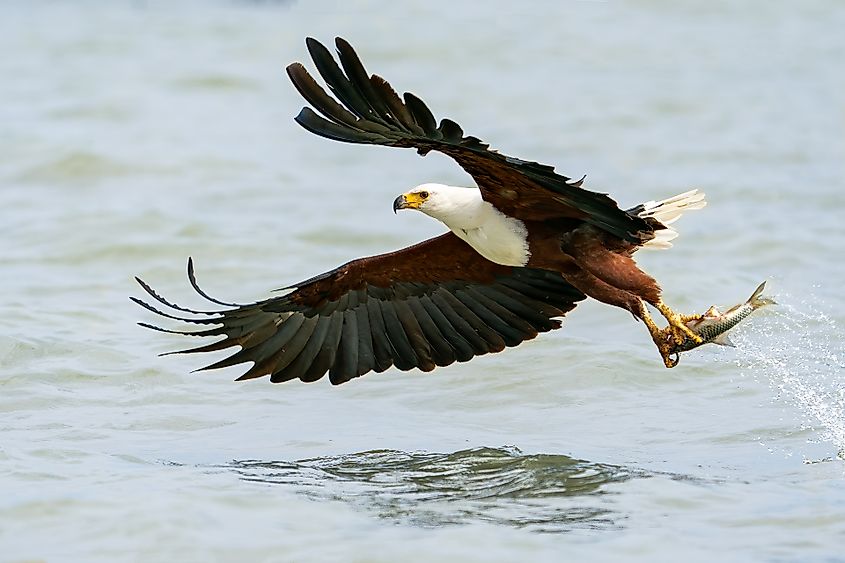
A bald eagle with a fish in its claws.
Whatever the exact number, the region is regarded as having one of the highest concentrations of brown bears in the world. While the bears rule the lands, the bald eagle rules the air. The region is also home to one of the highest concentrations of bald eagles in the world: the apex predator of the air. If that wasn’t enough, the surrounding coastal waters of the marine ecosystem are home to killer whales. They are the peak of the marine food chain, with virtually no natural predators of their own. There truly is no escaping predators here: land, air, or sea. It’s a terrifying mix that would leave anyone finding themselves with nowhere to run.
Greater Yellowstone Ecosystem
A wolf in Yellowstone National Park.
Another predator-dense ecosystem is Yellowstone National Park, where the standout apex predators are the wolves. Since their introduction to the ecosystem in 1995 and 1996, their numbers have grown rapidly. They immediately had an impact on the all-time high population of elk at the time. The wolves' impacts also forced the grizzlies to change their feeding habits, switching to bison as another source of prey, which soon became a competition between the two, as the number of bison began to drop.
The northern range of the greater Yellowstone ecosystem is the area most populated with wolves, with a density of approximately 1 wolf per 7 square miles. Comparing this to the grizzlies (who still have a heavy population density themselves), there’s about one grizzly per every 38 square miles; it’s plain to see why they are the kings of the ecosystem.
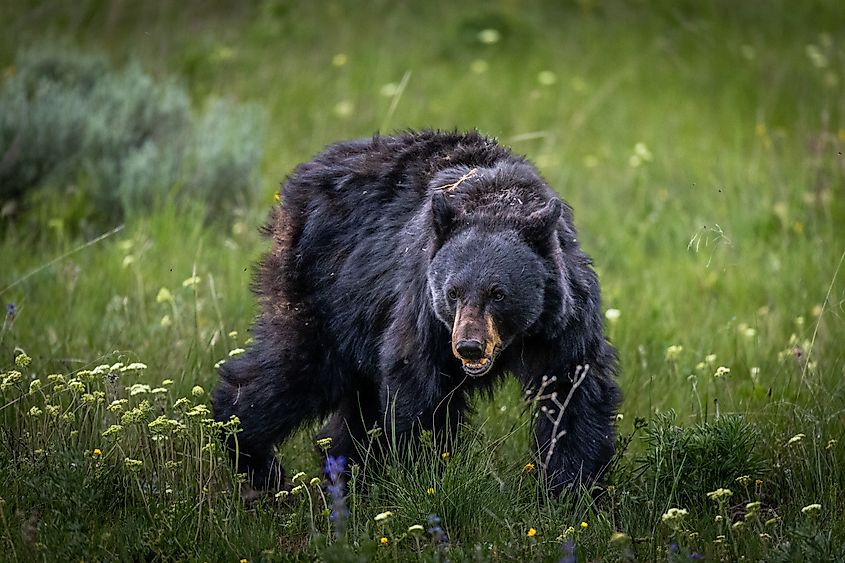
A big black bear in Yellowstone National Park
Although wildlife attacks in the region are rare, a recent attack by a grizzly bear inside Yellowstone National Park left two brothers in critical condition. The attack was believed to be a mother bear responding with force because she was with her cubs. This is Rule Number 1 when dealing with grizzlies: stay away from a mama bear when she’s with her cubs. There is no telling what they will do to protect their little ones. The attack could’ve been avoided if the brothers had followed Rule Number 2 that the national parks suggest: always carry bear spray in predator-dense areas.
South Texas Brushlands
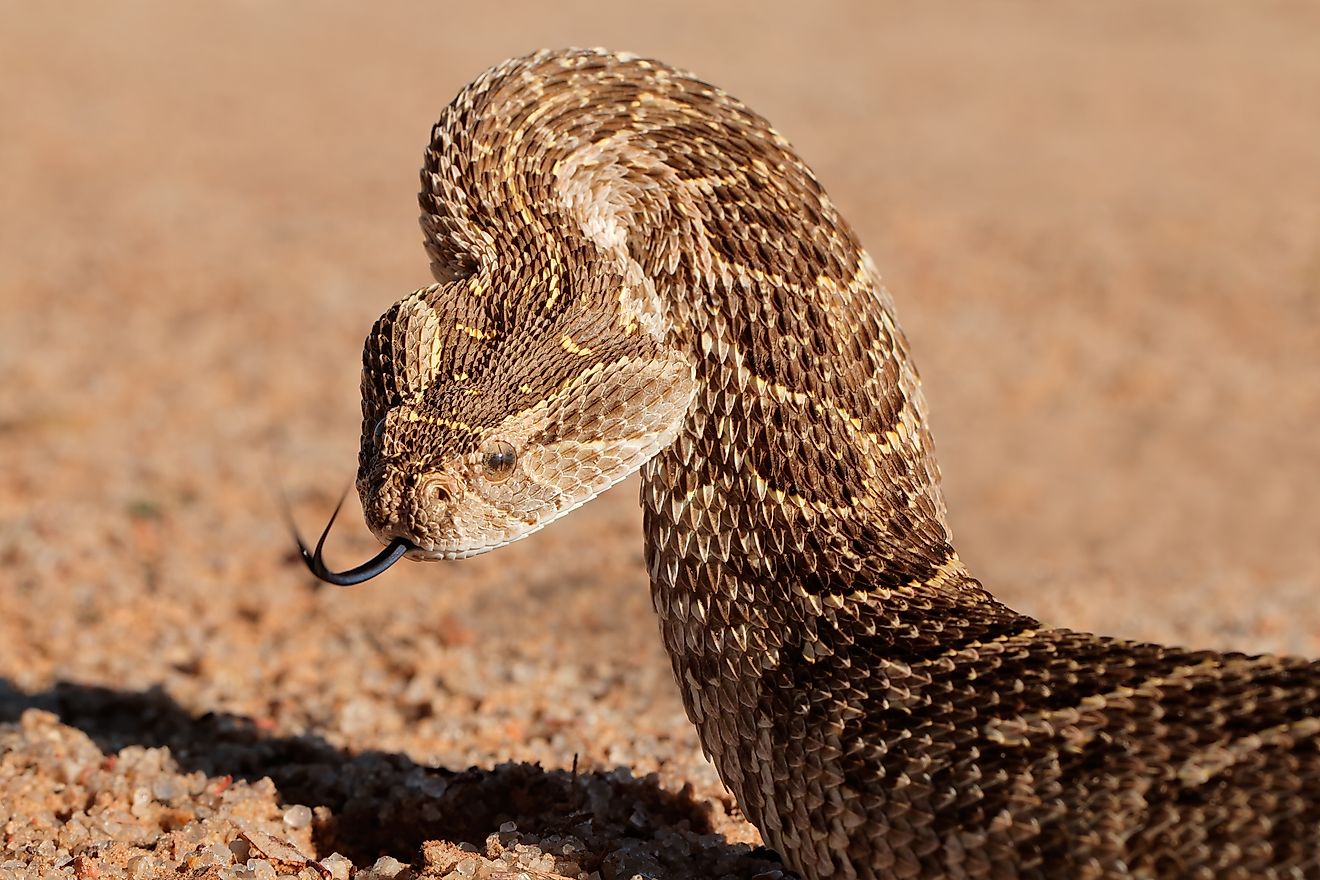
Western diamondback rattlesnake (crotalus atrox)
Everything is bigger in Texas, including the dangers the wildlife poses. Texas consistently ranks as one of the states with the most wildlife encounters, and the brushland ecosystem is one of the most predator-dense areas in the country. Predators here don’t just kill you with brute force: they can get you with their venom. Pray for anyone injected with the venom from one of the killers here: diamondback rattlesnakes, copperheads, cottonmouths, Texas coral snakes, and more.
The snakes around Texas are no joke. Back in 2018, a South Texas man decapitated a 4-foot-long snake that was about to attack his wife. The beheaded snake then bit him and injected him with venom! Beware: Experts say that a decapitated Rattlesnake can still bite you with a lethal amount of venom for up to an hour after beheading.
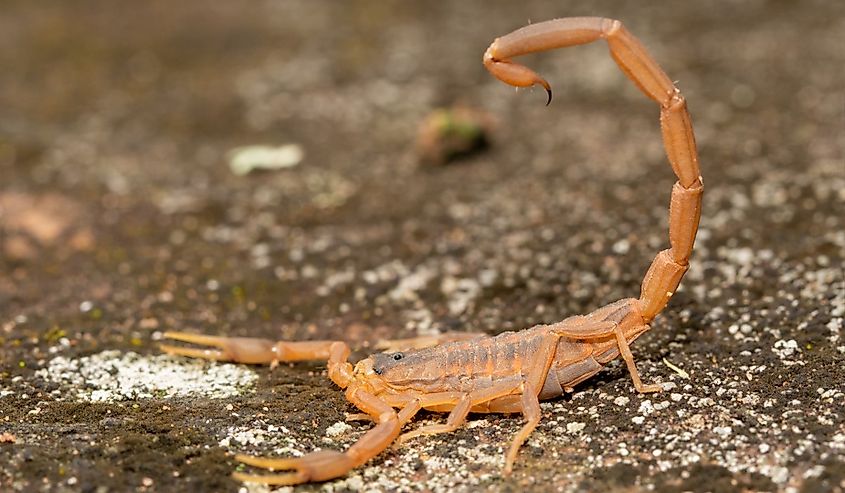
Side view of a Striped Bark Scorpion with his stinger over his back, ready to be used.
The slithering reptiles aren’t the only predators with venom in their arsenal: The brushland is home to scorpions, too. Scorpions in Texas are venomous, but compared to rattlesnakes, their effect on humans is much less powerful. Some of their bites are akin to a bee sting. Although they rank below the Arizona desert ecosystem in population density, the Texas brushland has one of the highest population densities of scorpions in America, especially the striped bark scorpion.
For the land mammals, the highest density predators are the coyotes, but the apex predator of the area is the mountain lion, capable of taking down the biggest prey. Among the other mammalian predators, including black bears, Bobcats, and foxes, they rule.
The Florida Everglades
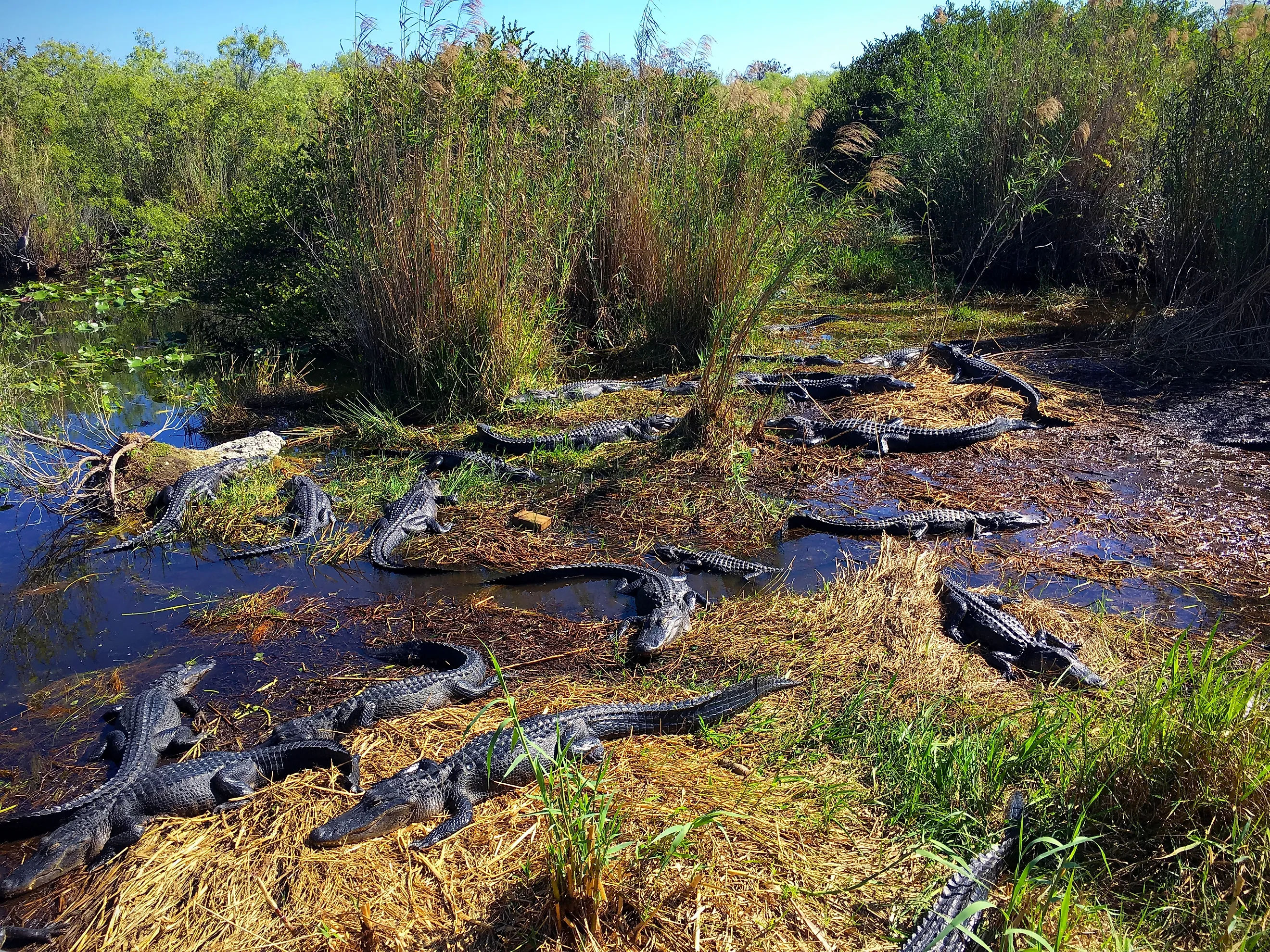
Alligators in the Everglades National Park.
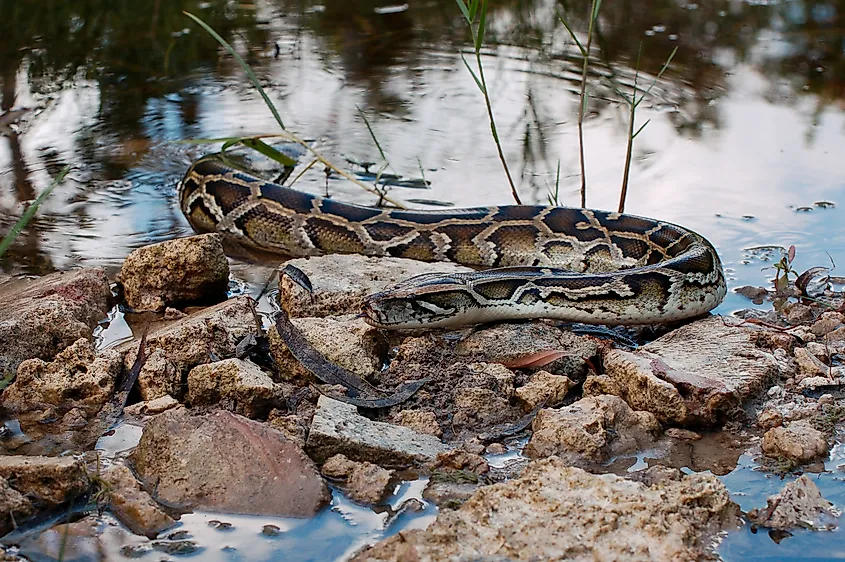
Home to a whole different set of predators is the Florida Everglades, and there is no other place in North America more dense with deadly reptiles, particularly crocodiles, alligators, and snakes. There is also a species that invaded the ecosystem years ago, which is causing problems that the government can’t control: Burmese Pythons.
Venom is not the danger; it’s their squeeze. They squeeze with several hundred pounds of pressure per square inch. By wrapping their bodies around their prey, there’s hardly an animal on the planet that can escape. They don’t have a reputation for being particularly aggressive towards humans (probably why people started keeping them as pets), but they can grow up to 20 feet long. Their jaws can open up to 150 degrees, allowing them to consume prey and other predators up to 50% of their own size, including white-tailed deer, limpkins, bobcats, and even alligators.
Burmese Python in the Everglades
Burmese Pythons are native to South Asia, so how they invaded the Everglades didn’t happen naturally. In 1992, Hurricane Andrew destroyed a python breeding facility, releasing around 1,000 Burmese pythons into Florida. They found their way to the Everglades and have impacted the ecosystem since. The government started offering cash rewards (usually paid out by the foot) to anyone who caught one, to try and get the population under control. How many of them are out there is still a mystery, with estimates being in the 100,000s.
Among the 15-foot alligators and mammoth snakes, there is one other land predator that has a special place in Florida: the panther. The namesakes of their NHL hockey team, these predators aren’t dense in population, with an estimate of only 120-130 still alive. Although encounters with humans are extremely rare, spotting one in the wild is a reminder that the Everglades are still home to these powerful native predators.
How to Protect Yourself
When dealing with a potentially deadly predator, the truth is, you don’t have much of a chance if they attack. Outcomes vary, but prevention is the key. Most predators have enough to feed on in their ecosystem and would only attack out of fear. If you do find yourself in contact with a predator in a national park or in one of these ecosystems, your best chance of survival is:
Creating Space: This may seem obvious, but if a wild animal isn’t within striking distance, they can’t hurt you. Spotting danger before it spots you, and getting as much space as possible, quietly and respectfully, should be your first step.
Recognize Signs of Alarm: Agitation, growling, staring— if an animal walks by you as if you are nothing, it means they don’t take you as a threat. When they stare and growl, they are sizing you up, ready for a potential attack.
Make Yourself Look as Big as Possible: This trick works with black bears. These predators have been known to stumble into rural neighborhoods, and if you spread your arms wide and make yourself look as big as possible, there’s a good chance you can scare them off.
Stay safe and be smart in these predator-dense ecosystems, and treat all wildlife with respect.