The National Parks With The Most Black Bears
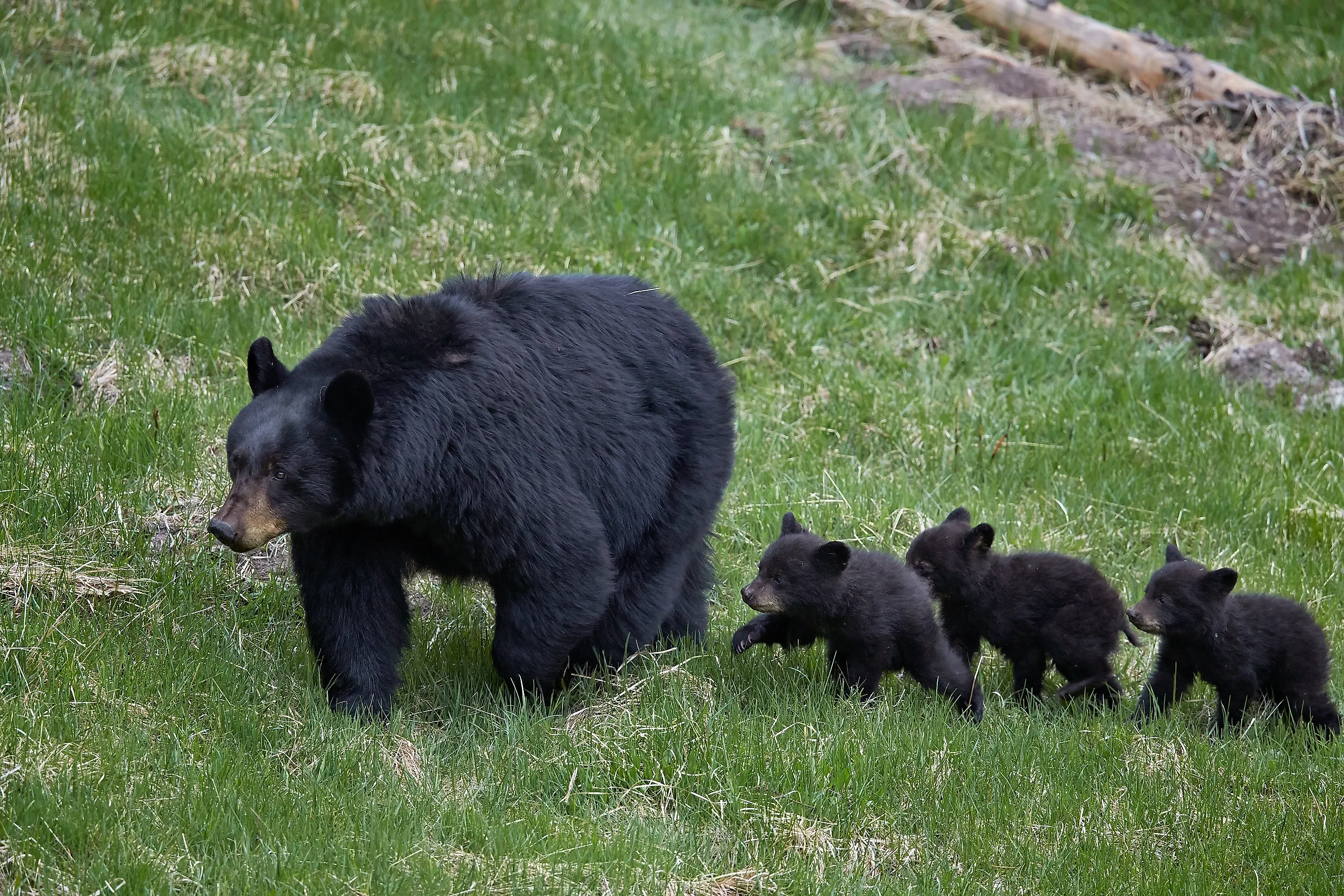
The National Park Service estimates that there were once as many as two million black bears in North America until the arrival of Europeans decimated the population to as low as 200,000 because of habitat destruction and hunting. Despite this, black bears were able to recover. They are highly adaptable, naturally avoidant of humans, and are by no means fussy eaters. There is now an estimated population of one million black bears in the world, meaning there are more black bears on Earth than all other species of bears combined.
A handful of national parks are among the best places in the country to find black bears. Great Smoky Mountains National Park has one of the densest black bear populations in North America, while most of the black bears in Yosemite National Park are brown rather than black, a trait common to bears across the West.
Great Smoky Mountains National Park

Great Smoky Mountains National Park is home to approximately 1,900 black bears. It has one of the densest black bear populations in North America, with approximately two bears per square mile. With over 800 square miles of protected wilderness, the Smokies are one of the largest tracts of undeveloped land in the eastern United States, where a wide variety of wildlife can thrive, including black bears.
Bears inhabit all elevations of the park, even choosing to den high above the ground in standing hollow trees, a behavior that is seldom seen elsewhere in the United States. Similarly, while black bears in the northernmost part of their range hibernate for as long as seven months, bears in the Smokies may only sleep for one or two months at a time.
Black bears enter torpor, a state similar to, although less intense than hibernation, in which they do not eat, drink, urinate, or defecate, yet remain more alert than animals that hibernate. Before winter, black bears prioritize high-energy foods like nuts and acorns to build up fat reserves. Despite being one of the largest predators in the park, their diet is composed of approximately 85% plant material.
Shenandoah National Park

An estimated 18,000 to 20,000 black bears live in Virginia, but the population inside Shenandoah National Park fluctuates between 200 and 1,000 bears at any given time. These numbers can be influenced by several different factors, including the availability and distribution of natural forage, reproduction and mortality, juvenile dispersals, and hunting pressure from neighboring land.
With so many bears inside the park's 300 square miles, encounters with bears are highly likely. Black bear populations are particularly successful in Shenandoah because of the large areas of contiguous forest habitat and stands of mast-producing trees, like oaks, that can produce large acorn crops.
However, there are also threats to survival in Shenandoah. The mortality rate for cubs in their first year is approximately 20% in Virginia. This is due to predation from birds of prey, foxes, bobcats, coyotes, and even other bears. Adults have a very low natural mortality rate; however, wildlife collisions are one of the greatest sources of mortality to bears, especially along Skyline Drive, which follows the Blue Ridge Mountains in the park.
Glacier National Park

Research that sampled scat and snagged hair estimated that of the roughly 1,000 bears in Glacier National Park, about 600 are black bears. Since the park is part of the Waterton-Glacier International Peace Park, black bears can roam freely among the Crown of the Continent, which covers 10 million acres of Rocky Mountain wilderness across Montana, Alberta, and British Columbia.
Black bears primarily live in the forests of the Crown of the Continent, feeding on young shoots from trees, shrubs, berries, fruits, grasses, and nuts. Black bears also incorporate animal proteins into their diets, such as insects, stealing eggs from bird nests, and the occasional carcass. Black bears may also be found in avalanche chutes, mountain meadows, and practically anywhere with berry-producing bushes.
Yosemite National Park

Despite their name, the majority of black bears in Yosemite National Park are brown, like most black bears in the Western United States. Unlike the shaded forests of the Eastern United States, the West has large open meadows with little tree cover for foraging animals like bears. Many of Yosemite's black bears have lighter, brown-toned coats, which reflect more sunlight than a black coat, and researchers believe this coloring helps them cope with the hotter, more open terrain of the West.
There are an estimated 300 to 500 black bears in Yosemite. Unlike grizzly bears, which were hunted to extinction in California, black bears have survived so long in the park because they are able to adapt to the presence of humans and have much different habitat requirements. The Yosemite Valley is particularly important for bears. Unlike the alpine zone of the park, bears forage in lower elevations and riparian habitats along the Merced River, where grasses and fruits grow in abundance.
Yellowstone National Park

The grizzly bears of Yellowstone National Park tend to get the most attention, thanks to their turbulent history there, but the park is also home to one of the densest black bear populations in the northern Rocky Mountains. Black bears are far less studied here than grizzly bears, but in the park's Northern Range, researchers estimate about 20 black bears for every 100 square kilometers (roughly 62 square miles), one of the highest densities in the northern Rocky Mountains. Most black bears in the park live in the Northern Range and the Bechler area.
Studies from the early 2000s indicated that the black bear population had been impacted by changes to the ecosystem, such as fluctuations in the grizzly bear population and limited resource availability. Although black and grizzly bears have overlapping diets, black bears tend to avoid open meadows where grizzly bears roam. Black bears have few natural predators, but both cubs and adults have been killed by grizzly bears.
Bears Abound in National Parks
The adaptability of black bears is responsible for their success as a species across different habitats in the United States. Between the shaded forests of Great Smoky Mountains and Shenandoah National Parks and the open meadows of Yosemite and Yellowstone National Parks, black bears survive on varied diets, in varied habitats, and increasingly alongside a growing human population.