The Best National Parks In Appalachia
Appalachia stretches across the Appalachian Mountains in the eastern United States, touching over a dozen states and containing some of the oldest mountains in the world. The region is known for its remarkably lush forests, secluded valleys and distinct traditions. Its communities were shaped by centuries of Indigenous history, European settlement and resource extraction industries.
While numerous state parks can be found in and around Appalachia, only three national parks lie entirely within it. This gives federal protection to hundreds of thousands of acres and preserves the region's biodiversity and natural landmarks. These standout destinations include Great Smoky Mountains National Park, Shenandoah National Park and New River Gorge National Park and Preserve, which we will dive more into below.
What Exactly is Appalachia?

Appalachia is a cultural and geographic region that stretches along the Appalachian Mountains between southern New York and northern Alabama, generally considered to cover parts of 13 different states in between. It follows many of the mountain range's ridges and valleys, mainly including areas of Pennsylvania, West Virginia, Virginia, Tennessee, North Carolina, and Kentucky. As mentioned, its history includes Indigenous and European influences, prolific coal mining, timber industries, and ongoing efforts to balance economic development with environmental protection.
Known for its rugged terrain, extensive forests, and small but tight-knit mountain communities, Appalachia has developed a distinct identity shaped by generations of highly varying economic statuses and longstanding traditions. As a cultural region, it's heavily associated with bluegrass and old-time music too, as well as a strong local connection to the surrounding landscape, with hunting and fishing often cited as favorite pastimes by residents and visitors alike. Because of all that, the place is also unfortunately considered a bit of a backwater by many living in much more metropolitan (and much wealthier) coastal cities.
The name "Appalachia" supposedly traces its origins to the Apalachee, a Muskogean-speaking Indigenous people who lived in present-day Florida. Early Spanish explorers encountered the name during the 16th century and recorded variations such as "Apalachen" while mapping the broader Southeast. Over time, the term expanded beyond the Apalachee people and became associated with what we now call the "Appalachian Mountains." The spelling and pronunciation then evolved through Spanish, French, and English usage, eventually becoming the name of the region and cultural area known today.
Said to be around 480 million years old, these mountains were once much bigger, slowly having been eroded by wind, water, and time. But with its age, the area has developed an incredibly diverse ecosystem of hardwood forests and high-elevation habitats, each supporting a massive variety of flora and fauna big and small.
Great Smoky Mountains National Park - Tennessee and North Carolina

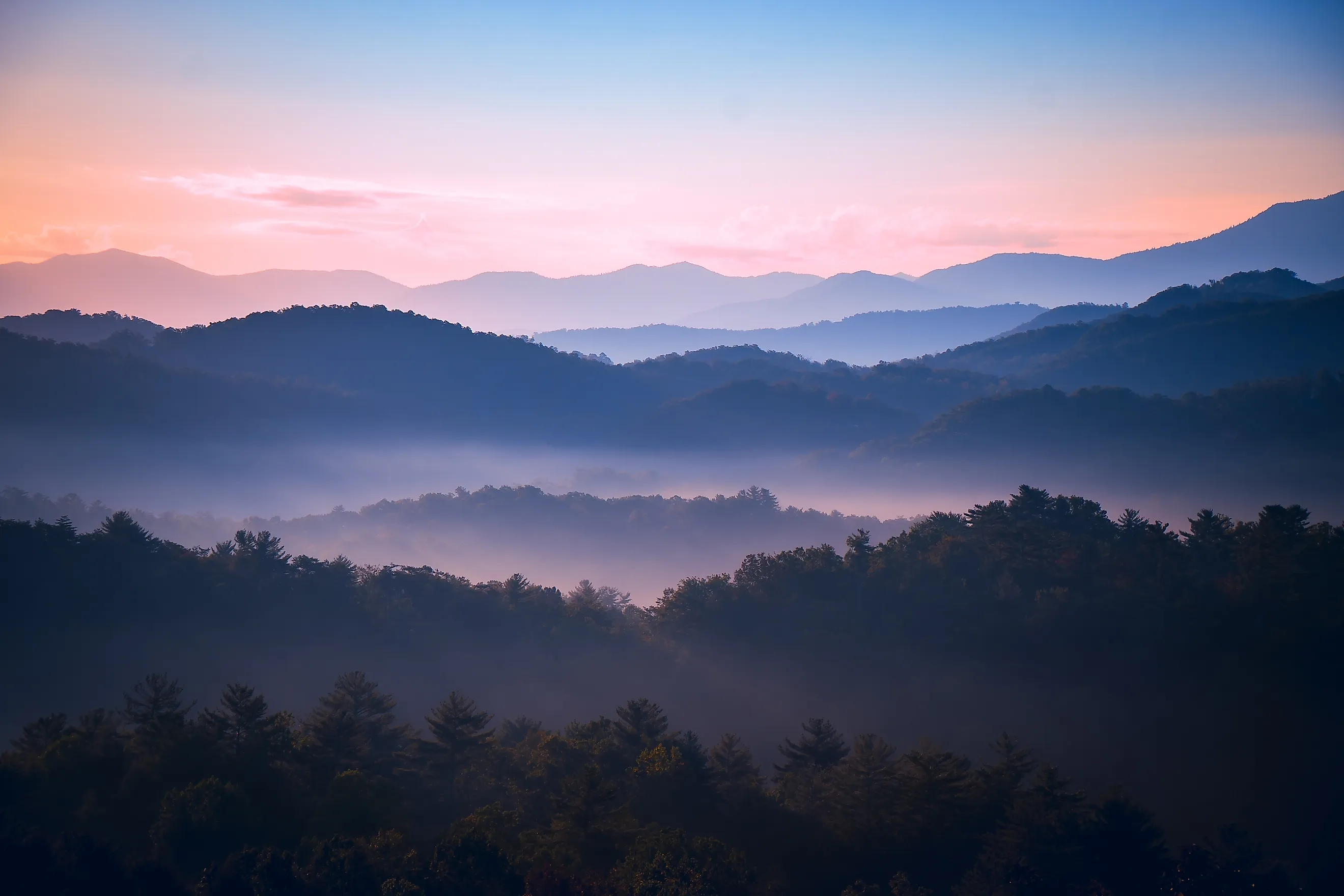
Great Smoky Mountains National Park is the most visited national park in the United States, let alone Appalachia, spanning more than 522,000 acres across the Tennessee-North Carolina border and inviting upwards of 14 million travellers per year. Renowned for its exceptional biodiversity, the park contains over 19,000 documented species, with thousands more believed to exist. Elevations here vary quite a bit too, ranging from around 875 ft (267 m) to 6,643 ft (2,025 m) at Kuwohi (once known as "Clingmans Dome"), the highest point in all of Tennessee, in fact.
The park is crisscrossed by hundreds of miles of hiking trails, including a sizable section of the Appalachian Trail. But other popular destinations to simply drop by are Cades Cove, where wildlife like white-tailed deer, black bears, and wild turkeys are regularly spotted, and Roaring Fork Motor Nature Trail, a scenic drive passing historic cabins, grist mills, and rushing mountain streams. Furthermore, numerous waterfalls, such as Laurel Falls, Abrams Falls, and Rainbow Falls, are others among the park's best-known attractions.
Throughout the year, curious travelers can also explore a preserved selection of Appalachian homesteads within the national park locales that provide a detailed look at the Smokies' early settlement history.
Shenandoah National Park - Virginia

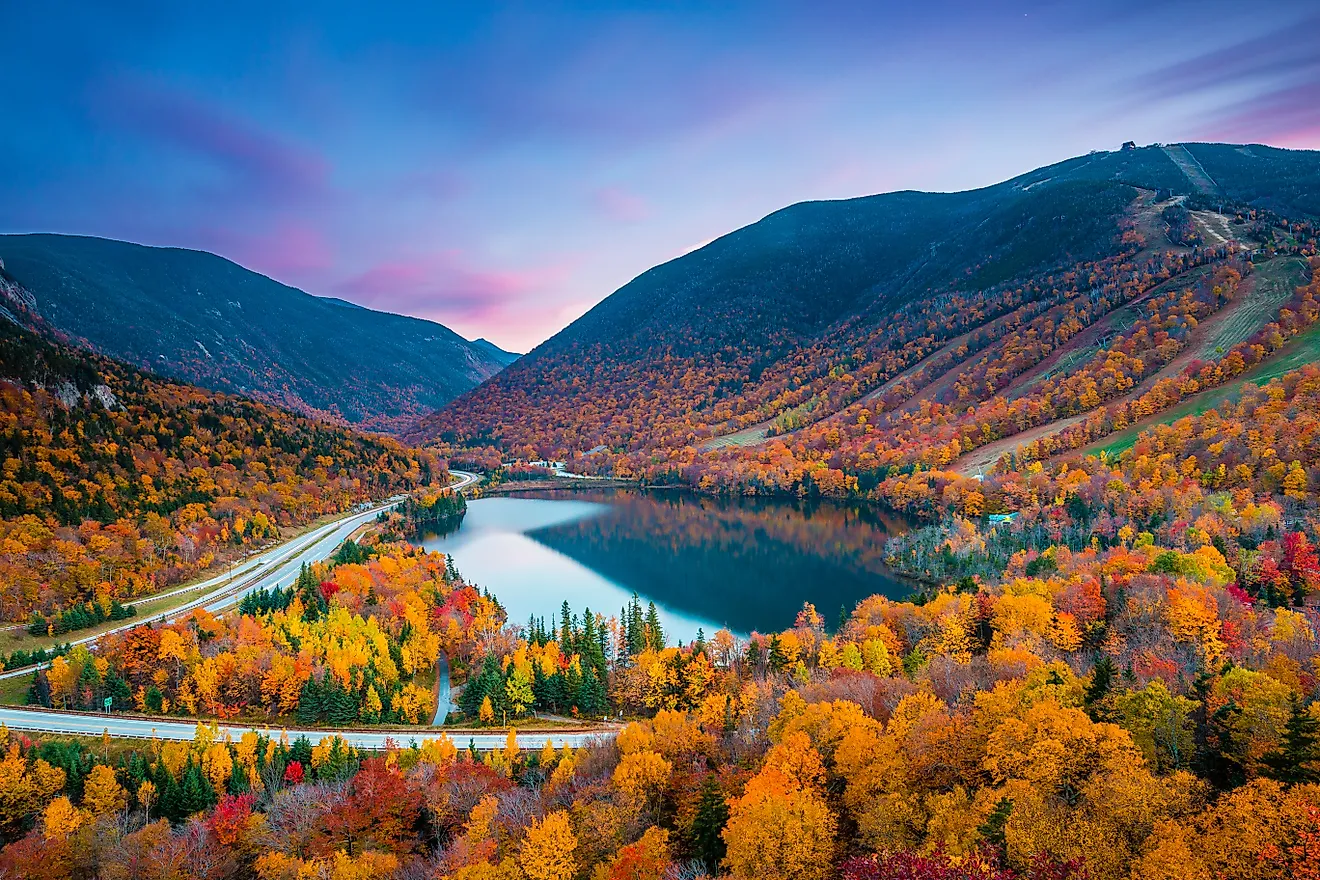
Shenandoah National Park protects nearly 199,000 acres of Virginia's famed Blue Ridge Mountains, forming a massive portion of the central Appalachians. Many will say its defining feature is Skyline Drive, a 105-mi (169-km) scenic road that follows the crest of the range, connecting dozens of overlooks with expansive views across the Shenandoah Valley and Piedmont. It is particularly beautiful in the fall season, when the region's leafy foliage spectacularly changes color.
More than 500 mi (805 km) of trails wind through the park, including much of the Appalachian Trail again. However, Old Rag Mountain is probably Shenandoah's best-known hike, featuring a demanding rock scramble that rewards those who make the trek with epic summit views. There are shorter, easier trails, too, leading to waterfalls such as Dark Hollow Falls and Overall Run Falls, the latter being the tallest waterfall in the park at 93 feet (28 meters)!
Much of the park is federally designated wilderness, providing habitat for notable species such as black bears, bobcats, and over 190 bird species. In terms of plants, spring brings dazzling displays of mountain laurel and other wildflowers, while autumn, as said, draws visitors from across the East to see local woodlands blanketed in vibrant red, orange, and gold foliage.
New River Gorge National Park and Preserve - West Virginia

The New River Gorge National Park and Preserve boasts one of the oldest rivers in North America as it cuts through a deep canyon in southern West Virginia. Covering more than 72,800 acres, the park is renowned for its sandstone cliffs, dense hardwood forests, and the iconic New River Gorge Bridge, which rises 876 ft (267 m) above the New River.
Every October, the bridge actually closes to vehicle traffic for Bridge Day, one of the world's largest single-day extreme sports events that allows public access for base jumping down into the gorge. Furthermore, nearby cliffs have also made the park one of the premier rock climbing destinations in the eastern United States throughout the year, with more than 1,400 established climbing routes. The New River itself is equally well known for whitewater rafting, offering gentle family-friendly floats as well as Class V rapids.
For something a little more relaxing (and safer), a widespread network of trails leads to yet another fine assortment of waterfalls, abandoned coal mining sites, scenic lookout points, and quieter stretches of riverbank. Keep an eye out for bald eagles, river otters, bears, and peregrine falcons, all of which inhabit this parkland and reflect the remarkable diversity found within this rugged section of Appalachia.
Explore Appalachia's Protected Wildernesses
Although Appalachia does not contain many national parks within its boundaries, the region's mountains, forests, rivers, and valleys remain some of the most important natural areas in the eastern half of the United States. The ancient peaks of the Smokies and the thrilling landscapes of the New River Gorge all show off the ecological and cultural significance that defines Appalachia, locations that any nature lover ought to check out at least once.