Least Visited National Park in Lower 48
Isle Royale National Park recorded 29,091 recreation visits in 2025 and is on track for a similar number in 2026, making it the least visited national park in the Lower 48. Located in Lake Superior, this island park has no road connection to the mainland, so you must arrive by boat or seaplane, then explore on foot or by water. Its geographic isolation and lack of modern amenities help explain the low attendance, but this doesn't make it an uninteresting place to check out. It has been the site of some of the most important wildlife studies in the country. Furthermore, ancient lava flows, forests shaped by browsing moose, and decades of wolf research give Isle Royale its distinctive character that not many people have been able to experience up close.
An Ancient, Isolated Island Park in Lake Superior

Isle Royale technically belongs to Michigan, but it lies in northwestern Lake Superior, closer to Minnesota and Ontario than to Michigan's mainland. The park protects a 45-mile (72 km) long main island, hundreds of smaller islands, and surrounding waters. Long, narrow bays cut into its rocky shoreline, while inland lakes and dense woodlands occupy valleys between parallel ridges.
Greenstone Ridge forms the island's central spine, with forests of spruce, fir, birch, and aspen covering much of the terrain. Formed by one of the largest known lava flows on Earth, these ridges preserve basalt that erupted roughly 1.1 billion years ago, when a continental rift began pulling North America apart. Later, glaciers scoured the bedrock and deepened depressions that became lakes.
Why So Few People Visit

First of all, there is no bridge, and you cannot bring your car to explore the island. Getting to Isle Royale requires crossing Lake Superior by ferry, seaplane, or private boat, adding transportation costs and travel time before a visit even begins. Ferry crossings can take several hours, while flights offer a faster but more expensive option. Rough water, strong winds, and fog can disrupt transportation, making tightly scheduled trips difficult.
The visiting season is also quite short. This national park's islands close from November 1 through April 15, and many commercial transportation and visitor services operate within a narrower seasonal window. Even when the park is open, reaching its interior generally means hiking or paddling, often with camping equipment and food.
Limited lodging further reduces options for travelers who do not camp. Together, these conditions make Isle Royale a destination that requires deliberate preparation, rather than somewhere people can easily stop during a drive through the region. To be fair, that is largely the appeal for the few who do come, and easier ways to arrive don't appear to be coming any time soon.
Wolves, Moose, and Other Island Ecology

Moose Blocking the Trail in Isle Royale National Park.
Gray wolves and moose have famously made Isle Royale the setting for the world's longest-running study of a predator-prey system in the wild, begun in 1958. Moose browse balsam fir and other woody plants, influencing which trees survive and regenerate. Meanwhile, wolves prey on said moose, but their populations also vary with disease, food availability, and changing weather.
The island's separation from the mainland helps researchers isolate and track these relationships within a clearly defined area, although occasional ice bridges have allowed animals to cross Lake Superior. However, decades of observations show that neither population stays in a simple, permanent balance, and this has been vital for our current understanding of the broader region's flora and fauna.
Red foxes and other smaller predators also scavenge moose carcasses left by wolves, extending the effects of predation beyond the animals directly involved. Furthermore, beavers reshape streams and wetlands through dam building, creating unique habitat for other wildlife.
What to See and Do on Isle Royale

From Rock Harbor, the Stoll Memorial Trail leads through beautiful forestland and along rocky shores to Scoville Point. The full loop covers around 4.2 miles (6.8 km), offering a pleasant day hike without committing to an overnight expedition. For a longer climb, Mount Franklin rewards hikers with views across the island's interior, northern shoreline, and distant Canadian mainland. Its round trip from Rock Harbor is approximately 10 miles (16 km). Backpackers can build a multi-day itinerary around the Greenstone Ridge Trail, using connecting trails to reach campgrounds beside inland lakes or Lake Superior.
Paddling offers another way to explore. Tobin Harbor provides a more sheltered setting than the exposed shoreline, with canoe and kayak rentals actually available through Rock Harbor Lodge. Farther inland, canoe routes link lakes through portages that require carrying boats and equipment overland.
Visitors interested in maritime history should also consider seasonal sightseeing trips aboard MV Sandy, while ranger programs at Rock Harbor explain its wildlife, geology, and human past.
Planning Your Visit

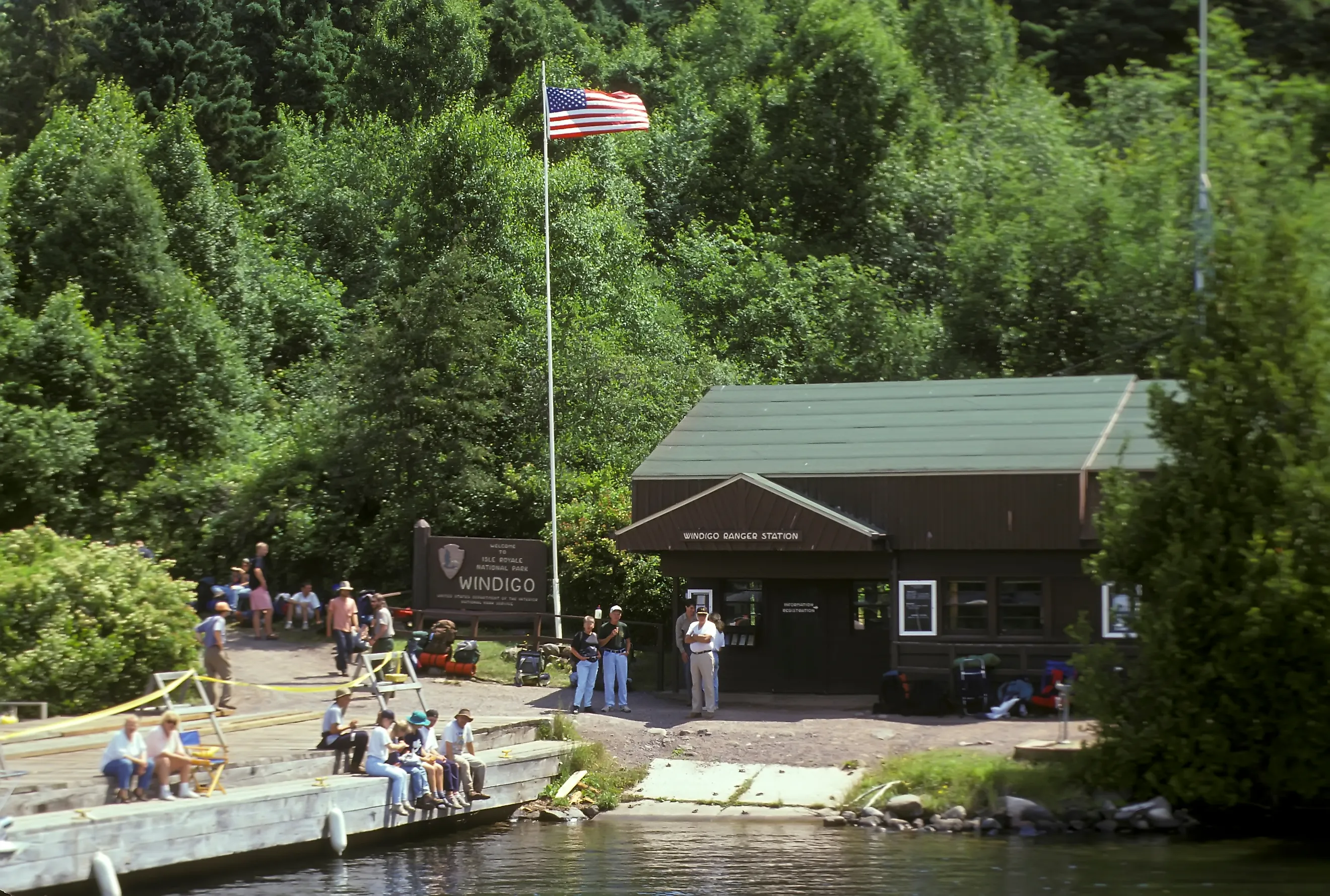
Choose your arrival point before booking transportation. Rock Harbor serves the island's eastern end and offers lodge rooms, while Windigo provides a western starting point with camper cabins nearby. With that, ferries depart from Houghton and Copper Harbor in Michigan and Grand Portage in Minnesota; routes and operating dates vary by provider. The next step is to coordinate return transportation with lodging availability or a realistic backpacking itinerary, and reserve ahead, as the limited spaces could fill up quickly despite the park's reputation for low visitation.
Overnight campers need a permit, and small-party campsites are generally available on a first-come basis. Be sure to pack rain gear, warm layers, sturdy footwear, and enough food for your planned stay plus potential delays. Backcountry travelers also need suitable purifying equipment for water, given you aren't going to lug all you need in prepackaged bottles. Download maps before departure, too, since cellular coverage is unreliable, and leave flexibility after your scheduled return in case Lake Superior weather interrupts ferry crossings or seaplane flights.
See This Peaceful Great Lakes Nature Reserve for Yourself
As you may be able to tell by now, a visit to Isle Royale depends as much on preparation as curiosity. Choosing a manageable route and allowing extra travel time leaves more room to appreciate the island once ashore. That might mean watching moose feed beside a lake, following exposed ridges, or spending several nights at backcountry campsites. The limited transportation options here also affect both who comes and how they explore. If you want to see a place in the United States where you can truly avoid the crowds, start planning your visit to Isle Royale National Park for next summer.