The National Forests Where Wolverines Still Survive
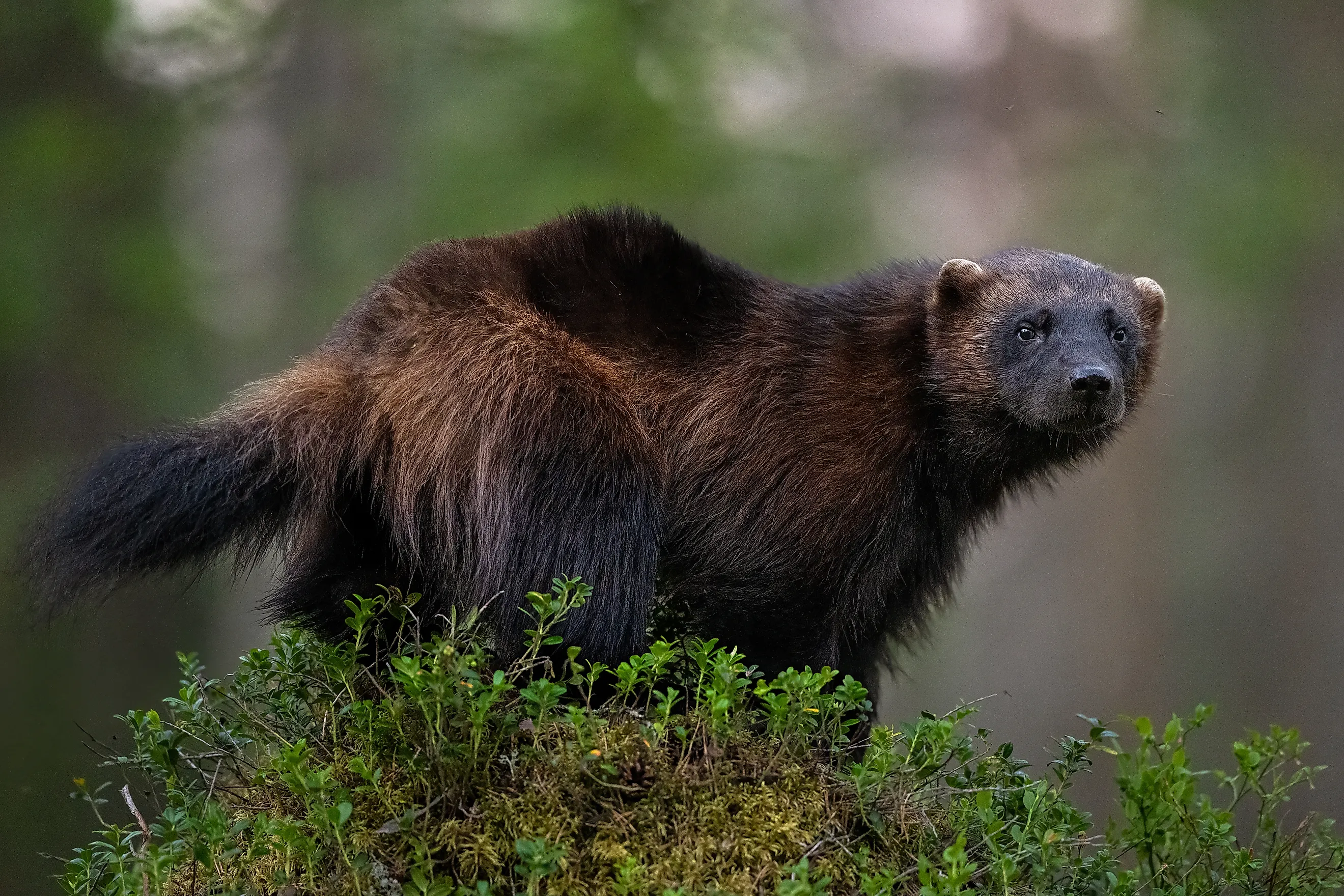
It is estimated that there are only between 250 and 300 wolverines (Gulo gulo) in the contiguous United States. Their numbers have been dwindling over the last 100 years, driven primarily by trapping and habitat loss, specifically reduced snowpack hindering their ability to make dens to give birth and raise young. But wolverines are resilient creatures.
Despite weighing between 30 and 50 pounds, they have the capacity to take on grizzly bears, bull moose, and wolves. They can also travel up to 20 miles per day, traversing snow and mountain peaks. That is exactly what one male wolverine did in 2008 when he traveled from Idaho to Tahoe National Forest.
Tahoe National Forest, California

His name was Buddy. He first appeared on trail cameras in the Truckee region of Tahoe National Forest in February 2008 and the last time Wolverines had been observed in California was in 1922.
By testing his DNA, it was determined that Buddy had traveled over 600 miles from Idaho's Sawtooth Range. This is not uncommon for young wolverines who will migrate to new territories to find mates and establish new populations.
Male wolverines in particular can have home ranges of 200 to 260 square miles. Although wildlife biologists could establish where Buddy came from, they could not establish how he got to the Sierra Nevada. He continued to appear on trail cameras until January 2018. By then, it is estimated he would have been between 12 and 13 years old, an age wolverines seldom reach.
Sawtooth National Forest, Idaho

A vast majority of the Sawtooth Mountains, where Buddy came from, lies inside Sawtooth National Forest in Idaho. However, unlike Tahoe National Forest, more than one wolverine has been documented on trail cameras.
Payette National Forest conducted a study between fall 2024 and spring 2025 to research wolverines in Payette, Sawtooth, and Boise National Forests. From over 46,000 photographs, the cameras recorded 5,001 images of wolverines across the three forests. This included 11 different wolverines in Sawtooth National Forest. Sawtooth National Forest covers over two million acres of alpine environments.
Since wolverines occupy large home ranges, they naturally occur at low population densities. The range of one male wolverine could hypothetically encompass the whole Sawtooth Mountain range.
Shoshone National Forest, Wyoming

Across the border in Wyoming, biologists at the Wyoming Game and Fish Department have studied the statewide distributions of wolverines. In 2017, trail cameras captured three different wolverines along tributaries of the North Fork of the Shoshone River in the Shoshone National Forest.
This was not the first time wolverines were documented in the Greater Yellowstone Ecosystem. Between 2006 and 2009, seven different wolverines were documented in eastern Yellowstone National Park and the adjacent national forests, including Shoshone.
Researchers with the Wildlife Conservation Society (WCS) captured a subadult male wolverine near the Togwotee Pass in Shoshone in December 2008. They fitted him with a GPS collar and tracked his movements over the next several months. After traveling 585 miles from northwest Wyoming to Rocky Mountain National Park in Colorado, the subadult male marked the first verified record of a wolverine in Colorado since 1919.
Okanogan-Wenatchee National Forest, Washington
Like their counterparts in Wyoming, researchers studying wolverines in Washington have used live-trapping and GPS collars to track wolverines' movements. Beginning in 2006, wildlife biologists with the U.S. Forest Service and the Washington Department of Fish and Wildlife spent a decade studying wolverines in the Cascade Range within Okanogan-Wenatchee National Forest.
They captured and collared 14 different wolverines to track their movements, with some even crossing the border into Canada. The research even used scat-detecting dogs specifically trained to locate wolverine droppings, and subsequently, natal dens.
Despite collaring 14 wolverines, only two natal dens were located in the study's first nine years. Dens can be hidden under boulders or downed logs buried beneath 12 to 15 feet of snow. Setting cameras up near a den could disturb the female and cause her to relocate the den and expose her kit to the winter temperatures. Therefore, biologists waited until the snow melted before searching the den for DNA. They discovered that the kits' father intermittently visits the den during the winter for what appeared to be social visits. Then, in the fall, when kits become more independent, they spend time with their mother and father separately.
Elusive, Yet Resilient Wolverines
Glimpses of them appear on trail cameras more often than they are spotted in person, but wolverines are definitely out there. They might travel from Idaho to California or from Wyoming to Colorado, but tufts of fur and pieces of scat provide evidence that some wolverines are living in the national forests of the United States.