American Towns Founded by a Single Family
Little boys build forts out of boxes and spare wood, but John Oliver Braselton built a town. His six-by-six-foot store grew into the Georgia settlement that still carries his family name. Nine towns across the country trace their names to a single founding family. A widow ran a Texas cattle ranch. A wire-rope inventor set up shop in Pennsylvania. Two sisters divided their father's land and sold the lots themselves. Each family opened a store, built a bridge, or worked the land, and the name stuck.
Braselton, Georgia

Little boys make forts out of big boxes, rocks, or spare wood and dream big. In the mid-1880s, while still a boy, John Oliver Braselton opened a tiny six-by-six-foot merchandise store near his family's farm. John's father, William Harrison Braselton, purchased almost 800 acres of farm land there in 1876, not long after marrying Susan Hosch, whose wealthy family owned a plantation estate nearby. In time, the family farm became a hub for agricultural commerce and an increasingly large thoroughfare. By 1884, a settlement was beginning to form on Braselton's original farm, taking the name of the family. By September 1, 1904, then 27-year-old John Oliver and his brothers Green and William Henry officially opened the fourth version of the country store shack they had started as boys, which they finally branded as Braselton Bros. Inc. in "the most handsomest and most completely arranged brick structure in this part of the State," as reported by newspapers of the day. This comprehensive department store, and its promise to care for customers "cradle to grave," became the center of the incorporated town of Braselton by 1916. Braselton covers roughly 13 square miles and has become one of the fastest-growing towns in Georgia. The 2020 census counted 13,403 residents, and Census Bureau estimates put the town above 17,000 by 2024.
Sistersville, West Virginia

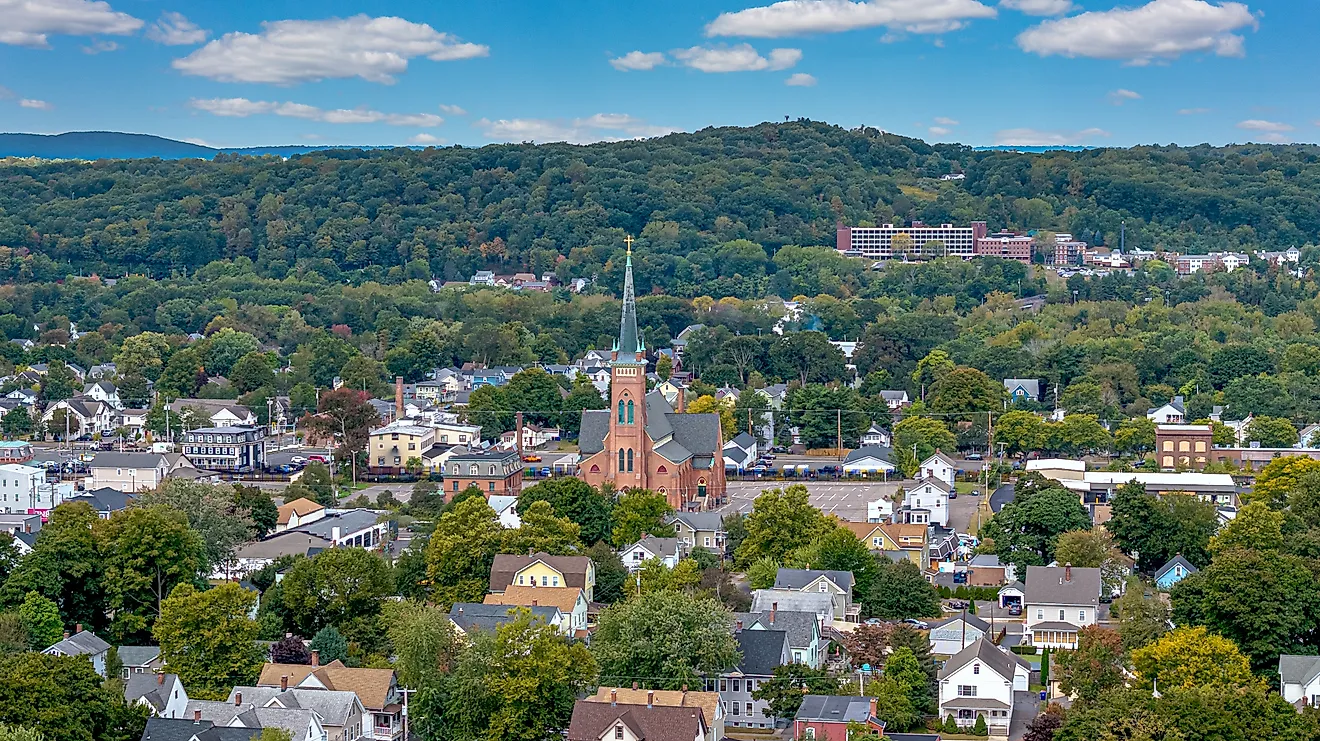
Charles Wells, born in Maryland in 1745, first settled near present-day Wellsburg in what is now West Virginia's Northern Panhandle and later moved down the Ohio River to present-day Tyler County. Accounts disagree on the exact number, variously reporting that Wells had 20 or 22 children by two wives. The Wells were known as a family that traveled in a large entourage. In 1802, after floating down the Ohio River on a flatboat with his second wife, Elizabeth Prather, Charles settled on the 400 acres he had purchased in Tyler County. His settlement became known as Wells Landing, and in 1817, Virginia awarded John McCoy a ferry franchise there. That crossing grew into the Sistersville Ferry, the only ferry on West Virginia's stretch of the Ohio River, and it carried cars and passengers over to Fly, Ohio, on a seasonal schedule for more than two centuries. Service stopped in April 2026 when the tugboat sank at the landing, and the city council voted in July to buy a replacement boat to get the crossing running again. When Charles died in 1815, two of his daughters, Sarah (the twelfth of his children) and Delilah (the seventeenth), began organizing their father's land into plots to sell and decided to call the emerging town Sistersville in honor of their sisterhood. Sistersville experienced various stages of growth, especially after oil was discovered there in 1891, leading to a brief boom as the "oil capital of the world." Now the town is known for its historic architecture and modest size, with a population of 1,412 at the 2020 census. Sisters Fest, held most years in March, brings sisters and friends to town for a weekend centered on the Wells sisters and their legacy.
Boonsboro, Maryland

The legendary Daniel Boone wasn't the only frontiersman of his family. His cousins George and William Boone are credited with founding Boonsboro in 1792, near the base of South Mountain in western Maryland; the brothers and Daniel shared a grandfather, George Boone III. William married Susanna Parks in 1778, and by the following year, they were living in a log house on a 100-acre farm at Beale's Chance. In July 1791, he purchased another 140 acres from Valentine Nicodemus, on a key piece of land called "Fellowship" that contained a major wagon crossroads in the area. With the help of his brother George, he began laying out his vision for a future town that originally contained 44 lots, 22 on either side of the main street. The first recorded sale occurred on November 11, 1792, when Frederick Netal paid five pounds for lot 15; any modern-dollar comparison depends on the conversion method used. The brothers named the place Boones Berry, and the earliest deeds at the Washington County courthouse record it as Boonesberry Town. It went through Margaretsville, named for George's wife, and Boonesborough before settling into Boonsboro.
Kingsville, Texas

Kingsville sounds like a town that may have been founded by or for a royal heir to a throne, but it owes its name to the leadership of a lady named Henrietta King. She had been running the King Ranch in South Texas, about 40 miles southwest of Corpus Christi, for two decades after her husband died in the late 1800s. She faced the difficult task of driving cattle long distances over hot, dry land to buy and sell them at market. Henrietta King designated King Ranch land for development and deeded half of it to the railroad-construction company. In 1903, ranch manager Robert Justus Kleberg organized the Kleberg Town and Improvement Company, which hired a surveyor to lay out Kingsville. And in this way, Kingsville came into being as other economic interests converged to coordinate efforts. Though Henrietta was the galvanizing force behind the town's founding, the town was actually named Kingsville in memory of her husband, Richard King.
Minden, Nevada

Town historians assert that there is no doubt that "the Dangberg family made the town." Though Dangberg might have been a more humorously memorable name, Minden still honors its founding family, referencing a town in Germany, which was near ranching tycoon Heinrich Friedrich (H.F.) Dangberg Sr.'s birthplace. Emigrating in 1848, Dangberg wound up in Carson Valley in Nevada territory by 1856. He purchased 160 acres and started a ranching enterprise, from the ground up, that would expand into a considerable land and livestock empire of 30,000 acres by the turn of the 20th century. The plan for the development of Minden was drafted as a completely designed community after H.F. Dangberg's death in 1904. The Dangberg Company, led by H.F. Dangberg, Jr. and his brothers, submitted the idea to the Douglas County Commissioners in July 1906. Soon, construction in the town was underway, and the town experienced steady growth through the 1940s. The Minden Inn was a popular local getaway for movie stars like Clark Gable, Will Rogers, and Jean Harlow during Hollywood's Golden Age, who rode over on the Virginia and Truckee Railroad. The Dangberg Home Ranch Historic Park preserves the family's ranching history, but a complete account must also note the sundown practice the town enforced against Washoe people. A 1917 Douglas County ordinance required Native Americans to be out of town limits by 6:30 p.m. The restriction remained in effect until 1974, and the siren associated with it continued to sound until a 2023 state law finally silenced it. A Dangberg summer festival is held at the ranch each year, celebrating the town's frontier history.
Saxonburg, Pennsylvania

Brothers John and Carl Roebling immigrated from Mühlhausen, Prussia, in 1831 and helped establish the community that became Saxonburg. That October, they purchased roughly 1,600 acres from Sarah Collins to establish a farming community in Butler County, western Pennsylvania. Prior to leaving Mühlhausen, Carl and John had formed an "Immigration Society" with hundreds of other families who had heard about the new world forming in the young United States across the Atlantic. After the brothers had begun laying out the town and organizing individual parcels, they wrote back to many of the families still in Mühlhausen, encouraging them to follow suit. Initially, the town was called "Germania," but eventually it would be renamed "Sachsenburg," subsequently anglicized to "Saxonburg." Saxonburg was incorporated as a borough in 1846 and remains one today. John Roebling lost interest in farming and, working out of his shop in Saxonburg in the early 1840s, developed the wire rope that made long suspension spans possible. He used it on the Brooklyn Bridge, and the company that carried his name, John A. Roebling's Sons, spun the main cables for the Golden Gate Bridge decades after his death.
Breaux Bridge, Louisiana

In Louisiana swamp country, a town evolved based on the efforts of a man named Firmin Breaux, a French Acadian ("Cajun") pioneer, who first started buying land in the Bayou Teche area in 1771. By 1786, he had become one of the largest landowners of the region and was a respected Revolutionary War patriot. By 1799, he had constructed a footbridge over Bayou Teche to facilitate passage over the water. The bridge began to be a public crossing point for other locals and people passing through the area. "Go to Breaux's Bridge!" became a popular saying directing travelers to the best spot to get over the bayou. By 1817, Firmin's son, Agricole Breaux, built a larger bridge for vehicles. Traffic and commerce continued to increase. After Agricole died in 1828, his widow, Scholastique Picou Breaux (Firmin's daughter-in-law), drew up a town plan and began selling lots to other French Cajun families in 1829. Breaux Bridge was incorporated in 1859 and is described by the city as the only community on Bayou Teche to have developed simultaneously on both banks. Local history credits Breaux Bridge restaurants with being the first to list crawfish openly on their menus and with popularizing crawfish étouffée. It became known as the "Crawfish Capital of the World" and a center for the celebration of Cajun culture. Today, Breaux Bridge holds a Crawfish Festival each spring, where crawfish arrive in every form and zydeco bands play into the evening.
Georgetown, Colorado

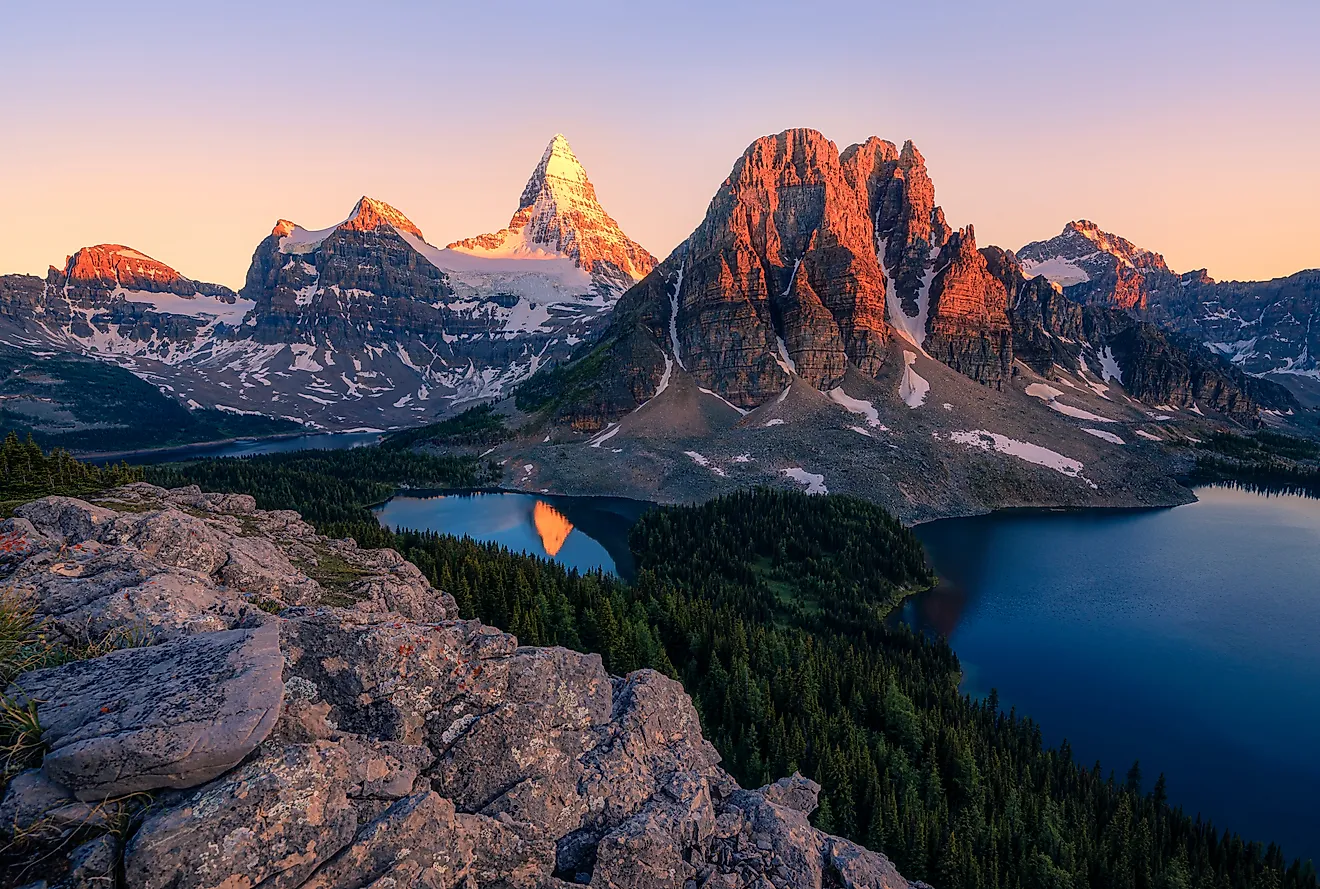
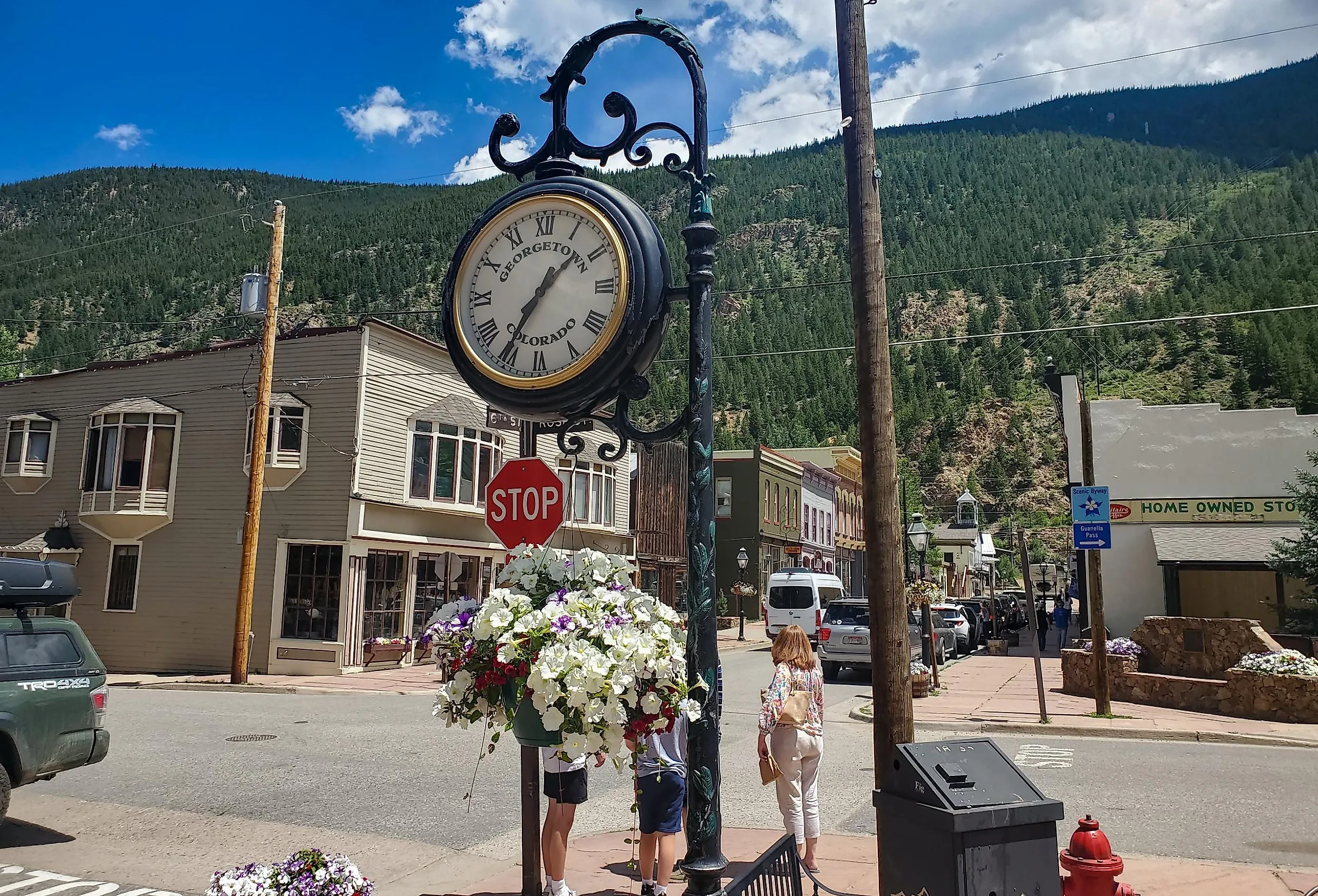
Georgetown was originally called George's Town, named after George Griffith, a man who discovered gold with his brother David Griffith, at the head of Clear Creek in 1859, 45 miles west of Denver. As the story goes, the brothers were part of the Pike's Peak Gold Rush, who had split off from a mining group in the Central City and Idaho Springs area. After word of their gold discovery spread, the Rocky Mountain News sent a journalist to cover the story, who reported in August of 1859: "We have no doubt there are millions of gold in the immediate vicinity!" By 1860, Georgetown had become a settlement, and by 1861, at least 2,000 gold claims had been staked in the area. Unfortunately for the Griffith brothers, they could extract only a few hundred dollars' worth of gold. By 1864, the gold boom had died, the Griffith family had splintered, and George himself finally left for Mexico, right before his namesake town would experience a silver rush, making it one of the wealthiest mining areas in Colorado at that time. The success of silver mining and the need for greater transport capacity would attract the Colorado Central Railroad line to run through Georgetown by 1877. The settlement that grew around the Griffith discovery survives as a historic Rocky Mountain town at approximately 8,530 feet.
McCall, Idaho

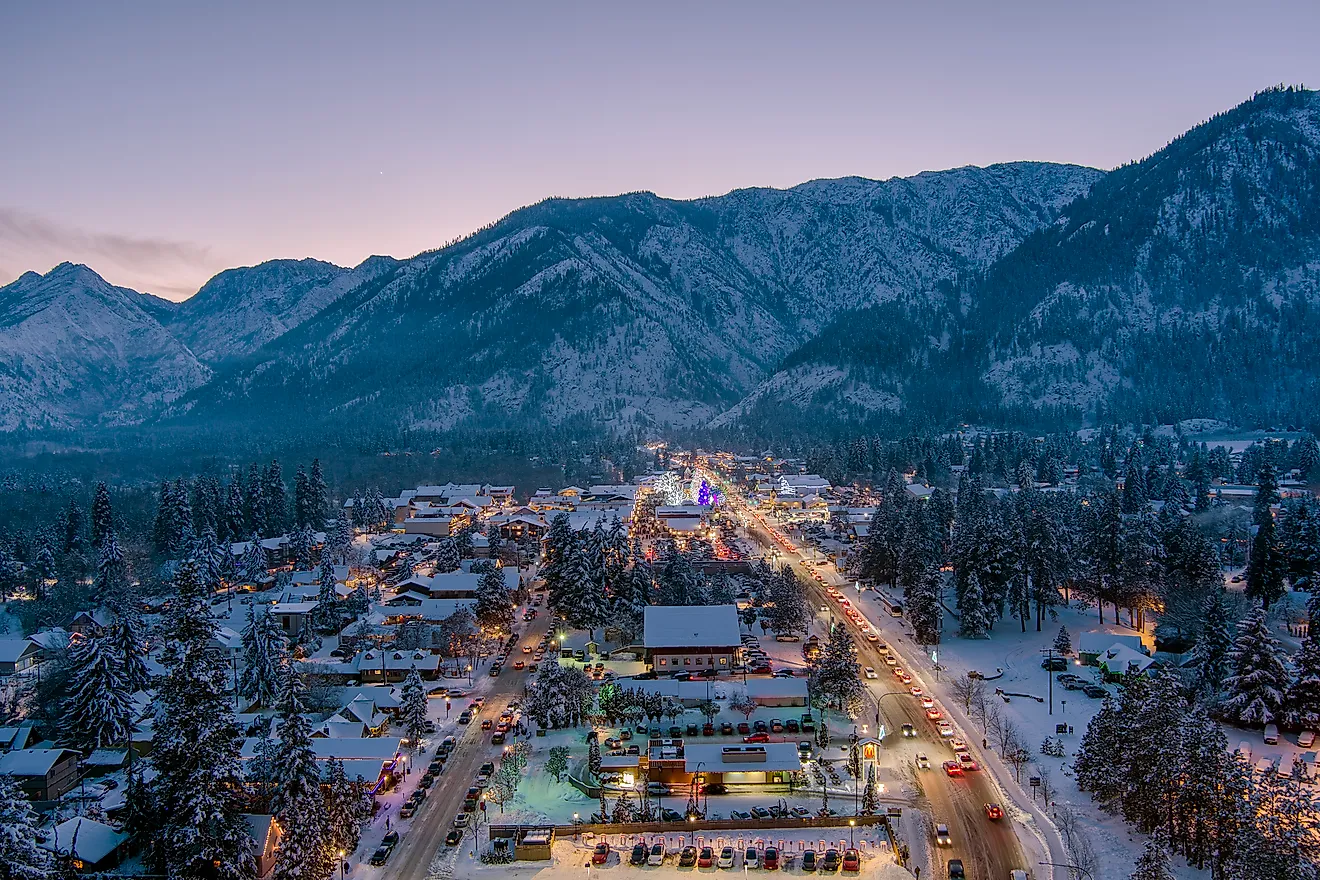
Tom and Louisa McCall moved west after leaving Ohio and Missouri; after their son Homer died near Emmett, the couple continued to Long Valley in 1889 with three sons, Ben, Dawson, and Ted. Upon arriving on the southern end of Payette Lake in Idaho, Tom traded a squatter named Sam Devers his team of horses and wagon for a log cabin and 160 acres, deciding to carve a settlement there. The area was already known from a gold rush in the nearby Salmon River Mountains in the 1860s. Payette Lake and its outlet had long served as seasonal fishing and gathering grounds for Native peoples, who harvested salmon and other fish. American explorers had also established commercial fisheries north of the lake to supply mining communities throughout the region with food. Tom McCall established an early sawmill and lumber business, while Carl and Ida Brown later expanded McCall's sawmill industry into a major economic force. He and his sons used the wood to build several early structures themselves, such as a school, hotel, saloon, and post office. Tom McCall platted a four-block townsite from his homestead, according to the local historic-preservation account. While the timber business was a chief focal point, the Payette Lake area was so attractive that, as early as 1902, McCall was recognized as a "pleasure resort" where one could rent a 30-foot yacht to ride around on the lake and enjoy its views. By 1911, the town of McCall was finally incorporated.
Just a Shade Shy of Utopia
Thomas More’s Utopia, published in 1516, imagined a perfect island society. Over time, the title became shorthand for an ideal world that cannot quite exist. Many Europeans and eastern Americans nevertheless looked west as a place to begin again and put ambitious ideas into practice. Those settlements did not arise on empty land. Their growth unfolded amid Indigenous homelands, territorial conflict, forced removal, and other struggles essential to a balanced account of westward expansion.
What makes these towns remarkable is the lasting imprint of families who opened stores, built bridges, managed ranches, laid out streets, and established businesses that drew wider communities around them. Their names remain on maps, but their legacies also live in historic buildings, local festivals, and stories passed down by residents. Together, these towns show how family ambition can become part of a community’s identity for generations.