The Forests Where Ticks Are Worst
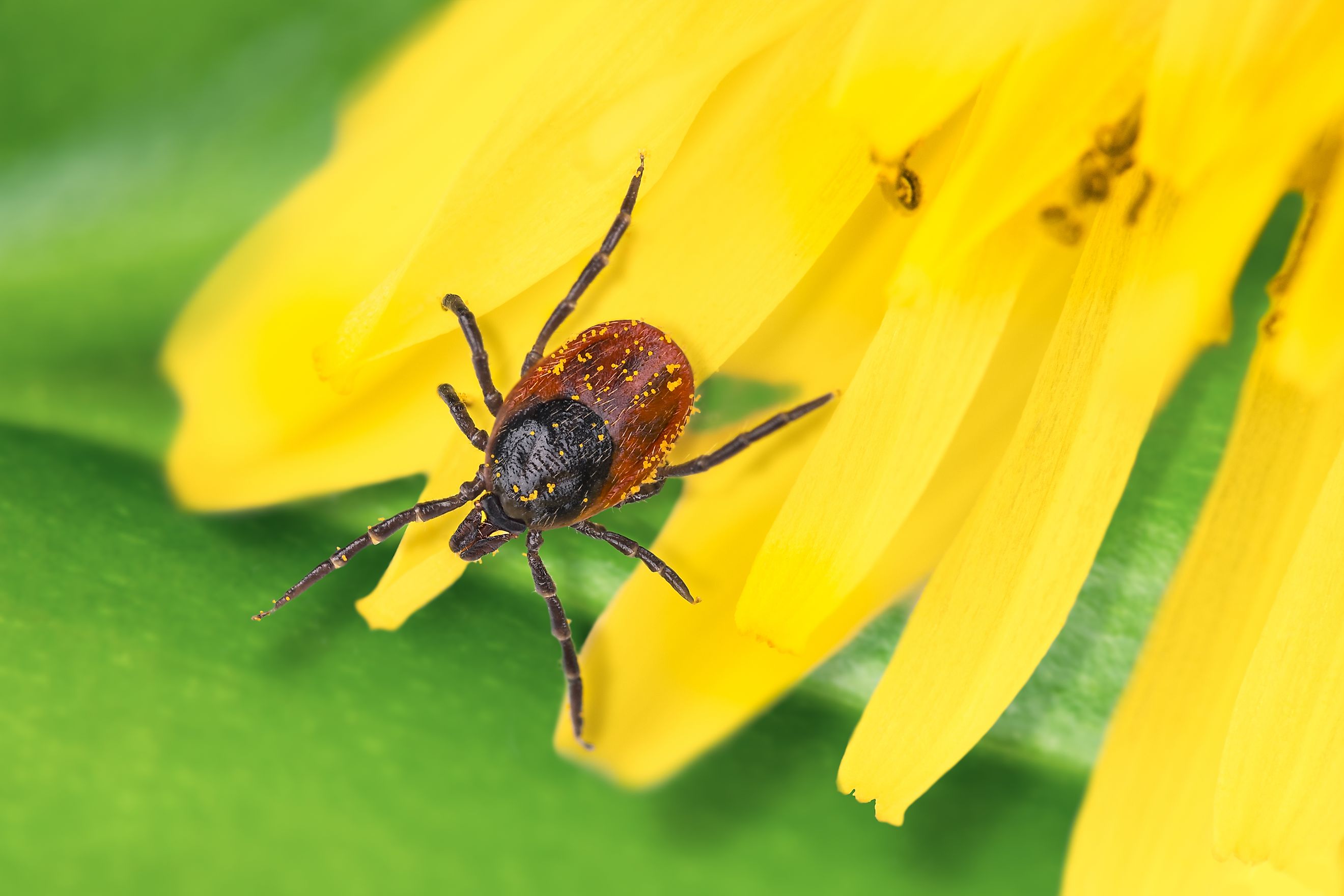
A tick waits, with its front legs raised, at the tip of a blade of grass or a low branch, and grabs on the moment you brush past. That posture, called questing, is why the worst tick areas in the national forest system aren't the deep backcountry but the ordinary stuff like brushy trail edges, leaf litter, and the waist-high grass at a trailhead parking lot. It's why the forests with the worst tick problems cluster in two very specific bands of the country and not evenly across all 150-plus national forests. Ticks are a year-round fact of forest life almost everywhere east of the Rockies, but risk isn't uniform. Risk tracks a handful of things such as which tick species live locally, how wet and shaded the undergrowth is, how many deer and white-footed mice are around to keep the tick life cycle going, and how mild the previous winter was. A century of Forest Service guidance has treated tick density as weather-driven. After a mild winter, populations spike, and ticks are worst in early spring when overwintered adults start moving.
The Northeast-to-Upper-Midwest tick belt

The single biggest concentration of tick-borne disease in the country runs from Maine down through the mid-Atlantic and out across Pennsylvania, Ohio, Wisconsin, and Minnesota. According to county-level CDC surveillance data, the historically separate Northeastern and Upper Midwestern Lyme disease hotspots have been merging into one continuous zone over the past two decades, meeting in the Ohio River Valley. National forests sitting inside that band carry the highest sustained tick risk in the system.
In Wisconsin, the Chequamegon-Nicolet National Forest is repeatedly flagged as one of the state's most consistent tick hotspots. Its mixed hardwood-conifer stands hold moisture in the leaf litter through summer, which is close to the textbook habitat for the blacklegged, or deer tick. A BMC Public Health study of the forest's own employees found tickborne disease awareness was a real occupational concern for staff working in its northern ranger districts, which sit in the part of Wisconsin with the state's highest reported Lyme disease incidence.

The blacklegged tick's bite carries more than Lyme disease. It's also the main vector for anaplasmosis, babesiosis, and, less commonly, Powassan virus, a rare but severe infection that can cause encephalitis and, according to the CDC, kills roughly one in ten people who develop severe disease. Powassan cases are still uncommon and concentrated in the Northeast and Great Lakes region, but Wisconsin health officials note that most of the state's confirmed cases have come from its northern counties, the same ones the Chequamegon-Nicolet sits in, and unlike Lyme, Powassan can transmit in under an hour of attachment rather than the roughly 24 to 36 hours typically cited for Lyme-causing bacteria.
Farther east, forests across New England and the mid-Atlantic, such as the White Mountain National Forest in New Hampshire, the Green Mountain in Vermont, and the Allegheny in Pennsylvania, sit inside states that consistently rank among the highest for Lyme disease case rates. Tick season here runs roughly April through November, with nymphs, the pinhead-sized immature ticks responsible for most human infections because they're so easy to miss, peaking in late spring and early summer.
The lone star tick

A second, geographically distinct problem is the lone star tick, named for the single white dot on the adult female's back. It's native to the South and lower Midwest, and forests like the Shawnee in southern Illinois, the Ozark-St. Francis in Arkansas, and the Mark Twain in Missouri all sit well within its range. Unlike the blacklegged tick, the lone star tick doesn't carry Lyme disease. What it does carry is what the CDC lists as ehrlichiosis, tularemia, Heartland virus, and a Lyme-like illness called STARI, and growing evidence ties its bite to alpha-gal syndrome, a delayed allergy to red meat and other mammal products. The Forest Service's own safety guidance for the Shawnee National Forest flags this species as the one to watch.
The lone star tick is also notably aggressive. Where blacklegged ticks mostly wait passively for a host to brush past, entomologists at Penn State describe the lone star tick as actively moving toward people and animals, which is part of why bite rates run high wherever it's established. The species has been pushing north out of the Southeast for the past decade or two, moving up through the Appalachians and into Pennsylvania forests that, a generation ago, saw almost none of it.
The Pacific Coast

Lyme disease risk isn't only an eastern problem. The western blacklegged tick occupies a narrower band along the Pacific Coast, and California's highest Lyme case rates cluster in the northwestern counties of Trinity, Humboldt, and Mendocino, plus Nevada County in the northern Sierra and Santa Cruz on the central coast.
That puts national forests in that corridor like the Six Rivers, Mendocino, and the Sierra foothill fringe of the Tahoe National Forest among them into a western tick hotspot. The western blacklegged tick behaves a little differently than its eastern cousin, too, as it's more often found along open trail edges, in grassland, and in chaparral than in deep forest leaf litter.
What drives the risk

A mild winter lets more ticks survive to spring. A big acorn crop one autumn can fuel a boom in white-footed mice the following year, which in turn feeds more tick larvae, an effect that's been documented since at least the early 2010s and still shapes how bad a given tick season gets.
Terminix's national pest-control data for 2025 put California, Florida, Georgia, and Pennsylvania at the top of the list for tick-control service calls, but its own analysts point to the same underlying driver, a combination of warm, humid climates with abundant green space and winters mild enough that ticks no longer die the way they used to.
Sharing the Woods With Ticks
None of this makes these forests worth skipping. The ticks are, as the Francis Marion and Sumter's page puts it, an old and manageable nuisance that shouldn't keep anyone out of the woods, not a reason for the kind of fear it sometimes generates.
Long pants tucked into socks, a permethrin treatment on clothing, an EPA-registered repellent on skin, and a tick check after the hike behind the knees, the scalp, the waistband, and the ears cover most of the risk. The bigger point is to know whether you're walking into blacklegged tick country, where the watchword is Lyme disease and, less often, Powassan, or lone star tick country, where the concerns are different, and the bite itself is more likely.