The Foggiest Places on Earth
Fog is just a cloud that never learned to fly, a low haze of tiny water droplets that forms when moist air cools to its dew point and the vapor condenses out. It can drop visibility to a few feet, ground planes, and swallow entire bridges, and a handful of places on Earth live under it for a staggering share of the year. Some are cold coastlines where warm and cold ocean currents collide, some are valleys that trap chilled air overnight, and one is a desert that would barely survive without it. Here are some of the foggiest places on the planet, and what it is actually like to live inside a cloud.
Grand Banks, Newfoundland

Begin with the current champion: the Grand Banks, shallow underwater plateaus off Newfoundland's southeast coast, are foggy approximately 206 days annually. According to Guinness World Records, this makes them the foggiest place on Earth. The fog results from a collision of cold and warm waters: the Arctic's Labrador Current meets the warm Gulf Stream heading north, causing the air above to turn into fog. This area is also where the Titanic sank, not a coincidence, as ice and fog are common in these waters. Despite the constant turbulence, the region has become one of the world's most productive fishing grounds.
Point Reyes, California

Down on the California coast, Point Reyes is the runner-up, and it does things by halves. This wind-battered peninsula about an hour north of San Francisco logs roughly 200 foggy days a year, second only to the Grand Banks in North America, and, for good measure, it is also the windiest place on the entire Pacific Coast, with gusts that have reached hurricane force. The fog here can settle in for weeks at a stretch in summer. It is so reliably thick that when crews built the Point Reyes Lighthouse, they set it low on the headland, below the fog line, so that ships could see the beam rather than a faint glow somewhere up in the murk.
Cape Disappointment, Washington

No place on this list is more honestly named. Cape Disappointment, on the southwest tip of Washington where the Columbia River meets the Pacific, gets about 2,552 hours of fog a year, roughly 106 days, which puts it among the foggiest spots in the United States. The name is not officially about the weather, though it might as well be. A British fur trader sailed past in 1788 hunting for the mouth of the Columbia, could not find it through the murk, gave up, and named the headland for exactly how he felt. The river was right there. He just could not see it.
San Francisco, California

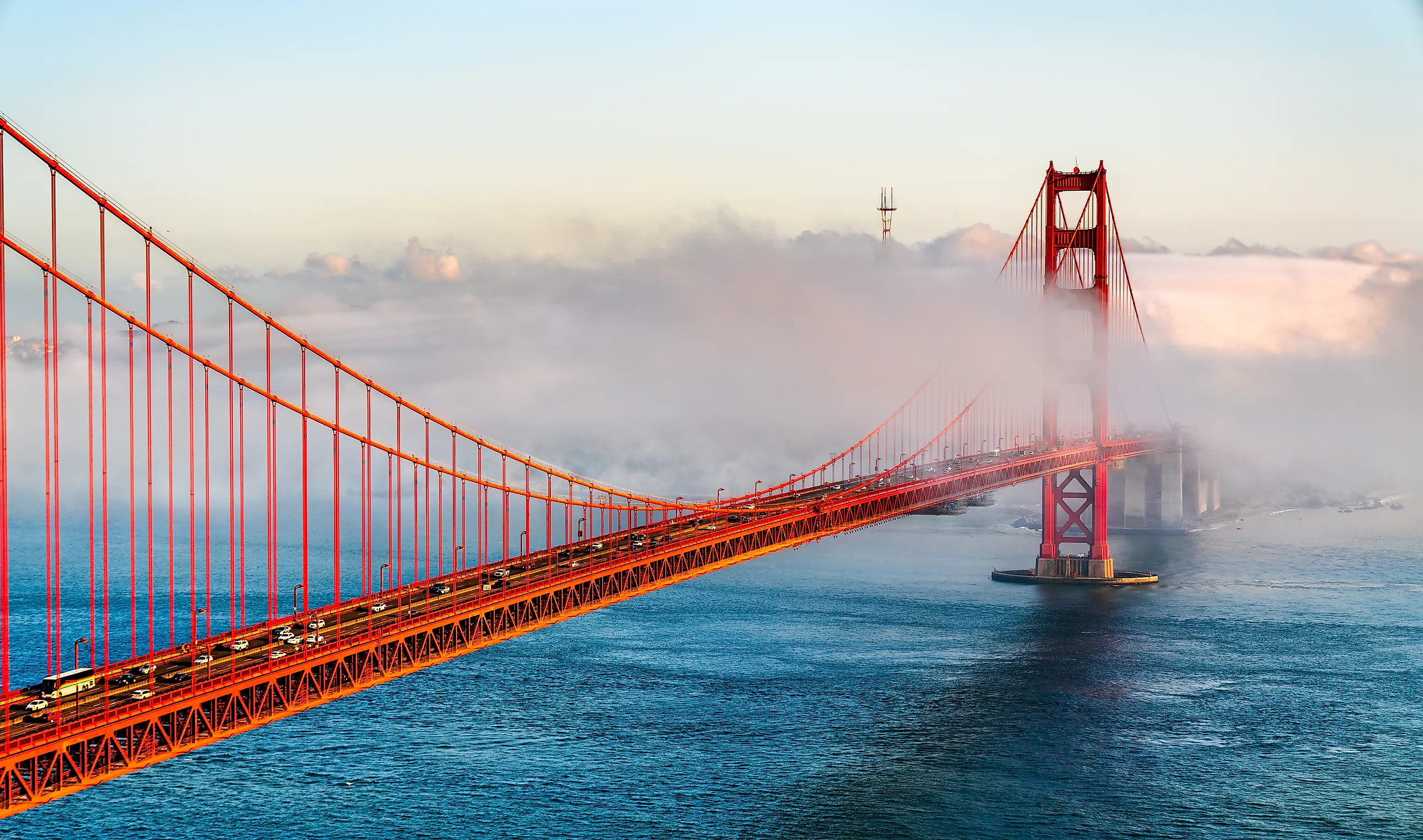
San Francisco's fog is so characteristic that locals have named it Karl, and it even has its own social-media following. Karl usually arrives off the cool Pacific in summer, flowing through the Golden Gate and engulfing the bridge towers, while just miles inland, people are enjoying the sunshine. This type of fog is typical advection fog, formed when warm ocean air is cooled from below as it moves over cold coastal waters. Despite frequent confusion, Karl is not tule fog. Tule fog is a different phenomenon: a thick radiation fog occurring in winter in California's Central Valley, far inland, known for causing pileups on Highway 99 that often make the evening news.
Mistake Island, Maine

Mistake Island, a small, barren rock in Washington County, Maine, northeast of Bar Harbor, is known as the foggiest place on the U.S. Atlantic coast. Its Moose Peak Lighthouse is shrouded in fog for roughly 1,600 hours annually, reaching 1,562 hours in 1930 alone. The next year, the U.S. Lighthouse Service declared it the nation's foggiest location. Accessible only by boat, navigating to the island has always been an adventurous endeavor due to limited visibility. The cold Atlantic waters cloak the area, similar to the Grand Banks, though slightly less harsh.
Hamilton, New Zealand

Not all fog comes from the sea. Hamilton, the fourth-largest city in New Zealand, is located inland on the North Island beside the Waikato River. Its fog is natural and local: radiation fog that appears on cold, still winter nights when the ground loses heat and the moist air just above it cools down enough to condense. In July, waking up in Hamilton, you might not see the end of the street; by midday, however, the sun usually burns away the fog, leaving a clear, bright afternoon. Compared to other foggy cities, Hamilton is relatively polite in its foggy displays.
Swiss Plateau, Switzerland

The Swiss Plateau, a lowland area between the Alps and Jura mountains where most Swiss residents live, often experiences winter days shrouded in gray. Cold, dense air collects in the basin and cannot rise because a layer of warmer air above traps it, creating a temperature inversion. This leads to Hochnebel, or high fog, which can linger for days, while ski resorts just a few thousand feet higher enjoy clear, sunny skies above the clouds. This phenomenon sometimes prompts many to head uphill for the weekend just to see the sky.
Po Valley, Italy

Northern Italy's Po Valley, a vast agricultural plain stretching from the western Alps to the Adriatic, has been known for its dense autumn and winter fog for centuries. This fog, thick and silent, often obscures farmhouses and rows of poplars entirely. Recently, however, the region's fog is dissipating. Research indicates that the fog has decreased by about 50% over recent decades, commonly attributed to a warming climate and improved air quality. Although it may seem unusual to feel nostalgic about fog, for a region whose identity was partly shaped by the mist, these clearer skies represent a subtle but poignant loss.
Atacama Coast, Chile

The Atacama, a ribbon of desert down the Pacific side of the Andes, is the driest place on Earth outside the poles. Some weather stations there have never recorded a drop of rain, and yet the coast is regularly soaked in fog. A thick bank the locals call the camanchaca rolls in off the cold ocean and drifts inland, and in a place this parched, that mist is not a nuisance but a lifeline. People and plants both drink from it, and some communities have strung up giant mesh fog-catcher nets that wring drinking water straight out of the passing cloud. A desert that gets its water from fog is about as counterintuitive as weather gets.
Namib Desert, Namibia

Then there is the Namib, an ancient coastal desert running some 1,200 miles down the Atlantic shore of Namibia and its neighbors, where the cold Benguela Current chills the sea air into a fog belt that blankets the dunes well over a hundred days a year. Here the fog is not merely useful, it is the foundation of the entire ecosystem. Most famously, the Namib's fog-basking beetles climb to the dune crests at dawn, tip themselves into a headstand, and let the fog condense on their backs and trickle down to their mouths. When your desert has a beetle that does yoga to drink the clouds, you know the fog means business.
Life Inside a Cloud
For all the trouble it causes, fog has a way of defining the places that get the most of it. It feeds a desert, sinks ships, names a headland, and gets adopted as a local mascot. The common thread is nearly always the same: cold water or cold air meeting something warmer and damper, with the difference settling out as a low gray cloud you can walk right through. Spend time in any of these places and you learn the local rule fast enough. Do not plan around the view. Plan around the fog, and treat a clear day as the happy accident it is.