Germany's 11 Best Retirement Towns Ranked
In Bad Harzburg, retirees can hike into a national park and soak in saltwater springs on the same afternoon. Lindau sits on Lake Constance, with a working harbor and Bavaria's only lighthouse. Buyers in Quedlinburg still find half-timbered homes near €150,000. At the upper end, buyers in Rottach-Egern pay close to €2 million for lakeside villas. Bad Kissingen has mineral springs and a classical music festival each summer. Bad Wörishofen opens this list as the birthplace of the Kneipp water cure.
1. Bad Wörishofen

Known for its spa heritage and tranquil setting, Bad Wörishofen is a favorite retirement destination in southern Germany. If you ever need it, Klinik Bad Wörishofen has an excellent reputation for heart and orthopedic care, and Heiligenfeld Klinik is known for its holistic approach. Seniorenzentrum Maximilian is just a 5-minute walk to the historic city center and the Kneipp spa area. The average home price is about €493,000 (according to Engel & Völkers), which makes Bad Wörishofen one of the more expensive towns in which to retire in Germany.
There's also plenty to do: outdoor concerts, farmers' markets, Kneipp wellness classes, walking groups, and bike rides. Relax at THERME Bad Wörishofen, widely considered one of Germany's top thermal spa resorts; visit Sebastian Kneipp Museum to learn about the history that made Bad Wörishofen into an internationally known spa town; and enjoy Kurpark Bad Wörishofen, a large park that hosts outdoor concerts.
2. Lindau

Lindau feels like something out of a postcard, with its old town set along the shores of Lake Constance. The small population of about 26,000 is attractive to retirees who want a close-knit community. Healthcare is a major plus, with facilities such as Asklepios Klinik Lindau and the Seniorenheim Hege in town. Retirement here doesn't mean slowing down completely. There are plenty of ways to stay active, including festivals, markets, sailing, and waterfront walks.
Lindau's lakeside setting also makes it one of Germany's more desirable places to live, and housing reflects that, with single-family homes selling for around €898,000. Some of the town's highlights include Lindau Harbor, home to Bavaria's only 108-foot lighthouse and the Bavarian Lion statue; the beautifully preserved Old Town Hall dating back to 1422; and the medieval Mangturm watchtower built in the 12th century.
3. Füssen

Imagine waking up to mountain views, strolling through an old town, and having beautiful lakes right nearby. A peaceful retirement awaits in Füssen, at the edge of the Alps. About 15,000 people call Füssen home. There are good healthcare options close by, including Klinik Füssen for medical needs and Seniorenresidenz am Lech for supportive senior living. Houses sell for around €560,000, but if you want a lakefront property, be willing to spend more.
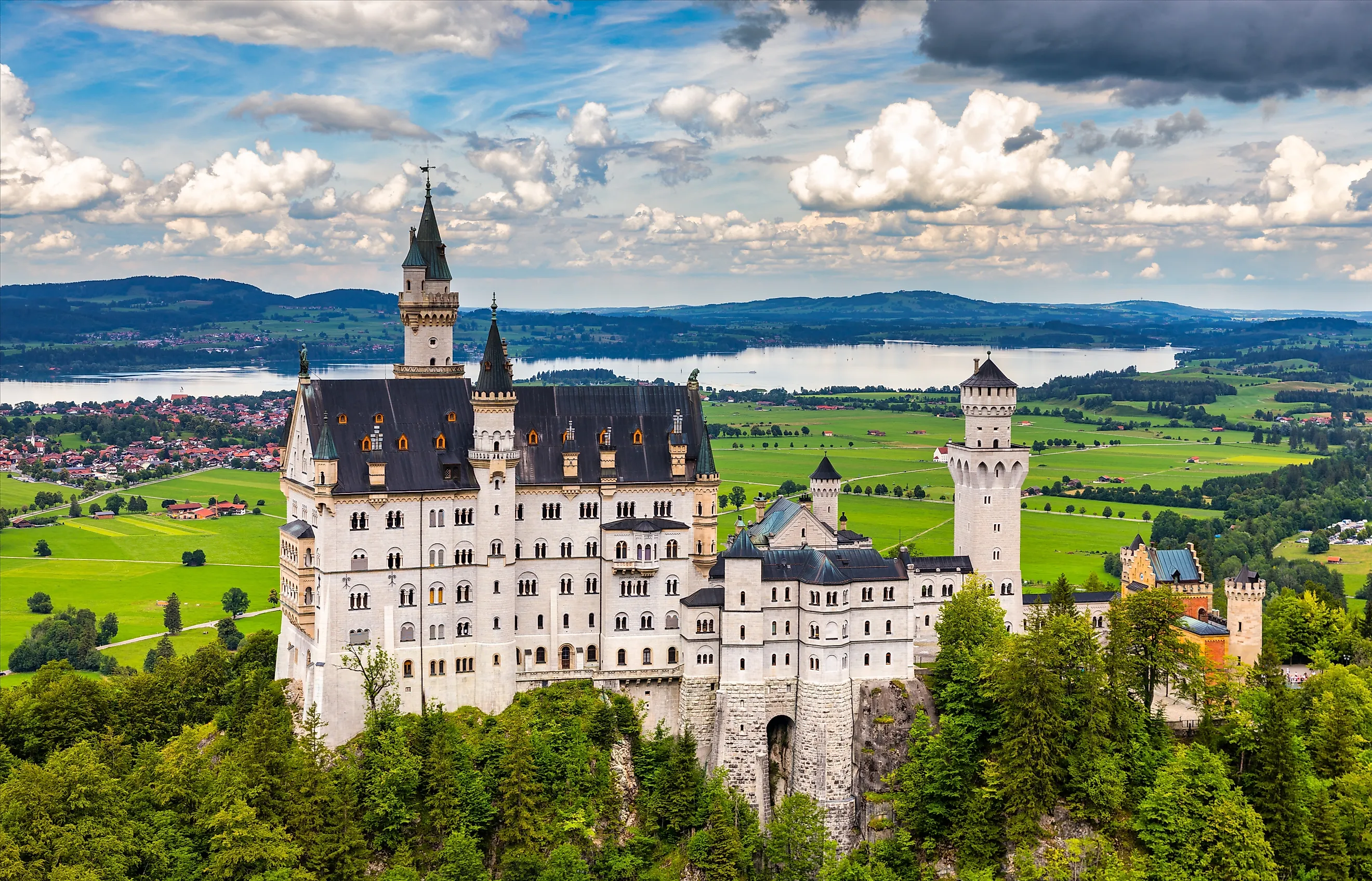
Popular landmarks include Neuschwanstein Castle, which sits on a hilltop above nearby Hohenschwangau, just outside Füssen. It is one of the world's most famous castles and is said to have inspired Walt Disney's Sleeping Beauty Castle. Hohes Schloss, one of the largest and best-preserved late Gothic castles in the region, overlooks the town as well. Nature lovers will enjoy hiking or boating on the crystal-clear waters of Alpsee, Alatsee, or the Forggensee reservoir.
4. Überlingen

On the northern shore of Lake Constance is Überlingen, a town that almost 23,000 people call home. Quality healthcare is easily accessible at Helios Spital Überlingen, and the Seniorenzentrum Haus St. Franziskus is a well-respected senior living facility if your needs change over time.
The average price for a home in Überlingen is around €788,000, although you may pay more for a lakeside property. Activities here include guided historical tours, wine tastings, and an array of seasonal events, such as the Seenachtsfest (Lake Night Festival). With both historical sites and the beautiful outdoors, Überlingen is certainly worth considering for retirement. You will be able to regularly visit Münster St. Nikolaus, the largest church on Lake Constance, wander through the flower-filled Stadtgarten with its Alpine views, and relax at Bodensee-Therme Überlingen, where thermal pools overlook the lake.
5. Meersburg

Views of Lake Constance, cobblestone streets, and hillside vineyards make retirement life in Meersburg a little more special. Meersburg's population may be on the smaller side (about 6,000 people), but life here can be as energetic or as relaxed as you want it to be. Locals gather for wine festivals, and boat cruises run across the lake.
You will love exploring Meersburg Castle, one of Germany's oldest inhabited castles, with medieval rooms and towers; New Palace (Neues Schloss), an elegant Baroque palace overlooking the lake; and the Meersburg Promenade, a lively waterfront lined with cafés, ferries, and sailboats.
Regarding health-care access, you can rest assured as well. 24-hour care is provided at Helios Spital Überlingen, in nearby Überlingen. For extra support, the upscale Augustinum Seniorenresidenz features an indoor swimming pool and sauna, as well as views of the Alps. Depending on how close you want to be to the lake, house prices fall between €349,640 and €800,173. Enjoy retirement and modern amenities in the medieval town of Meersburg.
6. Bad Harzburg

Famous for its natural saltwater springs and traditional thermal baths, the town of Bad Harzburg is located at the edge of Harz National Park, meaning plenty of fresh mountain air. If you love the mountains, Bad Harzburg is difficult to beat.
Stay busy with weekly markets and hiking clubs, then relax at the local spa. Ride the Burgberg Cable Car for panoramic views, walk among the treetops on the Baumwipfelpfad Harz, and explore the ruins of Harzburg Castle, an 11th-century fortress overlooking the town and surrounding forests.
With a population of about 20,000, Bad Harzburg is budget-friendly, with the average home price at about €240,578. The personalized care approach from Asklepios Harz Clinic and multiple specialized facilities for seniors, including the Seniorenzentrum Bad Harzburg, ensures a healthy retirement.
7. Cochem

On the banks of the Moselle River, Cochem is a small town of roughly 5,000 people. It's surrounded by vineyards, rolling hills, and colorful buildings, giving it plenty of old-world charm.
This region is well-known for its Riesling, so a wine tasting at Weinhexenkeller is a must for anyone who lives here. The evening boat cruises down the Moselle River are another nice way to relax in Cochem. Sitting above the Moselle River, Cochem's most notable landmark is the neo-Gothic Reichsburg Castle. It was destroyed in 1689 and restored in 1868. You can walk or take a shuttle to the top of the hill for guided castle tours.
Among the retirement homes is Seniorenzentrum St. Hedwig, which has high ratings and is located in a quiet residential area. For medical care, 24-hour services are provided at the Krankenhaus Maria Hilf Cochem.
Home prices are flexible, with the average house costing between €250,121 and €450,218. Historic homes and premium riverside villas come with a higher price tag. For an affordable, culturally rich lifestyle, Cochem is the answer.
8. Quedlinburg

At the northern edge of the Harz Mountains and described as a "medieval gem," Quedlinburg has a population of about 23,000. Enjoy retirement with community activities like holiday markets, walking trails, and mustard tastings.
Quedlinburg was designated a UNESCO World Heritage Site in 1994 for its exceptionally well-preserved medieval townscape. The town is home to over 2,000 half-timbered houses spanning the 14th through the 20th centuries. The Collegiate Church of St. Servatii, which dates to 1129, is a classic example of Romanesque architecture. A crypt contains the burials of King Henry I of Germany and his wife.
The Market Square (Marktplatz) is the medieval heart of the town, with cobblestone streets dating back over 700 years, colorful half-timbered houses, and the Renaissance Town Hall. The best way to get to know Quedlinburg and its history of timber-framed buildings is by checking out Fachwerk Museum im Ständerbau (Timber-Frame Museum).
If you're looking for a retirement home, Azurit Quedlinburg offers specialized care in a cozy atmosphere. The average price of a home in Quedlinburg is between €150,000 and €300,000, making it one of the more wallet-friendly spots for retirees.
9. Bad Kissingen

Another budget-friendly town in Germany is Bad Kissingen, a luxury spa town perfect for retirees looking for a peaceful, health-conscious way of life. Spend your retirement soaking in thermal waters, wandering historic gardens, and exploring nearby vineyards. The town has a population of roughly 23,000 and affordable homes between €189,679 and €229,888.
Bad Kissingen is known for its specialist care facilities, the KissSalis Thermal Spa, and its seven mineral springs. Caring senior living communities like Seniorenwohnanlage Rosenhof Bad Kissingen offer independent living apartments, indoor and outdoor pools, and on-site care.
Popular attractions here include Kissinger Sommer, a classical music festival held each summer. Rosengarten is a beautiful rose garden by the Franconian Saale River, perfect for your daily walk. If you appreciate classical architecture, you will enjoy living near the Arkadenbau, a 19th-century colonnade commissioned by King Ludwig I in 1834.
10. Bad Reichenhall

The Bavarian spa town of Bad Reichenhall is a great place to retire. Even with a population of about 19,000, it's still a serene atmosphere. However, highly regarded health services and home prices averaging €916,000 also make Bad Reichenhall one of the more expensive places to retire. The Seniorenwohnen Bad Reichenhall offers mountain views and is conveniently connected to the Kreisklinik Bad Reichenhall (the local hospital).
Your new favorite way to relax will be soaking in the Alpine brine waters at RupertusTherme. Brine is very rich in minerals that relax muscles and joints. You may also enjoy browsing shops and cafes in Obere Stadt (Old Town).
There's a rich history in this town. St. Zeno Abbey, founded in 1136, is the largest church in Old Bavaria and features Romanesque and Gothic elements. Gruttenstein Castle, estimated to have been built in the 12th century, is often the venue for seasonal events, such as wine festivals and Easter and Christmas markets. And in 1834, the Alte Saline/The Old Salt Works was constructed by King Ludwig I. It is one of Europe's shining industrial monuments, featuring the Salt Museum, underground tunnels, and old working waterwheels.
11. Rottach-Egern

Enjoy an upscale alpine lifestyle surrounded by natural beauty in Rottach-Egern, a Bavarian town of almost 6,000 people on Lake Tegernsee. It is best suited for retirees with comfortable financial resources, given the high cost of living and high-end real estate, with homes selling for €1.5 million to nearly €2 million.
KWA Stift Rupertihof is a highly regarded senior residence, so you know you will be in good hands if you need to relocate to a retirement home. And just eight miles away is Krankenhaus Agatharied (Hausham), the primary regional hospital.
Residents here have access to boat cruises on Lake Tegernsee, 18-hole golf courses, and the thermal baths. Wallberg has one of Germany's longest natural toboggan runs, stretching about 6.5 kilometers (4 miles). From the top, you can see St. Laurentius, a historic Roman Catholic parish church built in the late 15th century. Immerse yourself in more Bavarian history with a visit to Markus Wasmeier Open-Air Museum in the nearby town of Schliersee, home to 18th-century farmhouses, a historical brewery, and even a Bavarian tavern.
Final Thoughts on Retiring in Germany
Germany's smaller towns cover a wide range of retirement budgets. Homes in Cochem and Überlingen cost far less than the lakeside villas in the Alpine resort towns. Meersburg and Bad Reichenhall run more expensive, with lake and mountain settings in return. Residents in these towns build their days around spas, walkable old quarters, and nearby clinics. Anyone weighing a move should also check German residency rules and how pensions are taxed. The right fit comes down to budget, climate, and whether you want to wake up near a lake or a trail.