The Lakes With The Largest Waterfowl Migrations In North America
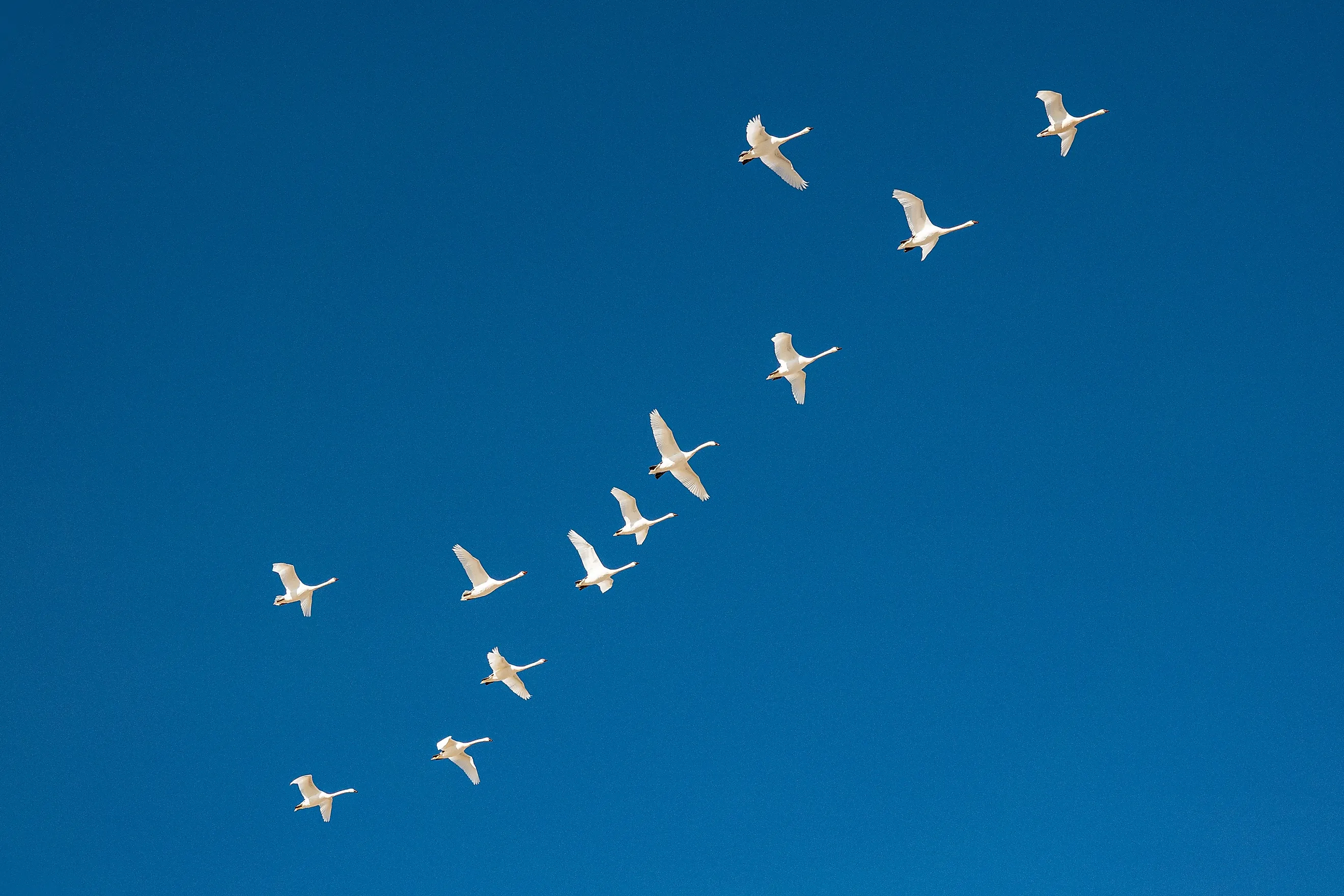
Every spring and fall, millions of ducks, geese, and other waterfowl travel thousands of miles between their breeding and wintering grounds. Along the way they depend on a relatively small number of lakes for food and shelter as well as safe places to rest. Without these stopover sites many birds could not complete their migrations.
This list highlights 10 of North America's most important lakes for migrating waterfowl. They span Canada and the United States and support birds traveling along the Atlantic, Mississippi, Central, and Pacific Flyways. The lakes were chosen for documented migration numbers and recognition by agencies such as the U.S. Fish & Wildlife Service rather than ranked by a single metric.
Lake Erie

No inland lake in North America rivals Lake Erie's importance for migrating waterfowl. The lake's western basin contains one of the continent's largest remaining freshwater marsh systems, serving as a critical staging area for hundreds of thousands of ducks, geese, and tundra swans each year.
Canvasbacks, redheads, mallards, northern pintails, blue-winged teal, and American black ducks all rely on the marshes surrounding western Lake Erie during migration. The shallow water supports abundant aquatic vegetation, while nearby wetlands provide shelter from storms and predators.
Lake Erie's strategic position between Canada and the Mississippi Flyway makes it one of the continent's premier migration bottlenecks, drawing birdwatchers and hunters every autumn.
Great Salt Lake

Utah's Great Salt Lake is one of the world's most significant inland bird habitats. While famous for migrating shorebirds, its surrounding freshwater marshes also support enormous concentrations of ducks, geese, and swans.
The wetlands surrounding the lake provide habitat for between 4 million and 6 million migratory birds annually, including large numbers of northern pintails, green-winged teal, cinnamon teal, snow geese, and tundra swans. Ducks Unlimited, the world's largest private waterfowl and wetlands conservation organization, considers the Great Salt Lake one of the Pacific Flyway's highest conservation priorities.
Last Mountain Lake

Stretching through central Saskatchewan, Last Mountain Lake has been protected since 1887, making it North America's oldest federally protected bird sanctuary.
During fall migration, as many as 400,000 waterfowl and 75,000 sandhill cranes gather along its marshes and mudflats. The lake is recognized as both a Ramsar Wetland of International Importance and a Western Hemisphere Shorebird Reserve Network site because of its exceptional habitat quality.
Located beneath the Central Flyway, it provides a crucial resting point before birds continue south across the Great Plains.
Malheur Lake

Located within Oregon's Malheur National Wildlife Refuge, Malheur Lake is one of the Pacific Flyway's most productive migration stopovers.
Water levels fluctuate dramatically year to year, but during wet periods the surrounding lakes and marshes can support well over 300,000 migrating ducks, while favorable conditions attract hundreds of thousands of additional geese, swans, pelicans, and shorebirds.
The refuge is also among the nation's most productive breeding areas for waterfowl, making it important during multiple stages of the birds' annual cycle.
Lake St. Clair

Although relatively small at 430 mi², Lake St. Clair supports one of the richest wetland complexes in the Great Lakes.
Its internationally recognized St. Clair Flats attract huge concentrations of canvasbacks, redheads, scaup, tundra swans, and Canada geese each fall. The lake forms a natural corridor between Lakes Huron and Erie, funneling migrating birds through one of the busiest portions of the Mississippi Flyway.
Its extensive marshes have made the region one of North America's classic waterfowl destinations for generations.
Lake Winnipeg

At 9,465 mi², Lake Winnipeg is Canada's sixth-largest freshwater lake and a major migration stop within the Central Flyway.
Its extensive shorelines, river deltas, and coastal marshes support large flocks of snow geese, Canada geese, scaup, mergansers, scoters, and numerous dabbling ducks. The lake's vast size allows birds to spread across hundreds of miles of productive habitat before continuing south.
Wetland conservation organizations consider the surrounding marshes among the Prairie Pothole Region's most valuable migration habitats.
Saginaw Bay, Lake Huron

Often considered a lake unto itself, Saginaw Bay occupies the southwestern portion of Lake Huron and is one of the Great Lakes' premier migration areas.
The bay's shallow waters produce abundant submerged vegetation that attracts diving ducks including canvasbacks, redheads, lesser scaup, buffleheads, and common goldeneyes. Tens of thousands of birds gather here before freeze-up each autumn.
Because of its location between northern breeding grounds and southern wintering areas, Saginaw Bay consistently ranks among Michigan's top waterfowl staging areas.
Upper Klamath Lake

Upper Klamath Lake, located in southern Oregon, forms part of the Klamath Basin, one of the Pacific Flyway's most important migration regions.
The broader basin supports the majority of Pacific Flyway waterfowl during portions of their annual cycle. Ducks, geese, tundra swans, and numerous diving ducks use the lake's marshes to replenish energy reserves before continuing their migrations.
Water management in the Klamath Basin has become one of North America's most important conservation challenges because of the lake's importance to migratory birds.
Lake Champlain

Bordering New York, Vermont, and Quebec, Lake Champlain serves as one of the Atlantic Flyway's most important inland migration corridors.
Each spring and autumn, thousands of Canada geese, snow geese, common goldeneyes, mergansers, black ducks, and mallards use the lake's bays and wetlands as stopover habitat. Floodplain forests and sheltered coves provide food and protection during migration.
Although migration numbers are smaller than those seen on the Great Lakes, Lake Champlain remains the Northeast's premier inland waterfowl lake.
Lake Ontario

The easternmost Great Lake provides essential habitat for migrating and wintering waterfowl before birds reach the Atlantic coast.
Long-tailed ducks, scoters, common goldeneyes, mergansers, and greater scaup are among the species that gather along Lake Ontario's shoreline each fall and winter. Research conducted through the Sea Duck Joint Venture has shown the Great Lakes remain critical staging and wintering habitat for many sea duck species that traditionally use coastal waters.
Its combination of deep open water and protected coastal wetlands allows Lake Ontario to support both diving ducks and dabbling ducks throughout migration.
Why These Lakes Matter
Waterfowl migrations depend on a network of healthy lakes and wetlands spaced across the continent. Birds often travel thousands of miles between Arctic breeding grounds and southern wintering habitats, but they cannot complete those journeys without reliable places to rest and feed.
These lakes also provide enormous economic and ecological benefits. Millions of people visit them annually for birdwatching, hunting, fishing, and wildlife photography, while their wetlands filter water, reduce flooding, store carbon, and support countless fish, amphibians, and mammals.
As climate change, drought, and development continue to reshape North America's wetlands, protecting these migration hotspots has become increasingly important. Organizations such as Ducks Unlimited, the U.S. Fish & Wildlife Service, and Environment and Climate Change Canada continue to restore and conserve these habitats to ensure that the continent's great waterfowl migrations remain one of nature's most remarkable annual events.