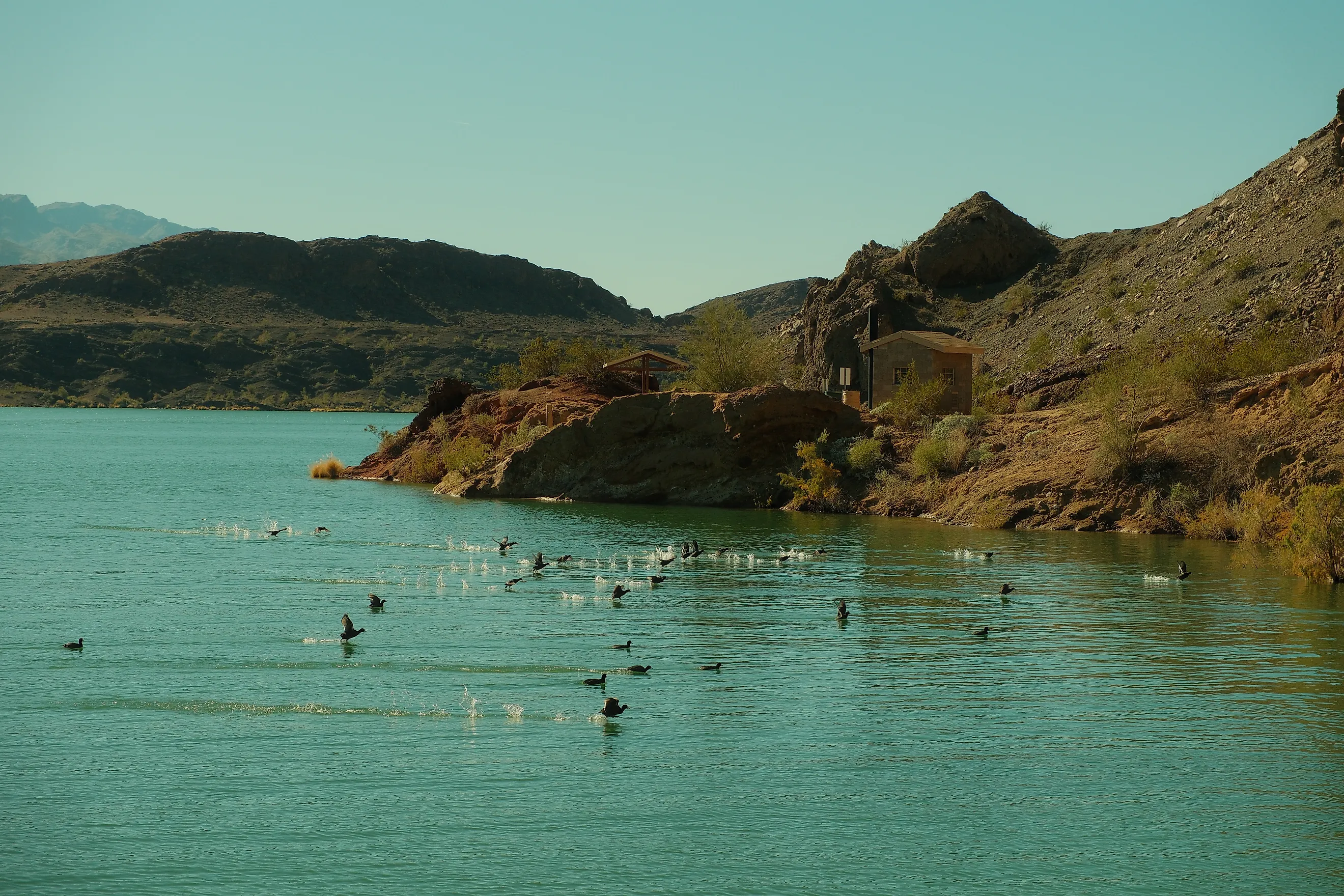
What Happens To Lake Havasu If Lake Mead Hits Dead Pool
Lake Havasu is the one reservoir on the Colorado that is not allowed to drop. It is legally and structurally mandated to hold a near-constant elevation between roughly 440 and 450 feet, even through severe drought, because two of the largest water diversions in the American West have their intakes sitting in it. That obligation is why Havasu looks full in photographs while Lake Mead's bathtub ring keeps making the news. It is also why the question in the headline matters, because Havasu holds about 83 days of its own outflow and receives almost all of its water from a dam 155 river miles upstream. If nothing comes past Hoover, that arrangement has a short shelf life.
Havasu Is Not A Storage Reservoir
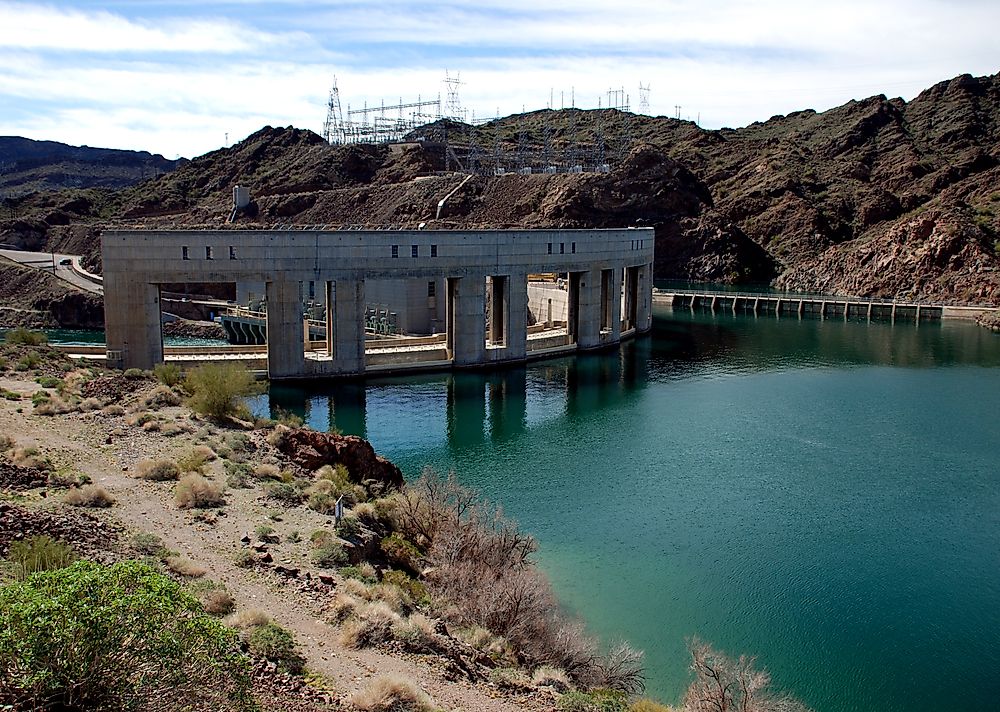
This is the distinction that explains everything else. Lake Havasu holds around 619,400 acre-feet of available capacity behind Parker Dam, which sounds substantial until you put it next to Lake Mead's 26 million or Powell's 24 million.
Havasu is a regulating reservoir. Its job is not to store water across years but to hold a steady pool from which pumps can lift water into two aqueducts, smoothing out variations in what arrives from upstream. It is a header tank, not a reservoir in the Mead sense.
That is why it stays full. The level is held deliberately rather than because the Colorado is generous.
Two Enormous Straws
Havasu is the intake point for both of the largest urban water diversions on the river, which is a remarkable amount of responsibility for a lake most people associate with powerboats and a relocated London bridge.
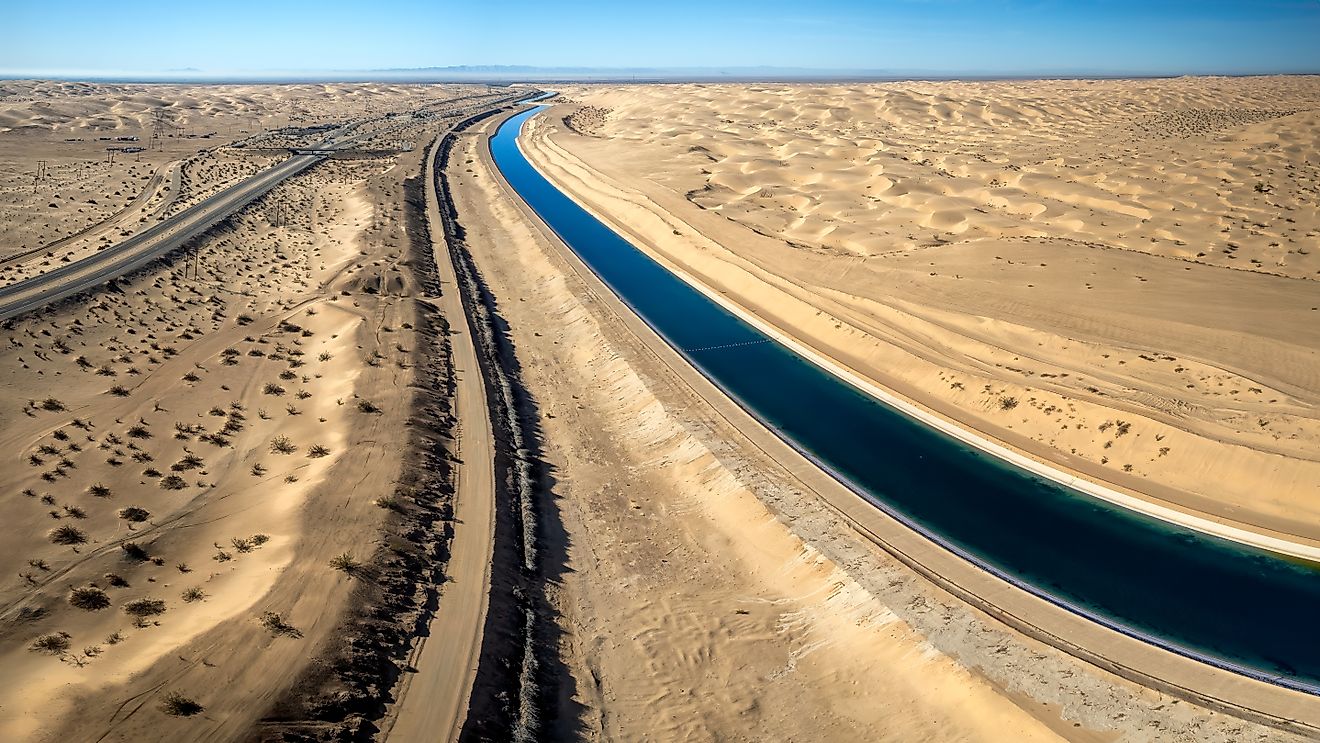
The Mark Wilmer Pumping Plant, originally called the Havasu Pumping Plant, feeds the Central Arizona Project, which can deliver roughly 1.5 million acre-feet a year across 336 miles to Phoenix, Tucson and central Arizona. Two miles upstream of Parker Dam, the Whitsett Pumping Plant lifts water 291 feet into the Colorado River Aqueduct, which carries up to 1,212,000 acre-feet a year over 242 miles to Southern California.
Add those and roughly 2.7 million acre-feet a year leaves this one small lake for two of the largest metropolitan areas in the Southwest.
Eighty-Three Days

Run the arithmetic and the position becomes clear. Those two aqueducts between them draw roughly 7,400 acre-feet a day, against an available capacity of 619,400.
Divide one by the other and the lake holds about 83 days of its own outflow, assuming both projects pumped at full rate and nothing arrived from upstream. Under three months, from full.
That number is not a prediction, because nobody would run it that way. It is a measure of how thin the buffer is, and the answer is that Havasu is a fortnight-to-a-season kind of cushion rather than a multi-year one.
What Sits In Between
Havasu is not directly below Hoover Dam, and the reservoir sitting between them changes the arithmetic considerably. Lake Mohave, behind Davis Dam, holds roughly 1.8 million acre-feet and sits between Hoover and Parker. Combine Mohave and Havasu and you get about 2.45 million acre-feet of water downstream of Hoover, which at the same 7,400 acre-feet a day works out to something like eleven months.
That is the real answer to the headline question in its most extreme form. If the Colorado genuinely stopped passing Hoover Dam, the Lower Basin would have roughly a year of stored water sitting between there and Parker before the aqueduct intakes were in trouble.
The Bill Williams Is The Only Other Inflow
Havasu does receive water from somewhere other than the Colorado, though not a great deal of it. The Bill Williams River enters at the southeastern end of the reservoir near Parker Dam, and its flow is controlled upstream by Alamo Dam, which the Army Corps closed in 1969 specifically to manage flash flooding. That is a desert river prone to sudden violent floods and long quiet spells, which makes it a poor substitute for a continental river.
The surrounding Bill Williams River National Wildlife Refuge extends up the canyon from the reservoir, and the Havasu National Wildlife Refuge covers the north end and the marshes above it.
The Pumps Set The Rules

The reason Havasu is held between 440 and 450 feet has nothing to do with recreation and everything to do with machinery. Both pumping plants are engineered for a specific intake elevation. Whitsett lifts water from 450 feet to 741 feet as the first of five plants on the Colorado River Aqueduct, which together raise it a total of 1,614 feet before it reaches Southern California. Drop the source pool and the lift gets longer, efficiency falls, and eventually the intakes stop working as designed.
Power generation at Parker Dam is explicitly constrained by that requirement. The 120-megawatt plant has to operate within whatever leeway the pumping elevation allows, which means electricity generation is subordinate to keeping the water level where the pumps need it.
Parker Dam Is Mostly Underground
One detail is worth knowing about the structure holding all of this in place. Parker Dam has a structural height of 320 feet, and roughly 73 percent of it sits below the original riverbed.
Only about 85 feet of it is visible above the water, with the superstructure adding another 62 feet above the roadway. Engineers had to excavate 235 feet down through river gravel to reach bedrock, which is why it is sometimes described as the deepest dam in the world.
Havasu Would Not Empty First
Here is the part that reframes the whole scenario, because the order of events is not what the question implies. Long before Lake Mead reached 895 feet, deliveries would have been cut drastically under shortage rules that already exist and are already in force. The Lower Basin would be operating under severe curtailment, agricultural users would be fallowing, and the volume being pumped from Havasu would be a fraction of the 2.7 million acre-feet used in the calculation above.
Dead pool is not a surprise that arrives one morning. It is the end of a long visible decline with a great many decision points on the way down, and the entire apparatus of shortage tiers and interstate negotiation exists to stop the system ever getting there.
What Would Actually Change At Havasu

In the realistic version of a severe shortage, Havasu stays close to its mandated elevation and what changes is the volume moving through it rather than the height of it.
The aqueducts would pump less, Arizona and California would receive reduced deliveries, and Parker Dam would generate less power because less water passes through the turbines. The lake surface would look roughly the same, which is precisely the point of a regulating reservoir.
Only in the genuine dead pool scenario, with nothing at all coming past Hoover, does the pool itself become the problem. By that stage the Southwest has considerably larger difficulties than a low boat ramp.
The Short Answer

If Lake Mead hit dead pool, Lake Havasu would have roughly 83 days of water at full pumping, extended to something like eleven months if you count Lake Mohave's storage sitting between them.
The more useful answer is that Havasu is engineered to stay full and will do so until there is genuinely nothing left upstream, because the pumps feeding Phoenix, Tucson and Los Angeles cannot work otherwise. It is the most stable-looking lake on a river in trouble, and that stability is a design requirement rather than a sign of health.