The US Lakes With the Most Fish Species
The Great Lakes hold more fish than any other freshwater system in North America. Lake Michigan alone counts 116 established species across its basins. Move south and east and the tally climbs into the hundreds across the region. Fertility drives the numbers as much as size does. Shallow warm water like Lake Erie grows fish that cold deep Superior never could. Southern giants such as Okeechobee and Caddo add subtropical species the northern lakes lack entirely. Each lake builds its own fishery around a signature fish. This article ranks ten major lakes by their documented species counts.
The US Lakes With the Most Fish Species
| Rank | Lake (State(s)) | No. of Fish Species |
|---|---|---|
| 1 | Lake Michigan (MI, WI, IL, IN) | 116 |
| 2 | Lake Huron (MI) | 115 |
| 3 | Lake Erie (OH, MI, PA, NY) | 107 |
| 4 | Lake Ontario (NY) | 106 |
| 5 | Lake St. Clair (MI) | 102 |
| 6 | Lake Champlain (NY, VT) | 93 |
| 7 | Lake Superior (MI, WI, MN) | 86 |
| 8 | Caddo Lake (TX, LA) | 70 |
| 9 | Reelfoot Lake (TN) | 61 |
| 10 | Lake Okeechobee (FL) | 60 |
1. Lake Michigan - 116

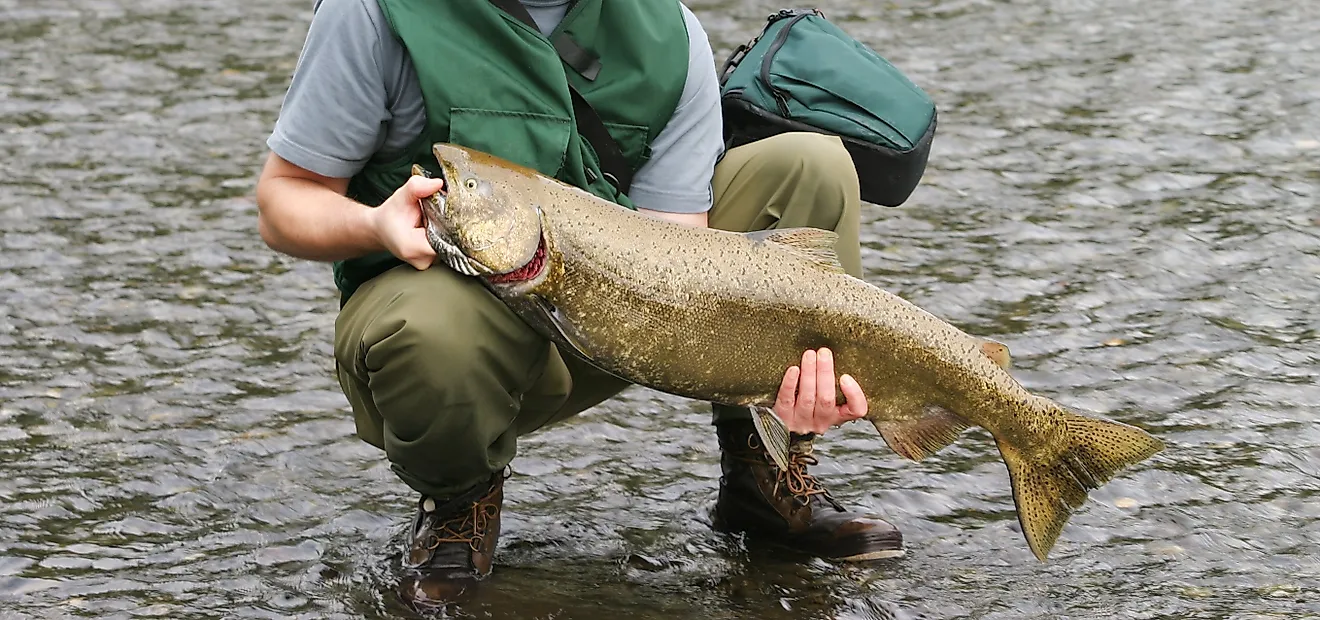
Lake Michigan tops the Global Great Lakes table with 116 established fish species, split between 96 natives and 20 introductions. Its signature fish is the chinook salmon, stocked since the 1960s to control alewife and now the marquee target of a charter fleet running out of Chicago, Milwaukee, and the ports along the Michigan shore. Coho salmon and steelhead share the cold offshore water, staging fall runs into the tributaries. Commercial operators still land lake whitefish, walleye, yellow perch, and ciscoes from the deeper basins. Smallmouth bass hold along the rocky Wisconsin shoreline, and muskellunge lurk in the warmer southern bays. Shiners and ciscoes feed the whole system.
2. Lake Huron - 115

Lake Huron carries 115 established fish species, drawn from 97 natives and 18 introductions. The lake trout is its defining fish, a native predator that Huron restored to self-sustaining wild reproduction after sea lamprey and overfishing nearly erased it. That recovery ranks among the great fisheries-management successes of the Great Lakes. Brook trout and walleye represent the rest of the cold- and cool-water heritage, joined by smallmouth bass across Georgian Bay. Sculpins, gizzard shad, and ciscoes make up the prey that sustains these hunters. Managers introduced Pacific salmon to rebuild angling opportunity, though natural reproduction now carries much of that fishery too.
3. Lake Erie - 107

Lake Erie holds 107 established fish species, counting 90 natives against 17 introductions. Walleye is the fish that made its name, and the lake is often called the Walleye Capital of the World for the vast schools that spawn on its western reefs each spring. Anglers pour into Ohio and Ontario ports to intercept the migration, supporting one of the largest freshwater sport fisheries on earth. Yellow perch anchor a steady commercial harvest alongside it. Bass, freshwater drum, and dense forage schools thrive in the shallow, sun-warmed western basin. That same fertility fuels the algal blooms that now threaten fish habitat.
4. Lake Ontario - 106

Lake Ontario is recorded with 106 established fish species, comprising 92 natives, 11 introductions, and 3 possibly native. The chinook salmon defines its modern fishery, growing to trophy weights on abundant baitfish and drawing charter fleets out of Rochester and Oswego. Ontario's chinook regularly rank among the largest caught anywhere in the Great Lakes. Brown trout and steelhead share the deep cold water, while bass, walleye, and yellow perch work the nearshore. The slow-recovering lake sturgeon persists in a few tributaries. As the final lake before the St. Lawrence outflow, Ontario absorbed heavy ecological change through canal connections and generations of stocking.
5. Lake St. Clair - 102

Lake St. Clair contains 102 established fish species in the Global Great Lakes table, including 86 natives and 16 introductions. Its calling card is the muskellunge, and few waters on the planet produce muskie fishing of comparable consistency. Guides here boast some of the highest catch rates for the species anywhere, drawing anglers from across North America to a lake barely 27 feet at its deepest. Smallmouth bass, walleye, and yellow perch keep boats busy through the rest of the season. Sitting at the junction of Lake Huron and Lake Erie, St. Clair passes fish between the larger lakes through its connecting rivers.
6. Lake Champlain - 93

Lake Champlain shelters 93 identified fish species across its basin, made up of 78 natives and 15 non-natives. The landlocked Atlantic salmon is its heritage fish, native to the system and the focus of a long restoration effort tied to improving tributary access and water quality. Its return carries cultural weight for anglers on both the New York and Vermont shores. Largemouth and smallmouth bass headline the warm-water fishing, while walleye, northern pike, and chain pickerel prowl the weed edges. Lake trout, steelhead, and rainbow smelt fill the cold-water ranks. Ten basin species carry endangered or threatened status across three jurisdictions.
7. Lake Superior - 86

Lake Superior lists 86 established fish species, formed from 71 natives and 15 introductions. The lake trout stands as its emblematic fish, and Superior holds the strongest wild, naturally reproducing populations of the species in the Great Lakes. Its cold, deep, nutrient-poor water suits the fish perfectly, even as that same austerity keeps the lake's overall species count the lowest of the five. Lake whitefish and lake herring round out the native cold-water stocks that sustain tribal and recreational fisheries. Introduced rainbow and brown trout add to the mix along accessible shorelines. Clarity and cold make Superior a coldwater stronghold.
8. Caddo Lake - 70

Caddo Lake supports upward of 70 fish species, and the U.S. Fish and Wildlife Service suggests the true figure may reach 86. Largemouth bass is the fish that draws most anglers, and Texas Parks and Wildlife names it the lake's premier sportfish for good reason. The flooded bald cypress, backwater sloughs, and thick vegetation create ambush cover few Southern lakes can rival, growing bass in numbers and size. Crappie fishing runs strong, and white bass, sunfish, and channel, blue, and flathead catfish give year-round options. Chain pickerel add a toothy target uncommon this far west. The lake straddles Texas and Louisiana.
9. Reelfoot Lake - 61

Reelfoot Lake is credited with around 61 fish species, though a good share are bait fish rather than rod-and-reel prizes. Crappie is the fish that built its reputation, and Reelfoot is regarded as one of the finest crappie waters in the South, its flooded stump fields and cypress giving both black and white crappie ideal spawning cover. Anglers travel for the spring run and the lake's long-standing spider-rigging tradition. Largemouth bass, bluegill, and the sunfishes fill out the panfish ranks, while channel, flathead, and bullhead catfish run heavy. Born from the 1811 and 1812 New Madrid earthquakes, the lake grew its fishery around drowned forest.
10. Lake Okeechobee - 60

The U.S. Army Corps of Engineers reports more than 60 fish species across Lake Okeechobee and the Okeechobee Waterway. Largemouth bass is the undisputed headliner, and Okeechobee ranks among the most celebrated trophy bass destinations in the country, its vast littoral marshes producing fish that draw tournament circuits every winter. Bluegill, black crappie, redear sunfish, and warmouth fill out the panfishing. Native oddities such as bowfin, Florida gar, and American eel share the water with channel catfish and chain pickerel. Coastal wanderers including tarpon, snook, and striped mullet push in through connected canals. Non-native blue tilapia, Mayan cichlid, and oscar are now well established.
What the Numbers Really Tell You
Species counts track productivity more than surface area. Warm shallow lakes convert sunlight into food fast, so they carry more fish than cold deep basins. That single rule explains why Erie outscores Superior despite holding a fraction of the water. Latitude bends the rule further south. Okeechobee and Caddo trade cold-water trout for gar, bowfin, and cichlids that northern lakes cannot support. Connection matters too, since canals and rivers ferry both game fish and invaders between basins. Read a species tally as a habitat map, and every number on this list starts to make sense.