The Cleanest Lakes in the World
The world's cleanest lakes are about more than just beautiful blue water. Their cleanliness comes from a mix of high visibility, low nutrient levels, limited pollution, protected watersheds, and careful environmental management. There is no single global ranking for lake cleanliness, so the lakes here stand out instead for measured transparency, low pollution, and the protections that keep them that way. Blue Lake in New Zealand, often described as the clearest lake in the world, is visible to a depth of more than 230 feet. Crater Lake in the United States has recorded average visibility of about 100 feet, while Lake Tahoe remains one of the world's most closely monitored clear alpine lakes. Other lakes on this list remain clean because pollution sources are limited, monitored, or kept away from the water by geography and strict protection.
Blue Lake, New Zealand

Blue Lake, also known as Rotomairewhenua, is often described as the clearest natural freshwater lake ever reported based on measured visual clarity. It is located in Nelson Lakes National Park on New Zealand's South Island, where its remote alpine setting and unusual natural filtration give it near-unmatched transparency. NIWA measurements put visibility at up to 262 ft (80 m), which is close to the theoretical limit for pure water.
Water reaches Blue Lake from nearby Lake Constance by underground seepage through landslide debris, which filters out suspended particles before the water enters the basin. The lake is quite remote, and reaching it usually requires backcountry hiking. Rotomairewhenua is also culturally significant to Ngāti Apa ki te Rā Tō. Visitors are expected to respect its ecological sensitivity, and swimming or entering the water is prohibited.
Crater Lake, United States

Crater Lake is one of the clearest and deepest lakes in the world. It sits inside the collapsed summit of Mount Mazama in southern Oregon. The lake is famous for its great depth, purity, and clarity, with average visibility around 103 ft (31 m), according to the National Park Service. It is also the deepest lake in the United States at 1,943 ft (592 m).
Crater Lake stays so clean partly because it has no major rivers flowing into it. Rain and snow are the main water sources, which limits the amount of sediment and nutrients entering the basin. This gives the lake its intense blue color and makes Rim Drive, Wizard Island, Cleetwood Cove, and the caldera overlooks feel especially tied to the water itself. National Park Service monitoring has found no consistent long-term reduction in Crater Lake's clarity over more than four decades, though readings vary annually.
Lake Mashu, Japan

Lake Mashu is a deep caldera lake in Hokkaido, Japan, known for its blue water, steep crater walls, and exceptional transparency. Mashu recorded a transparency of 136 ft (41.6 m) in 1931, described at the time as the highest in the world. That reported clarity record has since been surpassed by Blue Lake.
The lake has no visible outlet and only small inflows. Its low nutrient levels help give it an indigo-blue appearance. Its clarity has declined from the historic record, but Mashu remains one of the world's classic examples of a highly transparent lake. Visitors typically see it from observatories along the caldera rim, since direct shoreline access is restricted. Those restrictions help protect the lake from some of the pressures faced by more accessible bodies of water.
Great Bear Lake, Canada

Great Bear Lake lies in the Northwest Territories of northern Canada, far from the large cities, intensive agriculture, and industrial development that affect many freshwater systems. It is the largest lake located entirely within Canada and one of the largest freshwater lakes in the world. Its remote Arctic setting, cold water, and lightly populated watershed help keep pollution and nutrient levels comparatively low.
The lake is surrounded by tundra, wetlands, boreal forest, and largely undeveloped land. Much of its watershed forms part of the Tsá Tué Biosphere Reserve, a UNESCO-recognized region managed with the participation of the Sahtú Dene people. Great Bear Lake is not known for a single record-setting visibility measurement. Instead, it stands out because an enormous body of freshwater has remained relatively undisturbed by urbanization and large-scale agricultural runoff. Its remoteness protects it, but it also makes environmental monitoring and responsible resource management especially important.
Lake Superior, Canada and the United States

Lake Superior is the largest of the Great Lakes by surface area and contains more water than the other four Great Lakes combined. It stretches between the United States and Canada, bordered by Minnesota, Wisconsin, Michigan, and Ontario. Compared with the other Great Lakes, Superior has a colder climate, a more heavily forested watershed, fewer major urban centers, and less intensive shoreline development.
These conditions help keep nutrient concentrations and pollution levels relatively low across much of the lake. Its cold, deep water slows biological activity, while its enormous volume dilutes some contaminants. Lake Superior still faces pressure from invasive species, industrial pollutants, mining, plastic waste, and climate change, so its cleanliness should not be mistaken for an absence of environmental threats. Even so, its rocky shores, clear bays, island parks, and long stretches of undeveloped coastline make it one of the cleanest major lakes in the world.
Lake Vättern, Sweden

Lake Vättern is Sweden's second-largest lake and one of northern Europe's clearest large bodies of freshwater. It is long, narrow, and exceptionally deep, with cold, low-nutrient water that limits excessive algae growth. Its transparency and water quality allow the lake to serve as an important source of drinking water for communities around its shores.
Vättern remains clean because of its large volume, relatively slow biological production, and decades of environmental regulation. Pollution from industry and wastewater created concerns during the 20th century, but improved treatment systems and stronger controls helped protect the lake. Today, its clear water supports swimming, boating, fishing, and distinctive cold-water species. Towns such as Jönköping, Hjo, and Vadstena also connect visitors to the lake's history and shoreline scenery.
Königssee, Germany

Königssee sits in Bavaria's Berchtesgaden Alps, surrounded by steep mountains, forested slopes, and protected national park land. It is widely known for its clean water, quiet boat traffic, and carefully managed setting. Electric passenger boats have operated on Königssee for generations, helping limit fuel pollution and noise on the lake.
The lake's setting makes it one of Germany's most memorable freshwater landscapes. Visitors often take the electric boat to St. Bartholomä, continue toward Salet and Obersee, or view the steep rock walls and waterfalls from the water. Its cleanliness is supported by the surrounding national park, limited shoreline development, and restrictions on motorized traffic.
Lake Annecy, France

Lake Annecy in the French Alps is often described as one of Europe's cleanest lakes because of decades of wastewater management, restoration, and local environmental protection. Its present water quality is closely tied to a major effort that began in the 20th century to prevent untreated wastewater from entering the lake. A system of pipes was constructed around the shoreline to collect sewage and carry it away for treatment.
Annecy is a strong example of a lake whose cleanliness has been preserved through policy, infrastructure, and public effort rather than isolation alone. Visitors come for swimming, cycling along the lakeshore, boating, and mountain views. The old town of Annecy, with its canals, stone streets, and alpine scenery, sits close to the water, making the lake's successful protection especially notable given the amount of tourism and development around it.
Lake McKenzie, Australia

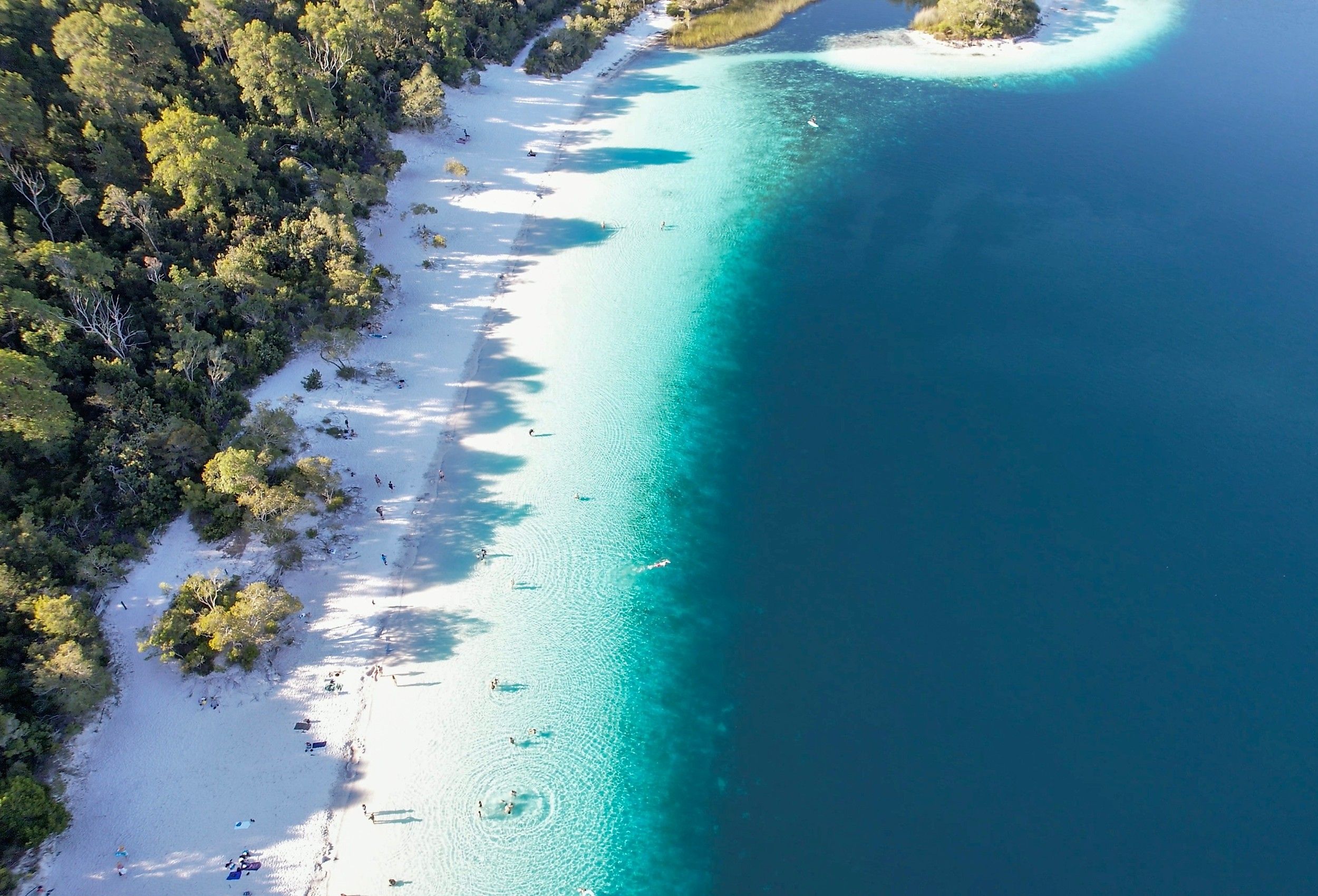
Lake McKenzie sits on K'gari in Queensland, Australia. Also known as Boorangoora, the lake is part of the island formerly known as Fraser Island. It is a perched lake, meaning it holds rainwater above the water table rather than being fed by streams or groundwater. Lake McKenzie contains almost entirely rainwater and has no regular channel connecting it to the ocean.
That unusual setup helps give the lake its white silica sand and clear blue water. Sand and organic matter form an impermeable layer beneath the lake, trapping rainwater and keeping the basin separate from many outside inputs. Lake McKenzie is also a reminder that clean-looking lakes can still be vulnerable. Because it is fed mainly by rain and has no regular outlet, sunscreen, erosion, litter, and heavy foot traffic can affect the water and shoreline more easily.
Lake Tahoe, United States

Lake Tahoe is one of North America's best-known clear alpine lakes, sitting in the Sierra Nevada on the California-Nevada border. UC Davis has monitored Tahoe's clarity for decades using Secchi disk readings. The 2025 Lake Tahoe Clarity Report listed the annual average clarity at 69.2 ft (21.1 m), making Tahoe a well-monitored clear lake rather than a current global clarity record-holder.
Lake Tahoe still has famously transparent water, but long-term monitoring shows that its clarity has declined from historic levels. Fine sediment, urban runoff, algae, wildfire smoke, and changing lake conditions all affect its water quality. Even so, the lake remains a major recreation and conservation landmark, with beaches, boating, hiking, winter sports, and shoreline towns all tied to the appeal of its blue water. Tahoe also shows why even a lake known around the world for clarity needs constant monitoring and restoration.
What The Cleanest Lakes Have In Common
These exceptionally clear or carefully protected lakes show that high water quality can come from very different conditions. Blue Lake and Lake McKenzie rely on unusual natural filtration, while Crater Lake and Lake Mashu benefit from enclosed volcanic basins with limited inflow. Great Bear Lake remains clean largely because of its remote and lightly developed watershed, while Lake Superior benefits from its enormous volume, cold water, and comparatively forested surroundings.
Lake Vättern, Königssee, and Lake Annecy show how wastewater controls, protected landscapes, and careful management can preserve or restore water quality. Lake Tahoe shows why even famously clear lakes need constant scientific monitoring. The pattern is simple: lakes stay clean when sediments, nutrients, pollutants, and human pressure are limited. Once those pressures increase, even the clearest lakes can change quickly. These places are more than scenic stretches of blue water. They are freshwater systems that need continued protection to remain clear.