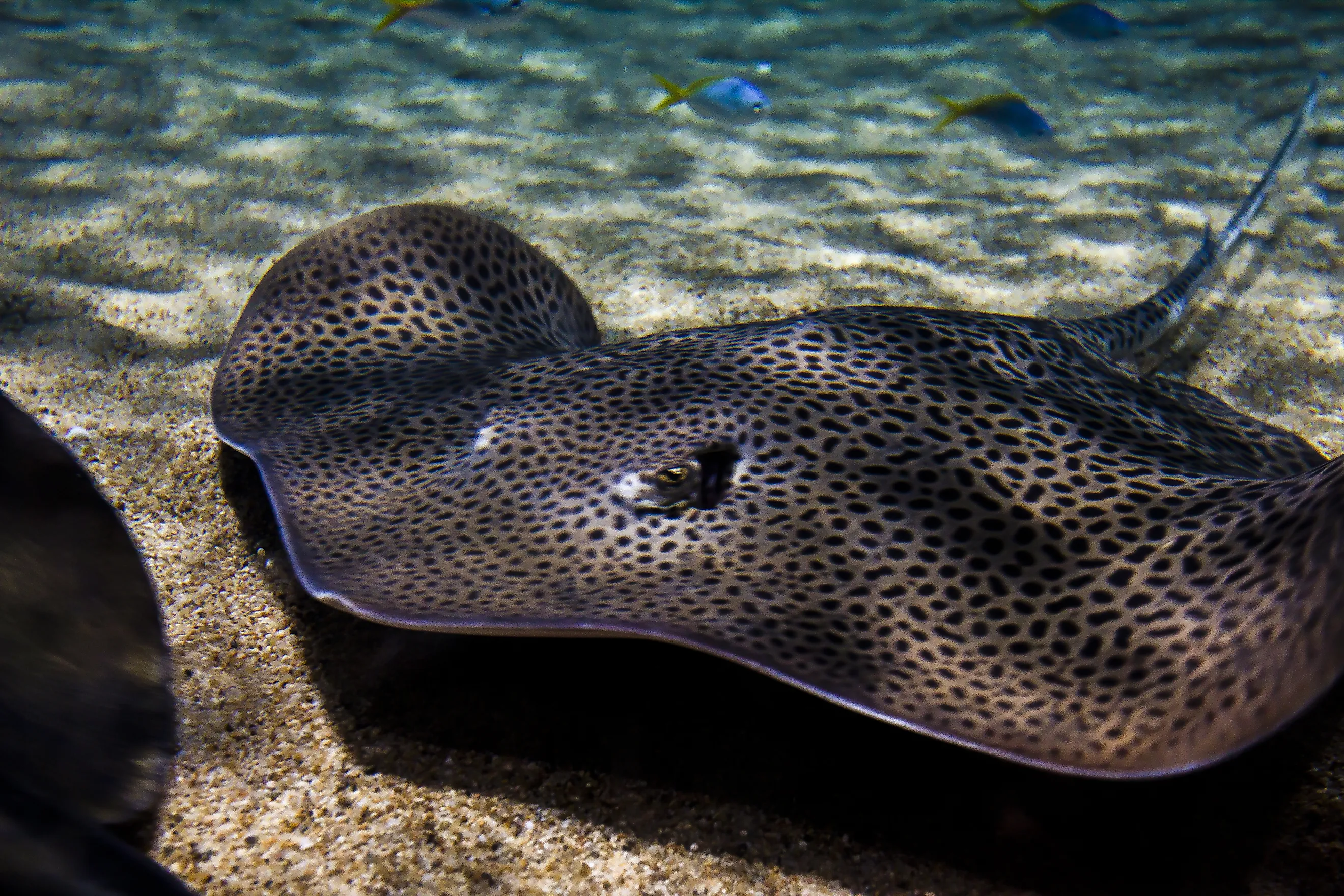
The Only Lakes With Freshwater Stingrays
Most people picture stingrays gliding over a warm coastal seabed, not resting on the muddy floor of an inland lake. Yet a handful of stingray species have left saltwater behind entirely, adapting to freshwater tropical rivers, floodplains, lagoons, and lakes far from any ocean.
There is no comprehensive worldwide inventory of every lake inhabited by freshwater stingrays, so it is not possible to establish a definitive list of every lake with these animals. However, scientific records document freshwater stingrays in several named lakes, particularly in South America. These unusual habitats are important because they provide feeding, shelter, and, in some cases, reproductive habitat for freshwater rays. South American freshwater stingrays belong to the family Potamotrygonidae, a family that is specially adapted to life in rivers and other freshwater habitats.
The lakes below are selected based on published scientific records specifically documenting freshwater stingrays in named lake environments. Because many tropical floodplain lakes periodically connect to rivers, some of these lakes are part of much larger seasonal freshwater systems.
Lake Maracaibo, Venezuela

Lake Maracaibo is the largest lake on this list and is also a very interesting place to find a freshwater stingray. Located in northwestern Venezuela, it forms the center of the Maracaibo hydrographic basin, which extends into northeastern Colombia. The lake covers about 5,130 square miles (13,280 km²) and reaches a maximum depth of roughly 115 feet (35 m).
The Maracaibo River Stingray (Potamotrygon yepezi) is a freshwater species restricted to the Maracaibo basin. The species can reach about 16 inches (40 cm) in disc width and is classified as Endangered by the IUCN. It has been documented in the shallower portions of Lake Maracaibo as well as rivers and other freshwater habitats throughout the basin. Recorded specimens from the lake have been found at depths of approximately 10 to 89 feet (3 to 27 m).
Lake Maracaibo is not completely isolated from marine influences. Rivers and rainfall supply much of its freshwater, while marine water enters the northern portion of the lake through its connection to the Gulf of Venezuela. This creates a complex environment in which freshwater and marine influences are superimposed.
Overfishing, habitat degradation, increasing water demand, salinization, pollution and climate change all threaten the Maracaibo River Stingray. The IUCN believes the species has declined significantly in population over the last three generations and that the conservation of the Maracaibo basin is critical to its continued existence.
Lake Arari, Brazil

Lake Arari is located on Marajó Island in the Brazilian state of Pará, near the mouth of the Amazon River. Rather than being a permanently isolated body of water, the lake is part of a seasonally changing floodplain environment shaped by fluctuations in rainfall and water levels.
Researchers have documented the Ocellate River Stingray (Potamotrygon motoro) in Lake Arari. The diet of freshwater stingrays from Marajó Island was studied based on the analysis of 137 specimens from three localities, including Lake Arari. The findings provide direct evidence that P. motoro uses the lake as part of its freshwater habitat.
The Ocellate River Stingray is widespread throughout the Amazon and other South American river systems. The occurrence of this species in Lake Arari indicates that freshwater stingrays are not only restricted to rivers but also to floodplain lakes, especially in areas where seasonal changes create connections between lakes, wetlands, and adjacent water bodies.
The fluctuating water level of Lake Arari is the main factor in this ecosystem. Seasonal flooding contributes to aquatic habitats, and some areas of the lake may connect with some wetlands. This dynamic allows fish and other aquatic organisms to move between habitats such as floodplain lakes, all part of the wider Amazon freshwater system.
Janauacá Lake, Brazil

Lake Janauacá is a water body in the floodplain of the Amazon, Brazil, near the city of Manaus. Instead of a permanently isolated lake, the Janauacá system fluctuates with seasonal variation in water levels, periodically connecting the lake and floodplain habitats surrounding it.
Scientific surveys have documented several freshwater stingray species in the Janauacá system, including Potamotrygon motoro, Potamotrygon scobina, Potamotrygon orbignyi, and Paratrygon aiereba. Rays live in the lake and have been collected by researchers studying the composition and effects of freshwater stingray venom from Janauacá Lake.
The seasonal linkage between the Amazon River and floodplain lakes helps to explain the presence of stingrays in both habitats. Previously isolated aquatic habitats are connected during high water, allowing fish and other aquatic animals to move among rivers, lakes, and flooded forests. As water levels decline, those connections can narrow or disappear, leaving individual lakes more isolated.
Catalão Lake, Brazil

Catalão Lake is a small floodplain lake near the confluence of the Solimões and Negro rivers in Amazonas, Brazil. Its connections to surrounding rivers change with the seasons, and during particularly dry periods, the lake can become temporarily disconnected from the main river channel. These changes in seasons create different environments for the fish and other aquatic life that live in it.
Researchers have recorded the presence of the Ocellate River Stingray (Potamotrygon motoro) in Catalão Lake. Field surveys conducted in 2014 and 2015 captured 20 stingrays in the muddy-bottom habitat within the lake, providing evidence of the species' use of this floodplain environment.
Catalão Lake is particularly notable because it has been identified as an important habitat for the reproduction of P. motoro. The Important Shark and Ray Areas program recognizes the lake as a reproductive area for the species based on field observations and documented captures. This makes Catalão more than a place where freshwater stingrays are occasionally found; it is one of the habitats where the species completes part of its life cycle.
The lake's seasonal isolation may also influence its fish community. During low water periods, connections to the Negro River may be very narrow or absent, temporarily concentrating aquatic animals in the remaining lake habitat. When water levels rise again, those connections are reinstated, and species can move between the lake and the surrounding river system.
Are Freshwater Stingrays Dangerous?

Freshwater stingrays carry venomous tail spines that they use for defense rather than hunting. Most injuries happen when someone accidentally steps on a ray resting on the bottom or tries to handle one. Documented envenomations can cause intense pain, swelling, bleeding, tissue damage, and secondary infection, though severe systemic reactions are less common.
The risk varies by species and setting. Many freshwater stingrays spend time on shallow, muddy or sandy bottoms, which makes accidental contact more likely in areas where people wade or swim.
The safest approach is to follow local guidance, watch where you step in shallow water, and avoid touching or disturbing stingrays.
Freshwater Stingrays Are Rarer Than Their Ocean-Dwelling Relatives

Finding a stingray in a lake may sound surprising, but these animals have successfully adapted to some of the world's largest and most complex freshwater systems.
One endemic freshwater stingray lives in the huge Lake Maracaibo basin, while in the Amazonian lakes of Arari, Janauacá, and Catalão, researchers find species that also occur in the surrounding rivers and floodplains. Catalão Lake is especially notable because scientists have identified it as a reproductive area for Potamotrygon motoro.
These lakes also show why it is difficult to draw a simple line between a "lake" and a "river" when discussing tropical freshwater ecosystems. Seasonal flooding can connect lakes to rivers, transform their boundaries, and allow aquatic animals to move between habitats.
Freshwater stingray habitats are an unusual reminder that some familiar aquatic animals have adapted to environments far beyond the ocean.