The Most Acidic Lakes in North America
North America contains millions of lakes, but only a few are known for dangerously low pH levels. Some turn acidic naturally through volcanic events or peat bog chemistry. Others become acidic from industrial runoff and pollution. A handful were intentionally acidified by researchers running long-term experiments. If you want to take a dip, these lakes are off the list. Here are five revealing examples.
El Chichón Crater Lake

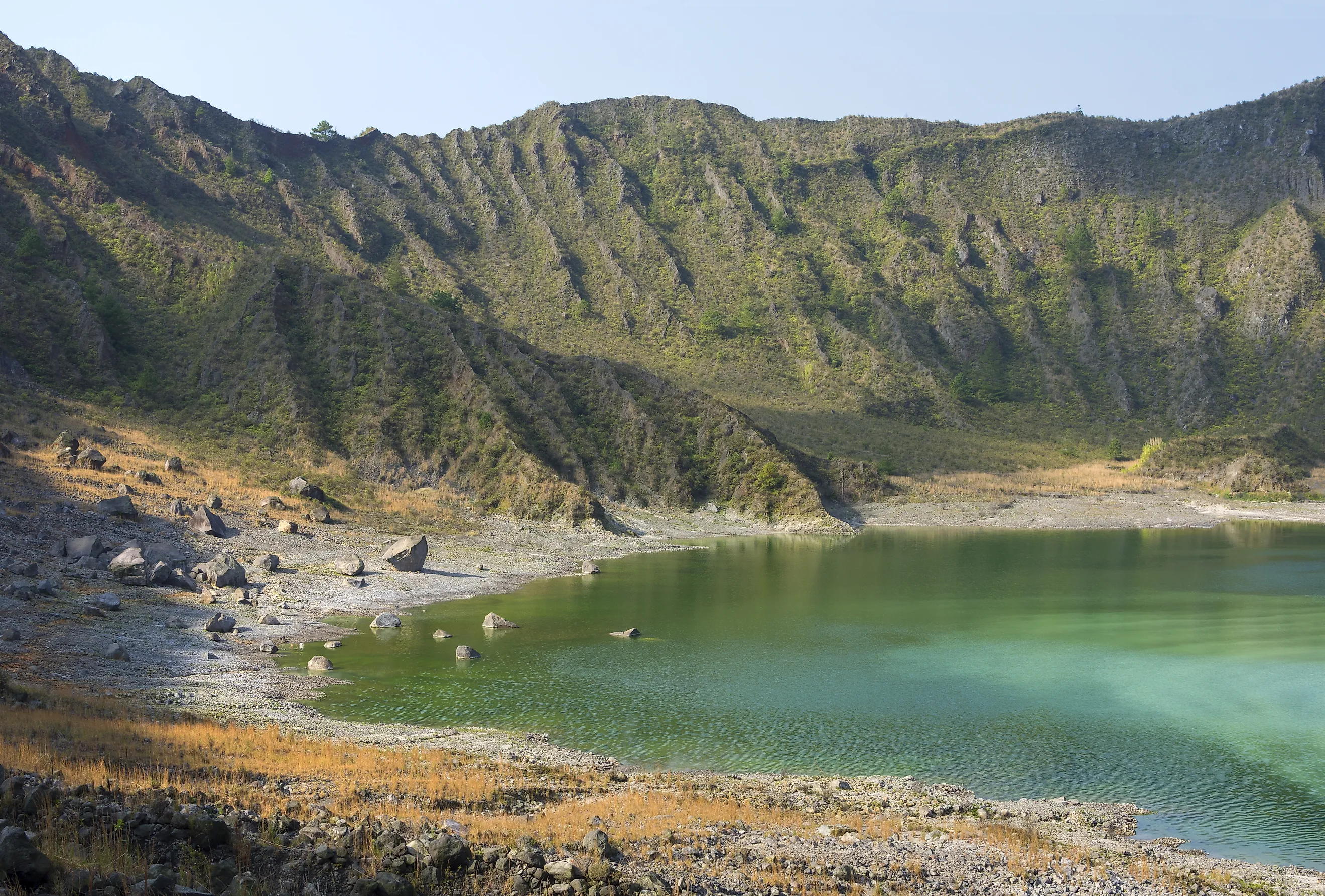
In northwestern Chiapas, Mexico, the crater of El Chichón Volcano holds one of the most chemically hostile bodies of water on the continent. The 1982 eruptions (March 28 and April 3 to 4) destroyed the summit lava dome and blew out a fresh crater roughly one kilometer wide and 300 meters (about 980 feet) deep. By late 1982, rainfall had pooled on the crater floor to form a shallow lake covering roughly 1.4 hectares.
The chemistry is the headline. Magmatic gases (carbon dioxide, sulfur dioxide, hydrogen sulfide, and hydrogen chloride) rise from fumaroles in the crater walls and dissolve into the lake, producing extreme acidity. The first detailed measurements in 1983 recorded a pH of about 0.5, with lake water temperatures of 52 to 58 degrees Celsius (about 125 to 136 Fahrenheit). Fumaroles around the crater edges have measured as high as 115 degrees Celsius. The water remains very acidic today, though pH and dilution swing widely with rainfall and the activity of a near-neutral geyser-like spring on the north shore.
The Universidad Nacional Autónoma de México has monitored the crater lake since the eruption, treating shifts in temperature and chemistry as early-warning indicators of renewed volcanic activity. The gas emissions are a recognized health hazard, and direct contact with the water can cause chemical burns to skin. Despite official warnings, the crater receives visitors.
Little Rock Lake

In August 1984, researchers from the University of Wisconsin, the Wisconsin Department of Natural Resources, and partner agencies installed a vinyl curtain across the narrow waist of an hourglass-shaped lake in Vilas County's Northern Highland American Legion State Forest. The barrier sealed one half of Little Rock Lake from the other and turned the lake into a paired natural experiment that drew national attention.
Beginning in spring 1985, research boats sprayed sulfuric acid onto the north basin to simulate the acid rain that was then falling across the eastern United States. The pH of the treated basin was lowered in two-year steps from a baseline of 6.1 to 5.6, then 5.2, and finally 4.7 by 1990. The untreated south basin served as the control. Crayfish populations crashed, lake trout reproduction failed, and small-bodied zooplankton displaced larger species on the treated side.
The acid additions stopped in 1991 and the chemistry of the treated basin recovered within a few years, but the biological recovery took far longer. The dividing curtain was finally removed in 2013, ending nearly three decades of one of the longest whole-lake acidification studies in North America.
Lake 223

In northwestern Ontario, Canada, a small boreal lake of roughly 27 hectares became the site of the first whole-lake experimental acidification anywhere in the world. Beginning in 1976, the late David Schindler and his team at the Experimental Lakes Area added sulfuric acid to Lake 223 in measured stages, progressively lowering its pH from a baseline of about 6.5 toward 5.0 over the next six years.
The findings reshaped how scientists understand acid rain. Two keystone prey species, the opossum shrimp Mysis relicta and the fathead minnow Pimephales promelas, stopped reproducing at pH values below 6, well above the pH 5 threshold then assumed safe for fish. Lake trout, dependent on those prey, began to starve and ceased reproducing even before direct acid toxicity would have killed them. By the time the lake reached pH 5.1, about half of the well-studied species had disappeared and overall biodiversity had dropped by roughly 30 percent. Transparency increased rather than collapsing into an algal bloom; the visible damage was in what was missing.
Lake 223 was distinct from the better-known phosphorus experiment at nearby Lake 226, where a divided lake split visibly into clear and bright-green halves. The acidification work demonstrated that indirect food-web effects could devastate fish populations long before water chemistry crossed previously accepted limits, and the results helped drive the regulatory response to acid rain in both Canada and the United States.
Sudbury-Area Lakes

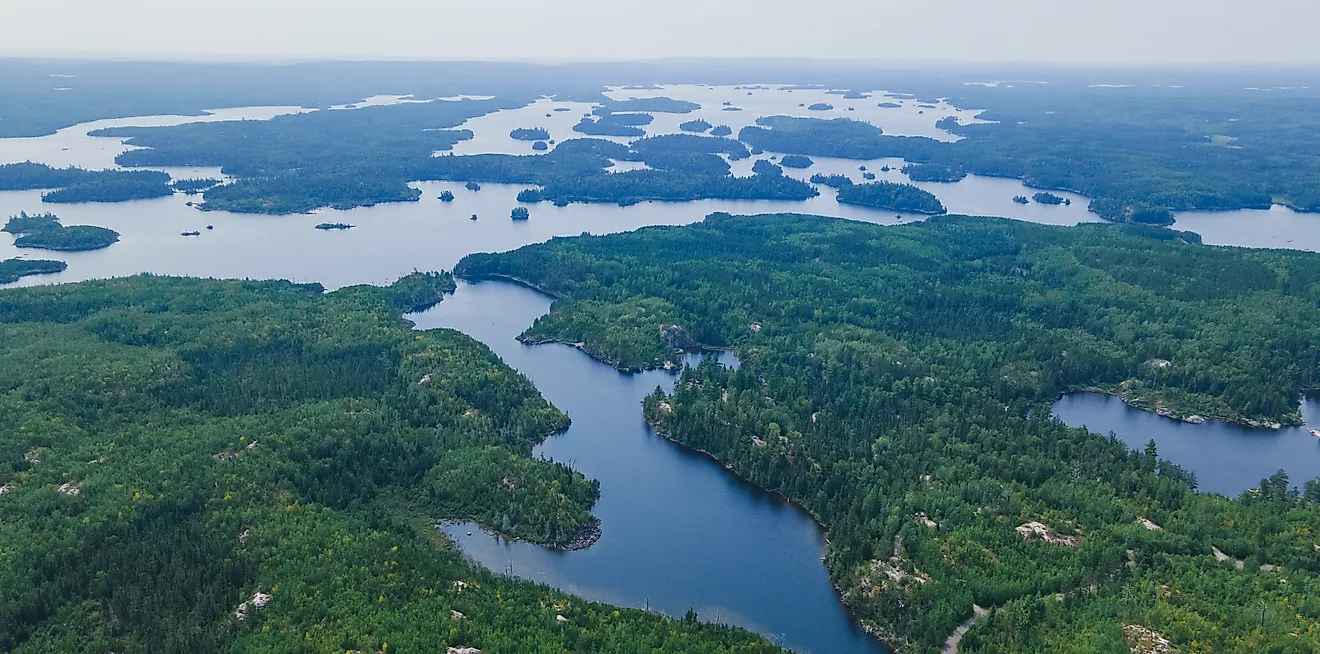
Around the city of Sudbury, Ontario, the rugged Canadian Shield holds more than 7,000 lakes that were acidified through the 20th century by sulfur dioxide emissions from local nickel and copper smelting. Open-pit ore roasting began in the 1880s, smelter emissions peaked in the 1950s and 1960s at more than 2.5 million tonnes of sulfur dioxide per year, and the landscape around the smelters became one of the largest acid-deposition zones on Earth.
Lakes nearest the smelters dropped to pH 4 or below and lost almost all aquatic life. Baby Lake, downwind of the Coniston smelter, registered a pH of about 4.0 in the early 1970s with copper and nickel concentrations above 1,000 micrograms per liter. The Coniston smelter closed in 1972, Inco completed its 381-meter Superstack the same year to disperse emissions over a wider area, and subsequent regulatory controls cut Sudbury sulfur emissions by more than 90 percent over the following decades. By 1985, Baby Lake had recovered to pH 6.8, and it now measures around 7.2. Many regional lakes still carry elevated metals in their sediments, but the Sudbury recovery is now one of the most-cited examples of aquatic-ecosystem rebound after pollution controls.
Adirondack Acidified Lakes

The Adirondack Mountains in northern New York hold more than 2,800 lakes and ponds, many of them sitting on thin, granitic soils with very little natural buffering capacity. Through the 1970s and 1980s, prevailing winds carried sulfur dioxide and nitrogen oxides from coal-fired power plants in the Ohio River Valley directly across the Adirondacks, and acid deposition turned the region into the most heavily studied acid-rain landscape in North America.
The Adirondack Lakes Survey, conducted between 1984 and 1987, found that roughly a quarter of the surveyed lakes had pH below 5.0 and were either chronically acidic or so vulnerable that single rain events could push them across the line. Brook trout populations disappeared from hundreds of lakes. Smaller invertebrates, salamanders, and acid-sensitive plankton dropped out of food webs across the region.
The Clean Air Act Amendments of 1990 capped sulfur dioxide emissions from eastern power plants through a cap-and-trade program, and acidity in Adirondack rainfall has fallen steadily since. Long-term monitoring at sites like Big Moose Lake and Constable Pond shows pH rising and acid-neutralizing capacity returning. Biological recovery has lagged the chemical recovery, but native fish populations are slowly returning to lakes that had been fishless for half a century.
The Truth About Lake Acidity
These five cases trace the full range of what makes a North American lake acidic: a volcanic crater that built its own chemistry from magmatic gas, two experimental lakes that researchers deliberately pushed across the threshold to learn what happens, and two regional landscapes acidified at scale by industrial emissions and now being studied for their recoveries. The Sudbury and Adirondack examples carry the most important lesson, that ecosystems can come back when the emissions stop, but slowly, and not always to their exact former state. None of these waters belong on a swimming list, but all of them belong on the record of how aquatic chemistry actually works.