What Is An Ocean Dead Zone?
- An ocean dead zone is an area of extremely low oxygen, where organisms cannot survive
- This hypoxia, or lack of oxygen, is often caused by algae blooms or rapid seaweed growth
- The algae blooms occur due to an increase in phosphorous and nitrogen in the sea waters, usually cause by human pollution
An ocean dead zone is an area of seawater in which dissolved oxygen has fallen below the level required to sustain most fish, shellfish, and bottom-dwelling life. The technical threshold is approximately 2 milligrams of oxygen per litre of water; below that point, mobile species either flee the area or suffocate, and immobile species die in place. Dead zones are not theoretical or rare. More than 500 distinct hypoxic zones have been identified in the global ocean according to the United Nations Development Programme, and Woods Hole Oceanographic Institution puts the total higher, possibly approaching a thousand. The total affected area exceeds 250,000 square kilometres. The number of identified dead zones has roughly doubled every decade since the 1960s, and the most consequential examples sit off densely populated and intensively farmed coastlines.
How A Dead Zone Forms
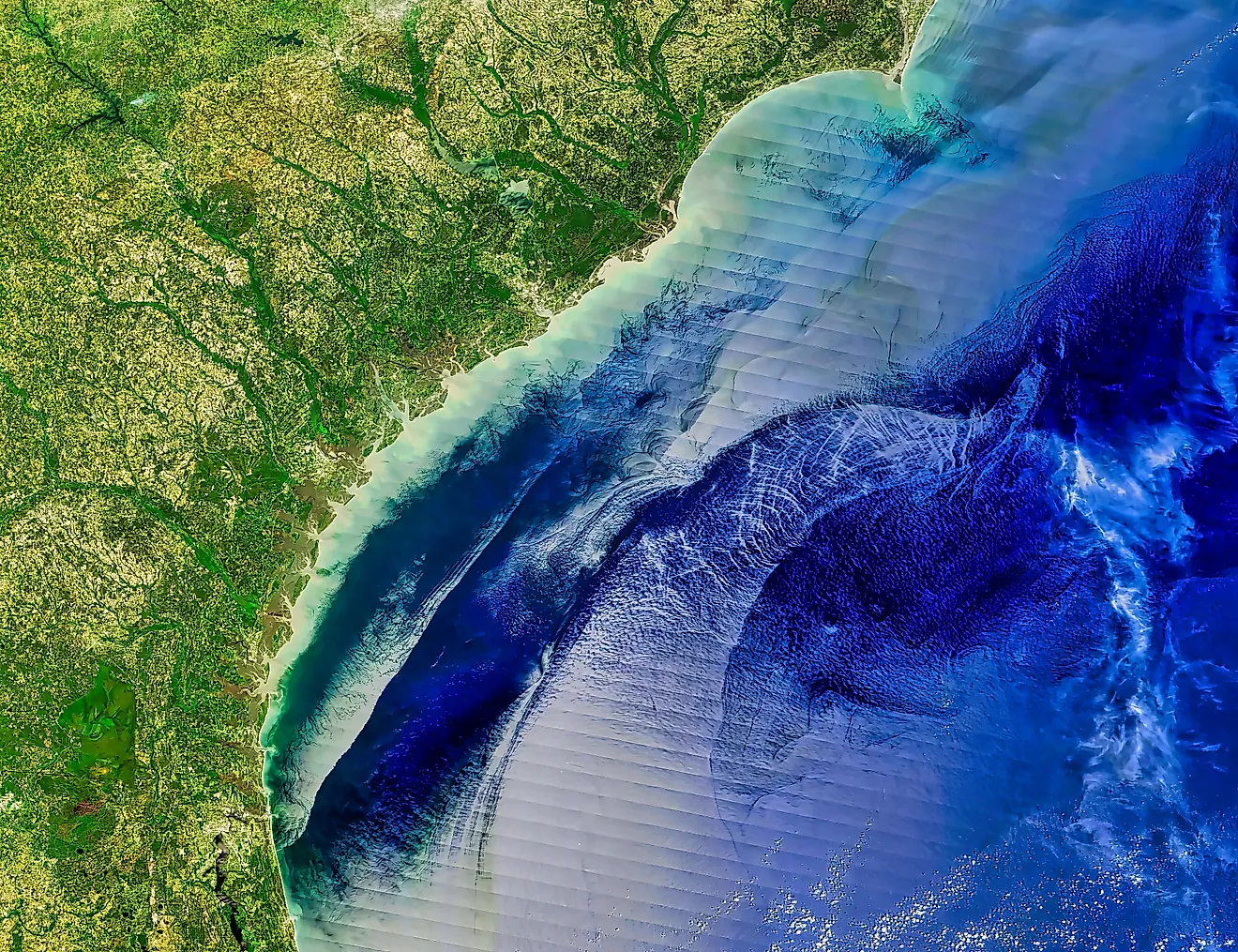
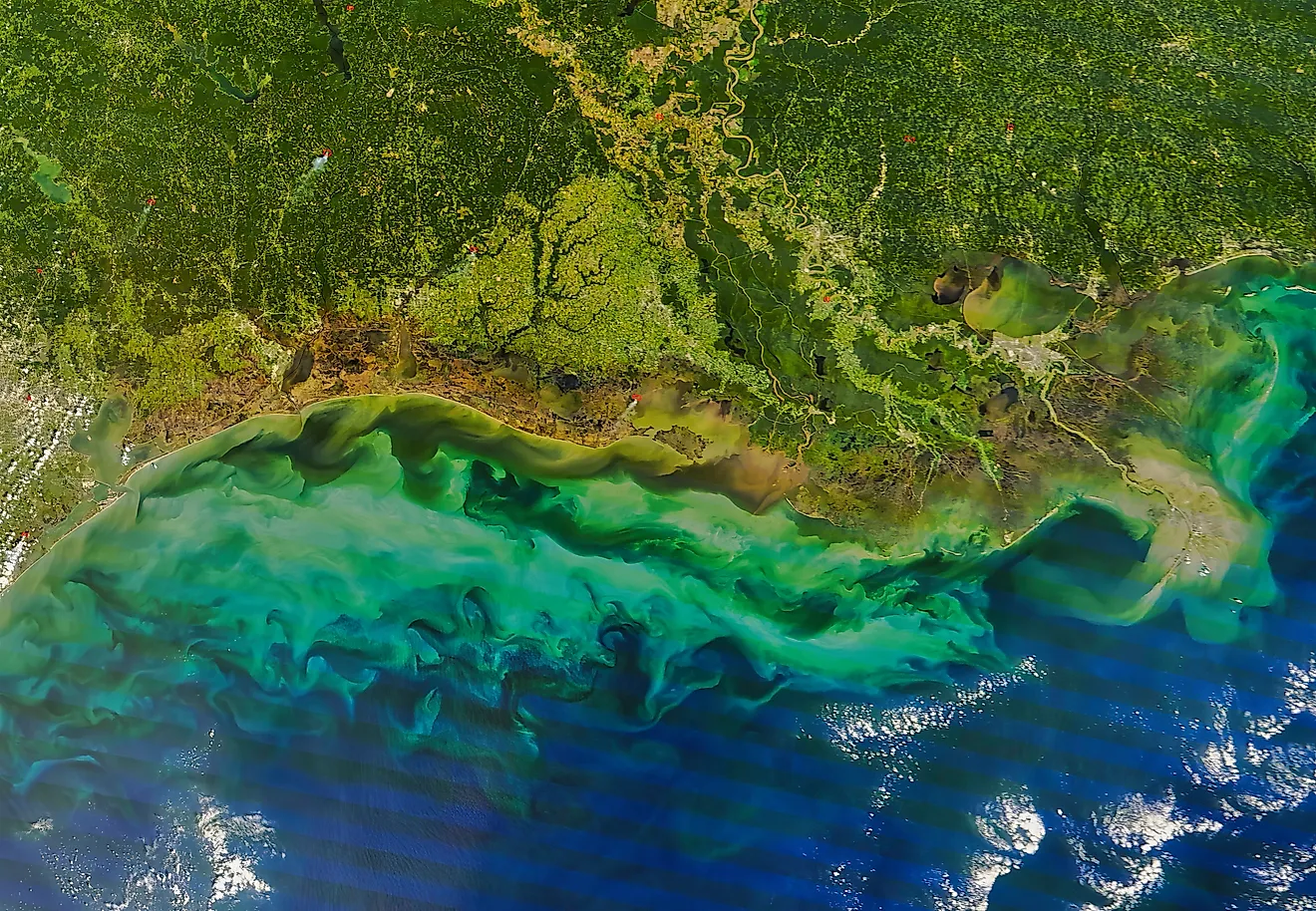
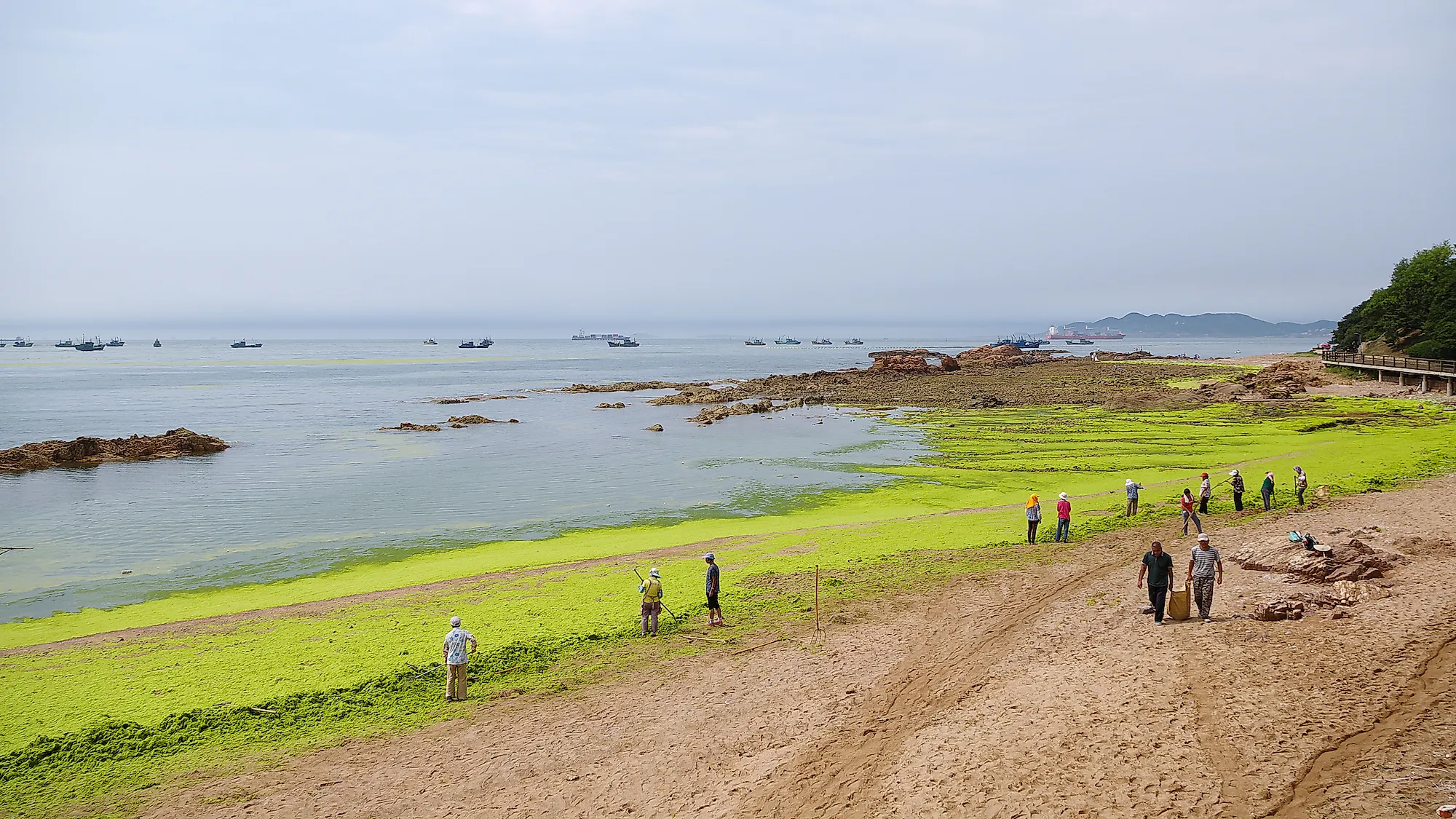
The mechanism is well understood and has a name: eutrophication. Excess nitrogen and phosphorus enter coastal waters, most often from agricultural fertiliser runoff, livestock waste, atmospheric deposition of nitrogen from combustion sources, and inadequately treated sewage. These nutrients drive rapid growth of phytoplankton, single-celled photosynthetic organisms that include true algae and the cyanobacteria sometimes called "blue-green algae" (these are bacteria, not plants, despite the name). The resulting bloom can colour the sea brown, red, or green and may cover thousands of square kilometres.

The bloom is not, in itself, the dead zone. Oxygen depletion follows the collapse of the bloom. When the bloom organisms die, they sink, and bacteria in the deeper water consume oxygen as they decompose the dead biomass. In a coastal area with seasonally stratified water (warmer, less dense water sitting above colder, denser water with little mixing), the deeper layer cannot easily replenish its oxygen from the atmosphere, and the result is a layer of essentially lifeless water near the seabed. Bottom-dwelling shellfish, crabs, and demersal fish either evacuate or die. Even after the bloom has passed, hypoxia can persist for months because the decomposition continues. This is why a "dead zone" can outlast its visible cause by an entire season.

Where Dead Zones Occur
The largest dead zones cluster in shallow, semi-enclosed seas downstream of heavily fertilised agricultural watersheds. The Baltic Sea hosts the world's largest dead zone by area: a permanent, year-round hypoxic and partially anoxic zone of approximately 70,000 square kilometres, which is larger than the entire Republic of Ireland and represents close to a sixth of the global dead-zone total in a single body of water. Seven of the ten largest individual marine dead zones identified worldwide are in the Baltic. The Baltic's slow water exchange with the North Sea through the narrow Danish Straits means that the deep water turns over very slowly, and the hypoxic layer recovers very slowly even when nutrient loading is reduced. The nine Baltic littoral countries coordinate nutrient-reduction work through the Helsinki Commission (HELCOM), the regional marine environmental protection treaty body, with mixed but partial success since 1974.

The Gulf of Mexico hosts the world's second-largest marine dead zone and the largest annual recurring one. The Gulf zone forms every summer along the Louisiana and Texas coastline, fed by nutrients from the entire Mississippi River basin, which drains approximately 41% of the continental United States and includes most of the country's intensive corn, soybean, and livestock production. The summer 2024 measurement put the zone at 6,705 square miles (approximately 17,366 square kilometres), about the size of New Jersey, well above the 5-year average target of 5,000 square kilometres set by the Mississippi River / Gulf of Mexico Hypoxia Task Force. The all-time record of 8,776 square miles was set in 2017. The Gulf zone forms annually because the Mississippi delivers fresh, nutrient-laden water that floats on top of denser saltwater, creating stratification that prevents deeper water from picking up atmospheric oxygen during the warm season.
Other significant dead zones include Chesapeake Bay (where North American dead-zone research effectively began in the 1970s), the northern Adriatic, the East China Sea around the Yangtze estuary, the coastal waters of Japan's Seto Inland Sea, parts of the Korean coast, and the Gulf of Oman. The Black Sea below approximately 150 metres has been permanently anoxic for thousands of years, the largest single anoxic body of water on Earth, although this case is naturally caused (by the basin's restricted exchange with the Mediterranean) rather than human-driven. The Black Sea's surface dead-zone problem improved dramatically after the 1991 collapse of the Soviet Union, when collective-farm fertiliser use crashed across the Danube and Dnieper watersheds.
Ecological And Economic Consequences

Dead zones reduce or eliminate the bottom-dwelling community in affected waters. Crabs, lobsters, oysters, clams, and bottom-feeding fish are the most vulnerable, because they cannot reliably outpace an expanding hypoxic layer. Mobile species such as shrimp and pelagic fish flee, but the displacement concentrates them in smaller adjacent areas where they become easier to overfish and where reproduction is impaired. Hypoxia is also known to suppress reproduction directly, reducing egg viability and larval survival in commercially important species including Atlantic cod (a key example: Baltic cod stocks have collapsed in part because of hypoxia-related recruitment failure). The cascading effects move up the food web. Seabirds, marine mammals, and human fisheries all see reduced prey availability in and around persistent dead zones.

The aggregate economic cost of marine dead zones to global fisheries, aquaculture, and coastal tourism runs into the tens of billions of dollars annually, according to the UNDP, and is growing. There is also a direct public-health dimension. Some algal blooms (notably the dinoflagellate blooms that produce paralytic, neurotoxic, and amnesic shellfish-poisoning toxins) accumulate in filter-feeding shellfish and remain dangerous to human consumers even after the bloom has dispersed. Bloom-affected shellfish harvests are closed regularly in the Gulf of Maine, the Pacific Northwest, southern Chile, and parts of Atlantic Europe each summer.
Climate Change Makes The Problem Worse
Two physical effects of ocean warming are accelerating dead-zone formation independently of nutrient pollution. First, warmer water holds less dissolved oxygen at saturation: the maximum oxygen content of seawater at 30°C is approximately 40% lower than at 0°C. Second, warming increases vertical stratification, because surface heating creates a stronger density gradient between warm surface water and cold deep water, which reduces the mixing that normally re-aerates the deeper layers. Both effects push hypoxic conditions toward earlier onset, longer duration, and greater geographic extent. Even areas where nutrient management has been improved are seeing renewed hypoxia driven by stratification rather than by new nutrient inputs. According to Woods Hole Oceanographic Institution, addressing global ocean deoxygenation will require both nutrient-runoff reduction and the broader greenhouse-gas mitigation that limits warming.
The Slow Recovery
Recovery is possible but slow. The Black Sea hypoxic layer contracted within a decade after Soviet collective-farm fertiliser use collapsed in 1991. Chesapeake Bay has seen partial recovery from coordinated state and federal nutrient-management programmes since the 1980s, although hypoxia still affects more than 40% of the estuary at peak summer. The Baltic, where flushing through the Danish Straits is too slow to clear deep-water hypoxia within decadal timescales, has so far been resistant to the HELCOM reductions. The general lesson from the recovery cases is that nutrient inputs must be reduced substantially and sustained for years before the deep water turns over enough to restore oxygen. The slower the natural water exchange, the longer the wait. The general lesson from the failure cases is that climate-driven warming and stratification can offset nutrient reductions even when they are achieved. Eliminating marine dead zones at scale will require simultaneous progress on agricultural nutrient management, wastewater treatment, atmospheric nitrogen emissions, and greenhouse-gas mitigation, all coordinated across the watersheds that drain into the affected seas. None of these is straightforward. The 500-plus dead zones in the current global inventory are, for now, an indication of how far the systems have already moved out of balance.