US Lakes Most Threatened by Invasive Mussels
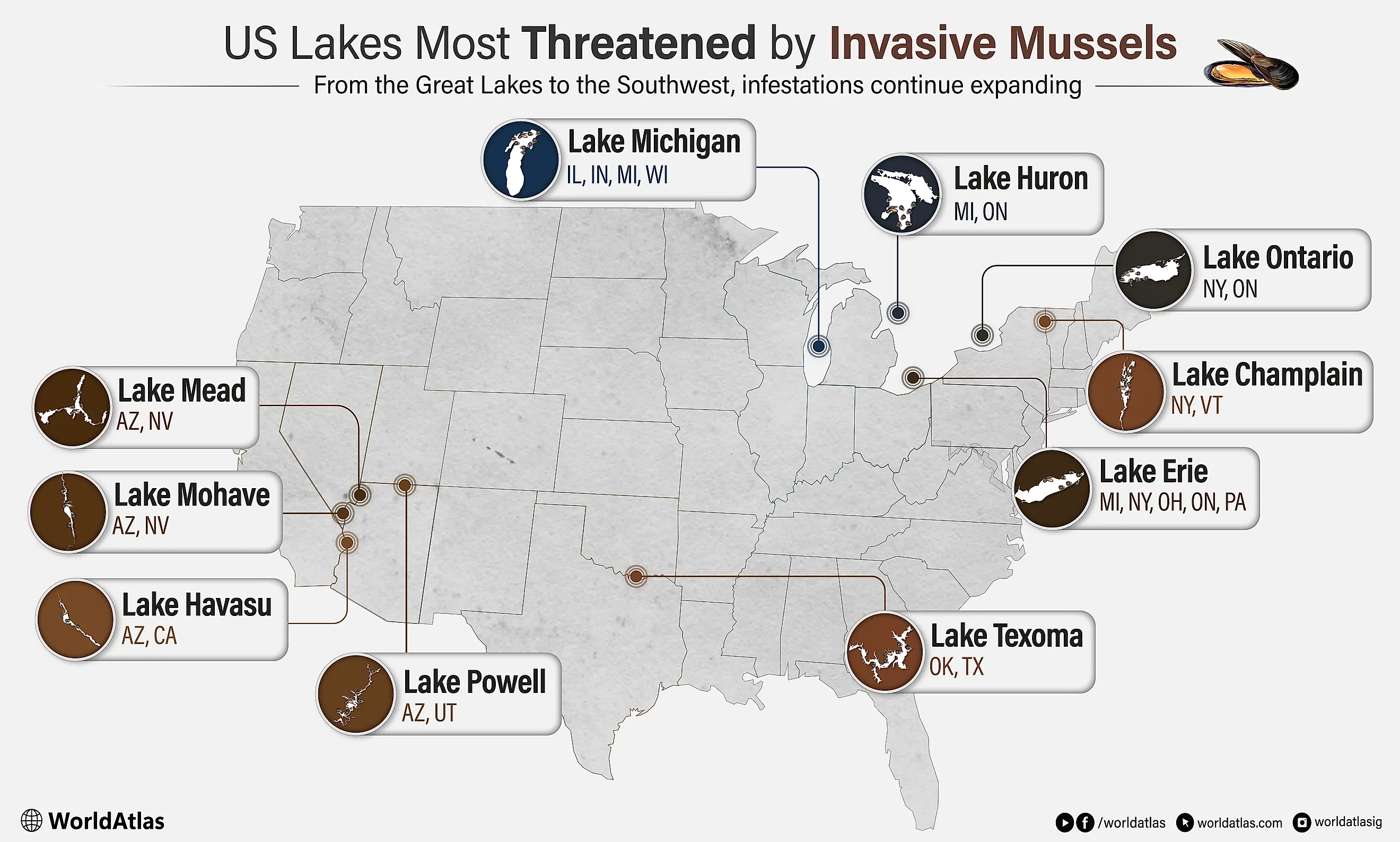
Since the 1980s zebra and quagga mussels have spread throughout lakes in the United States. The invasive species can be found throughout the Great Lakes region and as far south as Lake Texoma. Being foreign to the environments they invade, these mussels threaten native populations and disrupt natural food webs. Any visible presence of invasive mussels is considered an infestation. The ten lakes ahead are among the most threatened in the country according to sources including the Department of the Interior and the U.S. Geological Survey. Sheer density of mussels drove their placement on this list.
The Great Lakes
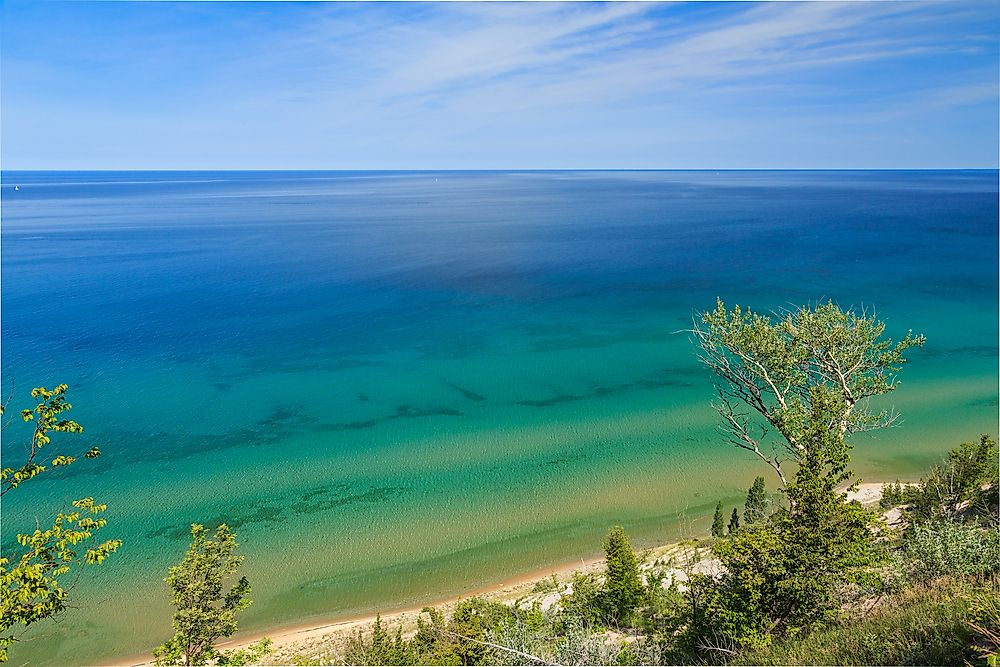
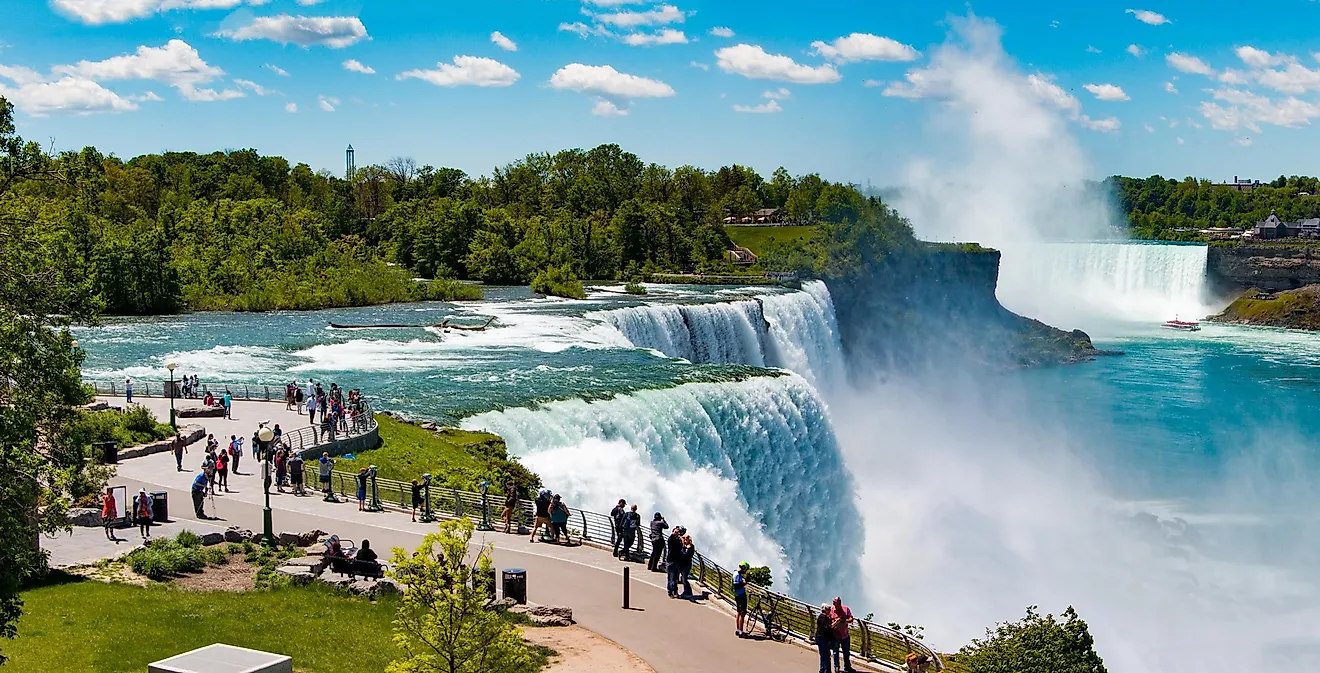
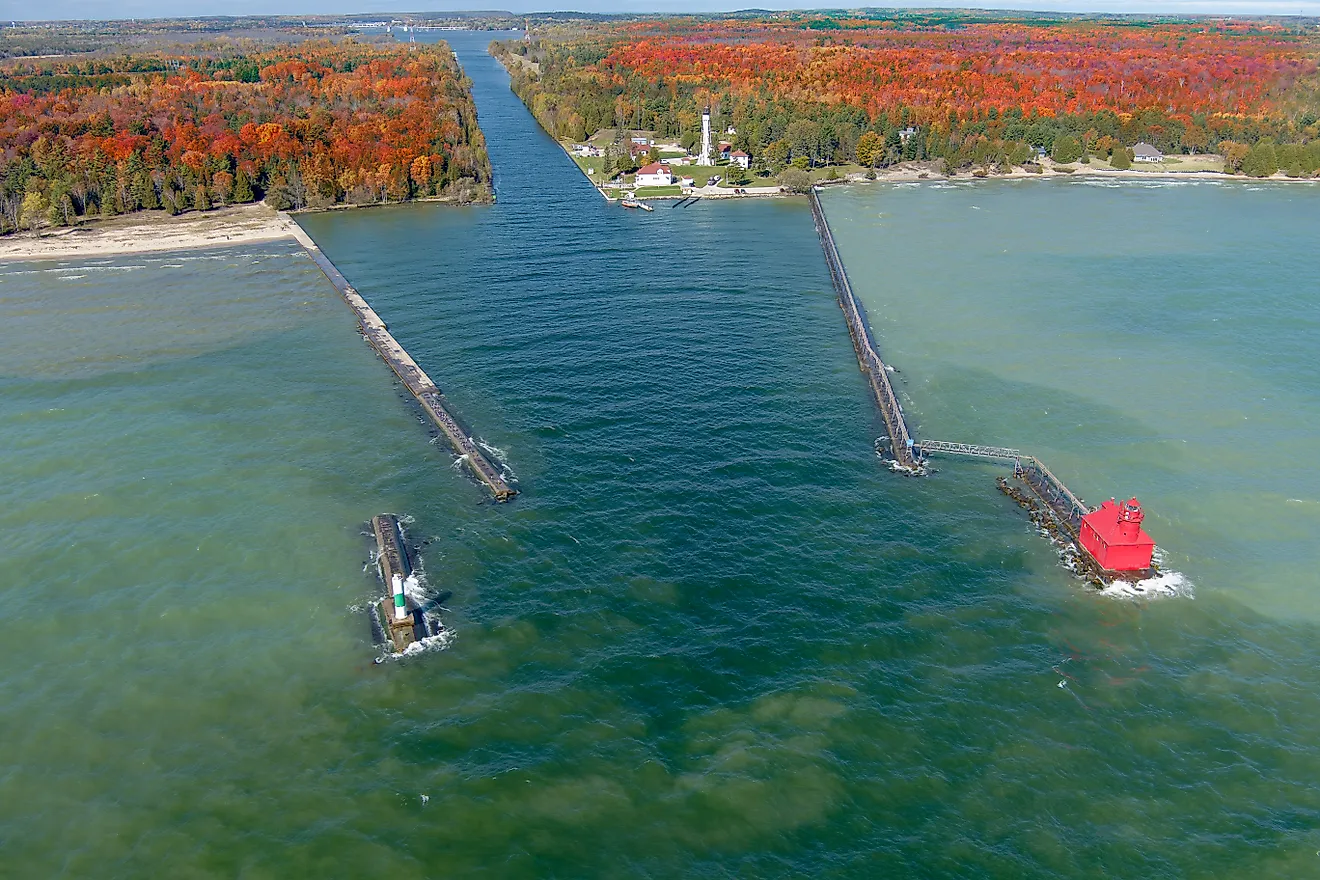
The United States Environmental Protection Agency lists almost all of the Great Lakes, except for Lake Superior, as threatened by mussels. Lake Michigan, Lake Huron, Lake Ontario, and Lake Erie are currently experiencing critical mussel growth, with populations varying across basins. In total, it is estimated that there are quadrillions of invasive mussels in the Great Lakes system. Quagga mussels have become particularly problematic in Lakes Michigan and Huron, where bottom-water filtering by the mussels has contributed to ongoing declines in offshore plankton and the fisheries that depend on it.
Scientists warn that global warming may make some northern waters more suitable for mussels, but the invasion's spread is currently driven primarily by human transport, connected waterways, and contaminated boats or equipment. Lower water temperatures around Lake Superior have made it harder for these non-native species to gain a foothold in the region. However, continued warming could alter conditions there too.
Lake Mead

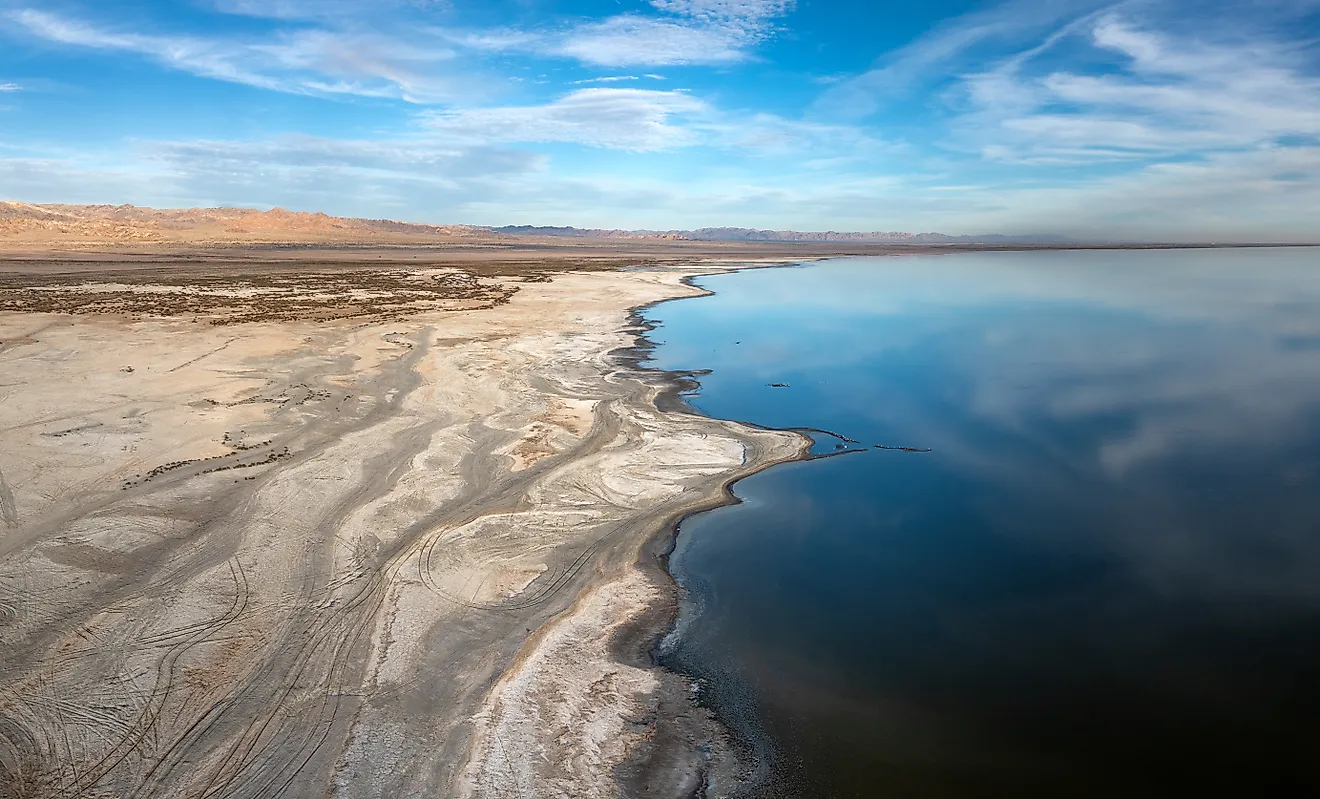
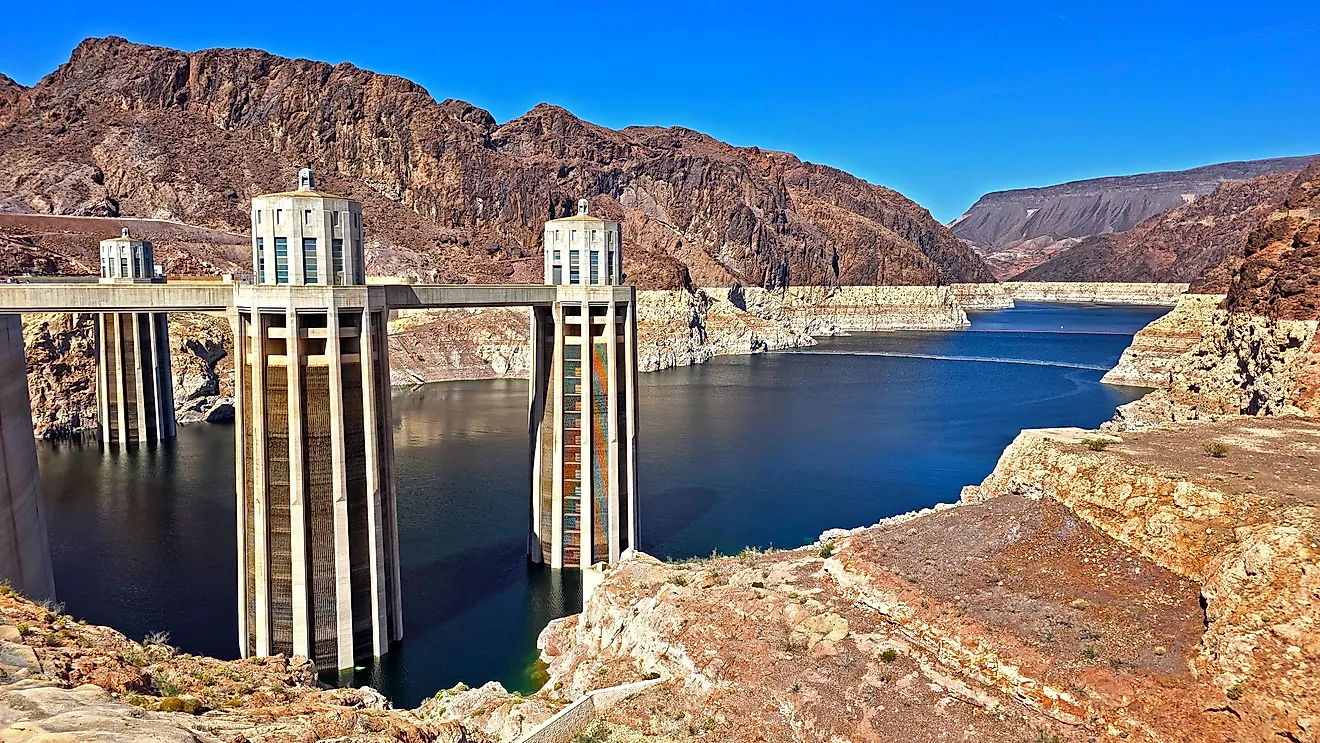
Quagga mussels have also been increasingly found in the American West and Southwest, affecting multiple lakes along the Colorado River. Lake Mead and Lake Mohave, which sit about an hour and a half apart along the river, were the first lakes along the Colorado where the species was detected in 2007. The lake is also at risk of being toxified as mussels absorb synthetic organic compounds, man-made contaminants that the mussels concentrate in their tissues. In turn, this affects the lake's food web. More of these contaminants end up retained on the lake bottom and affect species on the lakebed such as the razorback sucker. Researchers are concerned that this could impact the razorback's long-term survival. Lake Mead has had enormous quagga populations, with estimates of roughly 1.5 trillion adult mussels and 320 trillion juvenile mussels as early as 2012.
Lake Mohave

As with Lake Mead, quagga mussels were first detected in Lake Mohave in 2007, and the problem has only grown more severe since. Researchers warn boaters that it is important to keep their equipment clean. Infestations can even stick to flip-flops, so daily cleaning of boats and anything that comes into contact with the water helps prevent these creatures from spreading on equipment. The pest can travel and has spread from the Colorado River into the California Aqueduct. Lake Mohave is one of several spots in the area struggling to deal with the mussel infestation, since it is economically difficult to eliminate them once established. Individual counts do not exist for Lake Mohave, but officials treat the lake as carrying numbers similar to Lake Mead.
Lake Powell

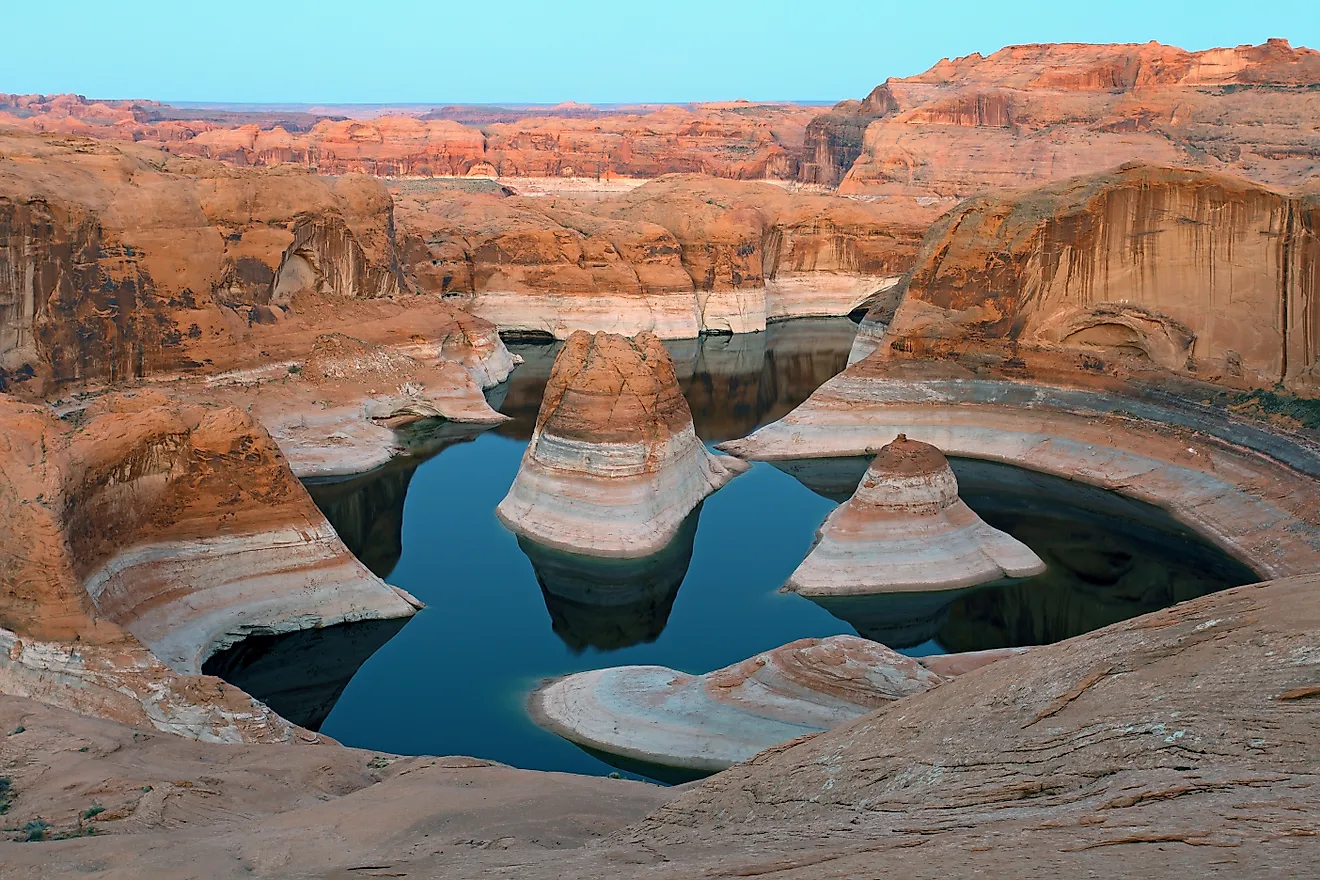
The dangers emerging around Lake Powell are significant because mussel growth threatens both the lake and the adjacent Glen Canyon Dam. The dam is a hydroelectric power plant that supports millions of residents in the region, so mussel infestation directly affects power generation and water delivery. Overcrowding of mussels can threaten water infrastructure such as pipes and parts of the dam itself by clogging them and preventing water flow and hydropower operations. Lake Powell, like distant Lake Mohave and Lake Mead, is fed by the infested waters of the Colorado River. Beaches are being overrun, and local fisheries are declining, making it all the more important for boaters to keep their vessels clean and minimise the spread. No reliable estimate exists for the total population, but mussels are present in such numbers that slip renters must sign agreements acknowledging that the lake is infested and that decontaminating their boats is their legal responsibility.
Lake Havasu

Further along the Colorado River is Lake Havasu, which has become threatened by the spread of quagga mussels. The lake is particularly popular with fishermen, but authorities warn that these same anglers can transfer the creatures on boats and gear, making the infestation harder to manage. Federal and state agencies have increased the level of inspection and decontamination at boat ramps, but they also need fishermen to play their part and keep their vessels clean. Boaters can transfer the species across state lines when they travel to fish in different parts of the country. Accurate population counts do not exist, but the Arizona Game and Fish Department warned in September 2020 that the population was accelerating due to cross-contamination from other affected waters.
Lake Champlain

Demonstrating how far-reaching this threat is, zebra mussels have become problematic in Lake Champlain, which lies between Vermont and New York. Over the course of more than 30 years, zebra mussels have created water infrastructure and ecosystem management concerns in the lake including clogged intake pipes. This is especially concerning because the lake is also used as a drinking water source. With about 145,000 people relying on the lake for drinking water, the situation poses a real health concern for many residents in the area. Zebra mussels can also alter lake food webs and disrupt the equilibrium of aquatic ecosystems. Their current density in Lake Champlain is high enough that the Vermont Department of Environmental Conservation continues to maintain a monitoring program to track new colonies.
Lake Texoma

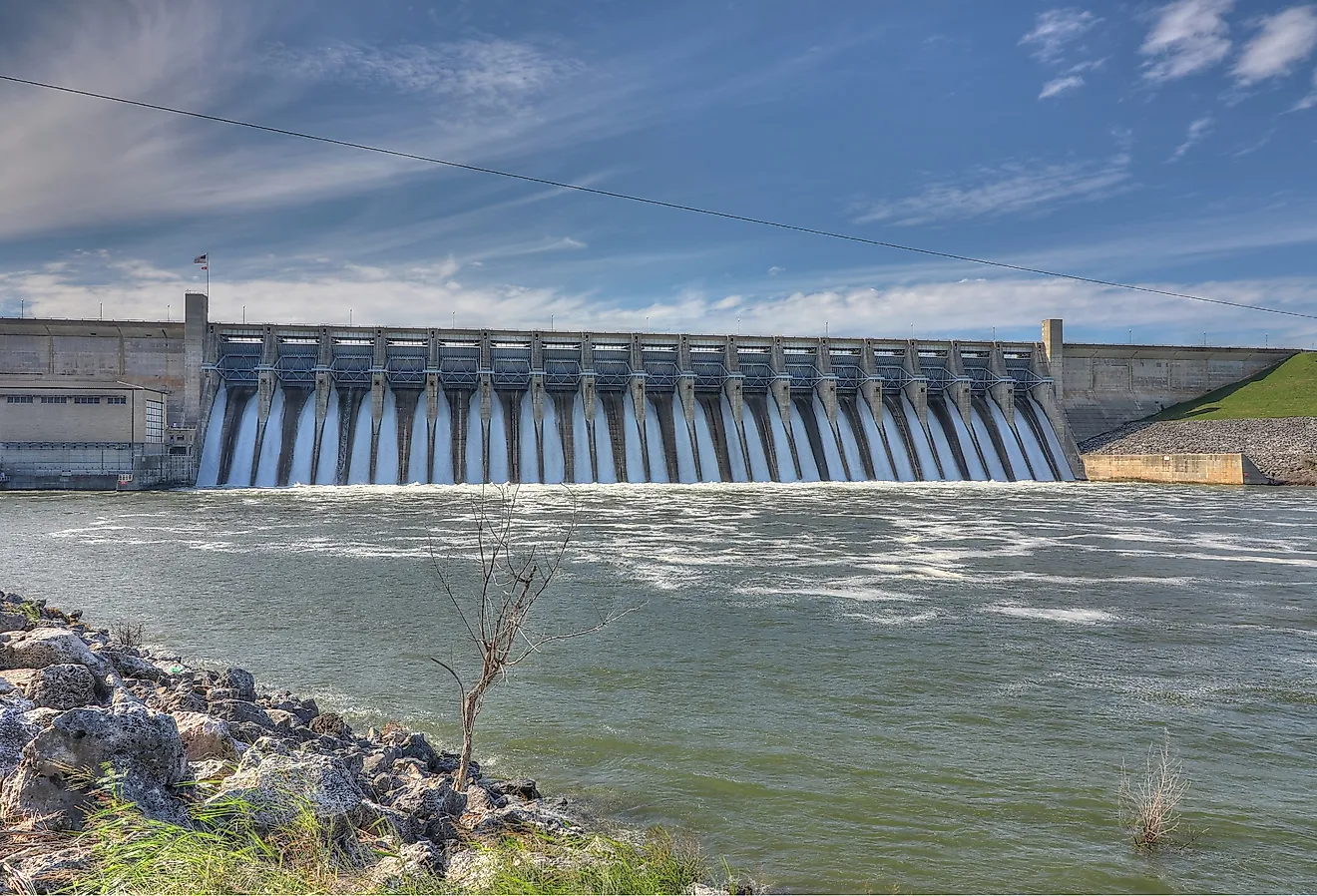
Lake Texoma has the unfortunate distinction of being the location of the first major mussel outbreak in Texas. The outbreak started in 2009 and persists to this day. Consistent with researchers' fears, it is believed that zebra mussels were introduced from other states. The transfer occurred despite the state's enforced limitation on boats entering the lake. Boaters must follow invasive-mussel prevention rules, including draining water from boats and onboard receptacles when leaving or approaching public fresh waters in Texas. Yet the pest still took hold in Lake Texoma. Worse, samples of mussel DNA have now been found in surrounding reservoirs, raising the fear that the species is spreading further. The number of invasive mussels is high enough that the Texas Parks and Wildlife Department is asking all lake users to help stop the spread.
Emerging Threats
From Lake Champlain in the northeast to Lake Havasu in the west, mussels have spread across multiple lakes despite protective measures. The invasive species directly threatens public health by concentrating contaminants and affecting drinking water, and also harms livelihoods. Whether by affecting the fisheries of the Great Lakes or threatening power in the region around Lake Powell, mussels are an increasing problem nationwide.