The Lakes Where Yellow Perch Grow Largest
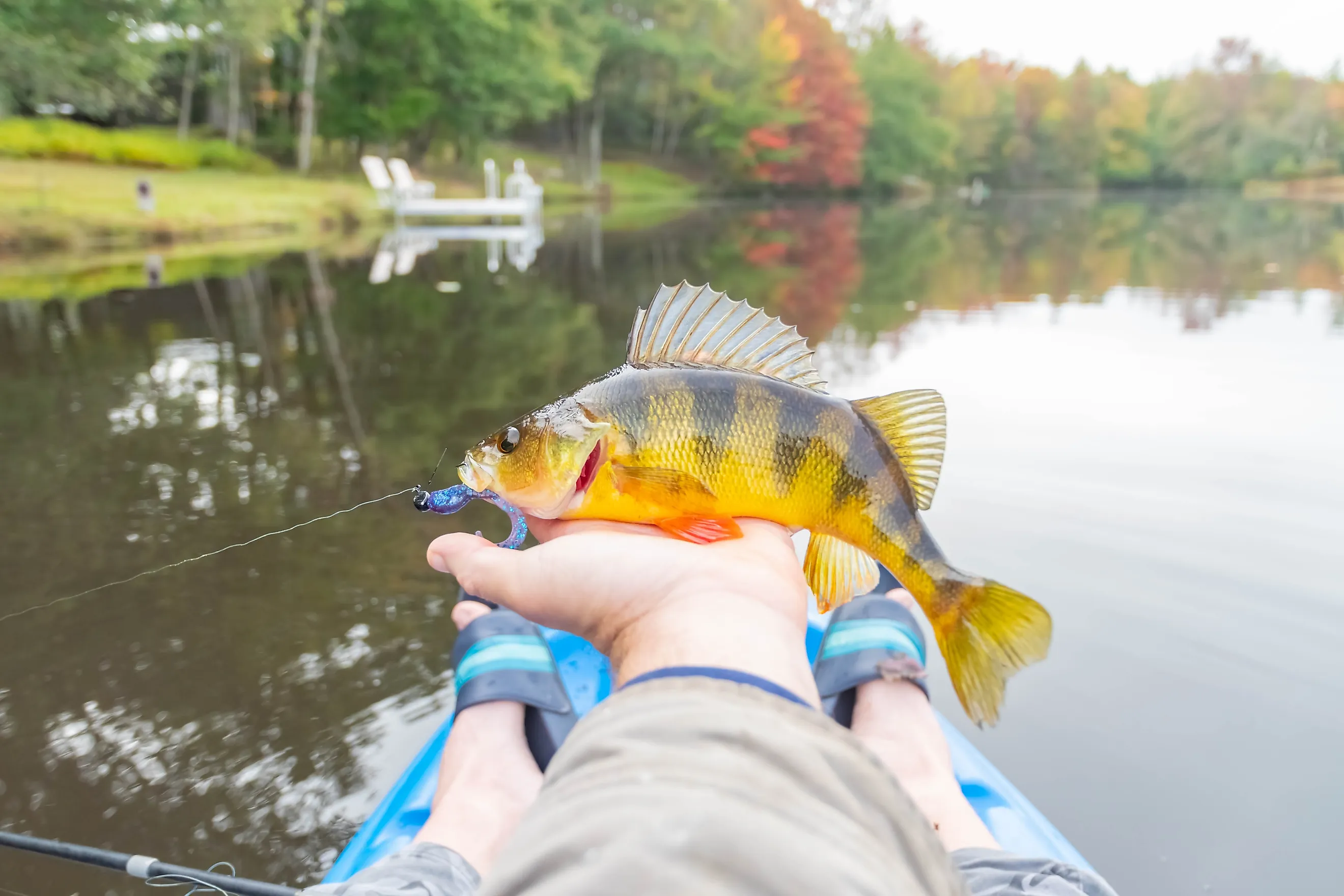
Yellow perch are spread across many parts of North America, one of the most widely distributed freshwater fish on the continent. The typical adult in this species is commonly measured at around 7 to 10 inches with a weight of 4 to 10 ounces, but some lakes are producing fish far larger than the average recorded size.
The lakes below have produced documented, record-winning "jumbo" perch, organized by weight starting from the biggest recorded to date. The characteristics of each body of water vary considerably. What they do share is a combination of habitat, food availability, population density, and other contributing factors that foster an environment where perch can truly thrive.
Lake Independence, Michigan

This massive yellow perch (also often referred to as "jumbo" perch) weighed a staggering 3.75 pounds and was approximately 21 inches long. It was said to be caught in 1947 by angler Eugene Jezinski, but local folklore prompted investigations that led to the revelation that the true catcher was George E. Slutter, a janitor and school bus driver in the area.
The lake is located in Michigan's Upper Peninsula, surrounded by the forests and rocky terrain typically associated with this region. Its relatively shallow, cold, tannin-rich waters are abundant with aquatic vegetation and a mixture of natural basins, which provide a shielded environment that supports a slew of cold-tolerant forage species. With 1,800 acres, the record is particularly striking compared to the other bodies of water here, given its comparative scale.
State creel surveys along with the Michigan Department of Natural Resources report that this lake no longer regularly yields fish that match the legendary 20th century benchmark, but still reliably supports the typical pan-sized yellow perch, along with pike, walleye, and smallmouth bass fisheries.
Almost 80 years later, Lake Independence still holds the distinction of the largest yellow perch recorded in any lake in state history.
Lake Erie, New York and Pennsylvania

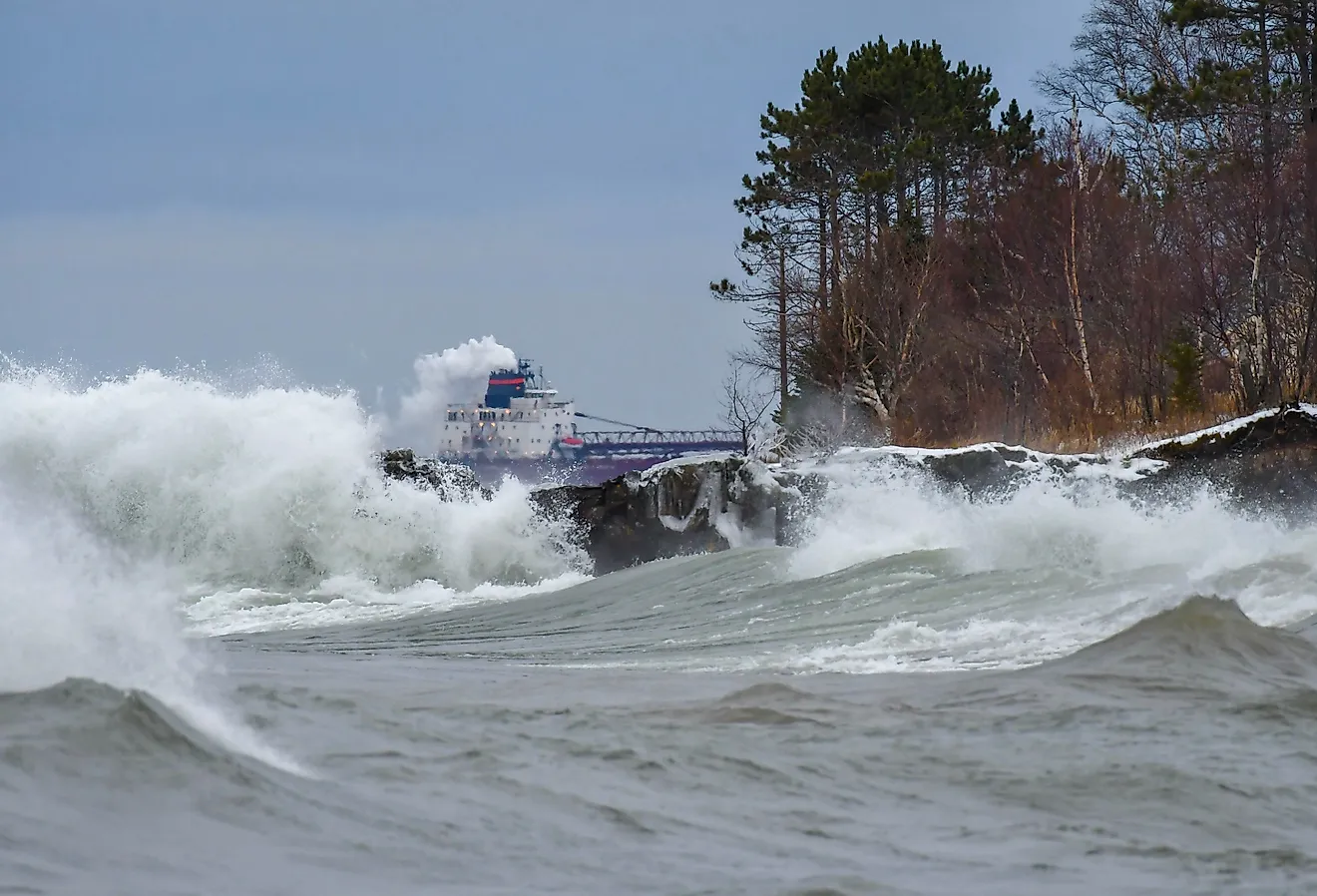
Covering about 9,900 square miles, Lake Erie is one of the largest freshwater lakes in the world and thus, unsurprisingly, consistently produces "jumbo" perch. Another possible contributing factor is its shallow depths, which yellow perch are known to travel to during spawn season to lay eggs and during low-light periods to feed. The sheer productivity of these waters has made Lake Erie an important yellow-perch fishery for generations.
Three state records have come from this lake. In 1982 a 3.5 pounder was caught by George Boice in Erie County and remains the New York State record. In 2021, a 3 pound yellow perch became Pennsylvania's state record, a mark matched by a second Presque Isle fish in 2024. Ohio's own record of 2.86 pounds also came out of Lake Erie, in 2016.
Yellow perch are native to Lake Erie and have been a part of the ecosystem for generations. Some biologists even theorize that the lake's unusual propensity for producing abnormally large yellow perch may have more to do with evolutionary shifts in the species taking place, and that the lake's massive population of yellow perch simply allows researchers to observe a species-wide change in real time.
Lake Erie is unusual in that it reliably combines high average-sized fish with actual multi-pound trophy contenders. According to state wildlife agencies such as NYSDEC and the Ohio DNR, current averages in prime basins frequently reach an impressive 10 to 12 inches, with some even hitting the 13 to 15 inch "football" class of perch. Its biological mechanism and the shallow, sunlit Western Basin, which regularly produces massive blooms of plankton during the spring, both contribute to the high-nutrient system that provides the high-protein caloric intake various fish species need for rapid growth.
Lake Plantagenet, Minnesota

This large inland body of water in north-central Minnesota produced a 3.25 pound jumbo perch in 1945. Although the state's current database has no listing mentioning the fisherman's name, historical accounts have identified the catcher as Carl Melin, a Minnesota fisheries biologist who caught it by net rather than the typical hook-and-reel fashion.
The record itself differs from the others here, since the Minnesota Department of Natural Resources (DNR) technically classifies it as a non-certified record because it predates the official certification standards that are now common practice across the country. The lake itself is said to provide a habitat with a diverse ecosystem and depths that provide cool-water protection for its inhabitants during the hot summer months.
Minnesota DNR classifies Lake Plantagenet as a stable, multi-species fishery with healthy populations of mainly walleye, muskie, and of course yellow perch. Situated in Minnesota's lake country, it features clear glacial water and extensive sub-lacustrine weed lines, which provide an oxygen-rich environment suitable for steady, year-round growth.
Unfortunately the numbers and sizes of the yellow perch found in this lake are said to be declining, which is especially pertinent since the Minnesota DNR labeled them a keystone species in the state both for game and for the lake's own food chain.
Lake Winnebago, Wisconsin

Although primarily known for its large sturgeon, the record-setting yellow perch found here in 1954 weighed 3.25 pounds.
Lake Winnebago is Wisconsin's largest inland lake, but it is also the main center of the larger Winnebago Pool (also known as the Winnebago System), an interconnected network of different bodies of water that all support major freshwater fisheries.
The sheer size of this lake allows it a wide variety of aquatic habitats, and these factors along with the aforementioned fishery system have seemingly allowed the lake to produce increasingly exceptional fish, including but not limited to just the "jumbo" perch. The lake is also massive and highly fertile, heavily enriched by the Wolf and Fox river systems.
Wisconsin DNR data tracks Winnebago as a high-density producer with standard catches averaging 7 to 9 inches. The record is now over 70 years old, and anglers visiting the lake have continued to catch impressive yellow perch, though none have managed to overtake the original record-setting numbers.
Lake Michigan, Indiana

One of the more recent trophy yellow perch was recorded in Indiana, a 3 pound 2 ounce fish caught by angler Blas Lara in April of 2024 near Hammond, breaking a 43 year old state record.
Lake Michigan is vast, covering more than 22,000 square miles with conditions that vary greatly from one side to another, the Indiana portion being just a small part of the overall fishery. Green Bay in particular is the premier destination for catching heavy jumbo perch. Its shallow, weed-filled water contrasts with the vast, cold depths around it.
Over time, invasive species have drastically cleared the water column, altering the food system so yellow perch today tend toward deep-water benthic feeding on gobies and amphipods, which could possibly fuel their exceptional body weights.
For these reasons among others, Indiana fishery officials have produced data citing increasingly large perch, including fish in the 14 to 17 inch range. Although its record-breaking "jumbo" perch is not the largest here, this number is a far cry from the 7 to 10 inch range typical of the species.
What The Records Do Not Explain

All of the lakes listed have various environments, climates, sizes, populations, and ecosystems, which make it exceedingly difficult to ascertain a singular quality that could be contributing to the variability of the yellow perch that manage to live in each location. Although certain contributing factors like food accessibility and population density likely have a greater effect than other circumstances, the correlations that can be evaluated are not necessarily causal.
These records should not be interpreted as saying that every yellow perch in these lakes is exceptionally sized. What they do show is that the biggest yellow perch does not have to come from a particular kind of environment, but can instead emerge anywhere that the species manages not only to survive, but to thrive.