How Lake Winnipeg Compares To The Great Lakes
Lake Winnipeg is 29 percent larger than Lake Ontario and holds about a sixth as much water, which tells you most of what you need to know. It covers 24,514 square kilometers, slotting neatly between Erie and Ontario on any map, and then averages twelve meters deep. That is a four-story building, in a lake visible from orbit. Its one genuinely enormous statistic has nothing to do with the lake at all, and everything to do with how much of Canada is quietly draining into it. On that one measure it beats all five Great Lakes at once.
On Area It Finishes Sixth Of Six

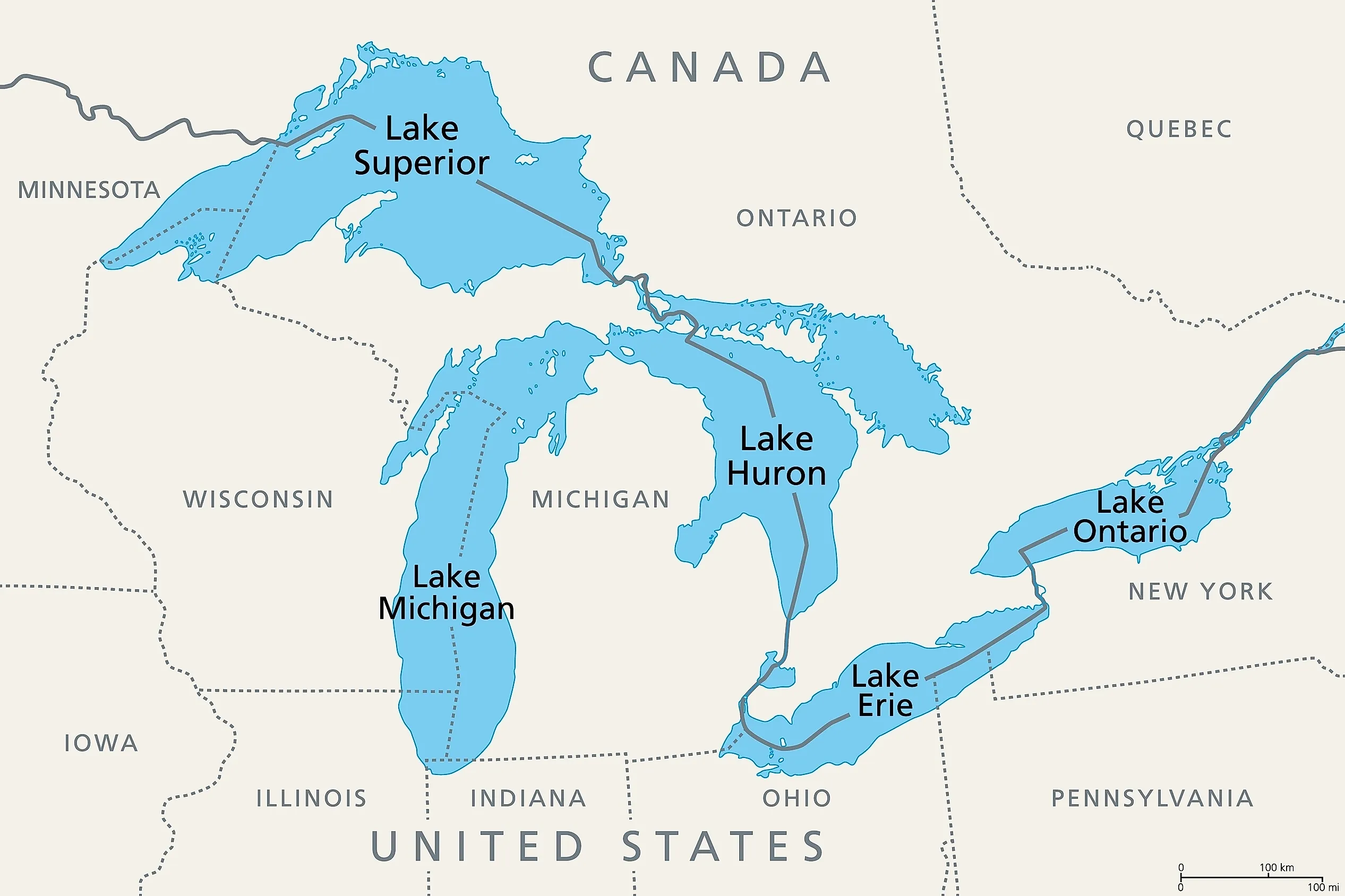
Dropped into the Great Lakes, Winnipeg would not finish last, which is more than Ladoga or the Great Salt Lake manage. At 24,514 square kilometers it beats Lake Ontario's 18,960 by a comfortable 5,554, and falls just short of Lake Erie's 25,700 by 1,186. That is a gap of under five percent, close enough that different sources occasionally flip them.
Against the big three it is not competitive. Superior is 3.3 times larger, with Huron and Michigan both 2.4. Winnipeg would finish fifth of six, which is a creditable result for a lake most people could not point to with a gun to their head.
On Water It Finishes Last, Badly

Here is where the shallowness turns up and repossesses everything the area won. Lake Winnipeg holds 284 cubic kilometers. Lake Erie, which is only marginally larger on the surface, holds 484, or 1.7 times as much. Lake Ontario, which Winnipeg comfortably beats on area, holds 1,640, or 5.8 times as much.
Superior holds 12,100 cubic kilometers, or 42.6 Lake Winnipegs. You could pour the entire lake into Superior and the main difficulty would be proving you had done it.
Superior's Average Beats Winnipeg's Deepest

The depth comparison produces the kind of number that makes the point without any help at all. Lake Winnipeg's maximum depth is 36 meters, found off the northeast shore of Black Island. Lake Superior's average depth is 147 meters. Superior is four times deeper on an ordinary day than Winnipeg is at its single deepest point.
Winnipeg's own mean is twelve meters, about nine in the shallow south basin and 13.3 in the north. Erie, the shallowest Great Lake and the usual punchline of these comparisons, averages nineteen. Winnipeg has taken Erie's job.
It Drains More Land Than All Five Combined

And now the statistic that justifies the entire article, because on this one measure Winnipeg beats all five Great Lakes simultaneously and nobody has ever congratulated it.
Lake Winnipeg's watershed covers about 982,900 square kilometers, taking water from four Canadian provinces and four American states and supporting more than seven million people. The entire Great Lakes basin, all five lakes together, covers roughly 766,000.
So a lake smaller than Erie collects runoff from 28 percent more land than Superior, Michigan, Huron, Erie and Ontario manage between the five of them. It is the largest watershed of any lake in Canada by a wide margin, and it is doing all of it in twelve meters of water.
That Combination Is The Problem
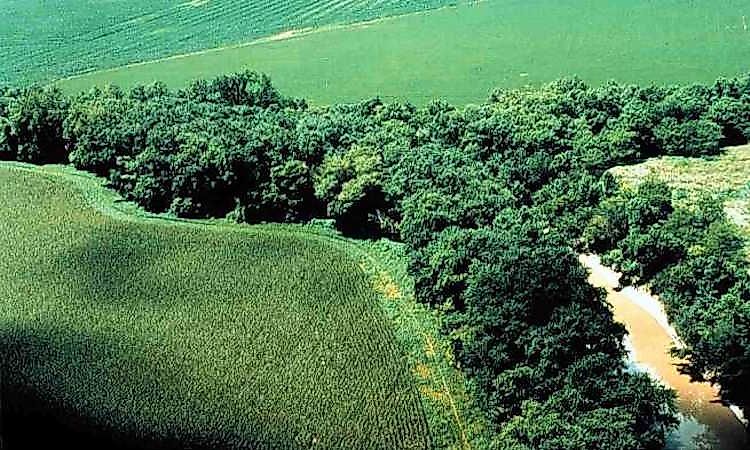
An enormous catchment feeding a very shallow lake is not a neutral arrangement, and Winnipeg has the water quality to prove it.
Nutrients washing off nearly a million square kilometers of farmland and settlement arrive in a basin with very little water to dilute them. The result is severe algal blooms, and in 2013 the Global Nature Fund named Lake Winnipeg the most threatened lake in the world.
Erie has precisely the same problem for precisely the same reason and gets vastly more attention, largely because its nutrients have the good sense to arrive in Ohio.
It Is A Leftover From Something Enormous

Winnipeg looks oversized for its depth because it is sitting in a basin built for something much bigger. It is a remnant of Glacial Lake Agassiz, the meltwater sea that covered a vast stretch of central North America at the end of the last ice age and at its peak held more water than all the Great Lakes combined. Lake Manitoba, Lake Winnipegosis and Cedar Lake are remnants of the same thing.
Agassiz drained away and left Winnipeg spread thinly across the floor of the room. The lake is not shallow because it failed to fill up. It inherited a very large property and is living in the hallway.
The Water Goes North

One structural difference is worth noting, because it determines where all that water ends up. The Great Lakes drain east through the St Lawrence to the Atlantic. Lake Winnipeg drains north into the Nelson River at an average 2,066 cubic meters per second and from there into Hudson Bay.
Which means the Red River, flowing north out of North Dakota and Minnesota, finishes in the Arctic watershed instead of the Gulf of Mexico. A considerable quantity of American water leaves the continent via Manitoba every year and nobody has ever raised it at a summit.
Manitoba Has Its Own Great Lakes And Told Nobody

The nickname is not a line somebody invented for a travel article. It is a peer-reviewed journal title.
The Journal of Great Lakes Research published a special issue titled Lake Winnipeg: The Forgotten Great Lake, which is a remarkable thing for a body of water to need. Researchers also refer to Winnipeg, Manitoba and Winnipegosis collectively as the Manitoba Great Lakes, so the province has quietly assembled a rival set and declined to publicise it.
The case is strong. It is among the ten largest freshwater lakes on Earth, it supports a major commercial fishery, and almost nobody outside the prairies could find it on a map without the label already printed on it.
Nobody Can Agree How Big It Is

Set everything side by side and Winnipeg wins one category outright, loses two, and cannot get a straight answer about its own dimensions.
By surface area it would be fifth of six, ahead of Ontario. By volume it would be last by a comfortable distance. By watershed it beats the entire Great Lakes system by 28 percent. Worldwide it is Canada's sixth largest freshwater lake and either tenth or eleventh on Earth, because sources put its area anywhere between 23,750 and 24,514 square kilometers and the maximum depth is logged as either 36 meters or about 60, which are not close.
A lake this large should not have a 24-metre margin of error on how deep it is, and the fact that nobody has settled it is the most Forgotten Great Lake detail available.
The Scoreboard

Lake Winnipeg is bigger than Lake Ontario and holds a sixth of its water, is marginally smaller than Lake Erie and holds 60 percent of its water, and would be beaten on volume by every one of the Great Lakes if it were dropped among them.
Then it drains almost a million square kilometers, more than all five Great Lakes put together, through a basin averaging twelve meters deep. It is the widest, thinnest, hardest-working lake on the continent, and its central problem is that a million square kilometers of runoff keeps turning up in something the depth of a swimming pool.