How Much America Spends Fighting Invasive Species In Its Lakes Each Year
Here is a question that sounds simple and absolutely is not: how much does America spend every year fighting invasive species in its lakes? Ask around and you will get numbers ranging from tens of millions to over a hundred billion dollars, which is a pretty wide margin of error. The truth is that the money is scattered across so many federal agencies, state programs, tribal budgets, city water departments, and power companies that nobody can hand you one clean total. But we can absolutely follow the money, and once you do, a clear picture emerges: America spends a genuine fortune battling mussels, lamprey, carp, and weeds in its waters, and it is still one of the best deals going. Let's break it down.
The Big, Fuzzy Number

Let's start at the top. The most-quoted figure is that invasive species of all kinds cost the United States around $120 billion a year, but that lumps together everything from farm weeds to forest beetles, and it blends actual damages with the money spent fighting back. Narrow it to water, and one older study pegged the cost of aquatic invaders in the Great Lakes region alone at roughly $5.7 billion a year, a number experts say has only grown since. The important thing to understand is that these totals mix two different things: the damage the invaders do, and the cash we spend trying to stop them. The spending side, the actual "fighting" budget, is smaller, but it still runs comfortably into the hundreds of millions of dollars every single year.
Zebra and Quagga Mussels: The Billion-Dollar Clog

If invasive species held a most-expensive contest, the tiny zebra and quagga mussel would win in a landslide. These fingernail-sized mollusks breed by the trillions and cement themselves to any hard surface underwater, which becomes a very costly problem when that surface is the intake pipe of a power plant or a city water system. By the Great Lakes Commission's estimate, zebra mussels cause somewhere between $300 and $500 million a year in damage to power plants, water utilities, and industrial intakes across the Great Lakes region. Controlling them, scraping, flushing, and redesigning pipes to keep water flowing, runs Great Lakes water users around another $40 million annually. Not bad for an animal you could balance on your thumbnail.
Sea Lamprey: The Best Deal in Conservation

Now for the bargain of the bunch. The sea lamprey, a nightmarish jawless parasite that latches onto fish and rasps them for their blood, nearly wiped out the native Great Lakes fishery in the mid-20th century. Ever since, agencies have spent roughly $20 million a year keeping the lamprey in check, mostly by treating spawning streams with a targeted substance that kills lamprey larvae without much bothering anything else. And here is the punchline: that modest annual spend protects a Great Lakes fishery worth several billion dollars a year. As returns on investment go, spending $20 million to safeguard billions is about as close to a coupon as government conservation gets. It is quietly one of the most cost-effective programs in the country.
Asian Carp: An $858 Million Wall

Sometimes fighting invaders means big, dramatic engineering. Invasive carp, the leaping menaces that have overrun stretches of the Mississippi River system, are the great looming threat to the Great Lakes, and the country is spending enormous sums to keep them out. There are already electric barriers on the Chicago Sanitary and Ship Canal that cost about $13 million a year just to operate. And the marquee defense, the Brandon Road Lock and Dam project near Joliet, Illinois, is a roughly $858 million gauntlet of noise cannons, bubble curtains, and electric fields designed to stop carp from ever reaching Lake Michigan. Yes, we are spending the better part of a billion dollars to build a high-tech wall against a fish. When you consider what a carp takeover would do, most experts consider it a steal.
The War on Weeds

Not every invader has fins or a shell. A huge, often overlooked chunk of the budget goes to fighting invasive aquatic plants like hydrilla, Eurasian watermilfoil, water chestnut, and phragmites, which choke lakes into impassable green mats. According to some state figures, controlling them with harvesting machines or herbicides can cost anywhere from $200 to $2,000 per lake-acre every single year, and it never truly ends, since the plants grow right back. This is a genuinely national fight: dozens of states, including all of New England, are battling aquatic weeds, and water-rich Florida has famously spent well over $100 million in a single year on invasive species work, much of it on plants. It is the endless, unglamorous mowing of an underwater lawn.
The Boat Inspectors

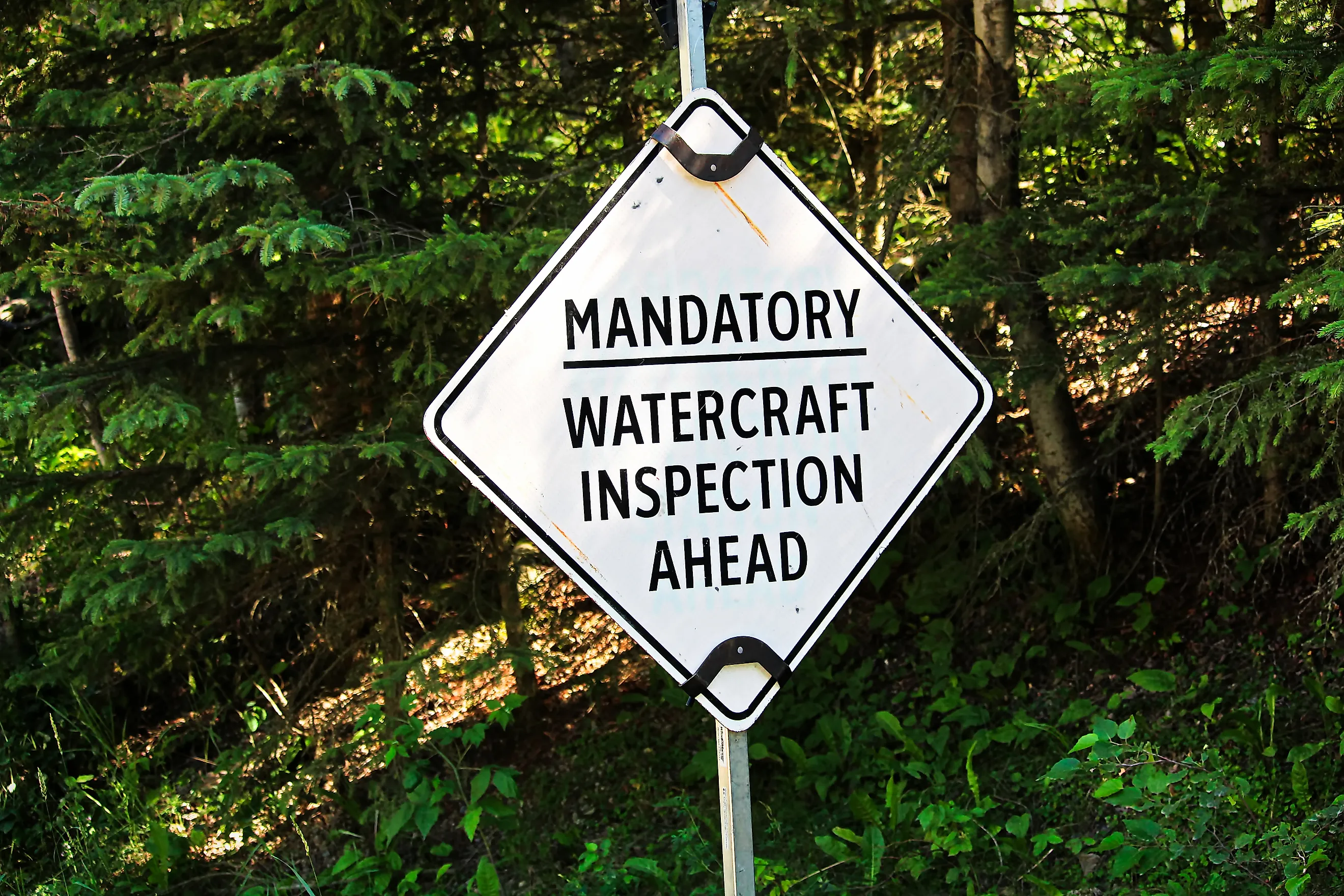
Because most of these invaders spread by hitching rides between lakes on boats and trailers, a lot of money now goes into stopping them at the ramp. Especially across the western states, agencies run watercraft inspection and decontamination stations, essentially checkpoints where boats are examined and hosed down before launching, to keep mussels and other stowaways from colonizing new waters. Programs like these, along with the familiar "Clean, Drain, Dry" campaigns, add up to tens of millions of dollars a year nationwide. It can feel a bit like airport security for your fishing boat, but the logic is airtight. Keeping a lake clean forever is dramatically cheaper than trying to clear it out once mussels move in.
Spending Millions To Save Billions

So, add it all up, and what is the answer? There is no single tidy figure, but the direct national effort to fight aquatic invaders clearly runs into the hundreds of millions of dollars a year, with occasional billion-dollar megaprojects like Brandon Road on top. That may sound like a lot until you see the other side of the ledger. One major analysis found that prevention spending is around 25 times cheaper than dealing with an invasion after it takes hold, and the damages already inflicted run into the trillions over the decades. Every $20 million lamprey program guarding a multibillion-dollar fishery like Lake Erie tells the same story. The money America spends fighting invasive species in its lakes is huge, a little chaotic, almost certainly not enough, and still some of the smartest cash in all of conservation.