How Many People It Takes To Run The Soo Locks
A crew of 120 employees keeps the Soo Locks maintained. That team handles more than 7,000 lockages across a 42-week navigation season, running 24 hours a day and seven days a week, and then spends the ten-week winter closure working inside a chamber drained of water in temperatures that regularly require steam lines to melt ice off the gates before anyone can start.
One Hundred And Twenty People

The figure comes from reporting on the locks during a winter maintenance period.
A crew of 120 employees keeps the locks maintained, and the Corps does most of the work itself rather than contracting it out. One engineer put it plainly during one of those winters.
That is the permanent operating and maintenance workforce, separate from the construction force building the new lock alongside it.
They Are Not All Doing The Same Job

The Corps describes the workforce as a set of distinct specialisms rather than a single crew.
Teams of engineers, maintenance workers, lock and dam operators and other specialists work together to operate and maintain the locks, hydropower plants and navigation channels under the supervision of an Operations Manager.
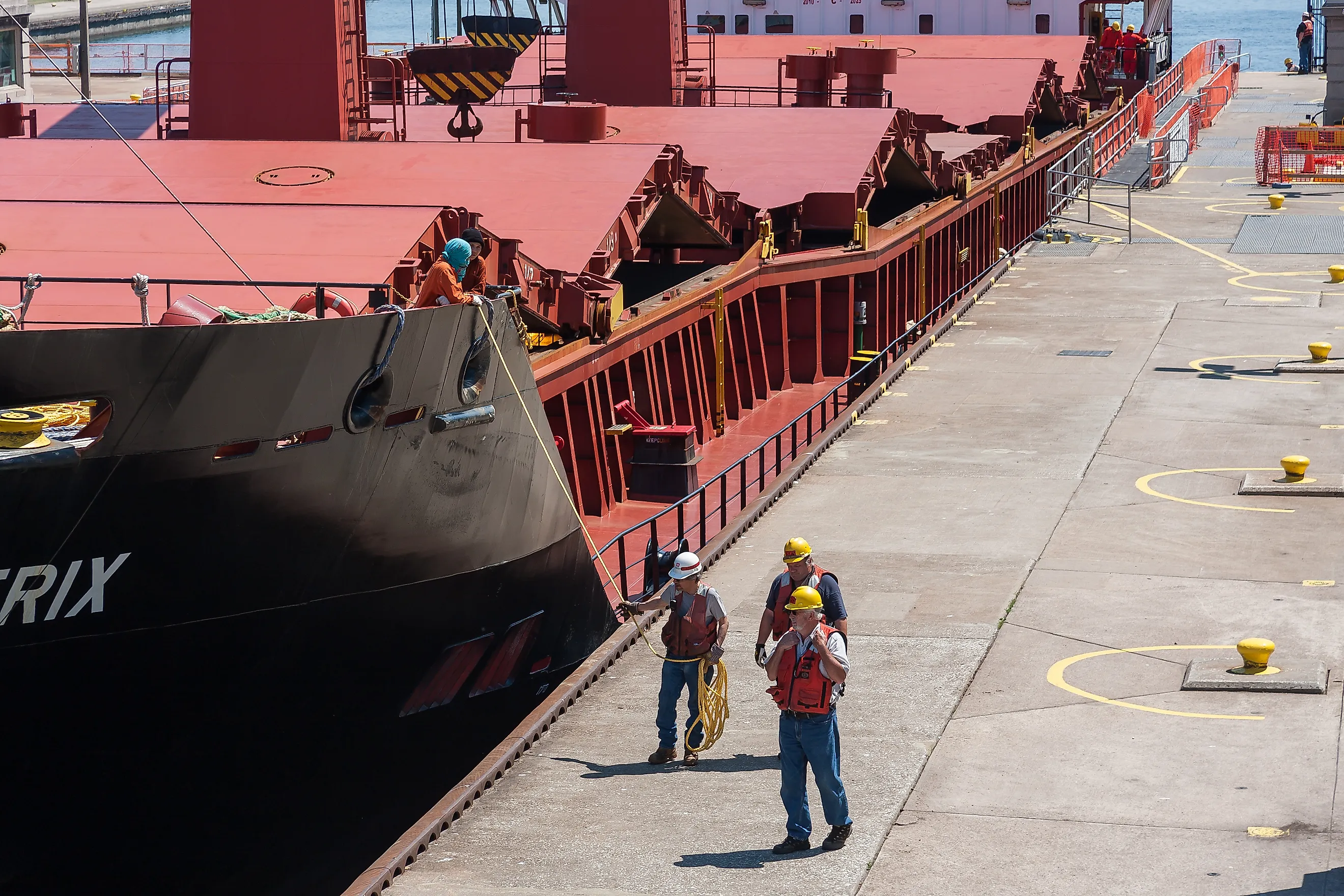
Lock and dam line handlers moor the vessels. Operators run the machinery from a central control panel. Divers, welders and structural crews handle the winter work.
Seven Thousand Lockages A Year

The throughput that 120 people handle is substantial by any measure.
Crews complete over 7,000 lockages during the 42-week navigation season, moving up to 75 million tons of cargo. Each transit takes about an hour from approach to departure.
That works out at roughly 24 lockages a day, every day, for ten months.
Round The Clock, Every Day

The operating pattern explains why the headcount is what it is.
The locks operate 24 hours a day, seven days a week through the season, allowing government, commercial and private vessels to pass between Lake Superior and the lower lakes.
A continuously staffed facility needs several shifts of operators to cover one position. The 120 figure is a roster rather than a crew on site at any moment.
Winter Changes Everyone's Job

Nobody is laid off when the locks close on 15 January.
Operations Branch chief Jeff Harrington described the transition directly: every year lock and dam operators move from assisting vessels through the locks to performing maintenance on them, working alongside Soo Project Office crews.
The same people who moored freighters in December are chipping ice off miter gates in February.
Draining A Lock Takes Ten Hours

The winter work begins with an operation that has no equivalent during the season.
It takes ten hours to dewater a lock. Stop logs go in, divers plug every leak in the gates to ensure a dry working environment, and barges carrying cranes are lowered 61 feet to the bottom as the water goes out.
Plastic covers are placed over the gates and steam is pumped underneath to melt ice and snow before work can begin.
Ten Weeks To Do A Year's Work

Everything that cannot be done with water in the chamber has to happen in one window.
The Corps uses ten weeks to examine and work on the drained locks. A recent closure list included underfloor cleanout, manhole inspection, a five-year periodic assessment, gate repairs, lifting lug installation and jacking pedestal work on the Poe alone.
The MacArthur gets its own list: spring boxes, lever arms, strut arm repair, concrete and deck plate work.
A Temporary Bridge Goes In Every Year

One recurring task exists purely to let the others happen.
The team installs a temporary panel bridge across the Poe Lock each winter, providing the ability to move materials and equipment to job sites throughout the closure.
A drained lock is a 1,200-foot trench with no way across it. The bridge is built, used for ten weeks and removed.
Six Hundred More Are Building A New One

The 120 figure covers operations and maintenance. A separate workforce is on site for a different reason.
Approximately 600 construction workers are engaged on the New Lock at the Soo project, replacing the Sabin Lock with a second Poe-sized chamber. Phase 3 reached 50 percent complete in August 2026.
It will be the first new lock built at Sault Ste Marie since 1968, and it exists because thirteen thousand-footers currently depend on one chamber.
Nobody Pays To Use Them

The entire operation is funded without charging the ships that use it.
The Army Corps provides free passage through the Soo Locks. Michigan handed the facility to the federal government when the State Lock opened in 1881, and the Corps has run it ever since.
The Corps estimates the Great Lakes navigation system saves the economy 3.9 billion dollars a year, which is the justification for 120 salaries and a free toll.
The Short Answer

About 120 people operate and maintain the Soo Locks, covering engineers, lock and dam operators, line handlers, divers and maintenance crews under an Operations Manager. They handle over 7,000 lockages and up to 75 million tons across a 42-week season, running continuously.
Then the gates shut on 15 January and the same workforce spends ten weeks inside a drained chamber. A further 600 construction workers are building the replacement lock next door.