Eight US Dams Taller than the Statue Of Liberty
Oroville Dam is the tallest dam in the United States, standing at 770 feet (234 meters tall). For comparison, the Statue of Liberty measures 151 feet and 1 inch (46 meters) from the base of the statue to the tip of its torch, excluding its pedestal and foundation. Oroville Dam is therefore over five times taller than the statue itself. However, it is not the only dam in the country to surpass this height. The following list highlights dams in the United States that are taller than the Statue of Liberty.
Oroville Dam, California

The Oroville Dam was completed in 1968 on the Feather River, creating Lake Oroville. It is located north of Sacramento in the foothills of the western Sierra Nevada. At 770 feet (234 meters) tall, it is the tallest dam in the United States and over five times the height of the Statue of Liberty. The dam is part of the California State Water Project, which supplies water to over 23 million people across California. A 47-foot-tall (14-meter-tall) observation tower is located at the Lake Oroville Visitor Center, granting panoramic views over Oroville Dam and Lake Oroville.
Hoover Dam, Arizona-Nevada

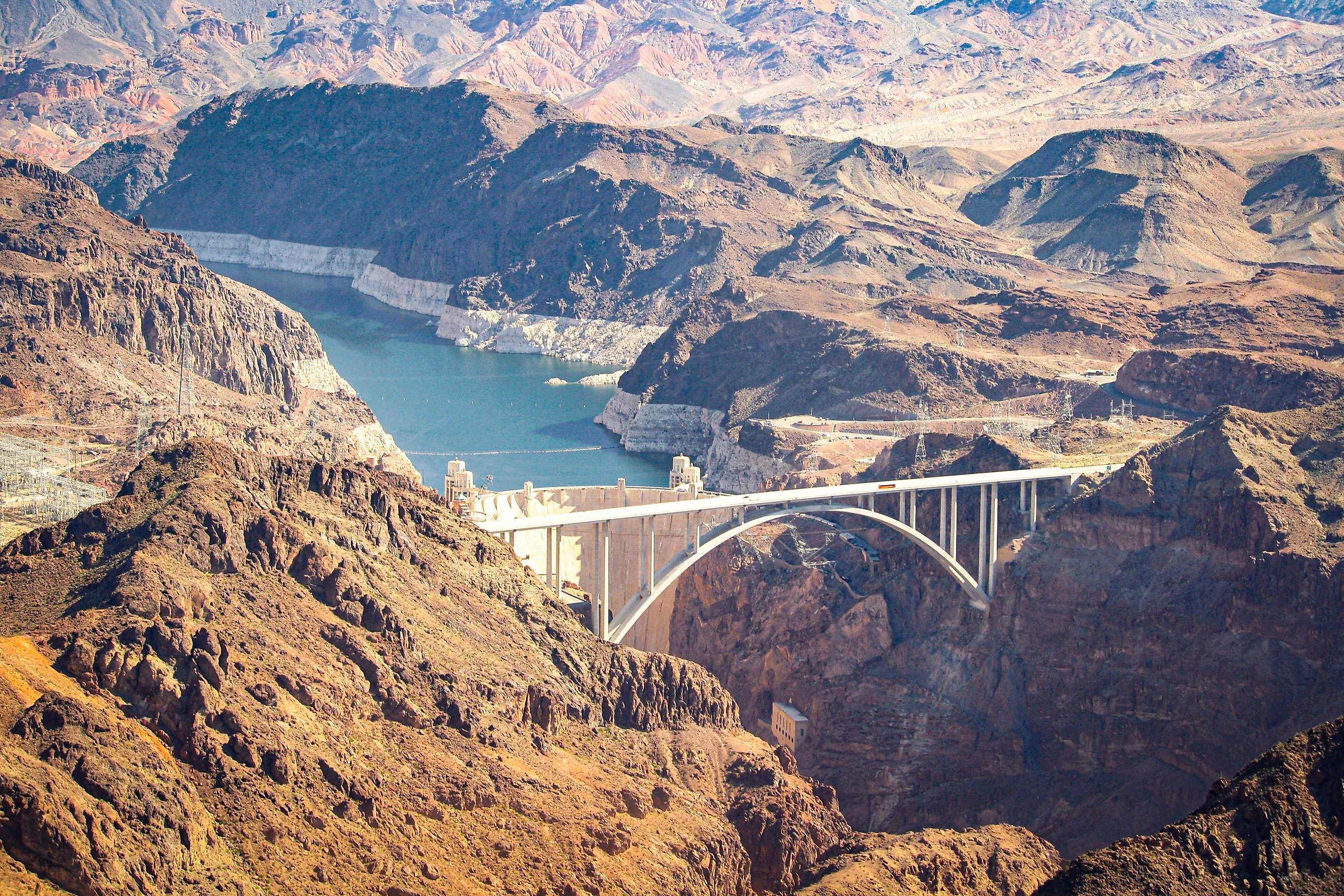
Hoover Dam is the highest concrete arch-gravity dam in the United States, standing at a height of 726 feet (221 meters). Its base is 660 feet thick, about as wide as two football fields are long. It was completed in 1936 in Black Canyon, spanning the Colorado River between Arizona and Nevada, approximately 30 miles (48 kilometers) southeast of Las Vegas. The Hoover Dam provides water to over 16 million people and generates enough energy to power 500,000 homes. The damming of the river resulted in the formation of Lake Mead. Lake Mead National Recreation Area was designated as the first national recreation area in 1964, and it is still visited annually by millions of visitors.
Dworshak Dam, Idaho

Dworshak Dam is the tallest straight-axis concrete gravity dam in the Western Hemisphere, with a structural height of 717 feet (218 meters). The dam was constructed on the North Fork Clearwater River in Idaho and was completed in 1973. The Dworshak Reservoir extends for 54 miles (86 kilometers) into the Clearwater National Forest in the Bitterroot Mountains, with the Dworshak Dam supporting the world's largest steelhead hatchery. In the summer, the dam provides cool water and increased flows to promote salmon and steelhead migrations on the Lower Snake River. Visitors arrive at the shores of Dworshak Reservoir for boating, fishing, and hiking.
Glen Canyon Dam, Arizona

Glen Canyon Dam was completed in 1963, dedicated in 1966 and rises 710 feet (216 meters) from in between the sandstone walls of Glen Canyon in Arizona. As another dam on the Colorado River, Glen Canyon Dam's reservoir, Lake Powell, is upstream from Hoover Dam's Lake Mead. Water is systematically drawn from Lake Powell to Lake Mead in times of drought to sustain cities, industries, and agriculture throughout the West. Lake Powell is one of the largest reservoirs in the United States, with over 1,960 miles (3,154 kilometers) of shoreline at full pool level, which is over twice the length of California's coastline. Lake Powell extends through Glen Canyon and into over 90 side canyons that are the most popular recreation areas of the reservoir.
New Bullards Bar Dam, California

New Bullards Bar Dam is in the foothills of the Sierra Nevada on the North Yuba River. The New Bullards Bar Dam was completed in 1970. It was built on top of the Old Bullards Bar Dam, which was completed in 1924 and is still fully submerged by New Bullards Bar Reservoir upstream of the current 645-foot-tall (196-meter-tall) dam. New Bullards Bar Reservoir has 55 miles (88 kilometers) of shoreline at full pool level and over 20 miles (32 kilometers) of trails, the majority of which are located in Plumas and Tahoe National Forests, bordering the reservoir.
New Melones Dam, California

New Melones Dam was completed in 1979 on California's Stanislaus River. Like New Bullards Bar Dam, New Melones Dam replaced the original dam, which was completed in 1926 and was submerged a short distance upstream. The creation of the 625-foot-tall (190-meter-tall) dam and its subsequent New Melones Lake was the center of controversy as it flooded a popular stretch of white water rapids and inundated archaeological sites as well as the deepest limestone canyon on the West Coast. Despite this, close to 800,000 visitors recreate on and off the water each year.
Mossyrock Dam, Washington

Mossyrock Dam is the tallest dam in Washington, at 606 feet (184 meters) above bedrock. The dam produces a maximum of 382 megawatts of hydropower, which supplies 40% of Tacoma's electricity needs. It was completed in 1968 on the Cowlitz River, creating Riffe Lake. Riffe Lake stretches more than 20 miles (32 kilometers) through rolling, forested hillsides. It has over 52 miles (83 kilometers) of shoreline, which is used for camping, boating, and fishing. This is done particularly at Mossyrock Park, located at the west end of the reservoir and Taidnapam Park, at the east end of the reservoir.
Shasta Dam, California

The 602-foot-tall (183-meter-tall) Shasta Dam forms California's largest storage reservoir, Shasta Lake. Shasta Dam was completed on the Sacramento River in 1945. However, Shasta Lake receives water from the Sacramento, Pit, and McCloud Rivers, as well as additional water from Squaw Creek. It is located in the southern Cascades, framed by evergreen hills and Mount Shasta. The Bureau of Reclamation offers free tours that include a walk across the dam, an elevator ride down 400 feet (121 meters), and a walk through the dam to a view of the spillway.
Dams That Tower Over Lady Liberty

Oroville Dam may be more than five times taller than the Statue of Liberty, but it is far from the only dam in the nation to rise above the famous monument. Between the Hoover Dam on the Colorado River and the Shasta Dam on the Sacramento River, these structures demonstrate the sheer size and scale of engineering involved in controlling, storing, and distributing water. Other than their heights, they supply water to millions of people. Generate hydroelectricity and help manage flooding. Whether exploring their histories at visitor centers, recreating on their reservoirs, or hiking through their surrounding landscapes, these dams are landmarks in their own right.