Why Is Lake Baikal Deeper Than Lake Superior
If you were to take Lake Superior's deepest point and dive down to that same point in Lake Baikal, you wouldn't even be a third of the way to the bottom.
It's no exaggeration to say that no other freshwater lake on Earth comes close to Lake Baikal in terms of depth, water volume, and age. While most lakes are relatively young geologically speaking, Lake Baikal dates back tens of millions of years. Both lakes owe their depth to a tear in continents. But where the rift that formed Lake Superior's basin ultimately stopped, the one in Lake Baikal is still growing.
Lake Superior vs Lake Baikal

First, let's compare the raw numbers. Lake Superior is sometimes called the largest freshwater lake in the world, but that's only due to one measurement: surface area. Lake Superior is 31,700 square miles, which is larger than the land area of 10 U.S. states, including South Carolina and West Virginia.
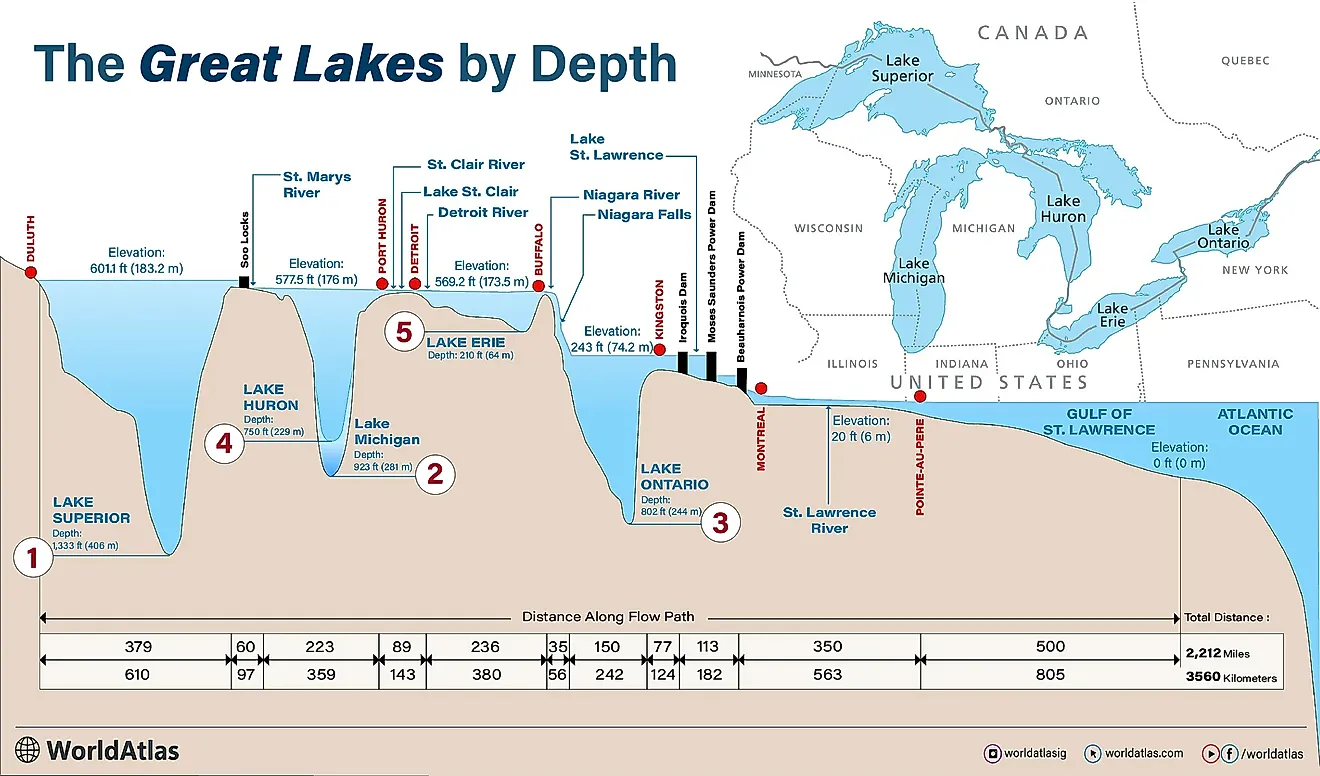
However, a lake is more than just its area; one also has to consider how much water it holds and how deep that water goes. Lake Superior's water volume is 2,900 cubic miles, which is already more than the other four Great Lakes combined, and accounts for close to 10% of total surface area freshwater on Earth. The water sinks down deep, with an average depth of 483 feet and a maximum depth of 1,332 feet.

Lake Baikal's surface area is 12,200 square miles, which is less than half that of Lake Superior. Compared to the other Great Lakes, it is also smaller than Lake Huron and Lake Michigan. However, its water volume is 5,521 cubic miles, making it tthe largest freshwater lake in the world by volume. If you were to take all the water of the Great Lakes and combine it into one super lake, it still would be 82 cubic miles smaller than Lake Baikal.
But the real kicker here is how deep Lake Baikal is, with a maximum depth of over a mile at 5,315 feet.
A tectonic movement explains Lake Baikal's depth

A lake can only be as deep as the feature it fills, and in the case of Lake Baikal, it sits over a deep feature formed through tectonic plates known as the Baikal Rift, where two continental plates are slowly pulling apart.
This rift began to form 25 to 30 million years ago over an existing weakness in the Earth's crust. In particular, the Amuria plate (sometimes known as the North China plate) is moving to the east away from the Eurasian plate at a rate of roughly 0.1 to 0.2 inches (3 to 5 millimeters) a year.
As to why this happened, scientists propose a number of parallel geological events. For example, the collision of the Indian subcontinent into Eurasia added a lot of stress to the tectonic plates further to the east. This was the same event that formed the vast Himalayan mountains. In addition, basins formed to the east in Japan and Okhotsk due to the subduction of the Pacific plate.

To quote a paper entitled Structure and evolution of the Baikal rift: A Synthesis by Carole Petit, "there is no single explanation for the origin of the rift, but rather an addition of favorable parameters: plate stresses, large-scale lateral heterogeneities, thermal conditions. Rifting does not necessarily localize where the thermal lithosphere is thinner, but the inherited thermal and mechanical contrast between the craton and the folded zone is one of the key factors controlling its development."
Water began to flow into this rift, including more than 330 streams and rivers, with only one major river flowing out of it: the Angara River. Due to it sitting over an active rift zone, there are earthquakes that do shake the lake, including a 6.3 magnitude one that occurred in 2008.
The failed continental split that formed Lake Superior's basin

Lake Superior's formation can be thought of in two stages. First, there was the formation of the trough itself from a time long before Lake Baikal, when North America almost split apart.
Around 1.1 billion years ago, a rift formed from Kansas down through Michigan, with Lake Superior situated close to the center of the rift. The basin slowly sank downward, as volcanic eruptions shot upward. When the eruptions stopped, a deep basin was left behind, which slowly filled with sedimentary rock.
If this rift had continued, it would have formed a new ocean, but it did not. Unfortunately, scientists are uncertain of why it stopped. A former theory proposed that a Grenville front from Canada ran into the rift in Michigan, stopping it, but modern geology has shown the rift extended all the way into Oklahoma, and could not have been halted by the Grenville Front.

After this rift, the crust compressed, uplifting the basalt rocks from deeper in the crust, some of which can still be seen in Lake Superior today, such as the 1.1 billion-year-old Superior Shoal, a volcanic mountain standing 1,000 feet from its base to a few dozen feet below the surface.
The second stage took place during the end of the last Ice Age. Beginning 14,000 years ago, the Laurentide Ice Sheet began to melt, first uncovering the southernmost Great Lakes and gradually revealing Lake Superior. As it melted, it filled the ancient basin with water, a process which ended 3,000 years ago.
Lake Baikal has no dead zone

Typically, with most deep bodies of water, one eventually reaches a dead zone, where the oxygen is so dissolved in water that fish cannot live. This is not usually at the bottom, but lies at a certain range between the shallow waters and the very deepest parts, between 328 and 4,290 feet in depth. Below this depth, the water is so cold it is able to store more oxygen.
However, Lake Baikal has no oxygenated dead zone and is able to maintain adequate oxygen flow throughout all of its depths, largely because cold, oxygen rich surface water regularly sinks to the bottom of the lake, which is aided by geothermal heat and hydrothermal vents that help with circulation.

Due to this oxygen, Lake Baikal supports life all the way down to the bottom, as long as the wildlife can withstand the pressure, which is equal to 164 atmospheres at the bottom. Even a mile down, one can find a fish: the Golomyanka. This fish's body is translucent and made of fat with no bladder, meaning it has plenty of padding to survive the pressure.
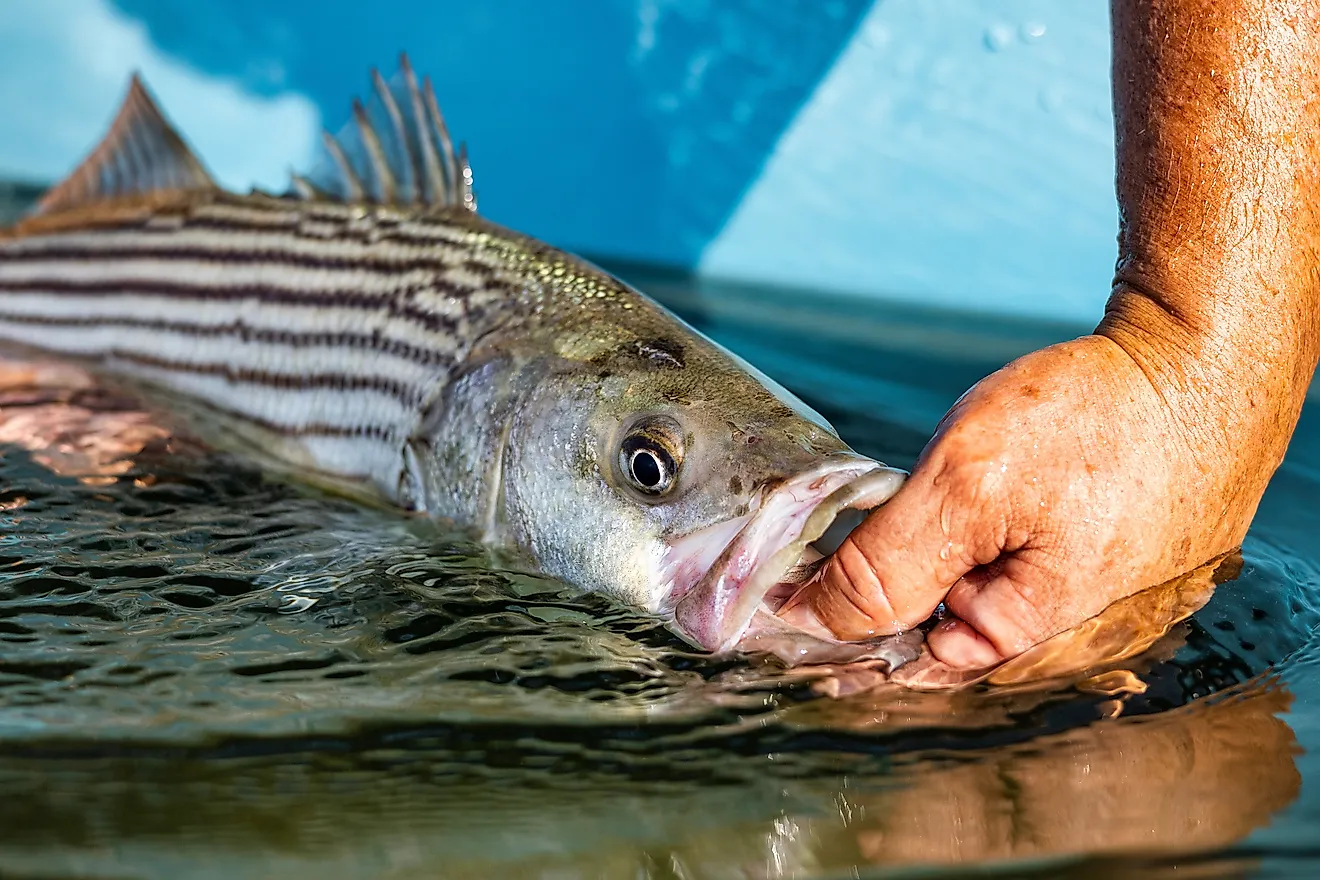
Lake Superior is much "shallower" than Lake Baikal, but its cold, oxygen-rich waters also support fish throughout its depth. The siscowet morphotype of lake trout has been caught at the deepest point in Lake Superior. Much like the Golomyanka, whose fat content can make up as much as 70% of its body weight.
Which one is older?
Surprisingly, the question of which lake is older is a bit more complicated than at first glance. If one is only looking at when the lake was filled, then Lake Baikal is older, as it began to open 25 to 30 million years ago and was filled with water. By comparison, the basin that Lake Superior sits on is much older, dating back to 1.1 billion years ago, but the basin was only filled from 14,000 to 3,000 years ago.
In addition, the rift that formed Lake Superior's basin long since stopped, while the Baikal Rift is still gradually tearing apart, thus making Lake Baikal a tectonically active lake. This is why the lake still sees earthquakes. What both of these lakes share in common is their huge size, water volume, and oxygen-rich water where fish can live even in the deepest waters.