How Lake Manitoba Compares To The Great Lakes
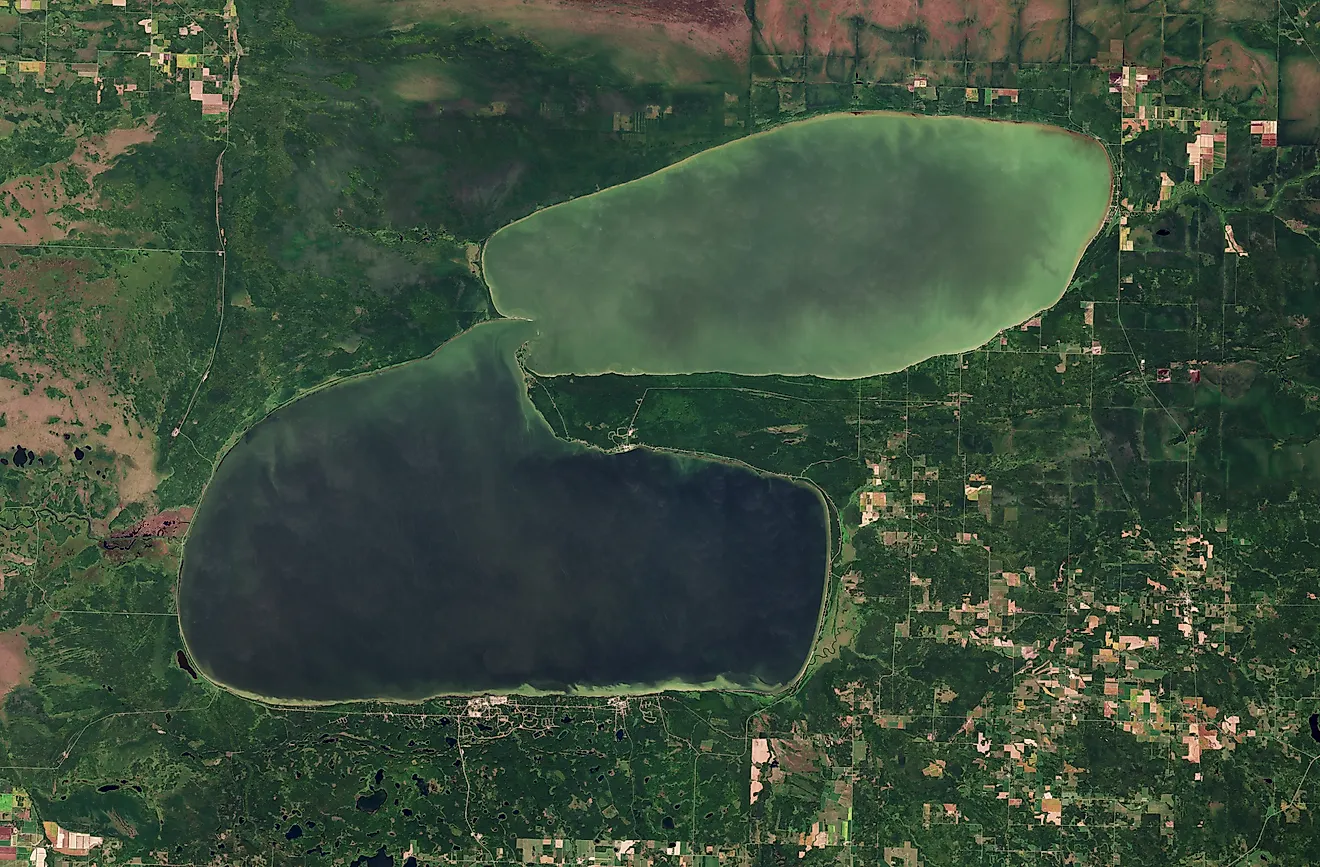
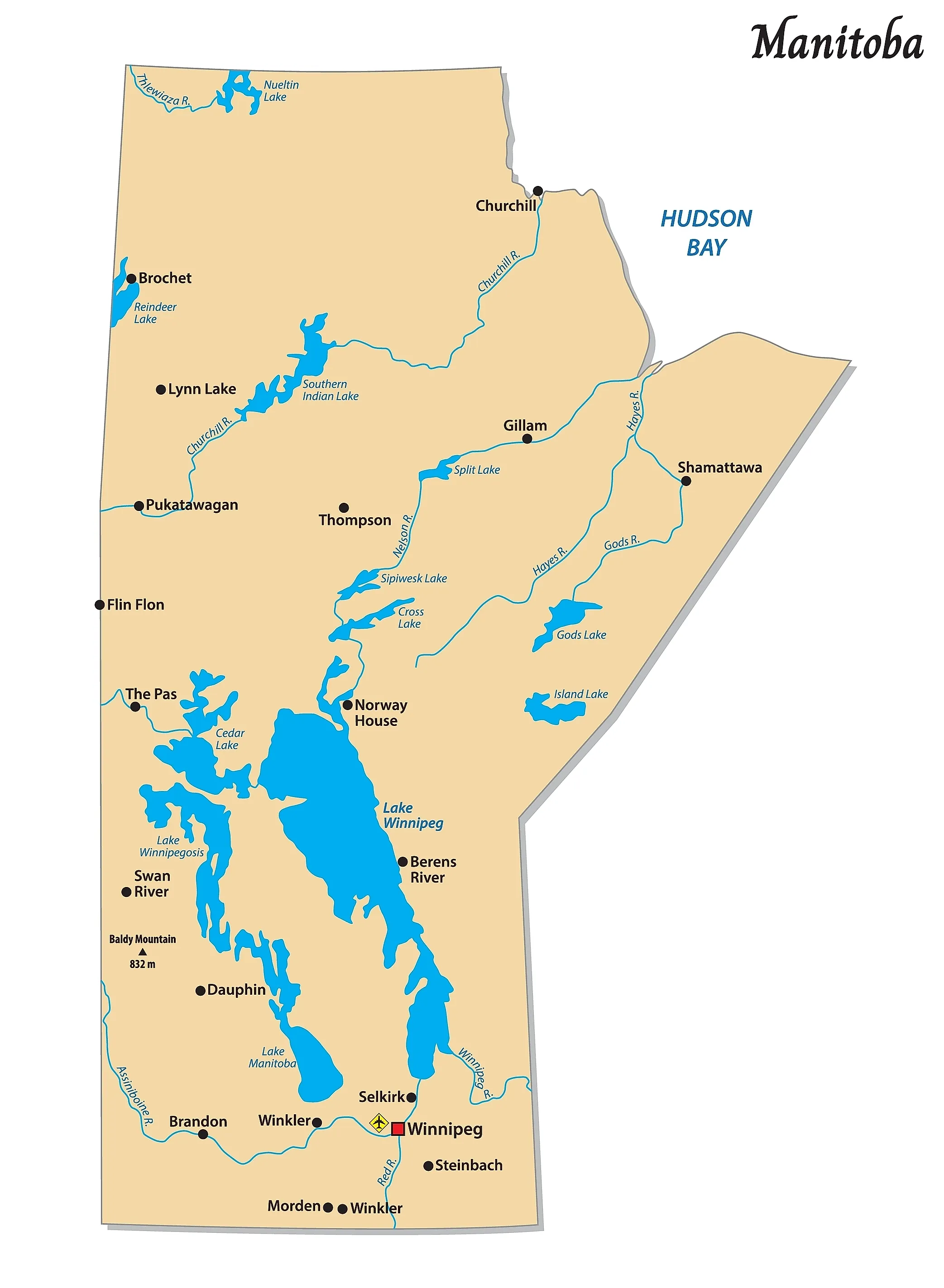
Lake Manitoba covers about 1,785 square miles, which makes it larger than Rhode Island and roughly 140 miles long. On a map it looks like a serious body of water.
Its deepest point is 23 feet. The average is closer to 15. A tall person standing on the bottom of most of Lake Manitoba would have their head and shoulders in open air, and that single number explains almost everything about how it differs from the Great Lakes.
Wide But Not Deep

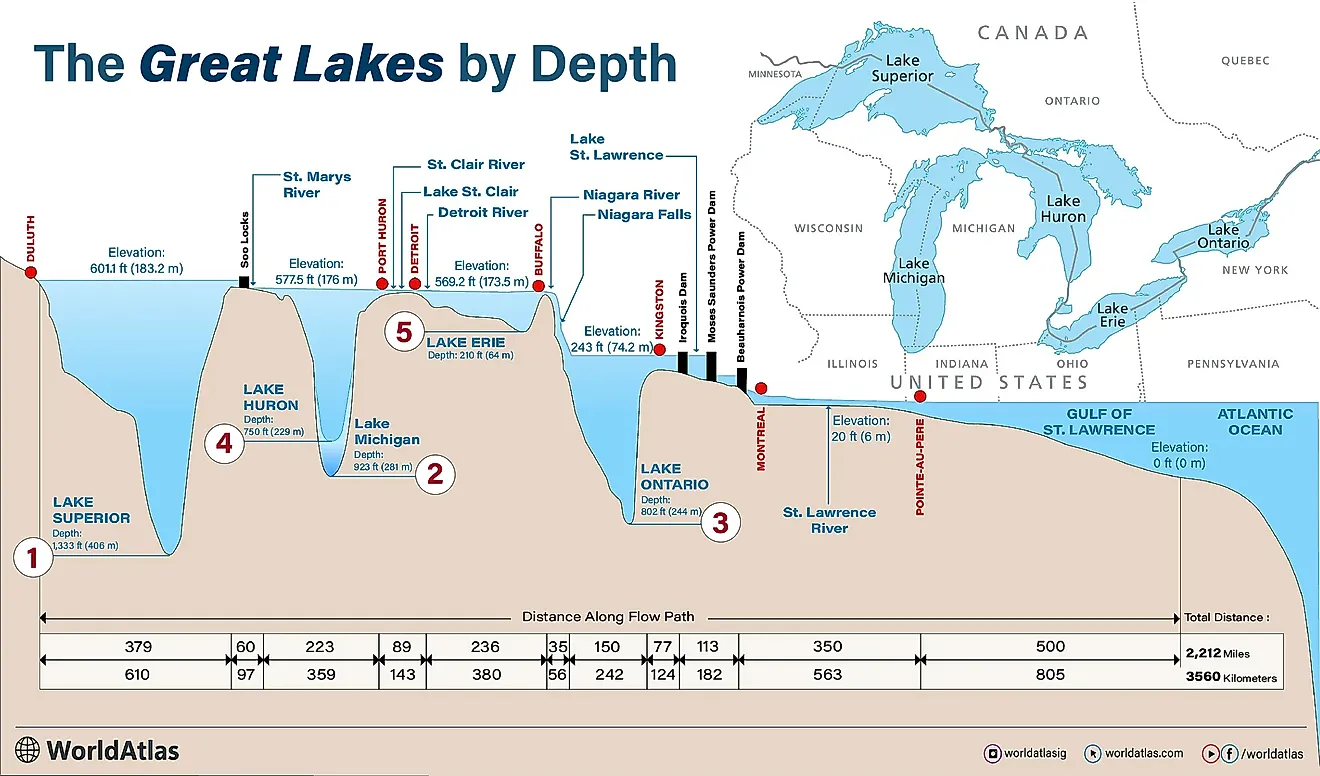
Start with the comparison that flatters Lake Manitoba least and most at once. Lake Erie is the shallowest of the Great Lakes by a wide margin, with an average depth of 62 feet and a maximum of 210.
Lake Erie's average depth is nearly three times Lake Manitoba's maximum. Its deepest point is about nine times deeper. And Erie is the one everyone calls shallow.
Against Lake Superior the gap stops being a comparison and becomes a different category. Superior averages 483 feet and bottoms out at 1,333. Its average depth is twenty-one times Lake Manitoba's maximum, and you could stack fifty-seven Lake Manitobas in its deepest basin.
The Area Is Respectable

On surface area Lake Manitoba holds up better. At 1,785 square miles it is a genuinely large lake, bigger than any natural lake in most American states, and it stretches 140 miles north to south while staying under 30 miles wide.
It still loses badly. Lake Ontario is the smallest Great Lake by surface area at 7,340 square miles, four times larger. Lake Erie is 9,910. Put all five Great Lakes together at 94,250 square miles and you have about 53 Lake Manitobas.
The lake is also not even the biggest in its own province. Lake Winnipeg covers 9,465 square miles next door, which makes it larger than Lake Erie and the tenth-largest freshwater lake in the world.
Where The Gap Becomes Absurd

Surface area is a flattering measure for a shallow lake. Volume is not.
Lake Manitoba holds roughly 14.7 cubic kilometres of water. The Great Lakes hold 22,671, which is about 1,500 times more, or around 21 percent of the fresh water sitting on the surface of the planet.
Lake Erie, the smallest Great Lake by volume, holds 480 cubic kilometres on its own. That is more than thirty Lake Manitobas, from the Great Lake that everyone treats as the runt.
Being Shallow Changes The Weather

Depth is not just a statistic here, it changes how the lake behaves. Shallow water warms fast, freezes early, and gets pushed around by wind in ways deep lakes do not. A strong prairie wind can tilt the whole surface of Lake Manitoba, piling water onto one shore and exposing lakebed on the other.
That is why the 2011 flood was so destructive. Water diverted into the lake during an exceptional spring combined with sustained winds to drive levels onto farmland and cottages around the shoreline, and some properties never came back.
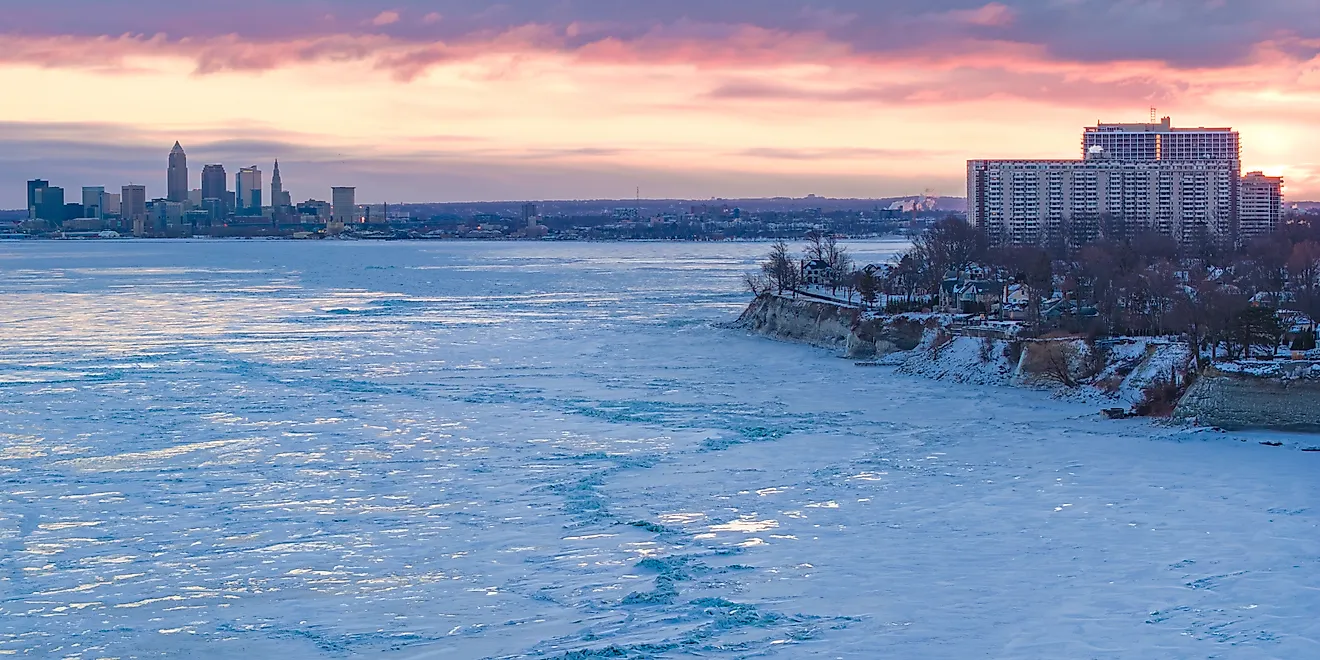
The Great Lakes do their own damage, but the mechanism is different. Their depth means they store heat, which is what drives lake-effect snow off Erie and Ontario and keeps Superior cold enough to be dangerous in July.
What It Has That They Do Not

The province took its name from the lake, not the other way round. The word comes from Cree and Ojibwe terms usually rendered as the strait of the Great Spirit, describing the sound waves make against limestone at The Narrows, where the lake pinches to a waist.
Lake Manitoba is also a remnant of something enormous. It, Lake Winnipeg, and Lake Winnipegosis are what is left of glacial Lake Agassiz, which at its peak held more fresh water than every lake on earth holds today. The Great Lakes are glacial too, but Agassiz was in a different league and the three Manitoba lakes are its puddles.
The shallow water is also why the birds are there. Warm, productive, and full of light reaching the bottom, it draws pelicans, cormorants, and huge numbers of migrating waterfowl, and the commercial fishery works it year-round, including through the ice.
The Honest Scoreboard
By surface area Lake Manitoba is a quarter of the smallest Great Lake and a fifty-third of all five. By volume it is roughly one fifteen-hundredth of the system. By depth it does not register, since its deepest point would sit in the shallow margins of every Great Lake including Erie.
What it actually shares with them is plumbing. Lake Manitoba drains through the Fairford River into Lake St. Martin, then into Lake Winnipeg, then down the Nelson to Hudson Bay. The Great Lakes drain the other way, out the St. Lawrence to the Atlantic. Both systems are the same ice sheet's leftovers, pointed at different oceans.
So Lake Manitoba is not a small lake. It is a large lake that someone forgot to dig out, and on a windy day in Manitoba that distinction matters more than the surface area ever will.