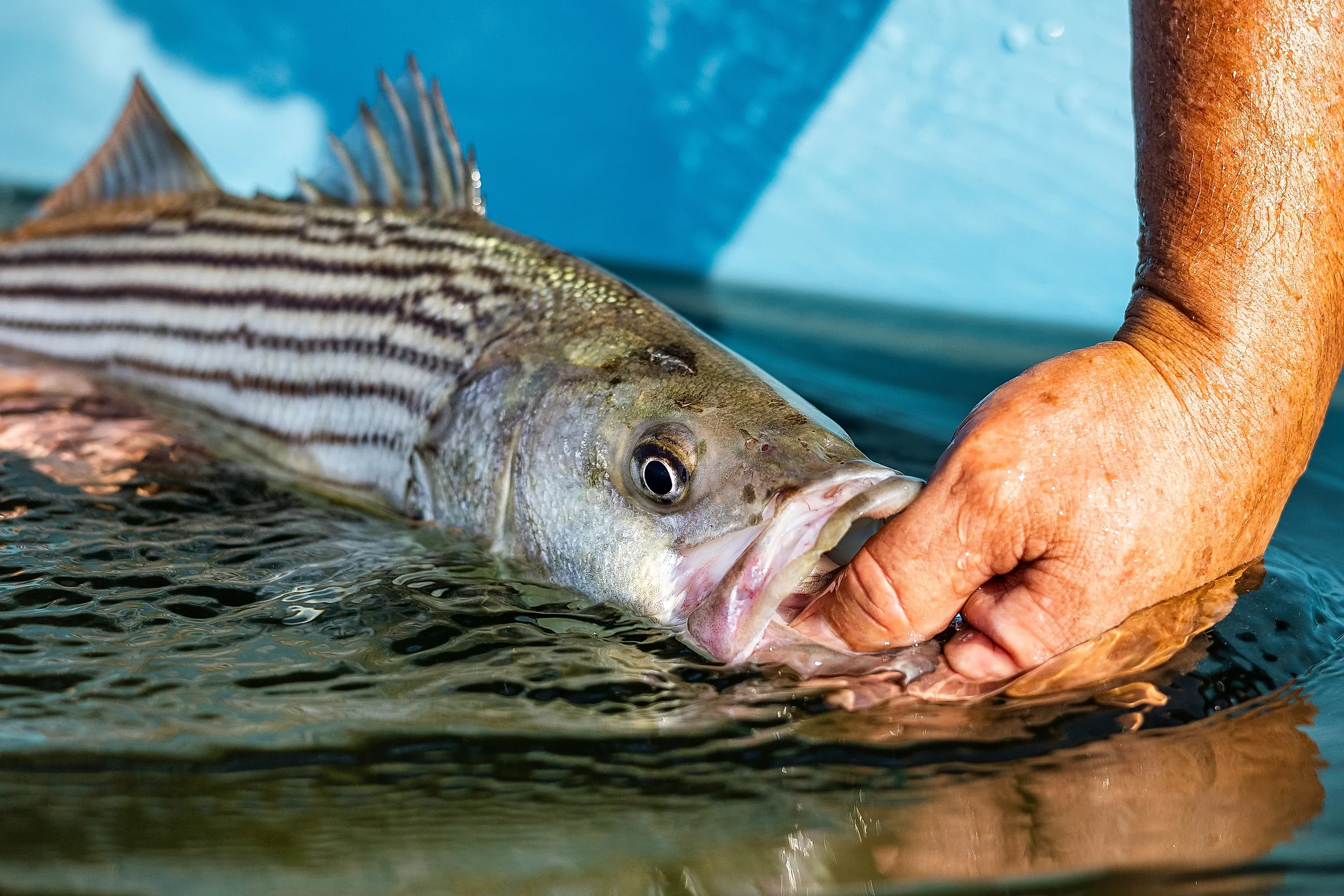
Where Striped Bass Go In The Winter
Every fall, the striped bass that fed off New England all summer leave the coast, and for the next few months, they get hard to find. In 2024, a federal and state survey that has gone looking for them every winter since 1988 tagged just 38. Some of the missing fish are far out at sea. Others never leave the rivers at all, and a few spend the winter in coves that freeze hard enough for ice fishing. Where a striper ends up starts with the river it hatched in.
The Big Migrants Winter in the Open Atlantic

Out on the ocean grounds, fish from different rivers spend the winter side by side. Most of the coast's migratory stripers hatch in the rivers of the Chesapeake Bay, with sizable shares from the Hudson and the Delaware, and tag returns show that the fish wintering off Virginia and North Carolina come from several of those spawning stocks at once. When the winter survey still ran as a trawl cruise, it left Morehead City in late January, started near Cape Lookout, and worked north until it found stripers in numbers. Its best catches usually came between Kitty Hawk and Corolla, and fish tagged on those grounds have been recaptured in every state north of North Carolina and as far away as Nova Scotia.
The big fish in that winter school spend most of their time in shallow water. Ten stripers, 37 to 44 inches long, carried satellite tags after anglers caught them in the winter fishery off Virginia and North Carolina. The eight tags that reported showed the fish spending more than 90 percent of their time shallower than about 33 feet, in water of 43°F to 48°F. Menhaden and bay anchovy made up about two-thirds of what 1,154 stripers from the grounds had eaten between 1994 and 2007, and menhaden alone reached 87 percent from 2005 to 2007.
Their Winter Schools Now Sit Beyond the 3-Mile Line

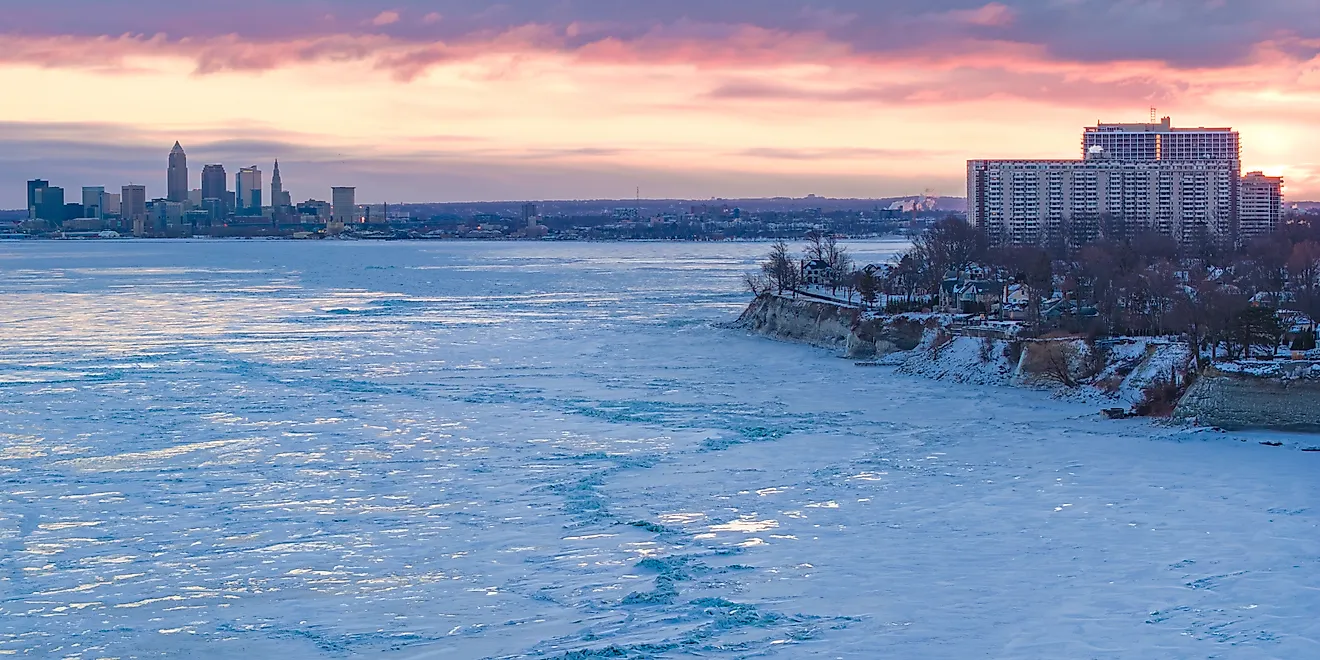
The wintering schools have shifted since the trawl years. The Atlantic States Marine Fisheries Commission's 2018 stock assessment reported that the stripers' winter distribution had changed significantly since the mid-2000s, with the migratory schools holding well beyond 3 miles from shore, in federal waters. Crews had to run as far as 25 nautical miles, close to 29 miles, off the mouth of the Chesapeake Bay to find fish to tag. The survey switched from trawls to rod and reel in 2011, and its sites have since moved north, to waters off Maryland, Virginia, and in some years New Jersey. Off Maryland, acoustic receivers picked up stripers more than 31 miles from the coast in winter, in water of about 48°F to 55°F.
Chesapeake Stripers Sink Into the Bay's Deepest Channels

When the Chesapeake cools into the 40s, the stripers that stay in the bay go as deep as they can. On December 10, 2025, Maryland's Department of Natural Resources reported main-bay surface water in the low to mid 40s and striped bass in their winter holding areas at 60 feet or more. By late January, they barely respond to lures. The department's midwinter report in 2025 found them hunkered down in the deep channels and, in most cases, ignoring jigs. Maryland's 2026 rules made the bay catch-and-release only for stripers from January 1 through April 30.
Some of the bay's winter stripers gather in warm water instead. The discharge from the Calvert Cliffs nuclear plant, on the bay's western shore in Lusby, Maryland, is a regular winter stop for anglers, and power-plant outflows draw overwintering stripers along much of the coast. That warmth depends on the plant. When generation stops, the heated water can cool quickly enough to cold-shock the fish gathered in it.
Hudson Stripers Winter Near New York City

The lower Hudson, between Yonkers and the Battery at the tip of Manhattan, held the river's densest winter concentrations of striped bass in sonar surveys during the 1990s. The fish get there by moving downriver toward saltier water each fall. Tagged Hudson stripers moved down the river between October and January and came back up between March and May, and a later study of 75 tagged fish found none staying in the upper estuary through the winter. Some Hudson-born stripers keep going past New York Harbor and down the Jersey Shore, wintering in coastal waters and estuaries south of Cape May.
New England Holdovers Hide in Tidal Rivers

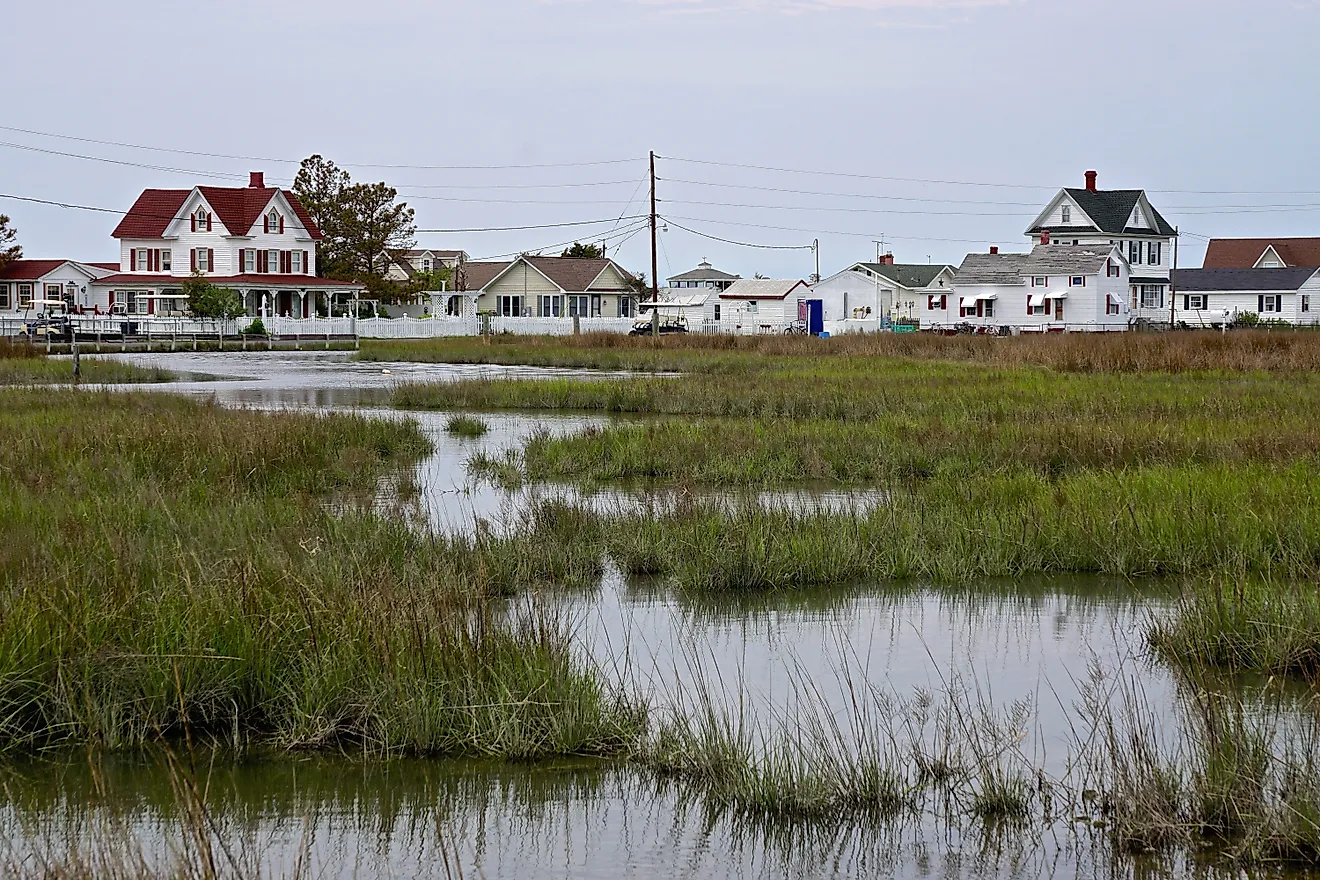
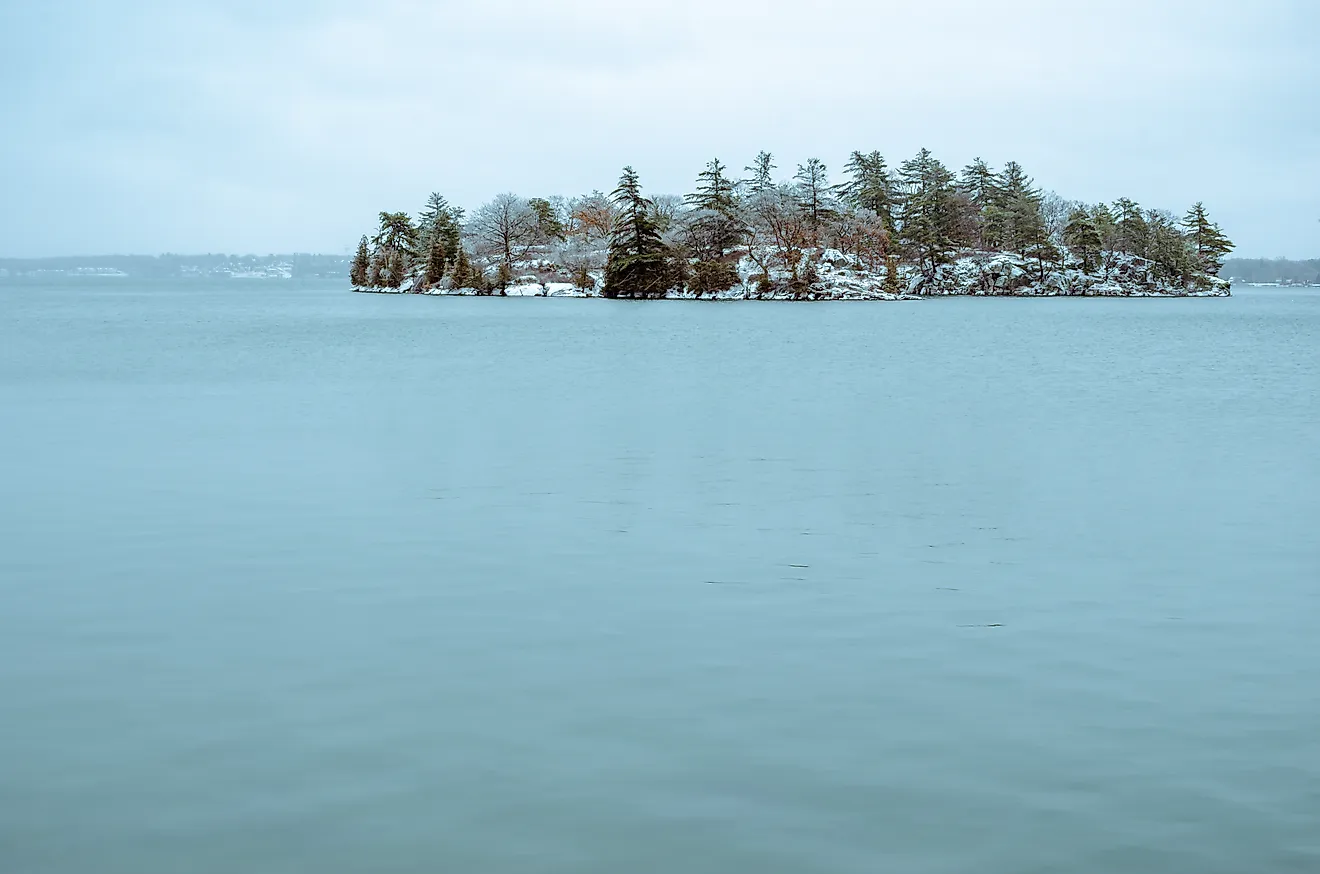
On the Connecticut River, some stripers spend the winter far up freshwater coves that freeze hard enough for ice fishing. These holdovers skip the migration and settle into the channels and dredged coves of big tidal rivers, where deep water keeps the temperature steadier. The Housatonic, from the Derby Dam down to Long Island Sound, is known for them, as is Rhode Island's Providence River at the head of Narragansett Bay. Near Boston, the Mystic and Charles rivers hold wintering schools above the salt line, in fresh water.
Connecticut is now protecting its holdovers. State biologists still name the Thames as the state's most notable overwintering river, though its winter fishery, once the best known in Connecticut, ended abruptly around 2009. Starting December 1, 2026, Public Act 26-101 makes all striped bass fishing in Connecticut catch-and-release from December through March each year, with fines starting at $150.
Gulf Stripers Spread Out Through Open River Water

On the Flint River in southwest Georgia, the hard season for stripers is summer. In a radio-tracking study in the mid-1980s, fish in the Flint and in Lake Seminole, on the Georgia and Florida line, crowded into isolated spring-fed pockets each May once the river warmed to about 75°F. The water where they sat averaged about 71°F, while the river and lake around them ran 77°F to 88°F. They stayed an average of 160 days.
The springs empty out in fall. When the river cooled to about 68°F in October or early November, the fish left, and from November through February they spread widely along the Flint and through Lake Seminole.
These fish belong to the Apalachicola, Chattahoochee, and Flint river system, which holds the only known naturally reproducing population of native Gulf striped bass. Downstream on the Apalachicola, stripers spend the winter in the river's lower reaches and stay mostly in the river and its estuary, rarely swimming out into the open Gulf.
Reservoir Stripers Follow the Shad Into Deep Water

Reservoir stripers have no ocean to run to, and on Lake Texoma, on the Texas and Oklahoma line, winter is when they put their weight back on, according to an Oklahoma Department of Wildlife Conservation fisheries supervisor. They stay with the lake's threadfin and gizzard shad. On one winter outing reported in 2020, Texoma's stripers sat layered on the bottom in 19 to 20 feet of water and followed the shad deeper as the sun climbed. January is the peak of dead-sticking season on the lake, when anglers lower bait to the depth where fish show up on sonar. At Lake Mead, the fish go deeper still. In late February 2019, anglers at Las Vegas Wash were finding stripers beyond 70 feet down.
The cold can hit the shad harder than the stripers. During the February 2021 freeze, with Texoma's water in the 30s, the head of Texas Parks and Wildlife's Lake Texoma Fisheries Station warned that threadfin shad start dying below 43°F unless they find deeper water. Biologists expected the lake's stripers to come through the cold with few problems.
West Coast Stripers Scatter Through San Francisco Bay and the Delta

Striped bass reached the West Coast in 1879, when they were introduced to the Sacramento-San Joaquin system, and their descendants spend the winter scattered from San Francisco Bay through the Delta. Some start moving into the Delta as early as October. Once the water turns cold, they stop feeding actively, and the California Department of Fish and Wildlife rates winter fishing there as generally poor. The fish that winter in the bays head upstream to fresh water to spawn, and fishing picks up as the water warms in March.
Each of these groups leaves its winter water on its own schedule. Hudson stripers start back upriver as early as March, and on the East Coast, spawning runs from April into June in the fresh reaches of the big tidal rivers, earliest in the south. After spawning, the ocean migrants turn north, and tagged adults are back in Massachusetts waters north of Cape Cod from May into November. In South Carolina's Santee Cooper lakes, where the damming of the Santee River in 1941 trapped a population of stripers, fish tracked in 1986 spent January through March near the lakes' two dams and in the open water of Lake Moultrie, moving only about half a mile a day. They started their upstream spawning run when the water reached about 57°F.