Do Alligators Really Climb Fences
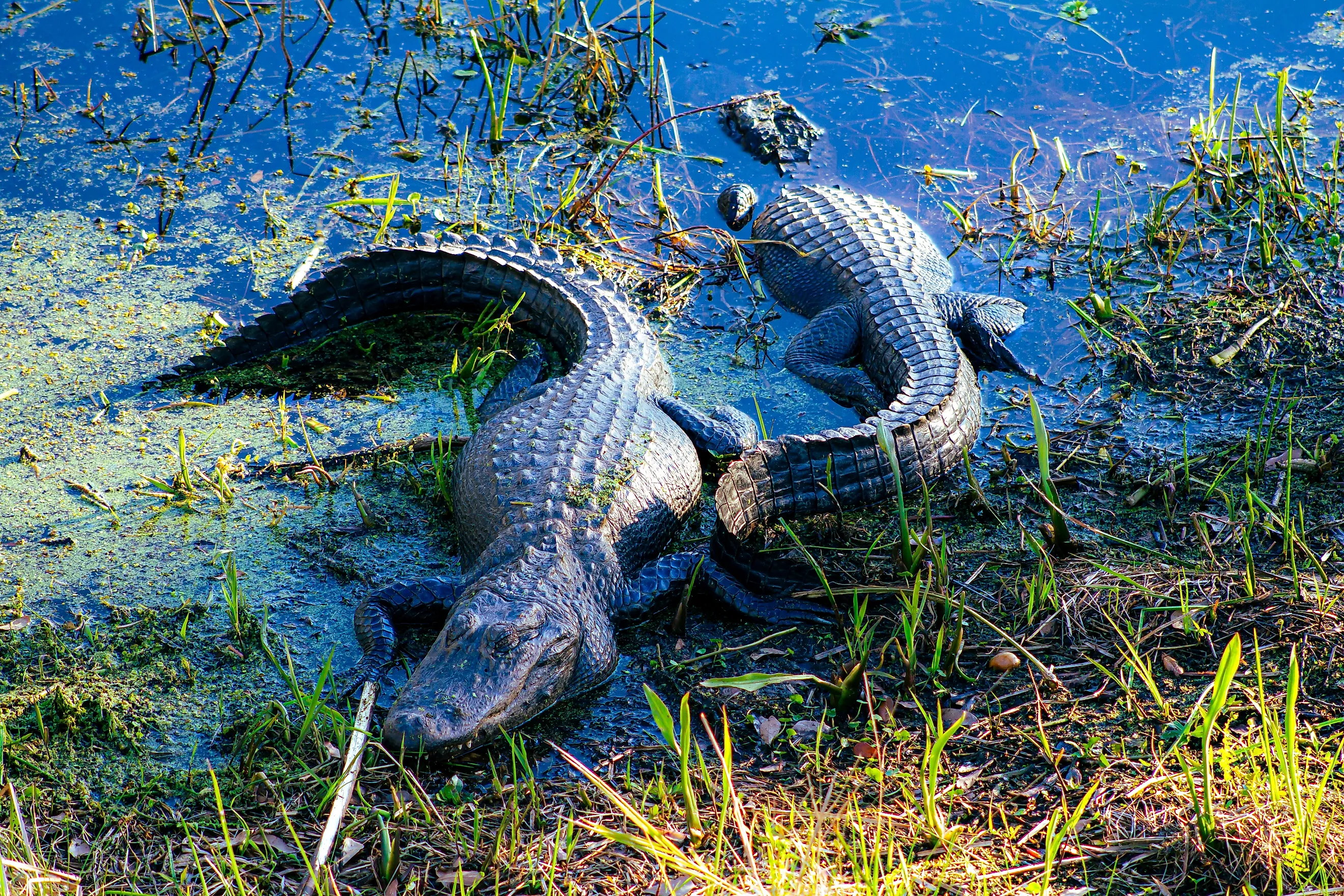
In August 2019 a woman named Christina Stewart filmed an alligator clawing its way up a chain-link fence at Naval Air Station Jacksonville, flopping over the top and walking away. The footage was viewed over 328,000 times. The base's own response was better than the video: they have several on site and, in their words, the alligators do not respect their security measures. The behavior is real, documented in a peer-reviewed study, and considerably more ordinary than it looks.
The Research Came First
Five years before the Jacksonville video, scientists had already published on this.
A 2014 paper by Vladimir Dinets of the University of Tennessee and colleagues documented climbing behavior in living crocodilians, based on original field observations of four species across Australia, Africa and the Americas.
Their conclusion was that despite lacking the physical adaptations for it, various crocodilians climb and in some cases spend considerable time in trees well above the ground.
Fences Were In The Study
The Jacksonville alligator was not doing anything researchers had not already recorded.
Dinets personally observed Australian freshwater crocodiles attempting to climb chain-link fences up to 1.8 meters, about six feet, which is a standard perimeter fence height.
So the viral video confirmed published fieldwork rather than revealing something new. It simply had better footage.
Small Ones Climb, Big Ones Do Not

This is the qualification that most coverage leaves out, and it matters.
The 2014 study found that crocodilians observed basking in branches were rarely larger than 1.5 meters, around five feet, in total length. Juveniles are the most capable climbers by a wide margin.
In Colombia, juvenile crocodiles were recorded climbing to heights approaching 30 feet. A full-grown bull alligator is not going up a tree.
They Climb To Warm Up
The purpose is thermoregulation rather than anything more dramatic.
Alligators are ectothermic and cannot generate their own body heat. Climbing gets them to a sunlit branch when the ground below is shaded, flooded or otherwise unsuitable for basking.
Research also points to surveillance of territory as a secondary reason. A higher perch is a better vantage point.
It Is Not An Ambush Tactic

The researchers were explicit on the point people most want to believe.
Climbing does not appear to function as a hunting strategy. Crocodilians do not perch in trees to drop on prey from above.
That makes the behavior far less alarming than the viral framing suggests. An alligator on a fence is trying to get somewhere, not setting a trap.
Four Species Are Confirmed

The ability is spread across the crocodilian family rather than being an alligator quirk.
The Australian freshwater crocodile, the Nile crocodile, the American crocodile and the American alligator have all been documented climbing trees. Central Africa's slender-snouted crocodile appears to be the most accomplished climber of the group.
A sub-adult American alligator has been photographed perching on a tree branch in the Pearl River Delta in Mississippi.
Thick Skin Helps On Chain-Link

A chain-link fence is arguably easier for an alligator than a tree trunk.
The diamond mesh offers continuous footholds at regular spacing, and an alligator's hide is thick enough that the wire poses no problem. The Jacksonville animal went over without apparent difficulty.
What it did at the top was less elegant. Accounts describe it flopping its body over the far side and belly-flopping onto the grass.
Florida Has Them Everywhere

The context for why this keeps happening is simple density.
Alligators are found in all 67 Florida counties, with an estimated 1.25 million in the state. The Jacksonville base includes 1,300 acres with marshes, swamps and bogs on it.
Any perimeter fence in Florida is a line drawn through occupied alligator habitat rather than a boundary between gators and no gators.
Thirteen Feet Is The Upper Figure

Published heights vary depending on the species and the animal's size.
The 2014 fieldwork documented crocodilians climbing as high as six feet off the ground routinely, with some reaching four meters up a tree and five meters out along a branch. Other reporting cites alligators climbing as high as 13 feet.
The practical conclusion drawn is that most fences in developed areas will not deter a motivated alligator.
Nobody Removed It

The official response to the Jacksonville climber says a good deal about how Florida handles this.
Base officials said they would not remove the animal until it posed a danger to nearby residents. Florida's Fish and Wildlife Conservation Commission runs a Statewide Nuisance Alligator Program for genuine threats.
The base's advice was practical rather than panicked: when you see water, assume an alligator could be in it, watch small children and pets, and golfers should mind where they put their hands.
The Short Answer
Yes. A 2014 study documented climbing across four crocodilian species including the American alligator, and recorded crocodiles attempting six-foot chain-link fences before the famous Jacksonville video existed. They do it to reach a basking spot or a better view, not to ambush anything.
The reassuring part is size. Animals found basking in branches are rarely over five feet long, and juveniles are the real climbers. The alligator going over a fence is usually a small one looking for somewhere warmer to sit.