How Many Americans Drink Great Lakes Water Every Day
The next time you fill a glass at the kitchen sink, there's a decent chance the water started its journey in a lake big enough to be mistaken for a sea. About 20 million Americans drink water pulled from the Great Lakes every day, most of them without ever thinking about it. Add roughly 10 million Canadians, and nearly 30 million people across two countries are quietly sharing the same five-lake water cooler. The water gets withdrawn, treated, and piped to the tap, but the source is the same one you can stand beside on a Chicago or Cleveland shoreline.
Lake Michigan Supplies Chicago and Milwaukee

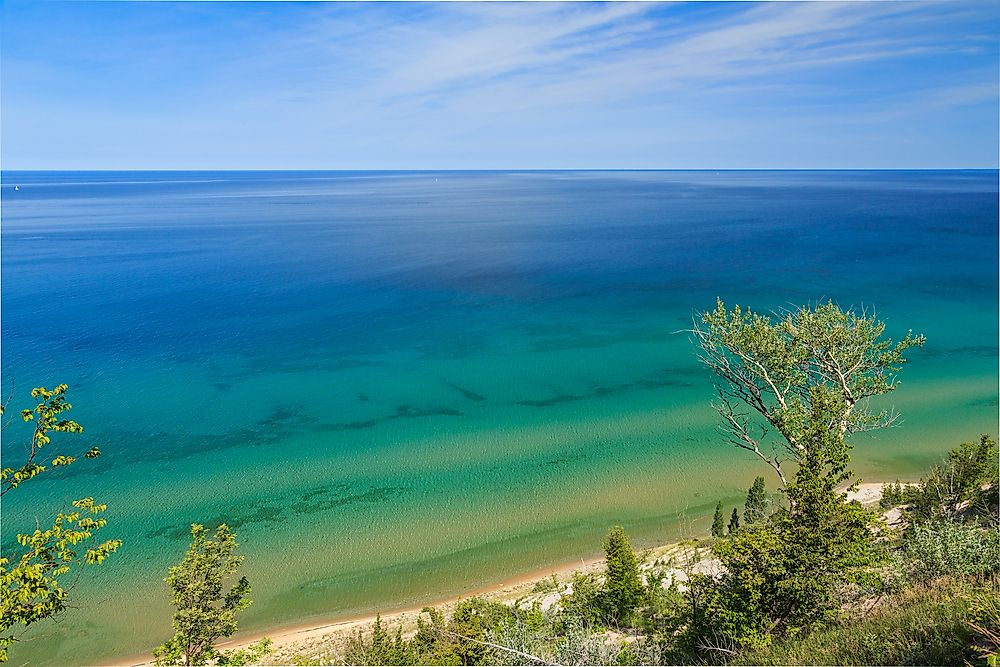
Lake Michigan sits beside one of the largest concentrations of Great Lakes water users in the country. Chicago's Department of Water Management purifies Lake Michigan water for Chicago and about 120 surrounding communities. The system uses two major purification plants before sending the treated water into an extensive distribution network.
The lake also supplies Milwaukee. Milwaukee Water Works identifies Lake Michigan as the city's source water. Farther around the shore, numerous smaller municipal systems also depend on it.
Lake Michigan is unique among the five because it lies entirely within the United States. EPA measurements put its volume at about 1,180 cubic miles, second only to Lake Superior. Its position beside major population centers gives that water an outsized role in daily life.
Lake Erie Supplies About 11 Million People In Two Countries

Lake Erie supplies drinking water to roughly 11 million people across the United States and Canada. That is a binational figure, so it should not be added directly to the 20-million-American total.
Cleveland offers a clear US example. Cleveland Water serves about 1.4 million customers and draws its raw water through four Lake Erie intakes located several miles offshore. Intake tunnels carry the water toward treatment plants before it enters the city's distribution system.
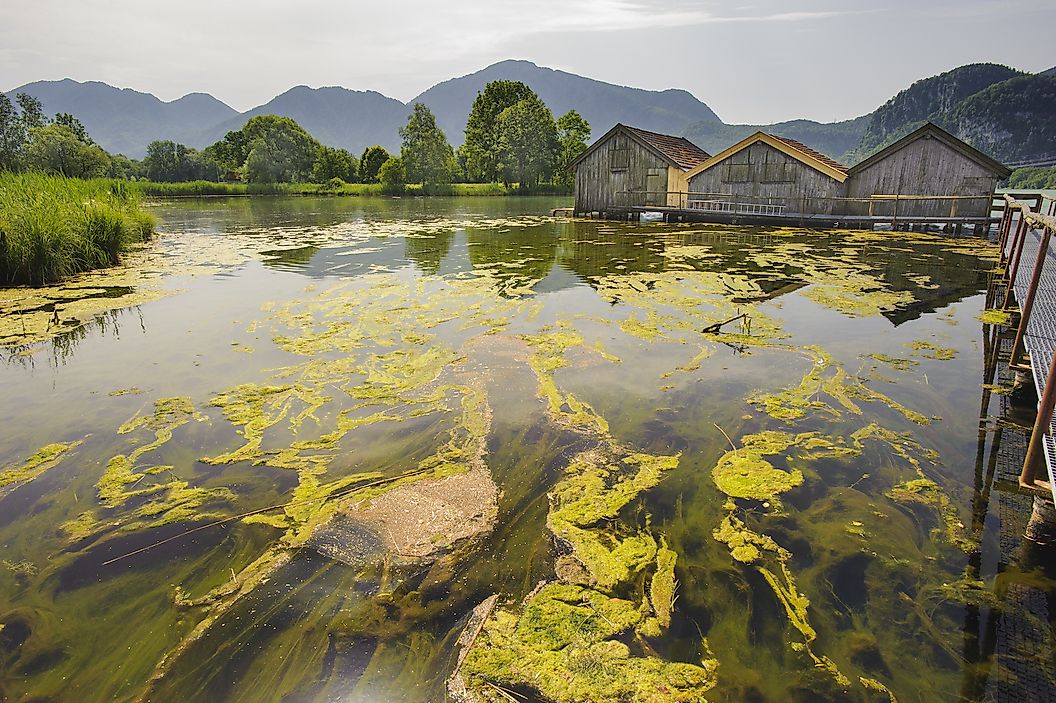
The lake's importance became impossible to overlook in August 2014. A harmful algal bloom produced microcystin near Toledo's water intake, and the toxin was detected in finished drinking water. Officials issued a do-not-drink order affecting roughly 500,000 people in Toledo and nearby communities. The episode showed how conditions in a lake can quickly become a public-water problem when so many communities share the same source.
Lake Huron Water Can Travel Well Beyond The Shore

Lake Huron shows why counting Great Lakes drinking-water users is more complicated than counting people living beside a lake. Municipal systems can move treated water considerable distances. A Lake Huron management plan published for 2017 through 2021 reported that more than 2.3 million people in Michigan and Ontario received drinking water sourced from the lake, including communities outside its immediate watershed.
The figure is useful for showing the reach of the system, but it is an older binational estimate rather than a current US subtotal. Newer Great Lakes reporting assesses the five-lake system together for the overall American drinking-water population.
Physically, Huron is enormous. EPA lists it as the second-largest Great Lake by surface area and third-largest by volume, holding about 850 cubic miles of water.
Lake Superior Holds More Water Than Any Other Great Lake

Lake Superior contains about 2,900 cubic miles of water, more than half of the water held in the five Great Lakes combined. Its maximum depth reaches about 1,332 feet, making it the deepest of the five.
Yet water volume alone does not determine how many people depend on a lake for drinking water. Superior's basin is comparatively sparsely populated, particularly when set beside the urban corridors around Lakes Michigan, Erie, and Ontario. A giant reservoir can therefore serve fewer municipal customers than a much smaller lake surrounded by large cities.
Lake Ontario Receives Water From The Entire Upper System

Lake Ontario covers about 7,340 square miles, giving it the smallest surface area of the five Great Lakes. It still holds roughly 393 cubic miles of water because it is considerably deeper than Lake Erie.
Its position is unusual. Water arriving through the Niagara River has already passed through the upper Great Lakes system before entering Ontario. The lake then drains into the St. Lawrence River.
Lake Ontario supplies heavily populated areas on both sides of the border, especially around its western end. Much of that population is Canadian, another reason lake-wide drinking-water estimates cannot be treated as American subtotals.
The Water Goes Through Treatment Before Anyone Drinks It

Great Lakes water entering a municipal intake is source water, not finished drinking water. Treatment plants use several barriers to remove particles and microorganisms and control other contaminants before the water reaches customers.
Cleveland's system provides a useful example. Water drawn from Lake Erie passes through screening, coagulation, flocculation, sedimentation, filtration, and disinfection. Treatment operators can adjust the process as lake conditions change. Similar details vary by utility, but every public system must meet applicable drinking-water requirements.
This is why saying millions of Americans "drink Great Lakes water" is accurate in an everyday sense, while drinking directly from the lakes is an entirely different matter. The municipal treatment system sits between the source and the faucet.
Most Systems Met The Standards Assessed In 2023
The latest State of the Great Lakes assessment rated treated drinking water sourced from the lakes as good overall. Of the approximately 20 million US residents served by those public water supplies in 2023, 97% received water that met all applicable health-based standards included in the assessment.
The system-level result was even higher. Water treated at 99% of community water systems drawing from the Great Lakes met the health-based standards covered by the indicator.
There is an important limit to those figures. The assessment focused on violations associated with source water and treatment, including filtration, corrosion control, and maximum contaminant levels. Some distribution-system issues were excluded. The percentages therefore describe the specific Great Lakes drinking-water indicator rather than every possible problem that can occur between a treatment plant and a household faucet.
EPA Checks The Lakes In Spring And Summer
Protecting drinking water starts before raw water reaches an intake. EPA conducts water-quality surveys on all five Great Lakes during spring and summer aboard the research vessel Lake Guardian. Scientists collect samples at different depths and track conditions throughout the water column.
The work includes measurements of pH, turbidity, conductivity, nutrients, dissolved oxygen, and other chemical and physical properties. In August 2026, Lake Guardian began another month-long summer survey of all five lakes. EPA said the data would help safeguard water quality for drinking and recreation while also tracking algal growth, nutrient conditions, and other ecosystem pressures.
Lake Erie receives particular attention because excess phosphorus can fuel harmful algal blooms. Monitoring gives scientists and water managers a clearer picture of changing conditions before they become problems at municipal intakes.
One Water System Used By Millions

The Great Lakes contain about 21% of the world's surface freshwater and extend more than 750 miles across the continent. Their size can make them feel almost oceanic, yet a substantial share of that shoreline is also the edge of a working public-water system.
The best current estimate is approximately 20 million Americans served by public water supplies sourced from the Great Lakes. Add roughly 10 million Canadians, and about 30 million people in the two countries depend on these waters for treated drinking water.
For those households, the connection is remarkably direct. Water moving through Lake Michigan beside Chicago or Lake Erie outside Cleveland can eventually pass through an intake, a treatment plant, miles of pipes, and a kitchen faucet. The lakes are enormous geographic features, but for millions of people, they are also where the day's tap water begins.