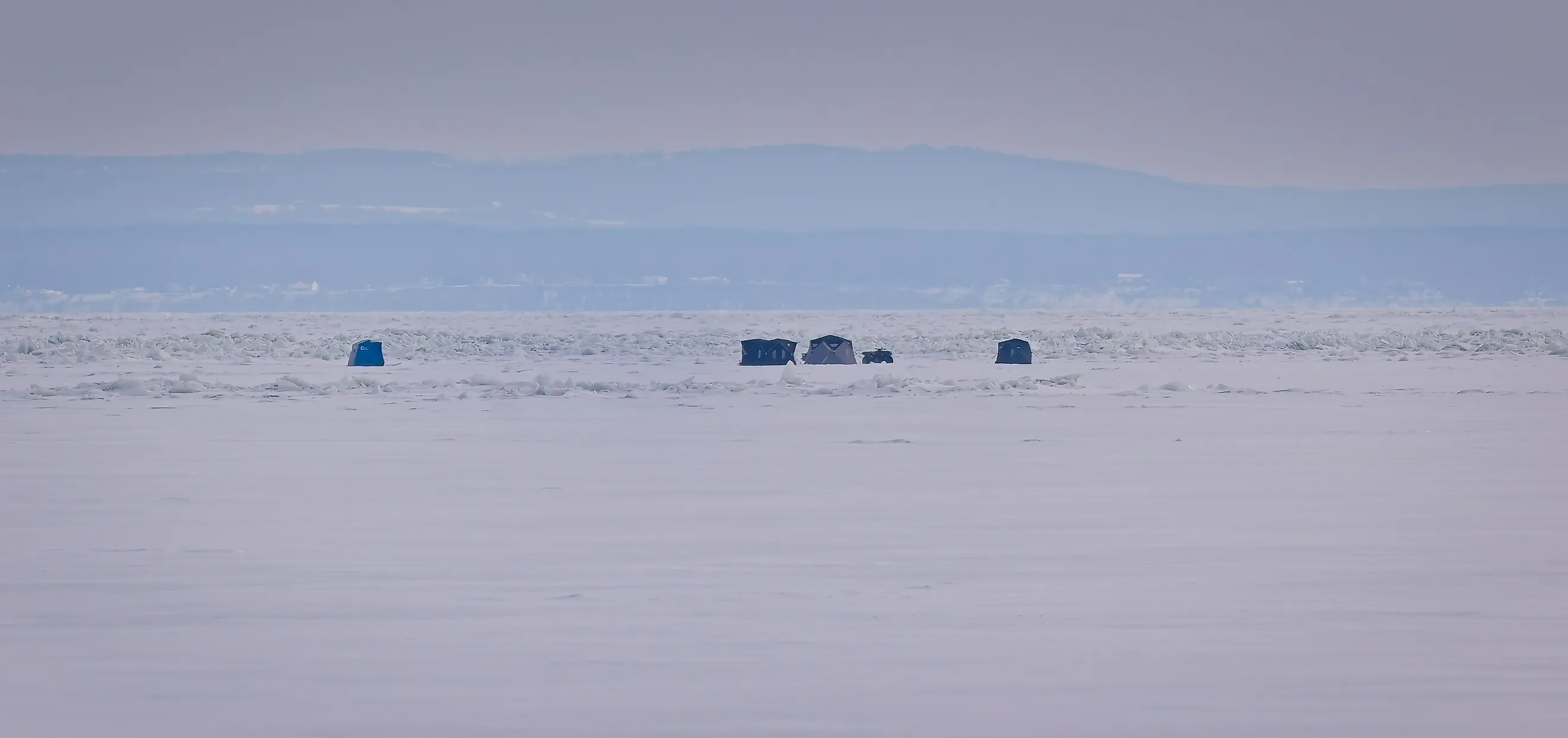
How Long The Ice Fishing Season Lasts On The Great Lakes
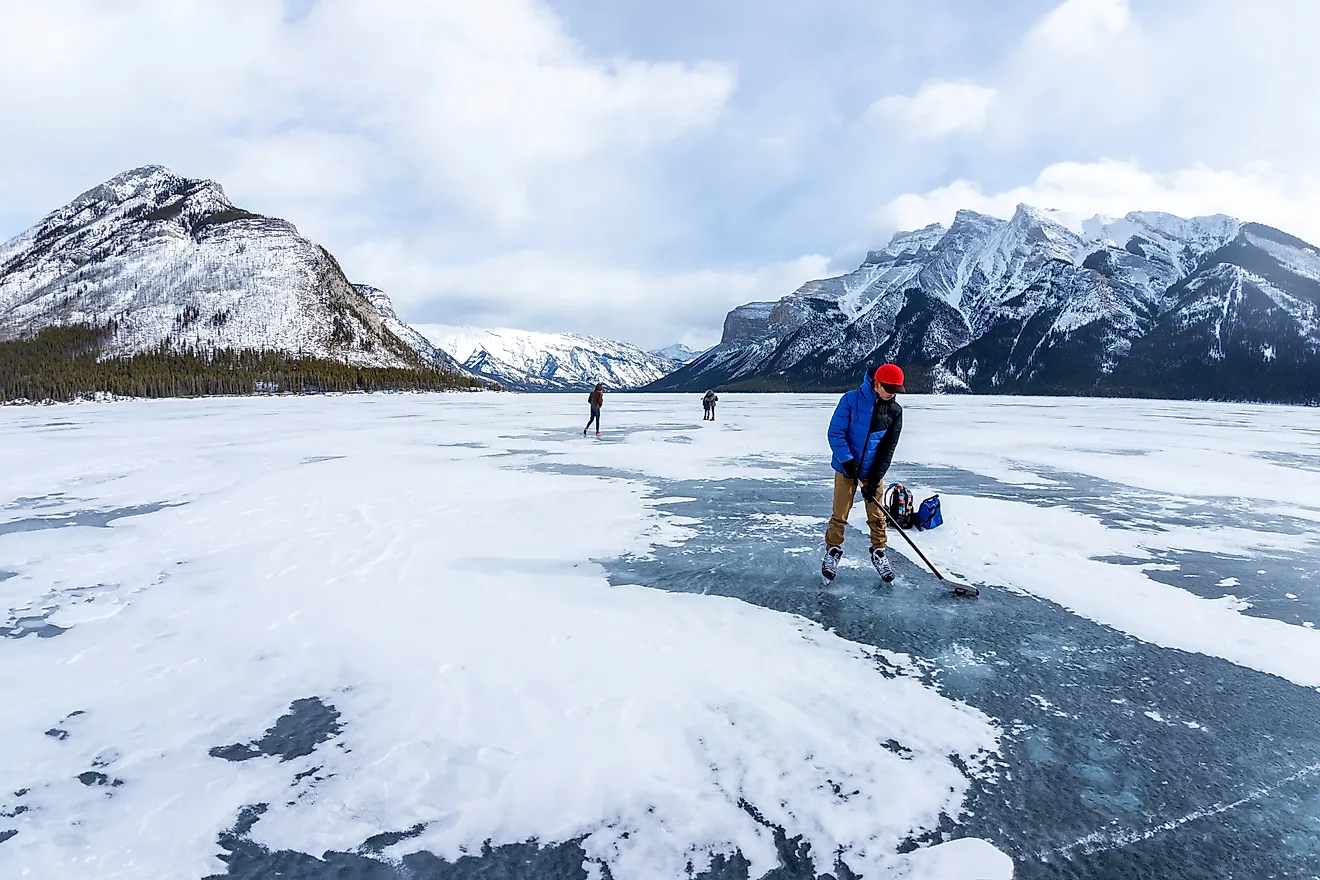
The Coast Guard defines the Great Lakes winter ice season as running from mid-December, when ice begins to impede navigation, through late March or early April. Maximum ice extent normally arrives at the end of February or early March. That gives roughly fifteen weeks, but the figure hides something important: the open water of Lake Michigan and Lake Ontario rarely freezes at all. Ice fishing on the Great Lakes almost entirely means ice fishing in the bays.
Mid-December To Early April

The official framing comes from the agency that has to work through it.
The Coast Guard's winter ice season runs from mid-December, when ice is determined to impede navigation, through late March or early April, when ice no longer impedes it and temperatures are not expected to return to levels that would form more.
Other descriptions put the ice season at December through April. Both leave a window of about three and a half to four months.
The Bays Freeze First

Where the season starts is more useful than when, because it is always the same places.
The Great Lakes ice season typically begins in the shallow, protected bays like Green Bay and Saginaw Bay, sometime in December. Those inlets see ice cover long before anything else.
Heavy ice also forms reliably in Duluth-Superior Harbor, the St Marys River, the Straits of Mackinac, the Detroit and St Clair rivers and all of Lake Erie.
The Deep Lakes Barely Freeze

This is the constraint that shapes everything about where people fish.
The open waters of deep lakes such as Michigan and Ontario rarely see ice cover at all. Michigan averages 280 feet deep and Ontario 283, holding far too much heat to freeze across.
Lake Erie is the exception at 62 feet average, which is why it is the one that produces usable ice across open water rather than only in corners.
Peak Comes At The End Of February

The best and most reliable ice arrives late in the season rather than in the depth of winter.
Maximum ice extent normally occurs at the end of February or early March. That is when coverage, thickness and stability all align.
December ice is thin and February ice is thick, but March ice is deteriorating even while it looks solid. The usable window is narrower than the ice-cover window.
Lake Winnebago Takes Ten Thousand Cars

The scale of a good season on a connected lake is easier to grasp than coverage percentages.
On Lake Winnebago, which drains into Green Bay through the lower Fox River, it is not uncommon for 10,000 cars to park on the ice during the ice fishing season. Expansion cracks are bridged and cities along both shores plow roads across the surface.
The lake sturgeon spearing season runs in February. Winnebago held the largest sturgeon population in the United States as of 2003.
Walleye And Perch Drive It

What people are fishing for explains where the effort concentrates.
Sauger and walleye predominate on Winnebago, with perch and white bass taken less often. Saginaw Bay and Green Bay draw anglers for the same species.
These are shallow-water fish in shallow-water bays, which happens to be exactly where the ice is.
Shipping And Fishing Share The Ice

The same ice that supports an angler is a problem for somebody else.
Icebreaking on the Great Lakes starts in December and runs until the Soo Locks close around 15 January, resuming as the Coast Guard prepares tracks about ten days before the locks reopen on 25 March.
Cutters work Green Bay, the Straits and Whitefish Bay through the same months that anglers are driving onto them elsewhere.
A Bad Year Cancels Most Of It

The three-and-a-half-month figure assumes the ice actually forms.
On 16 March in one recent season, total Great Lakes ice cover stood at 6.7 percent against 43.1 percent on the same date three years earlier. Derbies were canceled and travel on the ice was judged unsafe.
The season is defined by temperature rather than by the calendar, and the calendar has become the less reliable of the two.
Early And Late Ice Are The Dangerous Ones

The weeks at either end account for most of the trouble.
Thin December ice and rotting late-March ice both look walkable and are not. Minnesota's guidance puts the minimum for a car or small pickup at 8 to 12 inches of clear ice, and doubles that for white ice.
Ice also loses roughly half its strength when it forms from saturated snow rather than freezing from below.
Inland Lakes Beat The Great Lakes

Serious ice anglers in the region often skip the big water entirely.
Lake of the Woods holds one of the longest and most stable ice seasons in the Midwest, with reliable fishing for nearly four months from December through March and plowed roads running 20 miles out.
A shallow inland lake freezes earlier, thicker and more predictably than any of the five. The Great Lakes are a worse place to stand than the lakes beside them.
The Short Answer

About mid-December to early April, with peak ice at the end of February or early March, giving roughly three and a half months in a normal winter. Green Bay and Saginaw Bay freeze first and hold longest.
The important qualification is that the open water of Lakes Michigan and Ontario rarely freezes at all. Ice fishing on the Great Lakes means the bays, the harbors, the connecting rivers and Lake Erie, which is shallow enough to behave like an inland lake.