How Lake Of The Woods Compares To The Great Lakes
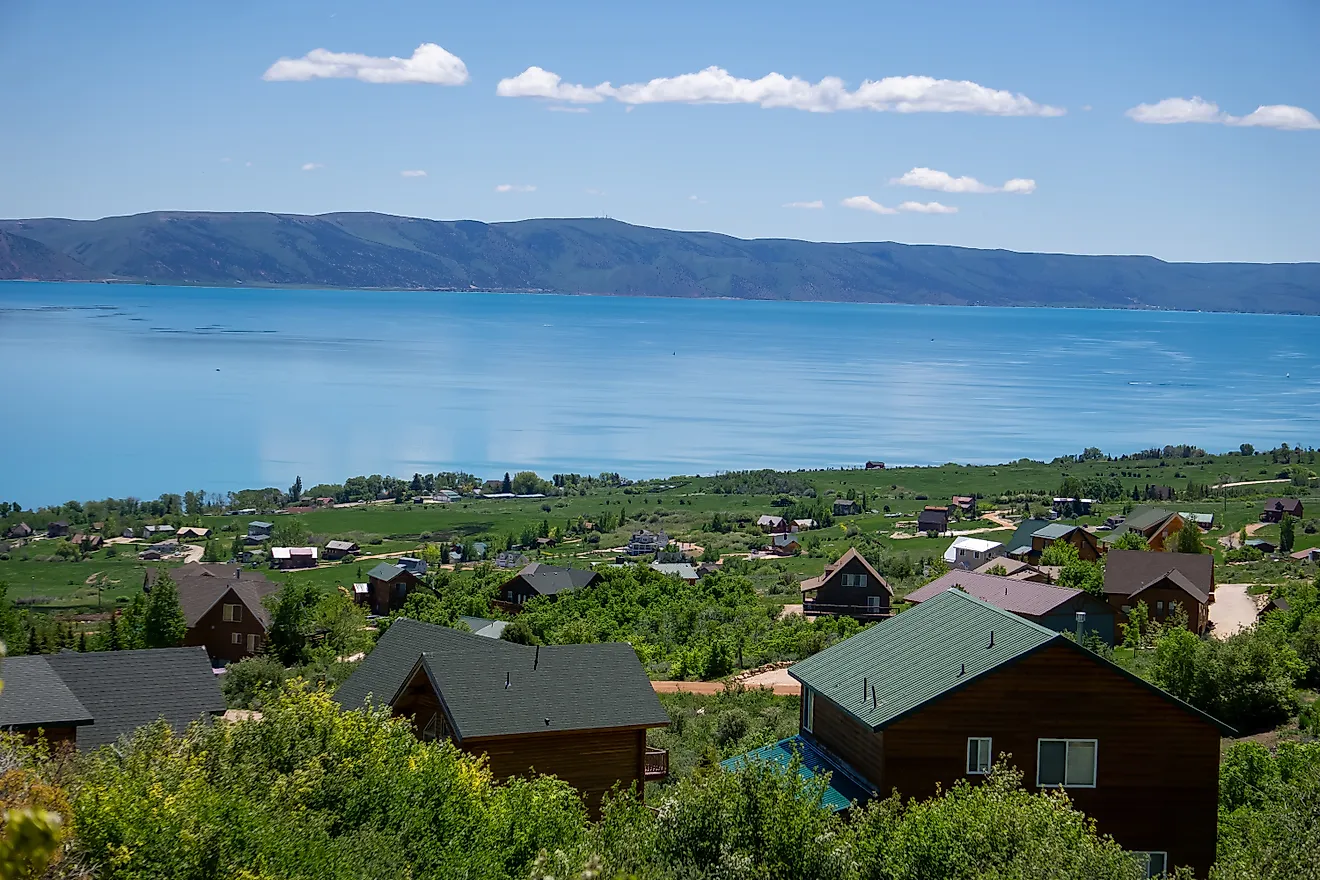
Lake Superior has 4,387 kilometers of shoreline counting its islands. Lake of the Woods has 105,000. That is roughly 24 times the coastline on a lake with one nineteenth the surface area, which reads like a misprint and is not. The culprit is 14,552 islands, a figure that also means this single lake contains more islands than Minnesota claims to have lakes in its own slogan. The state undersold itself by four and a half thousand, using one lake.
The Shoreline Figure Is Real

The number is published in two versions and both of them beat Lake Superior.
Excluding islands, Lake of the Woods has about 40,000 kilometers of shore. Including islands it reaches 105,000, or 65,000 miles. Lake Superior's shoreline including islands is 4,387 kilometers.
So even deleting every island from the calculation, Lake of the Woods still has nine times Superior's coastline. Count the islands and it reaches 24 to one. Superior holds ten percent of the world's surface fresh water and cannot win an argument about edges.
Fourteen Thousand Islands

The mechanism behind the shoreline figure is simply an enormous number of very small pieces of land.
Lake of the Woods contains more than 14,552 islands, with some sources citing 14,632. Lake Superior has Isle Royale, the Apostles, Michipicoten, Grand Island and the Slates, which is a handful of large ones rather than a scatter of thousands.
At one island per night you would need just under 40 years to get through them, by which point the first few would need revisiting. Every island adds its own perimeter, which is how a lake smaller than Lake Erie ends up with a coastline longer than most countries.
It Finishes Last On Area

On the conventional measure the result is the familiar one for this series.
Lake of the Woods covers 4,350 square kilometers. Ontario is 4.4 times larger, Erie 5.9, Michigan 13.3, Huron 13.7 and Superior 18.9.
The lake runs over 110 kilometers long and roughly as wide, spread across Ontario, Manitoba and Minnesota. That is enormous by the standards of anywhere else and faintly embarrassing here, which is the recurring experience of every lake that enters this comparison.
It Ties Lake Erie Exactly

One result in this comparison is a dead heat, which has not happened before in the series.
Lake of the Woods reaches a maximum depth of 64 meters, or 210 feet. Lake Erie reaches a maximum depth of 64 meters. Not approximately, not close enough to round. The same figure.
Against the others it is not close, with Huron at 229 meters, Ontario at 244, Michigan at 281 and Superior at 406. One tie and four comfortable defeats, and the tie is with the lake this series has spent months calling the shallow one.
Part Of It Is In Three Jurisdictions

The administrative arrangement is more complicated than any Great Lake manages.
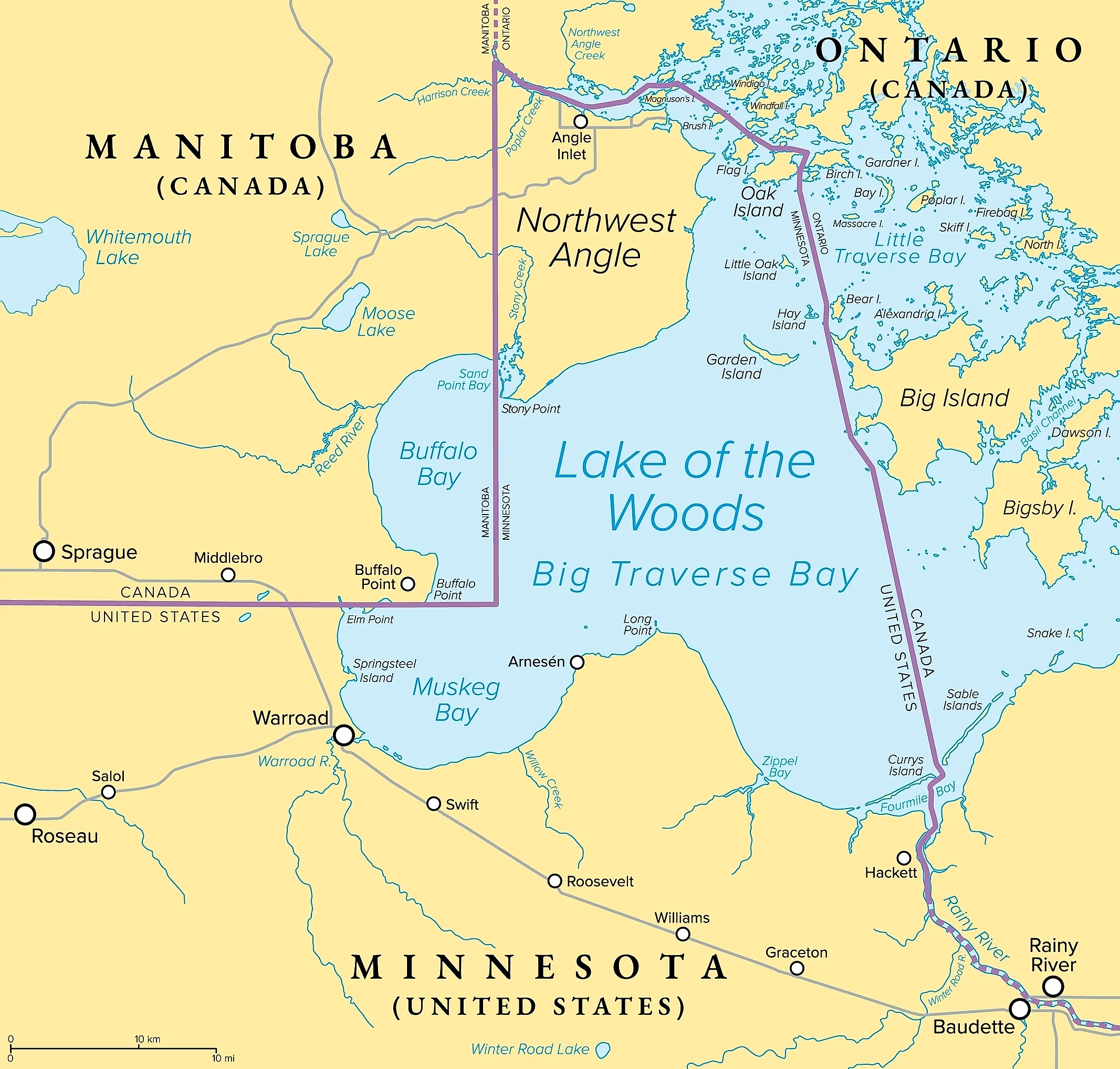
Lake of the Woods occupies parts of Ontario, Manitoba and Minnesota, with settlements including Kenora and Sioux Narrows in Ontario, and Warroad and Angle Inlet in Minnesota.
The Great Lakes are divided between two countries and eight states, but not one of them is split three ways between two provinces and a state. Lake of the Woods requires three separate governments to agree about a lake none of them can see all of.
It Created A Geographic Accident

This is the detail that no other lake on the continent can offer.
The Northwest Angle is a 123 square mile piece of Minnesota separated from the rest of the United States, reachable from Minnesota only by crossing the lake or driving through Canada. It is the northernmost part of the contiguous United States.
It exists because of a surveying error in the 1783 Treaty of Paris. Somebody got this lake's position wrong, nobody noticed in time, and 240 years later a corner of Minnesota is still marooned behind Canada because of it. You cannot drive there from your own country.
Shallow Water Over A Wide Area

The depth profile explains why the lake feels larger than its volume suggests.
With a maximum of 64 meters across more than a million acres, most of Lake of the Woods is considerably shallower than that figure implies. Big Traverse Bay alone stretches 30 miles north to south and 25 east to west.
That combination of enormous extent and modest depth makes it exceptional for fish and entirely unremarkable for water. It is a very wide puddle with a world-class reputation.
The Fishing Is The Point

Everything about the lake's structure produces one practical outcome.
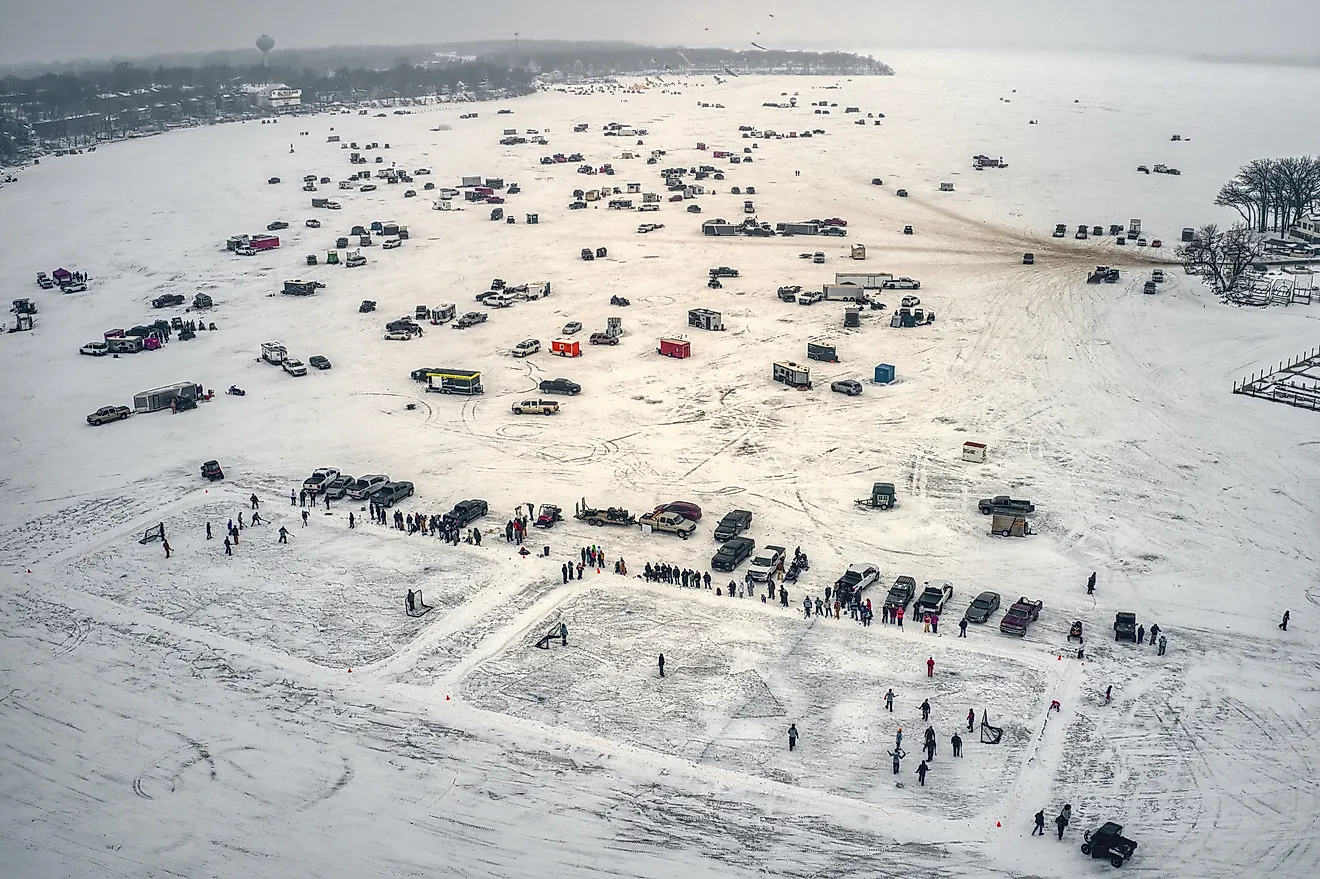
The species list runs to bass, crappie, muskellunge, perch, pike, sturgeon, trout, walleye and whitefish. The Northwest Angle alone offers year-round structure fishing around those 14,552 islands.
Structure is the word doing the work. A hundred and five thousand kilometers of shoreline is a hundred and five thousand kilometers of edge habitat, which is why anglers talk about this lake the way other people talk about religion.
It Is The Largest US Lake On The Border

There is one superlative it holds outright, with a careful qualification attached.
Lake of the Woods is described as the largest US lake to border Canada, which excludes the Great Lakes themselves on the grounds that they are a different category of thing entirely.
At over one million acres it operates on a different level from any other Minnesota lake, in a state whose entire brand is having a lot of lakes. This one has more islands than the brand has lakes.
The Scoreboard

Lake of the Woods loses to every Great Lake on surface area, finishing last by margins from 4.4 to 18.9 times, and exactly ties Lake Erie on maximum depth at 64 meters while losing to the other four.
Then it wins the one category it bothered to enter. With 14,552 islands producing 105,000 kilometers of shoreline, it has roughly 24 times the coastline of Lake Superior on a nineteenth of the surface, and more islands than Minnesota advertises lakes. It also contains the northernmost point of the contiguous United States, which is there because somebody measured this lake wrong in 1783 and the error was never corrected. The Great Lakes are bigger. Lake of the Woods has more edges than all of them and a piece of America it refuses to give back.