How Great Lakes Freighters Survive 25-Foot Waves
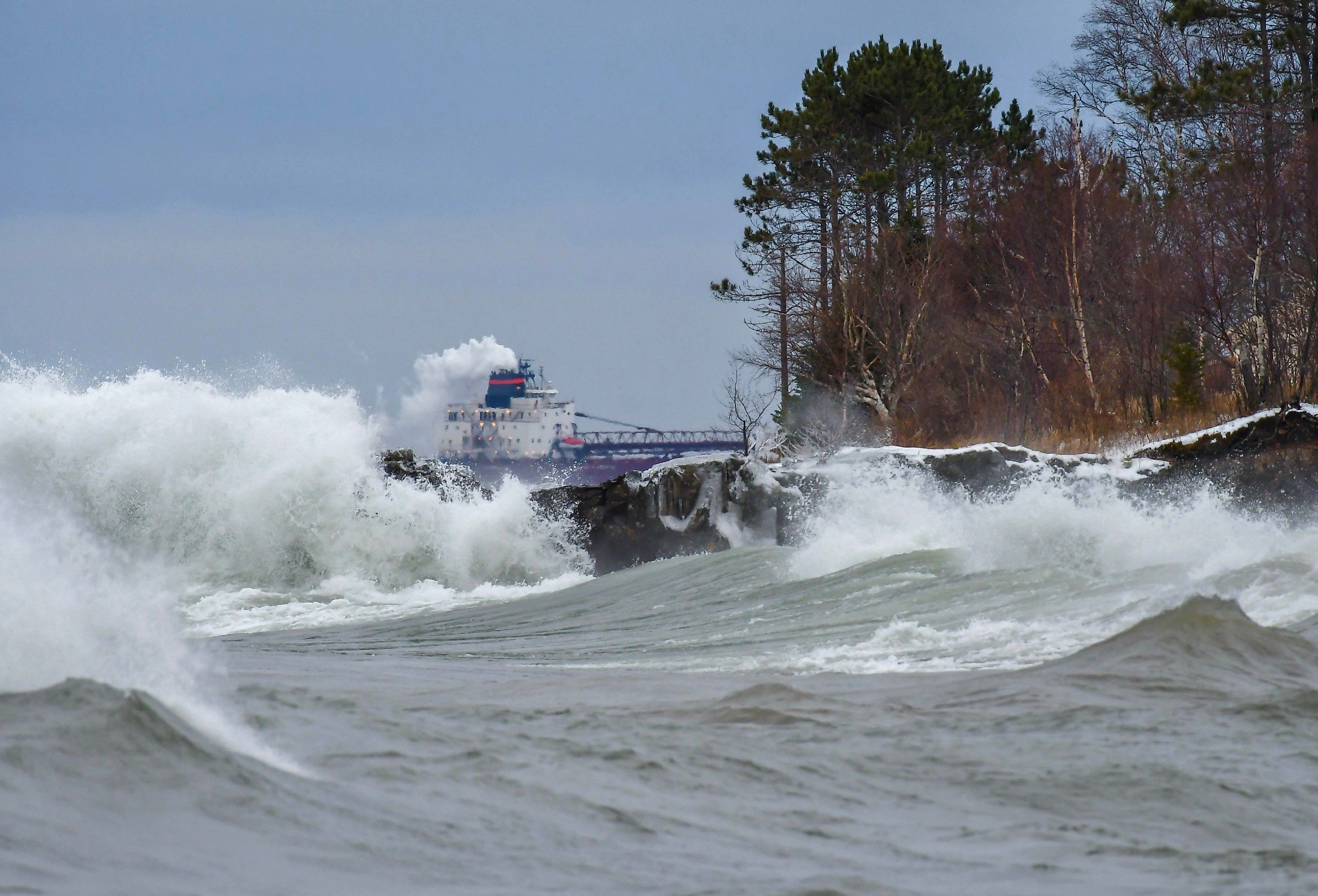
A singular 25-foot wave can tower higher than a two-story building, yet somehow massive cargo ships regularly find ways to power through intense storms and cross the Great Lakes. Guiding these commercial vessels through treacherous waters, especially when carrying heavy bulk goods such as iron ore, limestone, and grain, can pose immense challenges. Surviving such harsh conditions is dependent on several layers of protection. While things like a sturdy hull or a locked cargo hatch are helpful on a calm day, on a bad day, these precautions can make the difference between a successful voyage and an absolute disaster.
Why Great Lakes Waves Are Unique

Wave height alone cannot determine how threatening a storm may be. In NOAA marine forecasts, significant wave height is the average height of the highest one-third of waves during the measurement period. The Great Lakes also differ from the open ocean because they are enclosed by land, limiting the distance (or 'fetch') over which wind can build waves. During powerful extratropical storms, strong winds have less room to produce long, widely spaced swells. Rather, they generate shorter, steeper, and more irregular waves that can strike a vessel in rapid succession. Wave direction, steepness, length, and spacing further influence how a ship responds, making a 15-foot wave in one storm potentially vastly different from a wave of the same height in another.
Great Lakes commercial freighters vary widely in length, from vessels under the Seaway's 740-foot limit to lake-only carriers that exceed 1,000 feet. The front end (bow) may climb one crest while the center sits in a valley (trough), and the rear (stern) approaches another wave. In other words, as these waves shift beneath the hull, different sections of the ship rise and fall, placing the structure under powerful bending and shearing forces. Engineers account for these stresses when designing Great Lakes freighters, which must carry enormous cargo loads while enduring repeated wave impacts. Internal framing, decks, bulkheads, and steel plating help spread these forces throughout the vessel. The goal is not to make the ship completely rigid, but rather flexible enough to absorb controlled movement without structural damage.
Structural Strength and Water Clearance

Great Lakes freighters follow different size limits: Seawaymax vessels fit the St. Lawrence locks, while thousand-foot lake-only carriers are designed for larger infrastructure such as the Poe Lock. Because these vessels are so stretched out, they face a particularly tricky engineering problem: When a wave lifts the bow of the ship and leaves the center hanging low in the water, the forces acting on the frame change completely. The effect is similar to bending a long beam, except this beam in question may be carrying thousands of tons of cargo while moving through a storm. Naval architects carefully calculate these pressures to ensure the ship has the longitudinal strength to resist bending and tearing. This specialized design is vital because Great Lakes storms tend to deliver a nonstop pounding of tightly packed waves rather than isolated swells.
Keeping a ship afloat takes more than just a tough skeleton; it also comes down to how much of the vessel stays safely above the water. Freeboard is a term that simply means the vertical distance from the water up to the main deck, and the higher that clearance is, the more room the ship has before waves start crashing over the top. To keep things safe, strict load line rules control how low a ship is allowed to sit in the water by using painted marks along the hull. If a ship is overloaded, it eats away at its built-in buoyancy, leaving dangerously little freeboard when heavy seas roll in. Therefore, when it comes to structural design, it is imperative that Great Lakes freighter engineers make these adaptations to ensure a greater safety margin that can eventually become a total lifesaver when a storm hits.
Protecting the Interior and Managing the Weight

Great Lakes freighters haul tens of thousands of tons of bulk cargo in massive holds, so the decks often feature large openings that must be handled with the utmost care. Cargo cannot simply be thrown into whichever hold is most convenient; rather, loading plans must carefully account for the ship's trim, draft, stability, and structural stress to keep the freighter adequately balanced. If a ship sits too deeply in the water, it loses valuable freeboard, and uneven loading can twist its frame or even ruin its overall stability. Crews take lake water into ballast tanks and adjust it during loading, unloading, and the voyage to manage draft, trim, stability, and hull stresses.
Managing the weight is only half of the battle, because keeping water out of the cargo holds is equally vital. Under federal regulations, masters generally must ensure exposed cargo hatches and specified hull openings are properly closed and secured before leaving protected waters, subject to limited Great Lakes exceptions. If a substantial amount of water managed to flood the holds, that unaccounted weight destroys the ship's trim and stability while drastically reducing its freeboard. Substantial cargo-hold flooding adds weight, reduces freeboard and reserve buoyancy, and can create dangerous list, trim, and stability problems. Ultimately, secure hatch covers and smart cargo loading work hand in hand as a ship's defense against the ferocious power of the lake.
Evasive, Active Navigation, and the Ultimate Lesson

Even the strongest hull cannot make every storm safe, which is why a crew's primary line of defense will always be simply staying out of harm's way. The National Oceanic and Atmospheric Administration (NOAA) contains monitoring systems and real-time weather forecasts, which sailors can use to track storms before they reach dangerous waters. Because journeys through the Great Lakes can be relatively short and are full of sheltered ports, captains can choose to alter their routes, adjust speeds, or delay departure entirely. Avoiding severe weather in this industry is not seen as a sign of weak ship design or cowardly crew members, but rather a standard and effective safety strategy.

When getting caught in a tempest is unavoidable, how a ship confronts the water becomes imperative. A massive freighter reacts differently depending on whether waves crash into the front, hit it from the side, or chase it from behind. Crew members must tactfully oversee vessel speed and heading to control how frequently the ship encounters these towering swells. The goal is never to fight or conquer the waves, but rather to keep the vessel's structure, stability, and buoyancy within safe limits as it rides through chaos. Even in the instances where water breaches the outer barriers, a modern freighter has a series of internal safeguards to prevent total disaster. Weathertight closures limit water entry, watertight subdivision can restrict progressive flooding, bilge systems remove limited internal water, and scuppers or freeing ports drain boarding water from the deck. None of these individual mechanisms makes the structure invincible, but their true power lies in containment, keeping a single localized problem from immediately spiraling into multiple compounding failures.
The tragic loss of the Edmund Fitzgerald on November 10th, 1975, remains the starkest reminder of what happens when these safety margins disappear. When the large freighter vanished in Lake Superior during a brutal storm, the NTSB identified the probable cause as sudden massive cargo-hold flooding after one or more hatch covers collapsed, following earlier flooding through damaged topside openings and non-weather-tight covers that reduced freeboard and produced a list. The sinking claimed the 729-foot freighter and all 29 crew members. It stands as a haunting demonstration of how quickly a difficult voyage can turn into a complete catastrophe once water begins to find its way inside.
Despite the massive sizes of these vessels, surviving a towering 25-foot wave requires far more than it may initially seem. Keeping a Great Lakes freighter afloat is a delicate balancing act that relies on every single protective measure taken working in harmony, from proper cargo, ballast distribution, and reliable freeboard to secure hatches and fast deck drainage. It also depends heavily on the captain and crew knowing when to either pursue alternative routes, seek shelter, or delay departure before conditions turn too perilous to change course. On calmer days, these lakes can feel deceptively peaceful, but during major storms, these gigantic ships must navigate a shifting landscape of waves that can be taller than houses. In severe weather, a freighter's safety depends on the combined performance of its structure, loading plan, closures, drainage systems, navigation decisions, and crew.