The Oldest National Forest In America
Long before the United States had more than 150 national forests covering almost every corner of the country, there was one forest that became the model for how the nation would manage millions of acres of public land. Established in 1891, the Shoshone National Forest in northwestern Wyoming is the nation's oldest national forest. Today it protects about 2.4 million acres of mountains, alpine lakes, rivers, and wildlife habitat along the border of Yellowstone National Park. Most visitors come to hike or camp, but the forest is also the starting point of a uniquely American philosophy of public land management that balances recreation, wildlife conservation, timber production, grazing, and watershed protection under the stewardship of the USDA Forest Service.
National forests are not the same as national parks, which are managed largely to preserve scenery and natural resources. That philosophy began with Shoshone and continues across the National Forest System today.
America's First National Forest

Shoshone National Forest was created on March 30, 1891, by President Benjamin Harrison as the Yellowstone Timberland Reserve. It was the very first forest reserve established under the Forest Reserve Act of 1891, legislation that allowed presidents to set aside public forest lands for protection. When the U.S. Forest Service was created within the Department of Agriculture in 1905, the reservation became part of the new agency, and in 1907 it officially received the name Shoshone National Forest.
The forest takes its name from the Eastern Shoshone people, whose ancestral homeland included much of the surrounding region. Today, the nearby Wind River Reservation remains home to the Eastern Shoshone and Northern Arapaho tribes.
Although the designation of "national forest" came later as the federal system evolved, historians and the Forest Service recognize Shoshone as the nation's oldest national forest because it was the first federal forest reserve that eventually became part of today's National Forest System.
A Landscape Shaped by Mountains and Glaciers

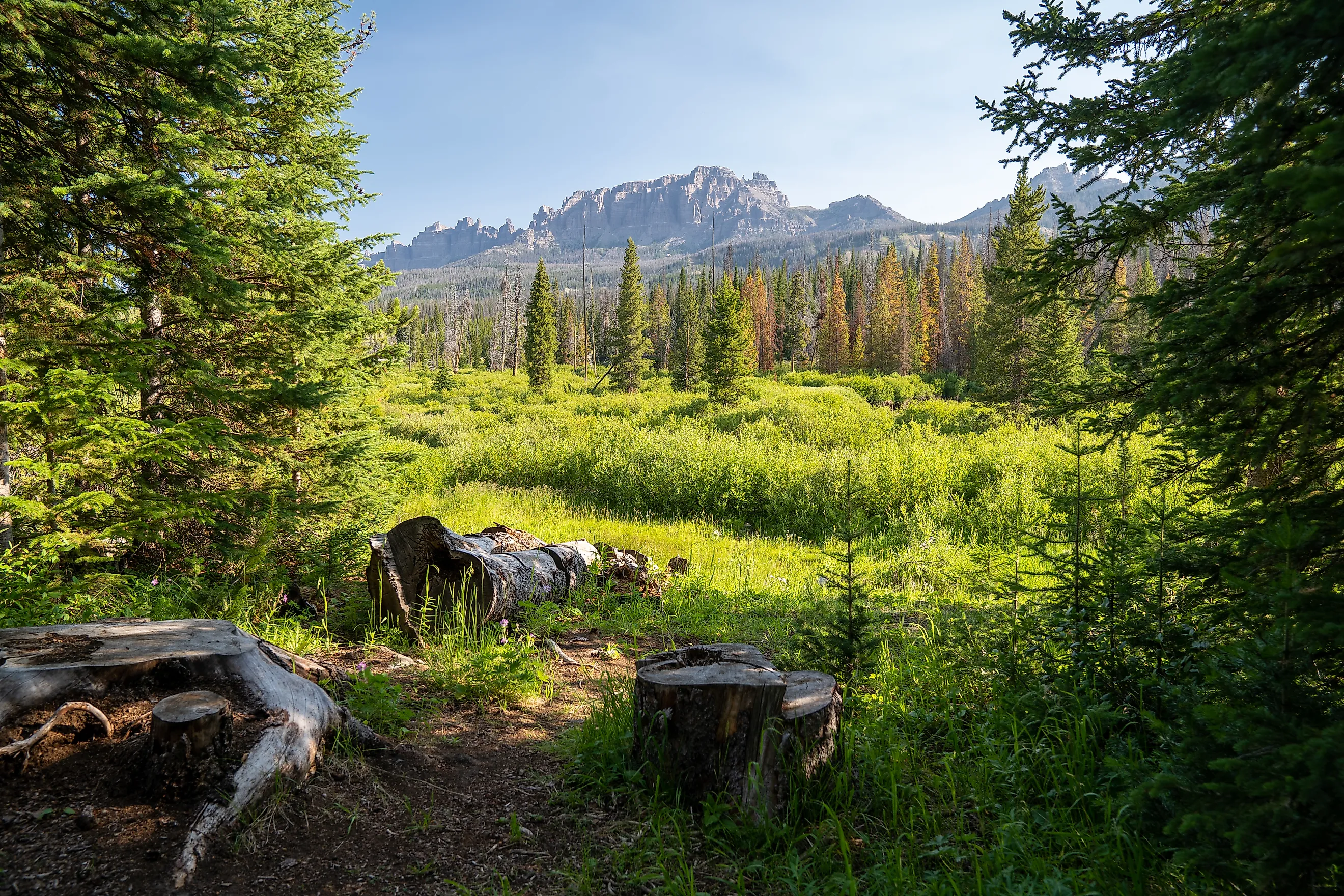
The Shoshone National Forest is roughly 2.4 million acres of some of the most spectacular scenery in the Rocky Mountains. The forest includes most of the Absaroka and Beartooth mountain ranges, featuring rugged volcanic peaks rising above dense evergreen forests and open alpine meadows.
One of its defining features is the Absaroka Range, created by volcanic activity about 50 million years ago. The Absarokas are of volcanic origin, the bordering ranges in many places being granite. This gives the Absarokas dramatic cliffs and colorful peaks that set them apart from the rest of the Rockies.
The forest is also home to many glaciers, several of which are on the Beartooth Plateau. Many glaciers in the American West have shrunk dramatically over the past century, but some still exist at higher elevations, supplying water to streams and rivers that flow to communities and ecosystems below.
Elevations range between about 4,600 feet and more than 13,800 feet at Gannett Peak, the highest mountain in Wyoming. This vast difference in elevation creates an astonishing variety of habitats, including sagebrush valleys and wind-swept alpine tundra.
Wildlife Thrives Across Millions of Acres

Shoshone National Forest is considered by many to be the most intact ecosystem left in the contiguous United States. The close proximity to Yellowstone National Park and several adjacent wilderness areas helps provide a large, mostly undeveloped landscape that allows animals to travel freely across natural migration corridors. As a result, visitors have the chance to see an impressive variety of animals, including grizzly bears, black bears, gray wolves, mountain lions, moose, elk, bighorn sheep, mule deer, pronghorn, Canada lynx, wolverines, bald eagles, and trumpeter swans.
The forest provides critical habitat for several sensitive and threatened species, particularly grizzly bears, whose numbers have recovered significantly within the Greater Yellowstone Ecosystem after decades of conservation efforts. Because wildlife moves freely between Yellowstone National Park and the surrounding national forests, many animals spend part of the year inside the park before migrating into Shoshone with the changing seasons in search of food, breeding grounds, or winter habitat.
The Shoshone Is a Working Forest

Many first-time visitors expect national forests to function much like national parks, but Shoshone National Forest exemplifies one of the most important distinctions between the two types of public land. Managed by the USDA Forest Service, national forests operate under a "multiple use" mandate from Congress, meaning they are meant for use in a variety of ways, not just for preservation. Recreation is a key part of Shoshone identity, but forest managers must also balance the needs of wildlife habitat, livestock grazing, sustainable timber management, watershed protection, permitted mineral activities, hunting, fishing and other public uses.
This is not in keeping with the mission of the National Park Service, which is to preserve natural and cultural resources and to allow people to enjoy those resources. Instead, national forests are viewed as working landscapes that blend conservation and resource use with recreation.
Ranching operations that have been in the area for generations continue to operate on grazing allotments within Shoshone National Forest. Hunting is also permitted during regulated seasons, helping state wildlife agencies manage populations of elk, deer, and other game species. Timber harvesting takes place on a much smaller scale than in many other national forests because much of Shoshone's terrain is rugged, remote, or protected as wilderness.
Nearly 1.4 million acres of Shoshone National Forest are designated wilderness, including portions of the Absaroka-Beartooth Wilderness, Fitzpatrick Wilderness, North Absaroka Wilderness, and Washakie Wilderness. These areas receive some of the strongest federal protections available while still remaining part of the national forest system. Shoshone's protected wilderness and active land management are examples of the balance that defines America's national forests, protecting important ecosystems while also remaining open for people to use and enjoy in many different ways.
Fire Is Part of the Forest's Natural Cycle

Wildfire is often viewed only as destructive, but in many Rocky Mountain forests it plays an essential ecological role.
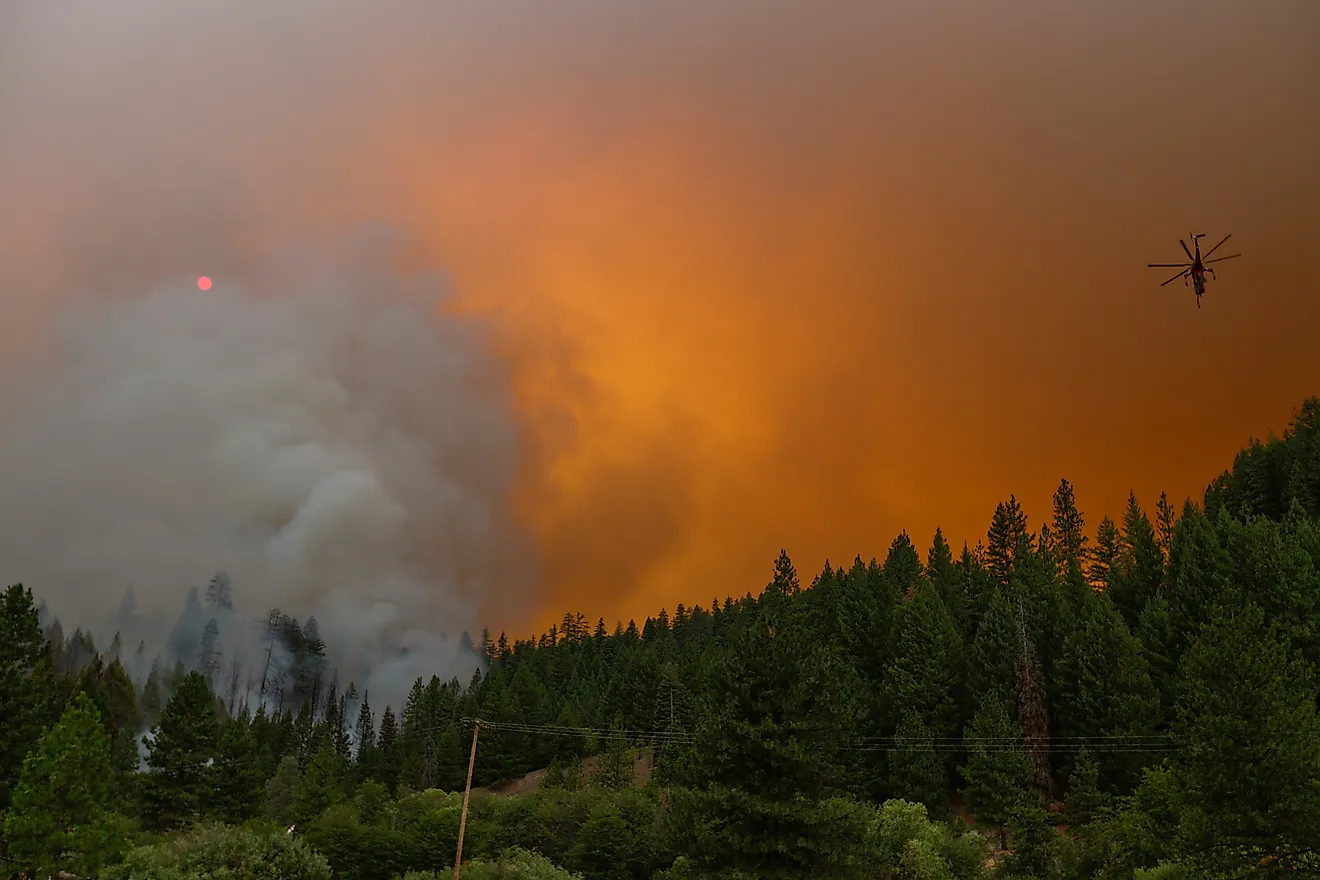
For thousands of years, lightning has carved Shoshone's forests with fires. Many tree species evolved with periodic fires that clear away accumulated vegetation, return nutrients to the soil, and create openings for new plants to grow.
Today, decades of aggressive fire suppression throughout the twentieth century have led land managers to recognize that excluding all fire from forest ecosystems can lead to excessive fuel buildup that, when conditions are right, increases the likelihood of larger and more severe wildfires.
Now, the Forest Service combines wildfire response with prescribed burns, mechanical thinning, and fuel reduction projects to reduce wildfire risk and create healthier forest conditions. The exact method depends on the weather, location, surrounding communities and ecological conditions.
Instead of seeing all burned areas as damaged, forest ecologists often think in terms of how vegetation naturally recovers after fire. Many burned landscapes go through a succession of grasses, wildflowers, and shrubs, and then young forests, each of which supports different wildlife species than mature stands do.
Recreation Draws Visitors Year-Round

Shoshone National Forest doesn't get the same level of attention as its more famous neighbor, Yellowstone National Park, but it provides an equally impressive array of outdoor experiences with far fewer crowds. The forest provides opportunities for almost every type of adventure, including hiking, backpacking, camping, rock climbing, horseback riding, mountain biking on designated trails, scenic driving, fishing, whitewater rafting, kayaking, and wildlife viewing during the warmer months. When winter arrives, the landscape becomes a destination for snowmobiling, cross-country skiing, and snowshoeing across snow-covered mountain terrain.
One of the forest's most scenic routes is the Buffalo Bill Cody Scenic Byway, which follows U.S. Highway 14/16/20 west from Cody toward Yellowstone National Park. Along the route, travelers pass towering cliffs, cascading waterfalls, dense forests, and the dramatic waters of Buffalo Bill Reservoir before reaching the park boundary. Because Shoshone serves as one of the primary gateways to Yellowstone, many visitors unknowingly travel through America's oldest national forest before they ever enter the nation's first national park, experiencing its rugged landscapes and abundant wildlife along the way.
More Than 130 Years of Public Land Stewardship
Over more than a century, Shoshone National Forest has become far more than the first name on a historical list. It established the foundation for a national system that now manages nearly 193 million acres of public land across the United States.
Its history reflects the evolution of American conservation itself. The first forest reserves were mainly concerned with protecting timber supplies and watersheds. Over the years, management has expanded to include wilderness preservation, outdoor recreation, wildlife, sustainable resource use, along with wildfire management.
That balance continues to define national forests today. Visitors can hike through designated wilderness in the morning, pass active grazing allotments in the afternoon, and camp beneath some of the Rocky Mountains' darkest night skies, all within the same public landscape.
More than 130 years after its creation, Shoshone National Forest remains both a living ecosystem and a working forest, demonstrating the multiple-use philosophy that continues to guide the USDA Forest Service across the National Forest System. Its combination of rugged mountains, abundant wildlife, rich history, and ongoing stewardship makes it not only America's oldest national forest but also one of its most enduring public landscapes.