The Sequoia Groves Of Sequoia And Kings Canyon
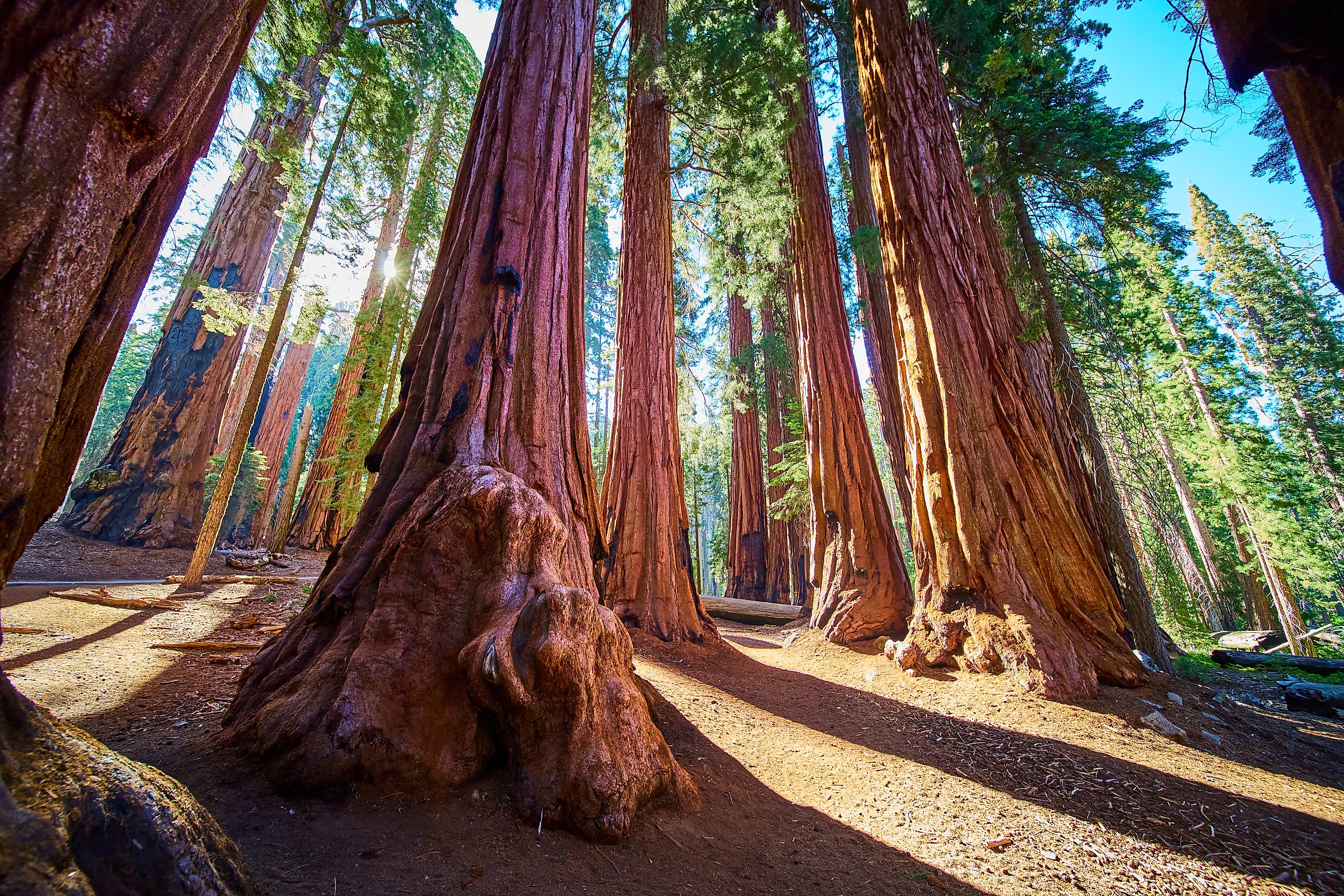
The sequoia groves of Sequoia and Kings Canyon National Parks are home to the largest trees on Earth. These forest giants are endemic to California, only occurring naturally on the Sierra Nevada's western slopes. Of the 70 giant sequoia groves that exist today, roughly 40 grow within Sequoia and Kings Canyon National Parks. These groves range from one to tens of thousands of sequoias, featuring famous trees like General Sherman, the largest tree in the world by volume. Other groves feature sequoia logs you can walk through and thousand-year-old stumps you can climb.
Giant Forest

The Giant Forest is the most-visited grove in Sequoia and Kings Canyon. The 1,800-acre area sits on a plateau in Sequoia National Park between 2 forks of the Kaweah River. It has more large sequoias than any other grove and features the General Sherman Tree, the largest tree on Earth by volume. This record-holding sequoia has an estimated volume of 52,500 cubic feet, with enough lumber to build about 120 average-sized homes. It has a base diameter of 36.5 feet, and it measures 274.9 feet tall.
The General Sherman Tree Trail runs 0.5 miles downhill. Other large sequoias can be spotted along the path, with countless connecting trails to explore on the way back. The Congress Trail begins near General Sherman. The paved 2.7-mile loop passes notable sequoias like the 240.9-foot President Tree, named for President Warren G. Harding in 1923. At the Giant Forest Museum, the Big Trees Trail is another notable hike. The paved 0.75-mile trail weaves past mature sequoias and trailside panels explaining their ecology.
Grant Grove

The Grant Grove is located in Kings Canyon National Park about 1.5 miles from its Visitor Center. Formed in 1890 as General Grant National Park, this historic grove is known for its concentration of giant sequoias within a 90-acre area. It is also home to the world's second-largest giant sequoia. The General Grant Tree is 268.1 feet tall, with a trunk volume of 46,608 cubic feet. President Calvin Coolidge named it the Nation’s Christmas Tree in 1926, and it also holds the title of America’s only living national shrine.
Reaching General Grant means hiking a 1/3-mile paved loop from the General Grant Tree Parking Area. Along the way, hikers can also see the Fallen Monarch, a massive fire-hollowed sequoia log that parkgoers can walk through. For a quieter trail, the 1.5-mile North Grove Loop begins at the same parking area. It passes creeks, meadows, and a mix of conifers and sequoias. This route can be combined with the 1-mile Dead Giant Loop, a trail with views of Sequoia Lake and its namesake tree. The Dead Giant, while no longer alive, is a sequoia that still stands tall.
Muir Grove

The Muir Grove features forest giants with fewer crowds. While this Sequoia National Park grove is just 215 acres in size, it is dense with old-growth sequoias. The Dalton Tree is its largest, at about 274.5 feet tall with a volume of 31,065 cubic feet. In 2021, proactive burns also helped limit the devastating effects of the KNP Complex Wildfire here. In addition to protecting its mature trees, the controlled fire helped clear room for young sequoias to grow.
Reaching the Muir Grove requires a wild hike from the Generals Highway. The Dorst Creek Campground is still closed as of 2026, but its entrance remains the starting point. Although the closure lengthens the previously 2-mile trip, many hikers prefer the solitude of this less-traveled path. Unlike the Giant Forest and Grant Groves, Muir rarely gets crowded.
Big Stump Grove

The Big Stump Grove is at the southwest entrance of Kings Canyon National Park, making it easier to reach. This unique grove is home to several historic sequoia stumps, revealing the area’s logging past. Most of the area’s mature trees were harvested in the late 1800s, though some were spared. The 161.5-foot-tall Resurrection Tree is the best example of this.
The Mark Twain Stump is this grove’s top attraction, accessible via the Big Stump Trail. The 2-mile hike begins near a picnic area, ending with the landmark site. A staircase lets hikers climb atop the stump, whose tree was cut down in 1891. Before being felled and donated to museums, the Mark Twain Tree reached a 16-foot diameter. Its rings reveal the tree was 1,341 years old.
Know Before You Go

Reservations are not required to enter Sequoia and Kings Canyon National Parks or see the sequoias. However, parking areas are first-come, first-served. Over 2 million people visit these parks each year, meaning parking spaces and hiking trails can fill up fast. Attendance peaks in the summer and holiday weekends, making shoulder-season weekdays the best time to avoid crowds and parking troubles.
A free seasonal shuttle at Sequoia National Park lets parkgoers navigate popular park attractions. It is generally offered from Memorial Day to Labor Day, with some special dates offered in the fall and winter. The shuttle transports guests between campgrounds and sites like the General Sherman Tree and Giant Forest Museum. Schedule dates and routes should be checked ahead of time using the national park website.
Sequoia and Kings Canyon National Parks are open year-round, but roads and trails are subject to closures. Prescribed burns are a potential reason you might encounter closed trails. Similarly, high-elevation roads are sometimes closed during seasons of heavy snow and ice. Parkgoers should consult the official National Park Service Road Conditions and Trail Conditions web pages for updated information. An automated Road Information number can also be called for up-to-date information at 559-565-3341.
Visiting The World’s Largest Trees
Standing beneath the General Sherman Tree means craning your neck for over 2,000 years of growth. Similarly, the Mark Twain Stump frames the tree’s age with its massive rings. The power of prescribed burns can also be seen firsthand at the Muir Grove. In contrast, the Grant Grove’s Fallen Monarch shows just how deep fire can burn. Visiting the sequoia groves of Sequoia and Kings Canyon means witnessing the resilience of these ancient forest giants.