The Oldest Forests On Earth
The oldest living tree, the bristlecone pine in California, is older than the pyramids. One of the oldest deciduous forests, the Hyrcanian Forest in Iran and Azerbaijan, was the refuge of animals during massive climate events from as long ago as 50 million years ago to today. The oldest rainforest on earth, the Daintree Rainforest in Australia, with its many unique beauties, predates the dinosaurs. And the oldest fossil forests on earth, the Minehead Fossil Forest in the United Kingdom and the Cairo Fossil Forest in the United States, are so ancient and powerful that they contributed to the ice ages themselves, and the subsequent rise of life as we know it on Earth. Read on to explore these ancient forests around the world.
Minehead Fossil Forest, United Kingdom (390 Million Years Old)

The Minehead Fossil Forest, discovered along the British coast, is thought to be about ~390 million years old and is the oldest known fossil forest on earth. It features Calamophyton plants that are essentially prototypes for the modern trees we see today; they would have looked something like parasols with a crown of leaves growing out of a long, thin trunk. They were smaller than today's trees, only about 2-4 m (6-13 ft), but they made an enormous impact on the Earth. Because before the Devonian forest evolved, plants had shallow roots (not true roots), but the Devonian trees had robust root systems that pushed deep into the Earth, shattering bedrock, excreting acid to dissolve rock and extract nutrients, and pulling carbon out of the air at a dramatic rate. Before the Devonian forests, the Earth was like a scorching greenhouse with carbon levels 10-15 times higher than they are today.

After the Devonian forests, so much carbon was pulled out of the atmosphere by the trees that it threw the planet into a deep freeze. Then, the sheer volume of nutrients that washed from the root system and into the sea caused massive algae blooms. Those blooms choked marine life and were a major contributing cause of the Devonian Mass Extinction. Finally, as carbon levels and temperatures continued to drop in the atmosphere, glaciers began to form on the Earth's poles, reflecting sunlight back into space, which locked the planet into the Late Paleozoic Ice Age. In the geological eras in world history, this is the stretch that immediately preceded the Mesozoic, the era famous for giving rise to the dinosaurs.

Today, the Minehead Fossil Forest doesn't seem nearly as world-altering as it has legitimately been. Unless a visitor knows what to look for, the forest does not announce itself. The fossils sit in high sandstone sea cliffs near the Butlin's holiday camp at Minehead, Somerset, which means the fairground and the swimming pools share a coastline with the oldest forest yet found on Earth. More paleontological news is likely, since the Minehead forest was only identified in 2024. Not long before, in 2019, scientists thought they had discovered the oldest fossil forest on earth, which also dates back to the Devonian period, but was found in a quarry in New York in the United States. That forest, known as the Cairo Fossil Forest, is now considered to be the second-oldest fossil forest on Earth. The trunks of the trees there are largely lost to time, but much of the root system still remains, showing that this forest also contributed to these world-changing events as long as 385 million years ago.
Daintree Rainforest, Australia (180 Million Years Old)

The Daintree Rainforest in Queensland, Australia, is thought to be about 180 million years old and is the oldest continuously surviving tropical forest ecosystem on Earth. To give some perspective on how old this is, it's roughly 100 million years older than the Amazon (the largest rainforest ecosystem on Earth). Daintree has outlasted the dinosaurs and multiple ice ages.
While the boundaries are not precisely defined, the rainforest may once have covered the entire Australian continent and now covers an area that's approximately 1,200 square kilometers, and includes the Daintree National Park, some areas of State Forest, and some privately owned land (hoped to be purchased by conservationists); and all of this land is encompassed by a larger area known as the Wet Tropics of Queensland.

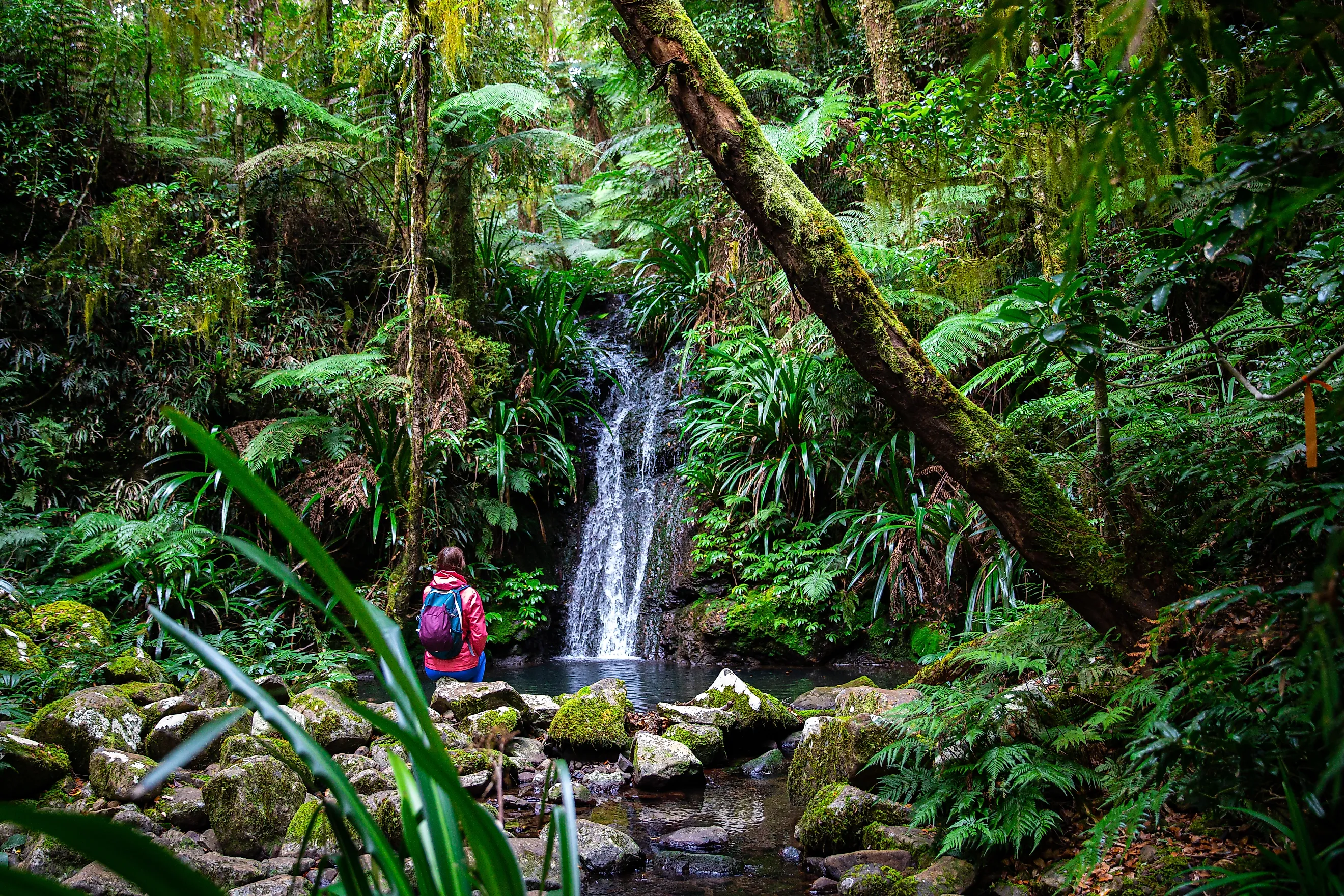
Much of this rainforest presents rare and unusual beauties to the world, taking in sandy beaches and fringing coral reefs just offshore, mountain peaks and gorges, swift-flowing rivers, and waterfalls. Some of the most ancient surviving lineages of flowering plants can still be found here. The rainforest is also home to thousands of species of animals, several of them endemic to this corner of Queensland. Bennett's tree-kangaroo (Dendrolagus bennettianus) is one, ranging only between the Daintree River and Mount Amos, and the IUCN lists it as near threatened.

Much of this vast and beautiful forest is open to exploration. Because of its sheer size, driving is recommended, but there are walking paths available, and even accommodations located within the rainforest proper for explorers to rest from the elements.
Caspian Hyrcanian Mixed Forests, Iran & Azerbaijan (25-50 Million Years Old)

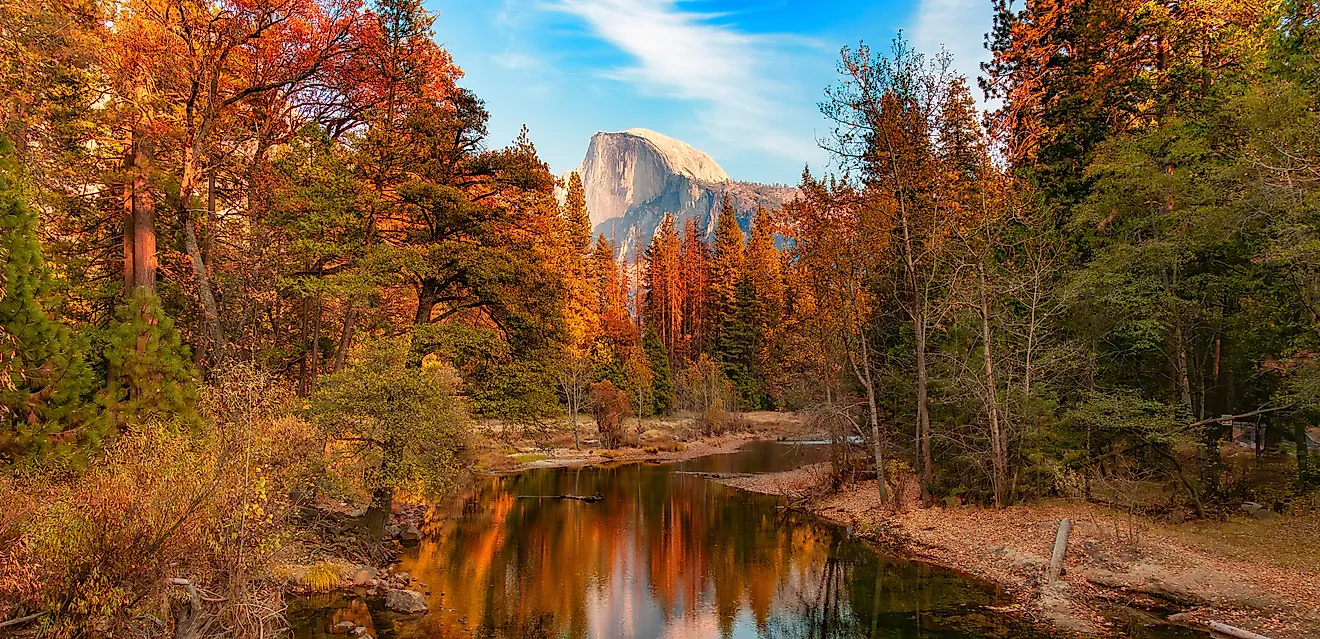
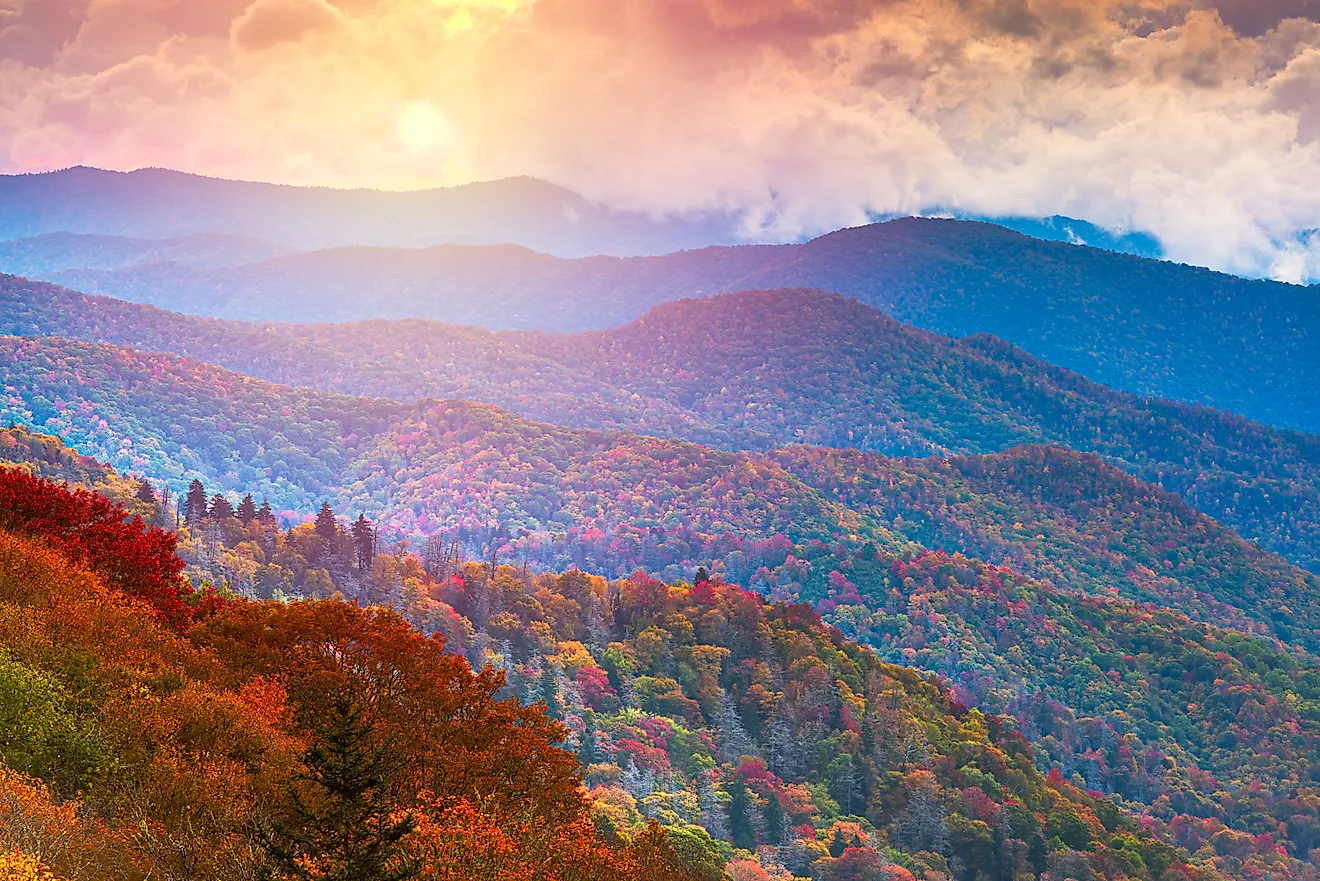
The Caspian Hyrcanian Mixed Forests are a unique 25-50 million-year-old temperate deciduous forest ecosystem, stretching 850 km along the southern coast of the Caspian Sea in Iran and Azerbaijan. Iran's portion was inscribed as a UNESCO World Heritage Site in 2019, with the Azerbaijani components added as an extension in 2023, and the forest is frequently described as a "living museum" or "living fossil" because it survived the Ice Ages that destroyed forests elsewhere. It's thought that many animals took refuge here during climate changes, and that is why the biodiversity here is so rich today. Apex predators include leopards, lynxes, bears, and jackals, alongside dormice, salamanders, bats, and creatures that have lived relatively undisturbed for millennia and are still little understood.

The climate inside this forest today is "humid subtropical" at lower altitudes, and "humid continental" at high altitudes, where precipitation from the Caspian Sea gathers to make this a lushly green forested region. About a third of the forest's trees are oriental beech. The Persian ironwood, endemic to this forest, holds interest in every season, but most of all in autumn, when its leaves turn yellow, orange, and deep red. Maples, oaks, elms, ash, and even cherry, plum, and lime trees all make their homes here. This land faced a great deal of deforestation since the 1950s, but because of its ancient beauty and vast number of endemic species, the Hyrcanian Forest is now a UNESCO site and a major focus of conservation.
Ancient Bristlecone Pine Forest, California, United States (5 Thousand Years Old)

The Ancient Bristlecone Pine Forest in California is far from the most ancient forest on this list. It has trees that have lived for around 5,000 years on this planet, considerably less than the ages of the other forests here. That said, it is worth a very special mention because it is home to the oldest individual (non-clonal) living trees. The Great Basin bristlecone pines that give the forest its name grow in the White Mountains of Inyo National Forest, and the best documented of them, a tree called Methuselah, has been dated at more than 4,850 years.

The exact location of the oldest trees is not a matter of public record; the secret is kept to protect the trees from vandals. One spectacular specimen can be visited, though. The Patriarch Tree, the largest bristlecone pine on record, stands in Patriarch Grove at about 11,000 feet, roughly a dozen miles north of the Schulman Grove visitor center along an unpaved road that opens only in the warmer months. Trees at that elevation are younger than the ancients below them, but the Patriarch is enormous. Inyo National Forest describes the wood of these pines as weathered and twisted, with striking color, and credits the grove's "splendid remoteness and moonscape appearance" for its surreal feel.
Geological Purpose Of Ancient Forests
From the geological perspective, a forest is defined not just as a large presence of trees, but as an entity that changes how the world works. The trees that grow in a true forest are strong and tall enough to create vertical stratification (a canopy and forest floor); the fallen branches and fronds of a true forest are capable of slowing down rivers, reinforcing riverbanks, and altering the global sedimentary cycle; the roots of a true forest will weather their way down to deep waters, making their way through even rock, and changing the Earth's biochemistry, acting as a giant carbon sink. In fact, the world's first forests from the Devonian period (~385 million years ago) triggered a global ice age.