The State Parks That Feel Like Arches
Arches National Park has one of the most fitting names out of the 64 national parks. There are more than 2,000 naturally occurring arches here, formed out of Entrada sandstone. Over time, precipitation gradually eroded the calcite bonding, hollowing out the rock and leaving behind a sandstone arch.
While Arches stands head and shoulders above the rest in terms of its concentration of arches, these landmarks and similarly formed natural bridges can be found all throughout the U.S., including in state parks east of the Mississippi. For those looking for an Arches experience, these state parks feel like Arches National Park.
Natural Bridge State Resort Park

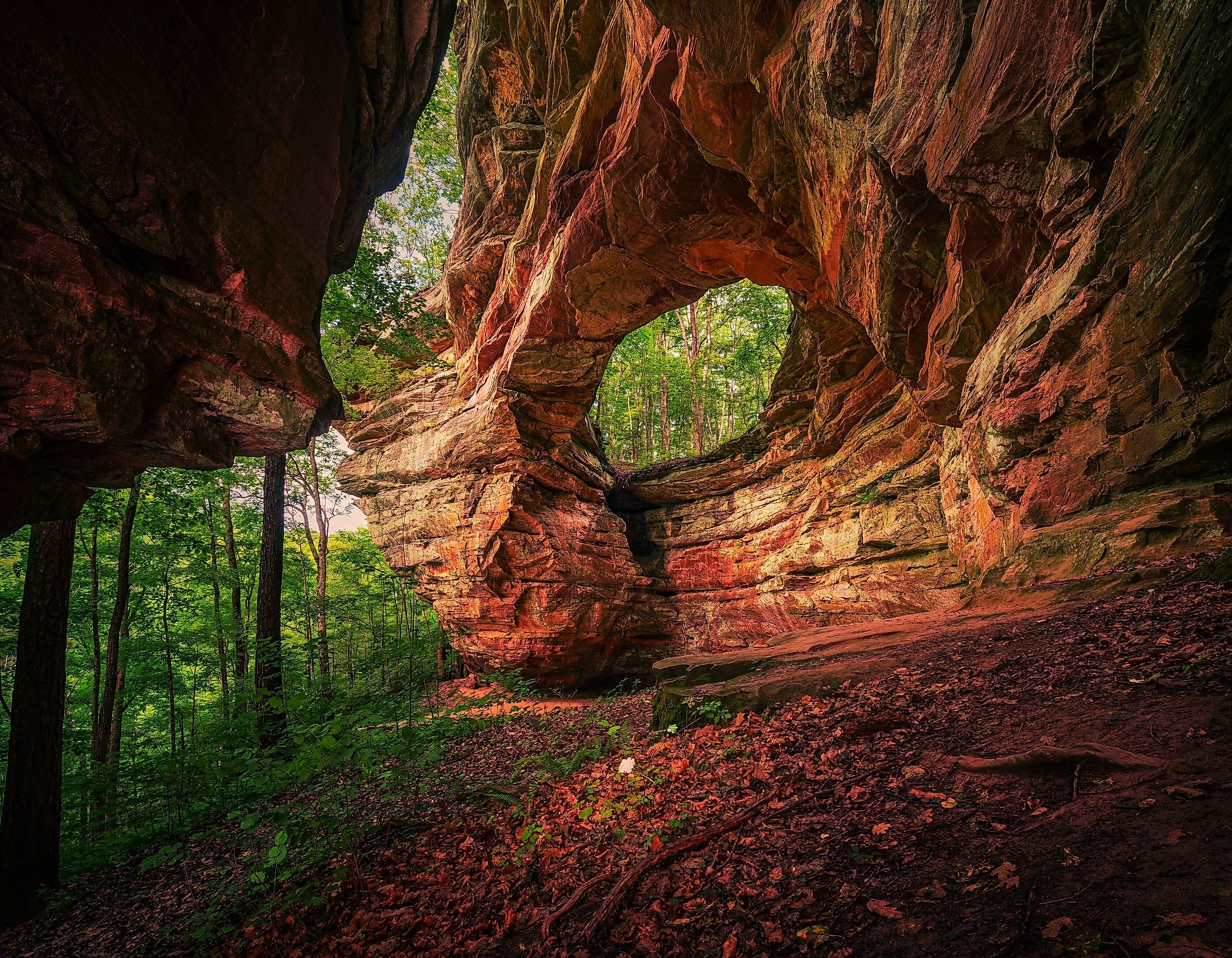
This Kentucky park doesn't just preserve a natural bridge; it lets hikers get on top of it. Located next to the larger Red River Gorge Geological Area, it has a wide variety of sandstone cliffs that were carved into a canyon by the Red River.
As for the Natural Bridge State Resort Park itself, its biggest landmark is the 78 feet long by 65 feet high natural bridge itself, which one can walk up to the top of via stone steps. The park also offers resort-like experiences such as a sky lift enabling guests to skip the hike up to the bridge, a pool complex, and the small Mill Creek Lake stocked with bluegill, green sunfish, and other fish species.

The wider Red River Gorge Geological Area also contains the largest concentration of sandstone arches east of the Mississippi, with hundreds to explore, such as the Devil's Market House Arch, which resembles a home entrance, or the Double Arch, with one large arch on the bottom and a thinner arch on top.
Valley of Fire State Park

The Valley of Fire State Park is not literally on fire, but it does preserve a fiery red landscape of Aztec sandstone. This type of sandstone was formed during the Jurassic period 190 to 180 million years ago, by compacted sand dunes that were buried and turned into rock.
Located in Nevada, this park also preserves several natural arches within these walls of red rock. The Natural Arch Trail enables one to see these arches along the walls of the Fire Canyon, along with balancing rocks.
Much like Goblin Valley State Park, there are rock formations here that resemble flora and fauna, especially at the Elephant Rock Loop, which is a red sandstone arch that looks a lot like an elephant.

Natural Bridge State Park
Located in the Shenandoah Valley of Virginia, the Natural Bridge State Park is a recent addition to Virginia's state parks, becoming its 37th state park in 2016. The land around it has been well known for much longer, as none other than Thomas Jefferson used to own it.

Its biggest feature is a 200- to 215-foot-tall natural bridge. This limestone feature stands above Cedar Creek. Natural bridges often look very similar, but their difference lies in how they were formed. Arches form via wind and a freeze-thaw cycle as water gets into its cracks, freezes, then melts, gradually eroding the structure. Natural bridges, meanwhile, form due to flowing streams of water that gradually hollow them out, forming a bridge-like structure.
Other than the bridge, there are 7 miles of hiking trails following through forests and meadows that offer views of the James River valley, and the Cedar Creek Trail that goes under the natural bridge to a 30-foot-tall Lace Falls.
Goblin Valley State Park
Goblin Valley State Park has a very unusual name, but it fits as soon as one sees the remarkable rock formations scattered around this 9,915-acre park near Hanksville, Utah. The goblins in the park are small hoodoos, rock formations that have been gradually shaped by ice and rain into thin rock pinnacles with hardened caps on top.

These hoodoos take many different shapes, with the most common here in Goblin Valley resembling mushrooms or mythological goblins. The park has a few marked trails, but it also enables guests to explore the rock formations freely, or go camping right beside it. Because of its small size, it's easy to see all this park has to offer in a day trip.
Nighttime visits are also popular, as Goblin Valley State Park is an International Dark Sky Park, meaning it has significantly less light pollution than the surrounding populated areas, and enables people to see the night sky as their ancestors did.
Decay can be a beautiful thing

The arches, natural bridges, and hoodoos in these state parks were all formed by the long decay of time, as wind, rain, ice, and snow gradually erode away rock and carry it away as sediment. However, this erosion can also create beautiful places that seem otherworldly, such as the goblins of Goblin Valley or the fiery red canyons of the Valley of Fire. These rock formations are proof that change and even the long, slow process of erosion can produce some of nature's most beautiful pieces of art.