9 Nicest Small Towns In Arizona
Arizona's small towns are built on red-rock scenery, mining history, Old West character, and easygoing downtowns. Sedona has dramatic rock formations, galleries, and trails that start at the edge of town. Jerome, once a copper camp, is now a hillside community of art galleries, shops, and historic buildings.
Prescott's lively historic downtown is surrounded with forests and lakes close by, and Route 66 nostalgia is kept alive within easy reach of the Grand Canyon. Nine towns stand out as the nicest in Arizona, each for its own scenery, history, and local character.
Sedona

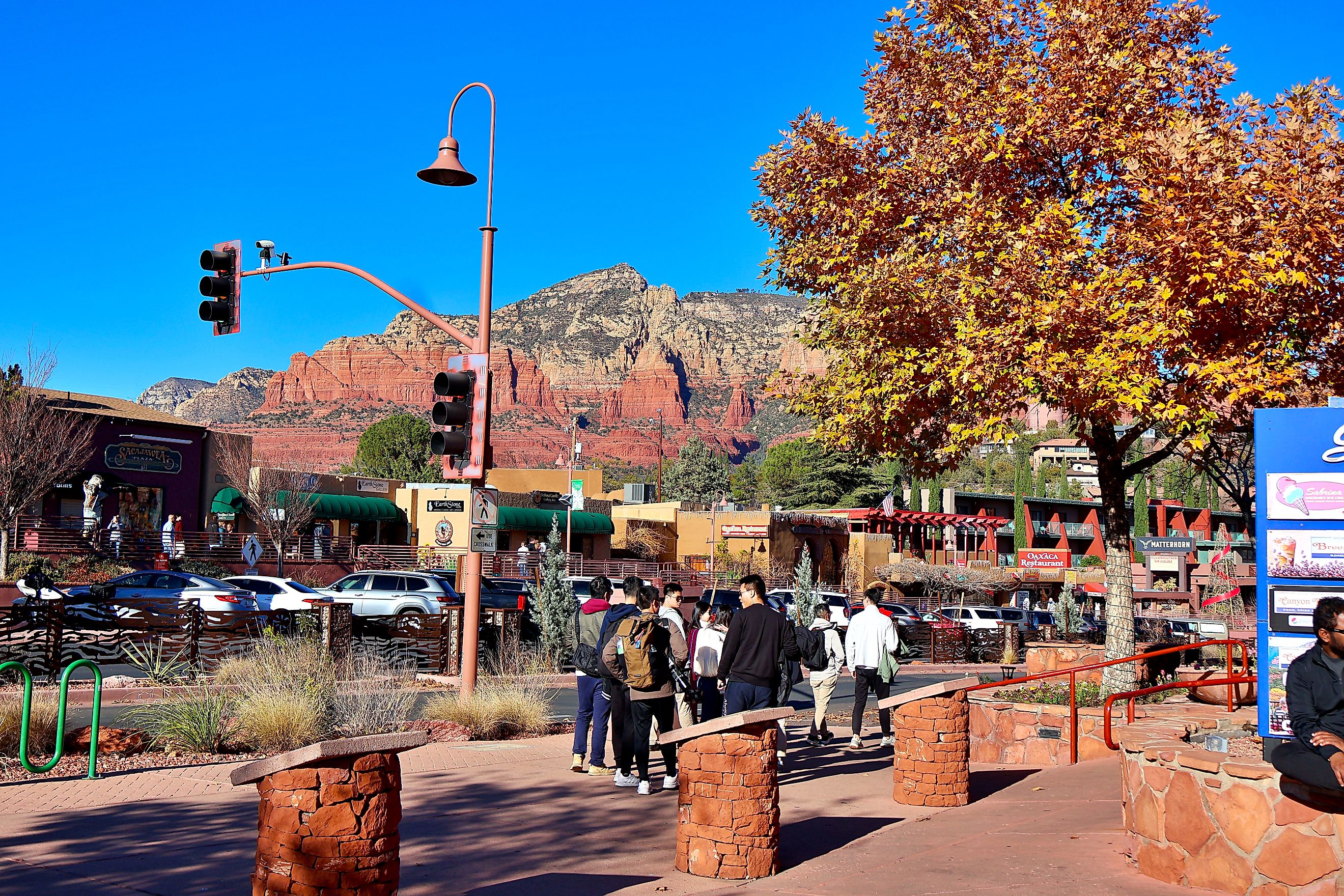
Sedona is hard to beat when it comes to scenery. Cathedral Rock and Bell Rock rise above the high desert, and trails lead right into the red rocks. The community was named for Sedona Schnebly, one of its early settlers, after her husband's brother suggested naming the village after her.
Uptown is an easy place to spend an afternoon, with more than 80 galleries, boutiques, and plenty of places to stop and browse. The Chapel of the Holy Cross is built directly into a pair of red-rock buttes and rises from a 200-foot-tall rock formation above town. It sits high above the surrounding landscape and has sweeping views of Sedona.
When the temperatures climb, Slide Rock State Park is a popular place to cool off. An 80-foot stretch of Oak Creek forms a natural water slide through a narrow red-rock flume, and the park was once the Pendley Homestead, where Frank Pendley established an apple orchard in 1912.
Jerome

Jerome once had 15,000 residents and a reputation as one of the wickedest towns in the West, with saloons and brothels packed onto its steep hillsides. Some of the town's galleries were once bordellos, and restaurants occupy former opium dens. After the copper mines closed in 1953, the population fell to fewer than 100, and parts of the hillside began to shift.
The old Sliding Jail was knocked off its foundations and slid downhill, ending up about 225 feet from where it was built, across the road. Jerome State Historic Park preserves that history in the 1916 Douglas Mansion, built by mining magnate "Rawhide Jimmy" Douglas.
The mansion had a wine cellar, a marble shower, and a central vacuum system, all unusual features for the period. After Jerome was largely abandoned, artists discovered the empty buildings and helped bring the town back to life. Now, the hillside holds more than 20 artist studios and galleries, along with offbeat shops and small wineries throughout the hillside town.
Prescott

Prescott has the feel of a real Western town, with a historic downtown centered on Whiskey Row and the tree-shaded Courthouse Plaza. The town's Old West identity comes through in its history, rodeo, and ranching traditions, and Whiskey Row has one of Prescott's best-known local stories.
When the Great Fire tore through downtown on July 14, 1900, it destroyed four and a half blocks. Palace Saloon patrons moved the bar across the street to the Plaza, where drinks continued to be served as the buildings burned.
Sharlot Hall Museum's research and photographs support the story, showing the same bar during the fire and later on the Plaza. Just west of town, Thumb Butte has a popular summit hike, and about 7 miles southeast, Lynx Lake is a good spot for fishing, paddling, or a picnic.
Bisbee

Bisbee is full of color, with brightly painted Victorian-era buildings climbing the hillsides of the Mule Mountains. The streets are steep and narrow, with crooked paths and plenty of stairs adding to the old mining town's character. The Queen Mine Tour runs 1,500 feet underground on a train through the historic mine, with retired miners leading the way.
The tour opened in 1976 as a way to keep local miners employed after the mines closed. Bisbee's mines have more than 2,500 miles of tunnels. Back above ground, former mining storefronts now house galleries, shops, and other local businesses.
On the edge of town, the huge Lavender Pit offers a look at the copper industry that built Bisbee. The open-pit mine reached about 950 feet deep and covered about 300 acres, making a striking contrast with the colorful downtown.
Tombstone

Tombstone fully embraces its identity as "The Town Too Tough to Die," and the appeal here is more about atmosphere than scenery. The O.K. Corral reenacts its famous gunfight daily, dramatizing the 30-second showdown that took place on October 26, 1881.
Nearby, boardwalk saloons and Allen Street evoke the town's 1880s days, complete with covered wooden sidewalks. Boothill Graveyard, where some of the era's most notorious characters are buried under cryptic and sometimes funny epitaphs, is another popular stop.
Graves here include those of Billy Clanton, Tom and Frank McLaury, and Buckskin Frank Leslie, while the famous Lester Moore marker adds some dark humor. Tombstone is more theme park than scenic getaway, but few towns bring the Old West to life quite this thoroughly.
Williams

Williams has two sides that feel almost like different towns. Downtown is pure Route 66, with neon signs, old diners, and historic shops recalling the days when travelers crossed Arizona by highway. Founded in 1881, the town was named for William Sherley "Old Bill" Williams, a famous trapper, scout, and mountain man.
A statue of him stands in Monument Park, and the mountain south of town bears his name as well. Williams was the last town on Historic Route 66 to be bypassed by an interstate in 1984. Outside the downtown strip, things get quieter and more focused on the outdoors.
The Grand Canyon Railway runs from Williams to the South Rim, and the nearby Kaibab National Forest has pine trees and hiking trails. Bearizona adds another reason to head beyond downtown.
Cottonwood

Cottonwood makes a nice change of pace from Arizona's desert towns, especially for wine and the outdoors. The city calls itself the "heart of Arizona wine country," and Old Town has tasting rooms in historic storefronts along a walkable main strip. Main Street dates to 1908, and many of the historic buildings that line it date to the 1910s and 1920s.
Just outside downtown, Dead Horse Ranch State Park and the Verde River Greenway State Natural Area offer plenty to do, from kayaking and birdwatching to walking along shaded trails. The park's unusual name came from Calvin "Cap" Ireys, who bought the ranch in 1950. His children saw a dead horse at one of the family's properties and chose the name "the one with the dead horse."
When the family sold the ranch to the state in 1973, they made keeping the name a condition of the sale. Cottonwood is an easy place to spend an afternoon wine tasting or a morning out on the water.
Payson

Payson is a good place to start for time spent outdoors, with the Mogollon Rim rising 2,000 feet above the surrounding foothills and canyons. About 10 miles north, Tonto Natural Bridge State Park is home to a large natural bridge formed from travertine.
The bridge rises 180 feet above a 400-foot-long tunnel, making it one of the area's most unusual sights. Scottish prospector David Gowan came across it in 1877 while searching for gold and fleeing Apache pursuers. He reportedly hid in the tunnel while they pursued him.
The travertine formed from mineral-rich spring water that deposited calcium carbonate over time. The USDA describes Tonto Natural Bridge as the largest known natural travertine bridge in the world. The surrounding Tonto National Forest has trails ranging from easy walks to tougher hikes.
The Zane Grey Cabin museum recalls the Western novelist, who had the original cabin built in 1921 as a hunting lodge where he hunted and wrote. Grey wrote extensively about Arizona, including 13 books about the area around Payson.
Wickenburg

Wickenburg still has the feel of an old cattle and mining town, with downtown buildings dating to the late 1800s and early 1900s. Many still have their original character, including wooden facades, brickwork, and Western-style storefronts that once housed general stores, saloons, and supply shops for miners and ranchers.
One of the town's more unusual landmarks is the Jail Tree, a 200-year-old mesquite that served as Wickenburg's jail from 1863 to 1890. Outlaws were chained to the tree to prevent them from escaping before they could be transported to the nearest jail in Prescott. The Sigler Western Museum traces Wickenburg's history from its beginnings as a mining camp through agriculture, dude ranching, transportation, tourism, and rodeo.
Vulture City, the mining town that grew around Vulture Mine, provides a look at Wickenburg's mining past. Vulture Mine was the most productive gold mine in Arizona's history, yielding more than 340,000 ounces of gold and 260,000 ounces of silver during its operation. For a change of scenery, the Hassayampa River Preserve protects a rare stretch of lush river habitat in the desert, where the river rises above ground beneath towering cottonwoods.
The Nicest Small Towns In Arizona Are Not Alike
Red rocks, mountains, mining history, and Old West architecture give Arizona’s small towns very different identities. Many have compact downtowns with local restaurants, small shops, and historic buildings close together. Sedona, Bisbee, and Wickenburg have little in common beyond the state they share, and that variety says a lot about small-town Arizona.