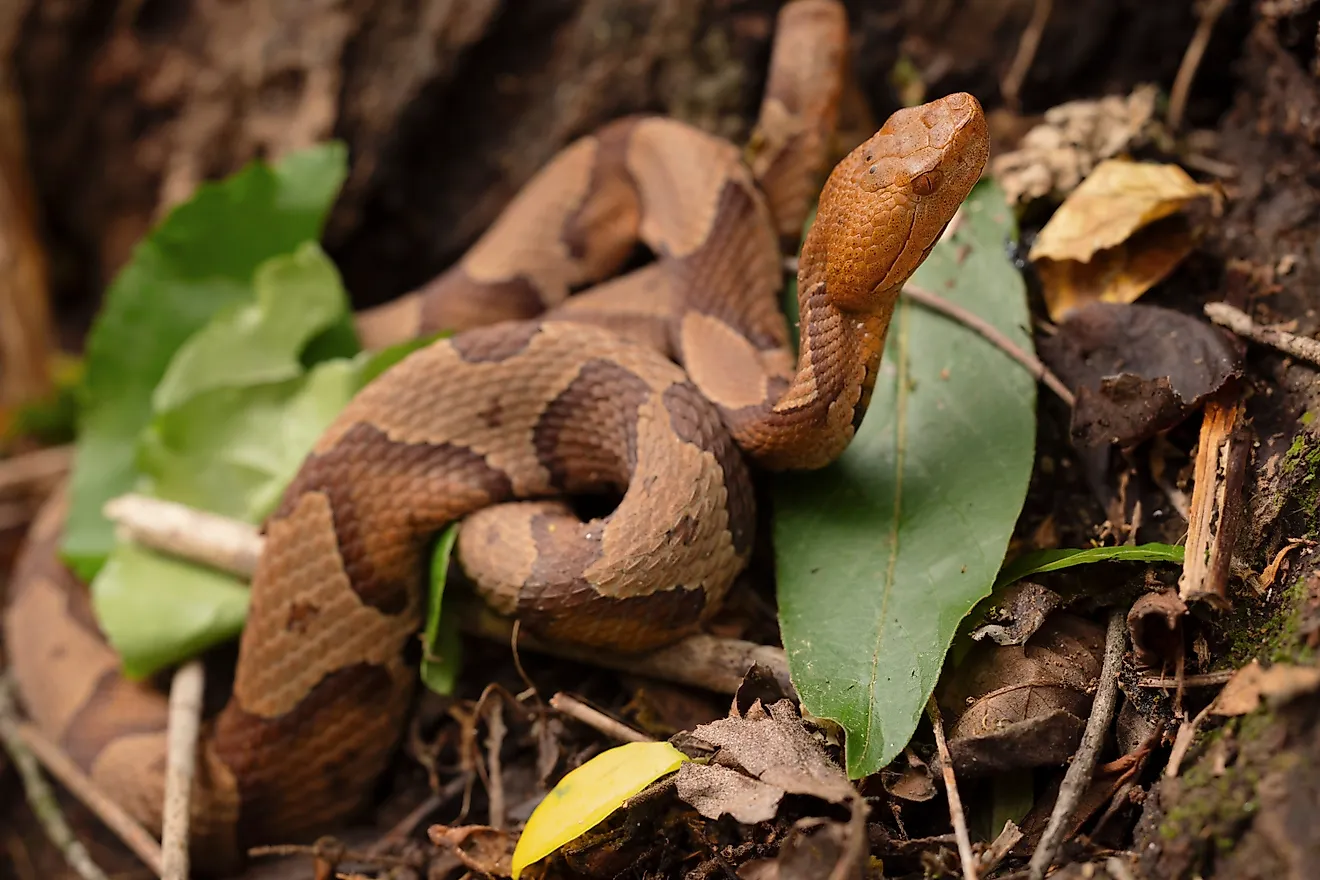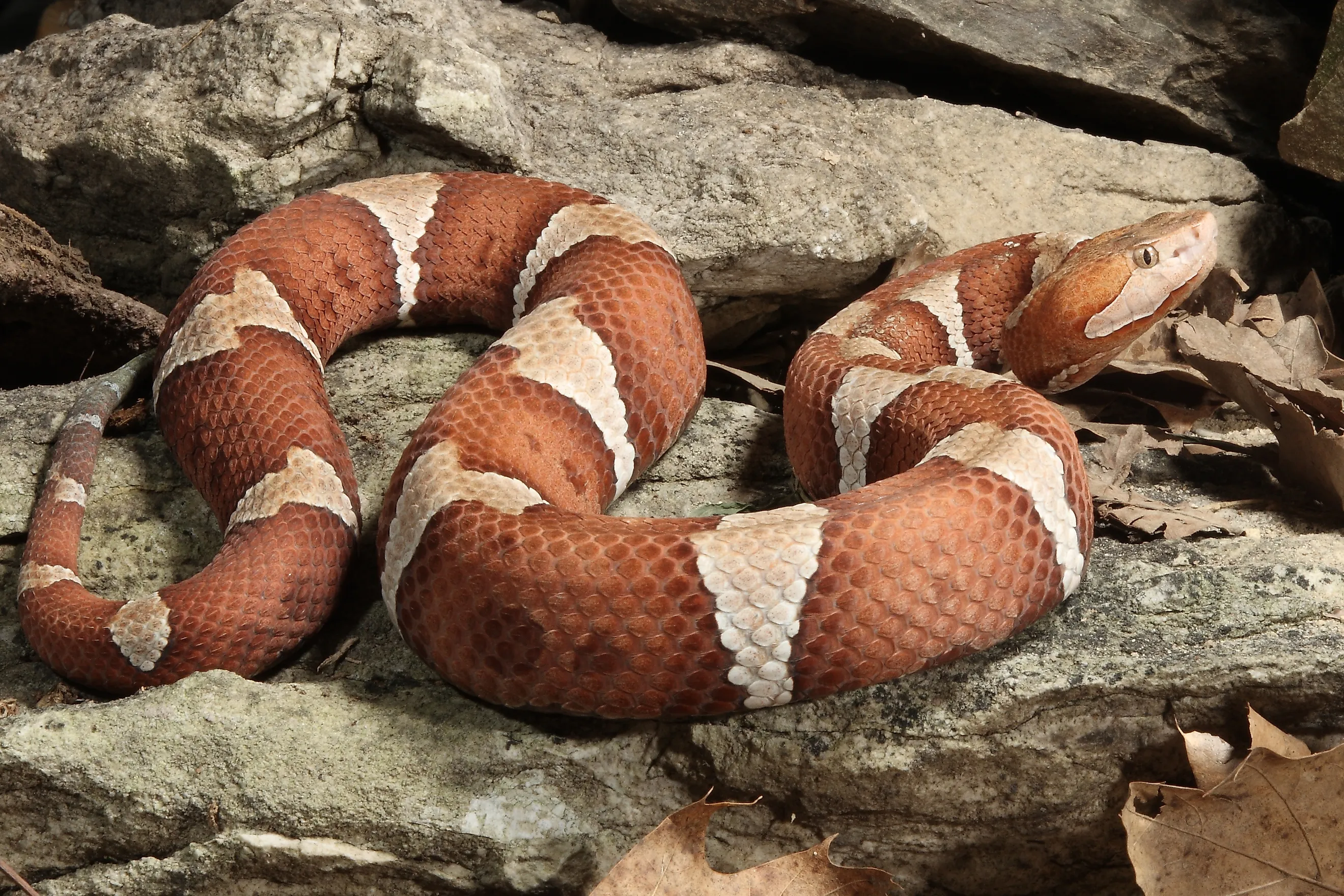
Why Copperheads Den Under Concrete Patios
Your concrete patio looks like a solid, snake-proof slab, but to a copperhead the narrow space underneath can be prime real estate. The gap between the concrete and the soil offers warmth, hidden cover, and, once winter arrives, a frost-free place to ride out the cold. It is one of the most common spots where homeowners find these venomous snakes holed up, often just a few steps from the back door. The reassuring part is that a copperhead under your patio is almost always there for a handful of very predictable reasons. Here is why they move in, and how to make your slab a great deal less inviting.
Concrete Is a Heat Trap

The first draw is temperature. Concrete has a high "thermal mass," which means it soaks up the sun's heat all day long and then slowly radiates it back out for hours after dark. The pocket of soil beneath a slab ends up far more temperature-stable than the open yard, cooler on a scorching afternoon and noticeably warmer on a cold night. For a cold-blooded copperhead, which cannot generate its own body heat and has to borrow it from its surroundings, that steady, reliable warmth is exactly what it is hunting for. A patio, in effect, is a slow-release heater sitting right on the ground.
A Ready-Made Hidden Shelter

A copperhead also wants to stay hidden, and the void under a slab is tailor-made for it. Over the years, concrete settles and cracks, expansion joints open up, and soil slowly erodes along the seam where the slab meets the ground, leaving dark, enclosed gaps underneath. Copperheads do not chew or dig through concrete; they simply exploit the openings that are already there, slipping in through a gap often hidden from view by mulch, landscape rock, or a flower bed. And once a single snake has used the space, it leaves behind a scent trail that makes other snakes far more likely to move in too.
A Frost-Free Winter Den

The space becomes most valuable of all in winter. To survive the cold, a copperhead needs a den, known as a hibernaculum, that sits below the frost line, stays above freezing, and offers tight crevices to wedge into rather than one big open cavity. The insulated void beneath a heated patio checks every one of those boxes, which is why copperheads will brumate there right through the winter, often several of them together, returning to the same dependable spot year after year. Worth knowing: a copperhead spotted near the patio in early spring is frequently a snake leaving the den it used all winter, not one that has just arrived.
The Food Comes With It

Warmth and shelter are only half the appeal. Mice, voles, and chipmunks burrow into that same insulated void for the exact same reasons a snake does, and copperheads simply follow their prey. In fact, a snake under your slab is usually a strong sign that rodents are living down there too. The patio ends up handing a copperhead everything it could want in one convenient package: a warm bed, a safe hiding place, and a steady supply of dinner, all just a few feet from the barbecue.
Keeping Them Out From Under Your Patio

The fix starts with the food. Control the rodents first, because a slab with no mice under it is just a cold, empty space that a snake has little reason to visit. Then clear away the nearby cover that funnels snakes toward the patio in the first place, including woodpiles, deep mulch, debris, and landscape rock piled against the slab. Sealing the gaps along the slab edge does help, but there is one crucial catch: never seal them blind in autumn, or you will simply trap the snakes inside, which leaves you with a dead snake and an odor problem rather than a solution. The safe approach is to confirm the void is actually empty, ideally during summer, before closing it up. And whatever you do, never reach a bare hand into the gap under a patio to check, because a cold copperhead is sluggish but still fully venomous. If there is any doubt at all, call a professional.