The National Forests With The Oldest Trees
America's national forests contain trees whose ages are measured in centuries and, in a few extraordinary places, millennia. The strongest records come from tree-ring dating, which allows scientists to count annual growth and crosscheck those rings against established chronologies. Great Basin bristlecone pine dominates the upper end of the age scale, while giant sequoia, limber pine, ponderosa pine, and Alaska yellow-cedar also produce exceptional survivors. The forests below were selected for documented old trees, published age measurements, or well-supported Forest Service records tied to a specific forest. Estimated ages are treated separately from trees with measured ring counts.
Inyo National Forest, California

The clearest claim to the oldest living trees in the United States belongs to Inyo National Forest. Its Ancient Bristlecone Pine Forest, high in California's White Mountains, contains Great Basin bristlecone pines more than 4,800 years old. Dendrochronologist Edmund Schulman studied the population extensively in the 1950s and identified Methuselah, one of the oldest confirmed non-clonal trees ever dated. The Forest Service places the species' maximum lifespan near 5,000 years.
The oldest trees grow above 9,000 feet on pale dolomite slopes where rainfall is low and the growing season is short. Those conditions limit competing vegetation and produce extremely narrow annual rings. Schulman Grove has trails through dense concentrations of ancient bristlecones, although Methuselah itself is not marked and its precise location is withheld. Many nearby trees are already thousands of years old, so the grove does not depend on a single famous specimen to establish its age record.
Sequoia National Forest, California

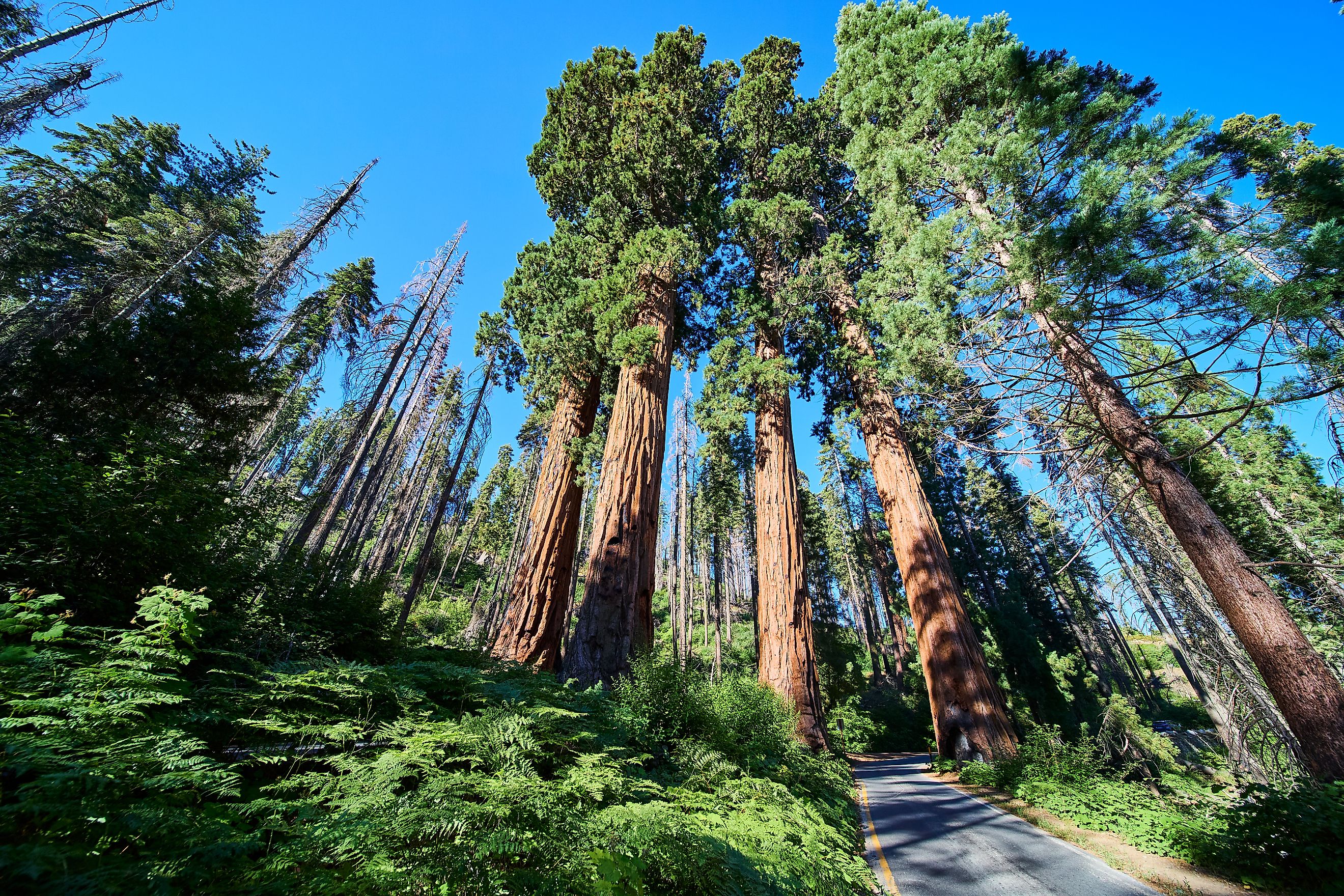
Converse Basin in Sequoia National Forest produced one of the best-known longevity records for giant sequoia. A tree cut there during nineteenth-century logging contained 3,266 annual rings, the highest reliably measured age published for the species. The U.S. Forest Service continues to cite that count in its giant sequoia research. The individual tree no longer survives, yet Giant Sequoia National Monument still protects extensive groves within the forest where living trees regularly exceed 2,000 years. Converse Basin also contains massive stumps from the logging period, including remains of trees felled before systematic dendrochronology could determine their ages. Giant sequoias can keep adding wood for thousands of years, and mature trees develop bark thick enough to resist many low- and moderate-intensity fires. The surviving groves now contain living sequoias beside physical evidence of the trees removed during the basin's commercial logging era.
Pike National Forest, Colorado
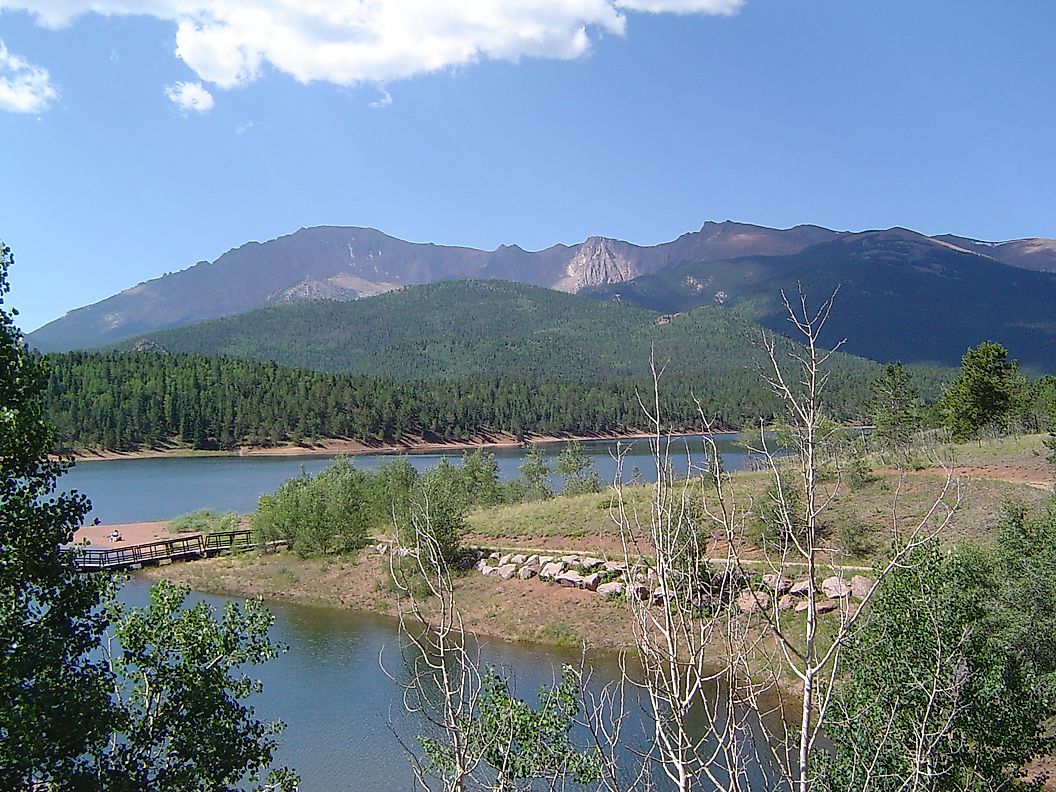
Rocky Mountain bristlecone pine in Pike National Forest carries one of the strongest scientifically measured age records outside California's White Mountains. Researchers F. Craig Brunstein and David Yamaguchi sampled trees on Black Mountain and Almagre Mountain and found 12 living specimens older than 1,600 years. Four exceeded 2,100 years.
The oldest sampled tree contained 2,435 annual rings when studied. Because the core missed part of the original center, the researchers estimated that the tree's full age was closer to 2,500 years. The published ring count remains the safer figure to cite as a measured minimum.
These trees occupy exposed high-elevation ground near timberline, where cold, wind, and a short growing season restrict annual growth. Dead wood can remain attached while thin strips of living tissue continue feeding individual branches. The locations of the oldest specimens have not been widely publicized, which helps protect trees whose scientific value depends on leaving them undisturbed.
Dixie National Forest, Utah

Southern Utah has its own population of Great Basin bristlecone pine, and research from Dixie National Forest includes trees a little over 2,000 years old. Studies of bristlecone physiology examined individuals ranging from young trees to specimens about 2,052 years old. Researchers used these long-lived trees to test whether very old bristlecones show declining shoot growth or reduced vascular production as they age. The expected deterioration was not obvious in the oldest samples.
Dixie's bristlecones grow on high, dry ground where cold temperatures, rocky soils, and limited moisture suppress faster-growing competitors. Their annual growth can be extremely small, which creates the dense ring sequences used for age dating. Southern Utah receives far less attention for ancient bristlecones than California's White Mountains, yet the measured ages here still exceed two millennia. That places Dixie among the few national forests where a tree's life can be demonstrated through more than 2,000 annual growth rings.
Carson National Forest, New Mexico

Carson National Forest contains an unusually old limber pine population in the Red River and Cabresto watersheds. Tree-ring researchers found numerous individuals more than 900 years old, while a living tree near Elephant Rock had an innermost ring dating to AD 320. Its calculated age reached about 1,670 years at the time of the study. Limber pine rarely receives the same attention as bristlecone pine, but this specimen shows that the species can survive far beyond a millennium under the right conditions. Elephant Rock sits within Carson National Forest near Questa and Red River, where rocky slopes, cold winters, and limited moisture keep tree growth slow. The narrow rings make long chronologies possible, allowing scientists to trace centuries of climate variability through individual trunks. The Carson record stands out because it comes from a measured living tree rather than an age inferred from trunk size.
Sierra National Forest, California

Nelder Grove is one of the country's major ancient-sequoia landscapes, and it lies within Sierra National Forest. Forest Service research has documented giant sequoias there at least 1,500 years old. The grove covers roughly 1,540 acres and historically contained more than 100 mature sequoias, some of them standing well before modern logging reached the Sierra Nevada.
Large stumps remain from nineteenth-century cutting, so the oldest trees that once occupied the grove cannot now be dated. The surviving trees still show why giant sequoia is one of the world's longest-lived species. Thick bark protects mature trunks from many surface fires, while annual growth continues for centuries after the trees reach enormous size.
Nelder Grove trails pass living sequoias, old stumps, incense cedar, pine, and fir within the same forest. The 1,500-year figure is tied to documented old-growth trees in the grove, making it a stronger claim than assigning unmeasured survivors the 3,000-year lifespan known from other parts of the species' range.
Coconino National Forest, Arizona

Arizona's San Francisco Peaks support an isolated population of Rocky Mountain bristlecone pine inside Coconino National Forest. Forest Service research records a specimen that was 1,438 years old when documented in 1984. Earlier field work suggested that some trees may exceed 1,500 years, but the 1,438-year measurement remains the more defensible forest-specific figure.
The trees grow near the upper edge of forest on the volcanic slopes north of Flagstaff. Snow, wind, strong sunlight, and short summers keep growth slow, while the thin soils reduce competition from larger conifers. Hikers climbing toward the higher San Francisco Peaks pass through ponderosa pine and mixed-conifer forest before reaching the harsher zone occupied by bristlecones. Their isolated Arizona population is important scientifically because it sits far from the best-known bristlecone stands in Nevada, Utah, and Colorado, yet still produces individual trees with more than fourteen centuries of measurable annual growth.
Tongass National Forest, Alaska

Some of the oldest trees in Tongass National Forest grow in a wet coastal environment far removed from the dry mountain sites where bristlecones grow. Alaska yellow-cedar grows throughout parts of the forest, and Forest Service assessments state that the species can live for more than 1,000 years. Its heartwood contains compounds that slow decay, helping old trunks persist for long periods in the cool, wet climate of southeast Alaska. Forest Service research in Tongass has also documented yellow-cedars older than 450 years that are important for traditional Tlingit, Haida, and Tsimshian cultural uses. A single, precisely dated thousand-year-old Tongass champion has not been widely published, so the forest is better represented by the species' documented longevity and known old individuals than by an invented record holder. Tongass's ancient cedars grow among Sitka spruce, western hemlock, muskeg, steep mountains, and coastal waterways across the largest national forest in the country.
Deschutes National Forest, Oregon

Deschutes National Forest contains one of the oldest documented ponderosa pines known from the Pacific Northwest. Forest Service research identifies a tree in Newberry National Volcanic Monument that had reached 879 years of age by 2018. Because Newberry is administered within Deschutes National Forest, the record is tied to a specific protected landscape rather than to a broad regional estimate.
The tree grows in country shaped by volcanic activity, with lava flows, cinder cones, obsidian deposits, Paulina Lake, and East Lake all found within the monument. Ponderosa pine's thick bark allows mature trees to survive many low-intensity fires, an important trait in central Oregon forests that historically burned often. Fire scars preserved in old ponderosas have helped researchers reconstruct earlier fire regimes and climate patterns. An 879-year-old individual provides nearly nine centuries of annual rings from a species more commonly associated with frequent fire and open pine forest than with extreme longevity.
Lolo National Forest, Montana

Old ponderosa pine stands in Lolo National Forest include individuals approaching 800 years of age. U.S. Forest Service publications describing the forest's old-growth ponderosa and Douglas-fir communities identify trees of roughly that age, placing western Montana among the strongest examples of long-lived ponderosa outside Oregon and the Southwest.
Much of the age evidence is tied to fire history. Ponderosa pine develops thick bark as it matures, allowing larger trees to survive repeated surface fires that kill smaller vegetation. Scars left by those burns can be dated within the annual ring sequence, giving researchers a record of individual fire years across several centuries.
Lolo's mountain valleys and ridges around Missoula still contain old trees within forests altered by logging and twentieth-century fire suppression. An 800-year-old ponderosa represents an unusually long survival span for the species, especially in landscapes where many comparable large trees were removed before modern ecological studies began.
Measured Rings Versus Estimated Age
These forests fall along a long gradient of confidence, not just a gradient of age. At the top sit the White Mountain bristlecones of Inyo, whose thousands of years are read directly from crossdated rings, and the Converse Basin sequoia count that still marks the species ceiling. Pike and Carson add measured minimums from living trees, where a missing pith means the true age runs a little past the count. Dixie, Sierra, Coconino, Tongass, Deschutes, and Lolo trail off into more modest figures, some tied to a single documented specimen and some to a species lifespan the individual trees have not been cored to prove. The distinction matters because a ring count is evidence and a lifespan estimate is expectation, and the two are easy to blur when the numbers all sound impressive. Read that way, the honest record is not one champion tree but a set of forests where the age of the wood can actually be shown.