What An Independent City Actually Is
A resident of Fairfax, Virginia, can be completely surrounded by Fairfax County and still live in no county at all. Why? Because Fairfax is an independent city, one of just 41 in the United States. Independent cities sit outside county government and are treated by the US Census Bureau as county equivalents. Thirty-eight of the country's 41 independent cities are in Virginia. The other three are Baltimore, Maryland; St. Louis, Missouri; and Carson City, Nevada.
The result looks a little confusing on a map. An independent city may look as though it sits inside a county, and it may share many regional services and connections with that county, but legally it is separate. Virginia turned this unusual form of local government into something close to a statewide system, while the three independent cities elsewhere in the country reached that status through very different histories.
What's An Independent City?

An independent city is an incorporated city that is not legally part of any county. Instead, it functions as one of the primary political divisions of its state. For Census purposes, the entire city is treated as a county equivalent, putting it at the same geographic level used for counties, Louisiana parishes, and Alaska boroughs or census areas.
Importantly, an independent city is different from a consolidated city-county. San Francisco, for example, is both a city and San Francisco County. An independent city such as Richmond, Virginia, belongs to no county at all.
The Census Bureau currently recognizes independent cities in four states. Virginia accounts for 38 of them, while Maryland, Missouri, and Nevada each have one. Washington, DC, is also treated as a county equivalent for Census purposes, but it is a federal district rather than an independent city.
Independent Cities Outside Virginia

Not all independent cities came about in the same fashion. Baltimore City became a governmental unit separate from Baltimore County on July 1, 1851. Baltimore County continued to exist around it, eventually establishing its county seat at Towson. Baltimore therefore became its own county-level jurisdiction rather than remaining part of the county carrying the same name.
St. Louis separated from St. Louis County in 1876 after city residents pushed for what became known as the Great Divorce. City residents supplied much of the county's tax revenue and objected to supporting services and expansion elsewhere in the county while county officials controlled much of the money. Today, St. Louis performs both city and county functions while remaining completely separate from St. Louis County.
Carson City followed another path. Carson City had been the seat of Ormsby County before Nevada voters and lawmakers approved consolidation. In 1969, Ormsby County and Carson City were combined into the Consolidated Municipality of Carson City. The Census Bureau now treats Carson City as an independent city and county equivalent. Baltimore is currently the most populous independent city. The 2020 Census counted about 586,000 residents there, compared with about 459,000 in Virginia Beach, Virginia, the largest of Virginia's independent cities.
Why Does Virginia Have So Many Independent Cities?

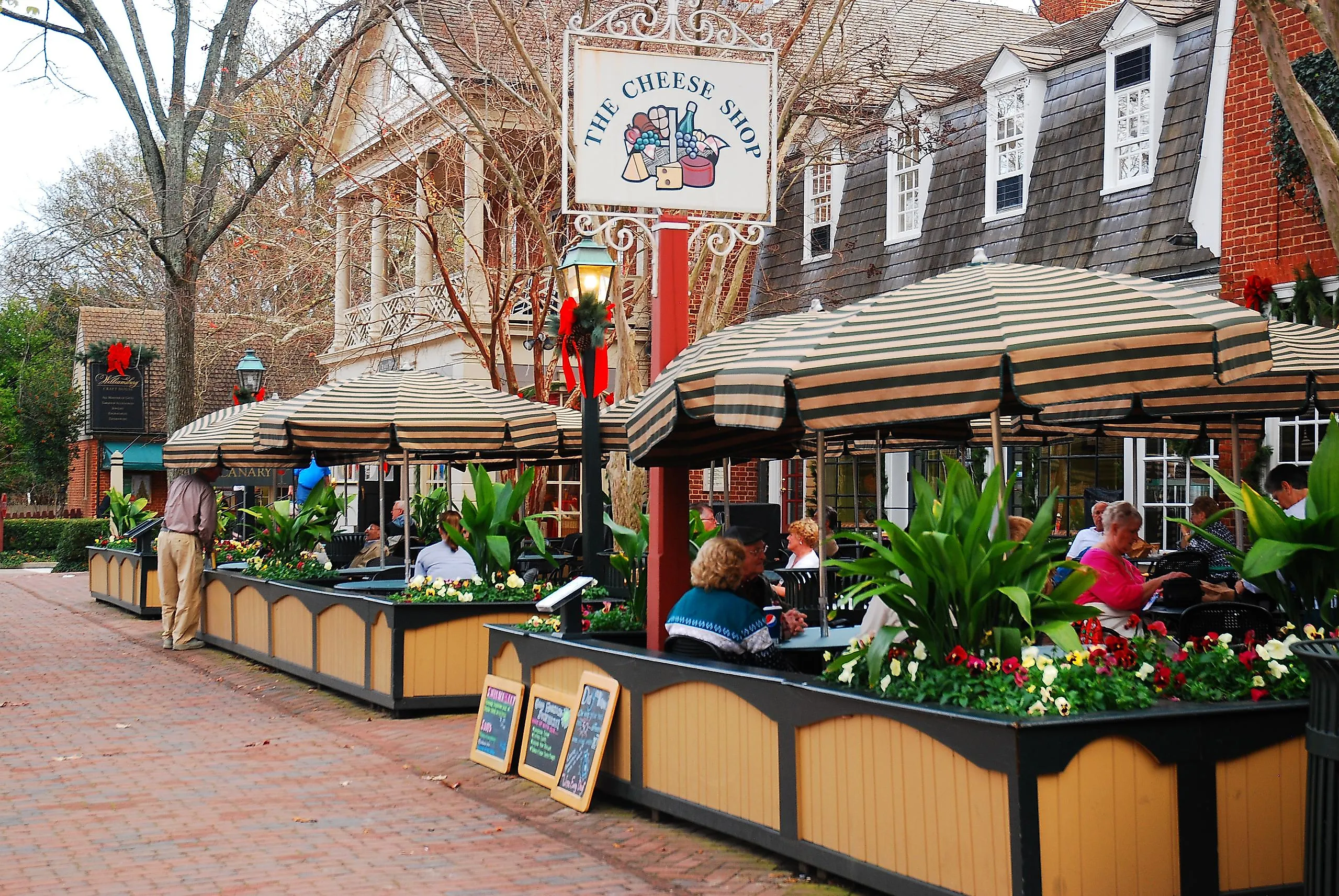
Virginia's independent-city system developed gradually as the state's towns and cities acquired increasingly separate governments. Williamsburg became Virginia's first incorporated city in 1722, although it was not yet an independent city in the modern sense. The first constitutional recognition of separate cities and counties came with Virginia's Constitution of 1869 and legislation passed during the 1869-1870 General Assembly session. That legislation kept towns and cities with populations of at least 5,000 outside the county township system.
The Constitution of 1902 further recognized the principle that cities were separate from neighboring counties. Virginia's current Constitution, which took effect in 1971, made the distinction explicit by defining a city as an independent incorporated community. Today, every incorporated place classified as a city in Virginia is independent of any county, while Virginia's incorporated towns remain within counties.
Why Do Cities Become Independent?

Independent cities emerge from different political and administrative circumstances. For St. Louis, taxation and control of government spending played a major role. Carson City emerged from the consolidation of a city and county government. Baltimore's rapidly growing city government became separate from Baltimore County in the mid-19th century. Virginia, meanwhile, gradually developed an entire legal system in which cities and counties existed as separate local governments.
As a result, residents of an independent city receive local government from the city rather than from a surrounding county. Services that might ordinarily be divided between municipal and county governments can instead fall under the city or separate agencies created under state law.
Pros and Cons Of Independent Cities

Independence can give a city clearer control over local taxation, services, and government without having to divide responsibility with a county. It also means that urban voters do not share a county government with residents of surrounding suburban or rural areas. Separation can create problems of its own. City boundaries may become difficult to expand, while jobs, development, and population move beyond them. Virginia has restricted most city-initiated annexations of county land since 1987, leaving some independent cities with relatively fixed boundaries. Current state law extends most of that restriction through July 1, 2032.
Some Virginia cities have decided that independence was no longer worth keeping. South Boston reverted to town status in 1995, Clifton Forge followed in 2001, and Bedford did the same in 2013. Each thereby returned to being part of a county. Independent cities remain one of the stranger features of the American map. In most of the country, finding the county containing a city is straightforward. In parts of Virginia, Baltimore, St. Louis, and Carson City, the correct answer is simply that there isn't one.