The 10 Largest Cities in North America
The ranking of North America's biggest metros is not the fixed thing it looks like. Over the past five years the coasts sprang leaks, the Sun Belt swelled, and international migration quietly became the engine doing most of the heavy lifting. Three cities now clear ten million people, Texas has muscled two metros into the top six, and older giants that once seemed permanent are fighting just to hold their place. The figures below use each country's official metropolitan-area definitions, drawn from the latest United States Census Bureau, Statistics Canada, and Mexican census estimates, which is the fairest way to line up cities across three very different countries. Here are the ten largest, and the forces pushing each one up or down.
1. Mexico City, Mexico

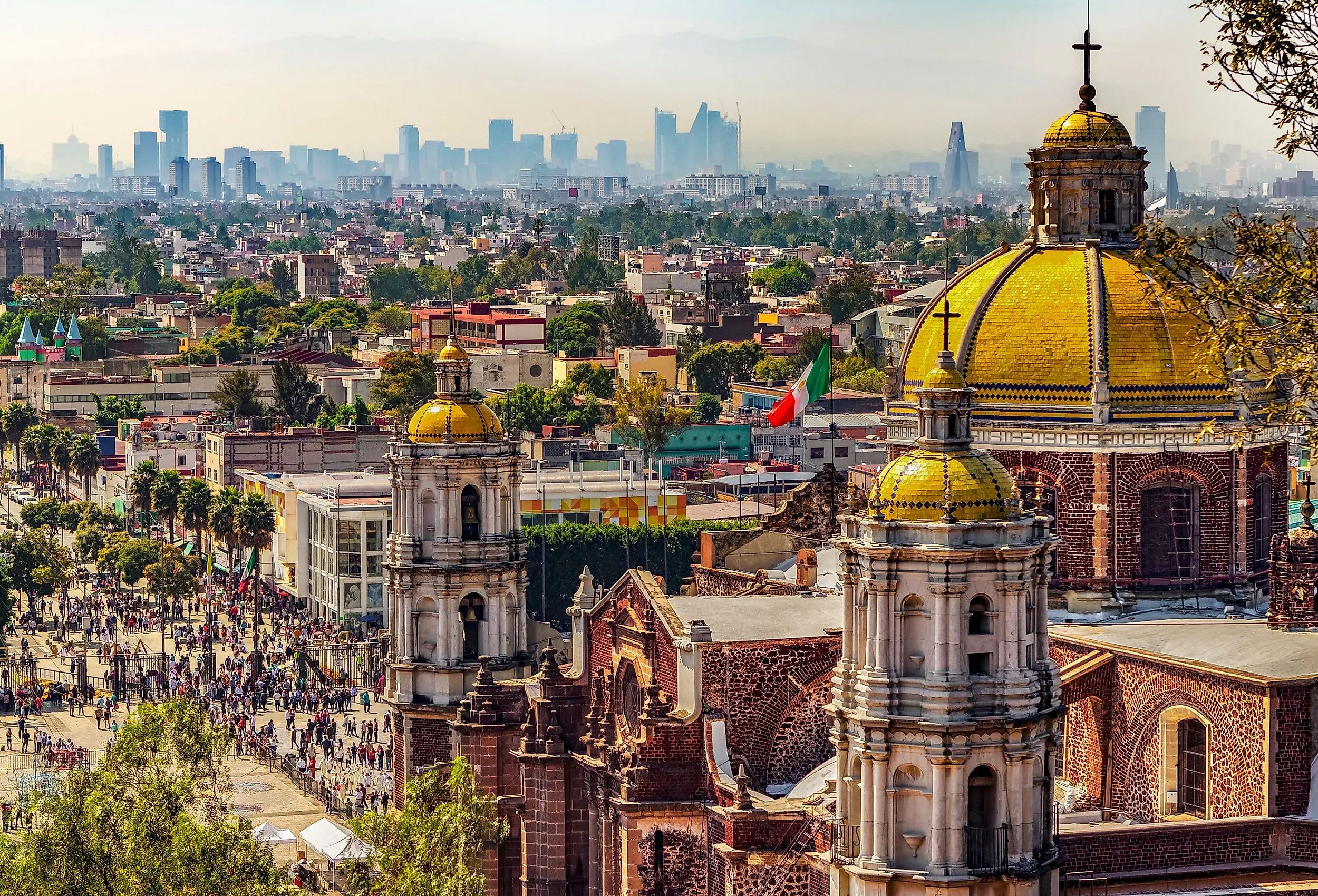
At roughly 22.8 million people, greater Mexico City is the largest metro on the continent, and it is not close. Around one in five Mexicans lives here, and the region generates close to a quarter of the country's economic output, a pull only strengthening as companies move factories closer to the United States border. Growth has cooled from its mid-century explosion to a slow crawl, but the sheer base keeps it on top.
The past is literally underfoot. The Aztecs founded Tenochtitlan on an island in a lake here in 1325; the Spanish leveled it in 1521 and built their capital on the same spot, then spent centuries draining the water away. That drained lakebed is why parts of Mexico City now sink several inches a year, tilting buildings and cracking pavement as the ground gives way. It is the rare capital slowly swallowing itself.
2. New York, United States

The New York metro holds nearly 20 million people and remains the largest in the United States, but the last five years nearly knocked it off balance. It shed close to 277,000 residents at the height of the pandemic, then staged the sharpest turnaround in the country, adding more than 213,000 people between 2023 and 2024, the biggest one-year gain of any American metro. The catch: that rebound runs almost entirely on international arrivals, because New York City still loses more people to other parts of the country than anywhere else, a net domestic outflow near 1.3 million this decade.
Its scale was an act of paperwork. In 1898 the five boroughs merged into a single city, instantly creating one of the largest urban centers on Earth. Ellis Island then funneled millions of newcomers through the harbor, wiring the place for immigration so thoroughly that a century later, immigration is the only thing keeping it growing.
3. Los Angeles, United States

Greater Los Angeles sits around 12.7 million, and its recent story is a recovery. The metro bled more than 214,000 people in the first pandemic year as housing costs and remote work sent residents packing, then clawed back to a gain of roughly 41,000 by 2023 to 2024. Los Angeles County alone still outpopulates 40 of the 50 states.
None of it would exist at this size without water it had to steal from somewhere else. When engineer William Mulholland opened the Los Angeles Aqueduct in 1913, he unlocked a semi-arid coastal basin for millions, and the oil, aerospace, and film booms of the twentieth century did the rest. The car arrived at the same time as the growth, which is why the city sprawls outward instead of up.
4. Chicago, United States

At about 9.4 million, Chicago anchors the Midwest, though its growth has been closer to a heartbeat than a climb. It lost around 77,000 people in the first pandemic year and another 52,000 the next, before edging back to a gain of roughly 71,000 in 2023 to 2024. The metro's core county is still shrinking while Sun Belt rivals close the gap.
Chicago built the modern city and then got stuck living in its consequences. The 1871 fire cleared the ground for the world's first skyscrapers, and rail made it the meeting point of the continent. But the Great Migration that filled its factories was met with redlining and restrictive covenants, and that engineered segregation still maps almost perfectly onto today's divide between a prosperous North Side and a hollowed-out South and West.
5. Dallas-Fort Worth, United States

The Dallas-Fort Worth metroplex has crossed 8.3 million and shows no sign of slowing. It added nearly 178,000 residents in a single year, the third-largest numeric gain of any American metro, and Fort Worth quietly passed one million people in 2024. No state income tax, cheap land, and a steady march of corporate relocations keep the newcomers coming, many of them settling in exurban boomtowns that barely existed a decade ago.
It grew up as twins that eventually grew together. Dallas made its money as a cotton and banking hub while Fort Worth ran cattle and rail as "Cowtown," and the airport built between them in the 1970s became a global connection point. The result is a rare two-headed metro with no single downtown, pushing outward in every direction because nothing about the flat North Texas prairie tells it to stop.
6. Houston, United States

Houston is right on the metroplex's heels at nearly 7.8 million, and in raw numbers it grew even faster, adding more than 198,000 people in a year, second only to New York. The draw is work: energy money, one of the largest medical complexes on Earth, and a port that never stops. It is also one of the most diverse metros in the country, with international migration doing much of the growing.
Two decisions made modern Houston. After a hurricane flattened rival Galveston in 1900, the city dredged a ship channel inland and turned a bayou town into a major seaport just as oil gushed in nearby. Then it declined to adopt zoning, and still has none, which is why refineries, mansions, and strip malls sit cheek by jowl and the city can expand almost at will, flooding and all.
7. Toronto, Canada

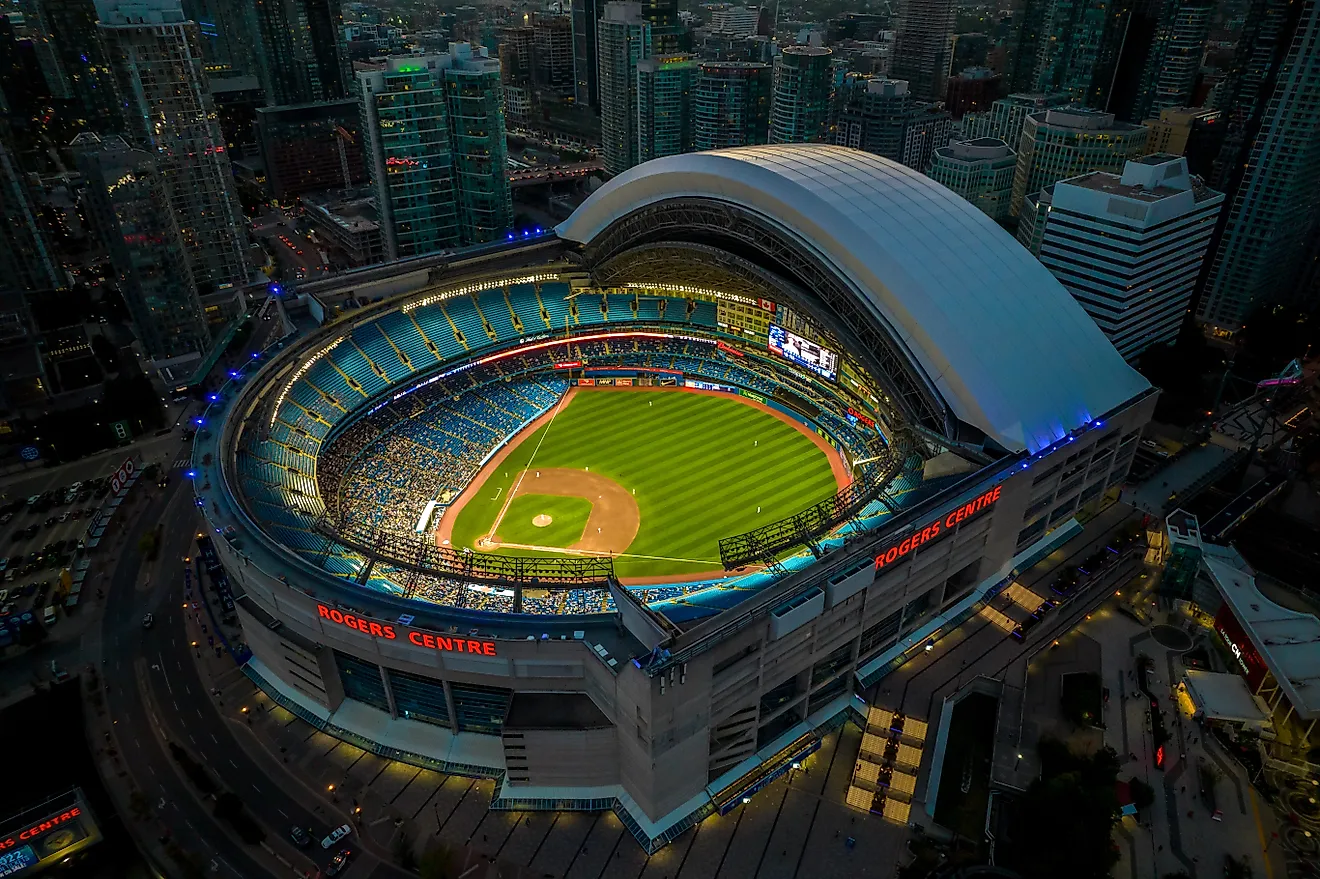
Canada's largest metro has reached about 7.1 million and is the fastest-growing big city on the continent, on track to add another 370,000 people this decade. The fuel is almost purely immigration: Canada's national policy funnels newcomers toward jobs, and most of them land in Toronto, the country's financial capital. The skyline has gone vertical to hold them all.
It started small and British. Founded as the town of York in 1793 and renamed Toronto in 1834, it spent its first century as a modest colonial capital. What transformed it was a deliberate turn toward immigration after World War II, wave after wave of arrivals that made it one of the most multicultural cities anywhere, and set up the growth machine still running today.
8. Miami, United States

The Miami metro has climbed to roughly 6.5 million, powered by two very different inflows: migrants from across Latin America, for whom Miami is the gateway city, and a more recent rush of finance and tech money that earned it the nickname "Wall Street South." People keep arriving even as insurance costs climb.
That is the tension at its heart. Miami barely existed until a railroad reached it in 1896, boomed on land speculation in the 1920s, and was remade again after 1959, when Cuban exiles turned it into the capital of Latin America in the United States. Now it sits about six feet above a rising sea, one of the American cities most exposed to climate change, growing fast on ground that may not cooperate forever.
9. Atlanta, United States

Metro Atlanta has reached about 6.4 million and remains one of the fastest-expanding large metros in the country, spreading across 20 counties as it grows. The magnets are the world's busiest airport by passenger traffic, a deep bench of corporate headquarters, and a long-running draw as a center of Black economic and cultural life.
The city exists because of a railhead. It began in the 1830s as the literal end of a rail line, named "Terminus" before it was anything else, the first major American city sited for transportation rather than water. Union troops burned it in 1864, and it rebuilt so completely that it took the phoenix as its symbol. That instinct to reinvent, later channeled through the Civil Rights Movement it helped lead, is the throughline of its growth.
10. Washington, D.C., United States

The capital metro rounds out the top ten at about 6.2 million. It bled residents early in the decade, then rebounded to become one of the nation's largest-gaining metros by 2024, its economy anchored by the one employer that never really leaves town. Around the federal government orbits a vast universe of contractors, consultants, and lawyers that has long made the region close to recession-proof, though recent cuts to the federal workforce could test that for the first time in years.
It is the only major American city that was drawn before it was built. Pierre L'Enfant laid out the street grid and monumental core in 1791 as a purpose-made capital in the United States, and the government has been the gravitational center ever since. When Washington grows, it is usually because government does.
What the Ranking Really Shows
Look across the ten and one pattern jumps out: the metros still growing fast are doing it on new arrivals from abroad, while Americans already here keep drifting south and west toward cheaper land and lighter taxes. That is why Texas now holds two of the top six and the old industrial centers are running to stand still. The other lesson is that geography and old decisions set the ceiling. A drained Aztec lake, a rail junction on a ridge, a ship channel dug after a hurricane, and a street grid sketched in 1791 are still deciding, centuries later, which of these cities can keep growing and which have run out of room.
Largest Cities In North America
The ten metros above get the full treatment, but the ranking runs deeper. The table below extends the list out to 25 on the same official estimates, showing who is next in line: a stretch of American Sun Belt and Rust Belt names, three more Mexican metros, and Canada's Montreal.
| Rank | Metropolitan Area | Country | Population |
|---|---|---|---|
| 1 | Mexico City | Mexico | 22,752,682 |
| 2 | New York | United States | 19,940,000 |
| 3 | Los Angeles | United States | 12,678,000 |
| 4 | Chicago | United States | 9,408,576 |
| 5 | Dallas-Fort Worth | United States | 8,344,032 |
| 6 | Houston | United States | 7,796,182 |
| 7 | Toronto | Canada | 7,106,379 |
| 8 | Miami | United States | 6,457,988 |
| 9 | Atlanta | United States | 6,411,149 |
| 10 | Washington, D.C. | United States | 6,160,891 |
| 11 | Philadelphia | United States | 5,861,831 |
| 12 | Monterrey | Mexico | 5,341,171 |
| 13 | Guadalajara | Mexico | 5,286,642 |
| 14 | Phoenix | United States | 5,186,958 |
| 15 | Boston | United States | 5,025,517 |
| 16 | Riverside-San Bernardino | United States | 4,669,149 |
| 17 | San Francisco | United States | 4,648,486 |
| 18 | Montreal | Canada | 4,615,154 |
| 19 | Detroit | United States | 4,400,578 |
| 20 | Santo Domingo | Dominican Republic | 4,274,651 |
| 21 | Seattle | United States | 4,145,494 |
| 22 | Minneapolis-St. Paul | United States | 3,757,952 |
| 23 | Tampa Bay Area | United States | 3,424,560 |
| 24 | San Diego | United States | 3,295,298 |
| 25 | Puebla | Mexico | 3,199,530 |