The Smallest County In The United States
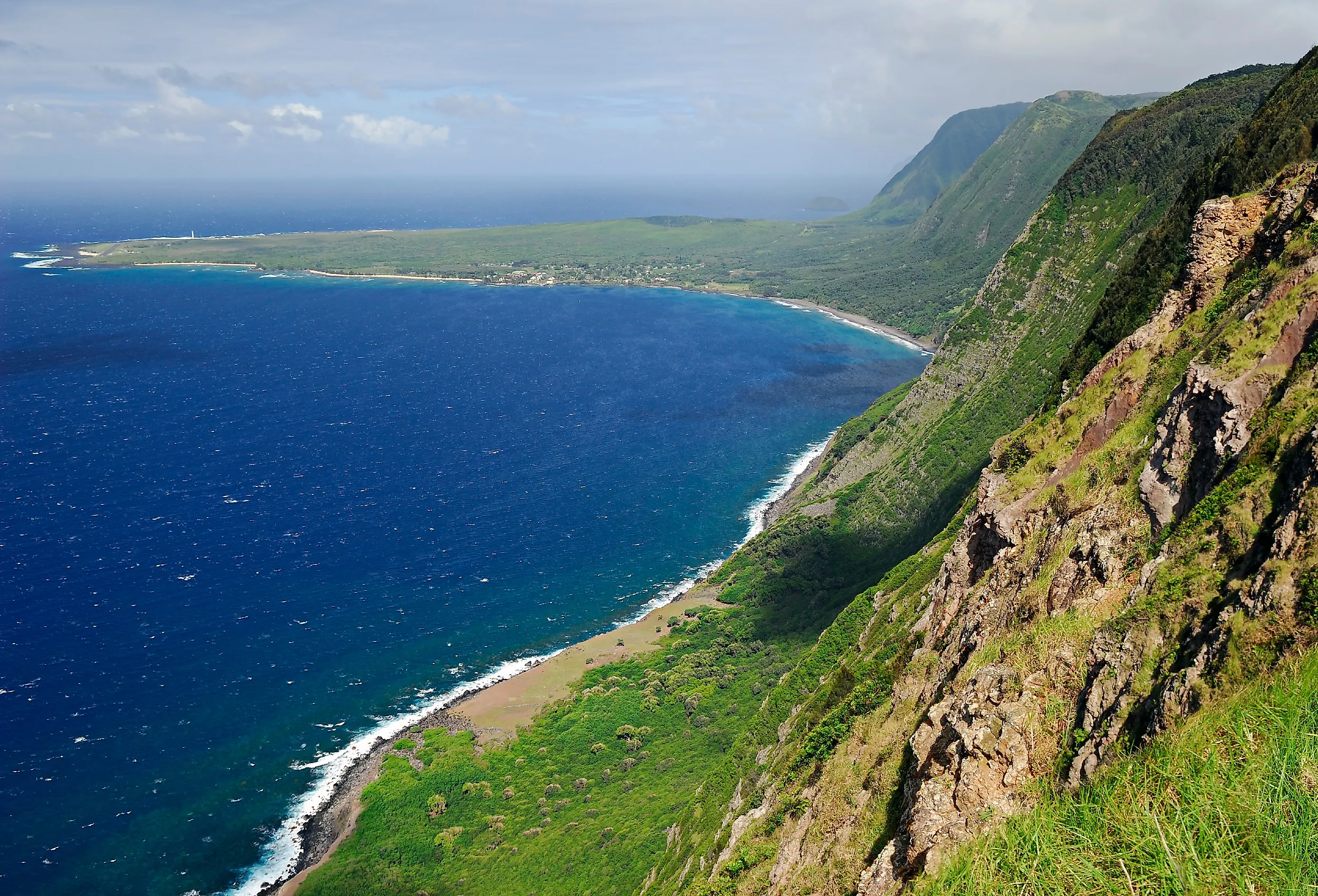
On the Hawaiian island of Molokaʻi sits Kalawao County, the tiniest county by land area in the United States. Across only 11.99 square miles on Molokaʻi’s north shore, Kalaupapa and old Kalawao sit beneath misty sea cliffs around a small shield volcano. Kalaupapa National Historical Park preserves much of the peninsula. By land area, Kalawao is the smallest county proper in the United States, but the second-smallest by population. Meanwhile, Loving County, Texas, had the smallest county population in the 2020 Census. Read on to learn more about the tiny Kalawao County.
The Small Stature of Kalawao

Kalawao County comes in at a lonely 12 sq mi (31 km2) of land as of the 2020 census. Most of the county is actually water, 41 sq mi (110 km2) of it, for a total area of 53 sq mi (140 km2). The county's status as the smallest by land is somewhat based on a technicality. Although there are what are called 'independent cities,' cities that belong to no county but perform their own administrative functions, and that are smaller than Kalawao, they are not considered counties by definition according to the US Census Bureau, but are considered 'county equivalents'. The consequences of this view are that while it's correct to say that Virginia's Falls Church, 2.05 sq mi (5.30 km2) of land, is smaller than Kalawao's, it isn't a county. Using strict terminology, Kalawao County remains the smallest in the United States.

For a rough sense of how small Kalawao's land is, consider that most national parks eclipse it in sheer acreage. 12 sq mi is roughly equal to 7,680 acres. Yosemite covers 759,620 acres, and it ranks only number 16 when compared to other national parks in size. It would take almost 100 Kalawaos to equal Yosemite's acreage.
Population, however, is another story. While Kalawao is not the smallest county by population in the United States (that title belongs to Texas' Loving County with a population of 64 according to the 2020 census), it is by no means large. With only 82 people in the 2020 census, Kalawao's population is about that of a typical hamlet. However, it is also due to Kalawao's unfortunate size and location that its future has been called into question.
Kalawao's Past and Future

Kalawao, the northernmost part of Molokaʻi, has been recognized as an isolated area since antiquity. Although the Kalaupapa Peninsula is geographically isolated by ocean and high cliffs, Native Hawaiians inhabited and cultivated it for centuries before the Hansen's disease settlement was established.
Beginning in 1866, people believed to have Hansen's disease were forcibly exiled to the settlement at Kalawao on the already-inhabited peninsula; non-patient Native Hawaiian residents were subsequently displaced, and Kalawao County was created in 1905. Kalaupapa remains a living community of former patients and state and National Park Service employees, while Kalawao is a second, largely uninhabited historic settlement within the county. The State acted because Kalawao's governance was legally tied to its aging population of Hansen's disease patients, and officials needed a plan to transfer responsibilities after patient care ended.

Introduced in 2025 and enacted as Act 171 on June 26, 2026, SB 1432 requires Kalawao County to become part of Maui County one year after the death of the last full- or part-time patient resident, as defined by the law and affirmed by a gubernatorial proclamation. When the transition takes effect, Kalawao will become part of Maui County, although state agencies and the National Park Service will continue to have important ownership and management roles. Molokaʻi Hawaiian Homestead beneficiary Sybil Lopez opposed transferring Kalawao to Maui County and instead supported creating a Molokaʻi County to provide islandwide local government. Molokaʻi resident Lori Buchanan supported eventual home rule through a Molokaʻi County while describing Maui County oversight as the nearest-term alternative.
The Legacy of the Smallest County

Under Act 171, Kalawao is scheduled to cease being a county on a still-unknown future date; when that occurs, New York County, with 22.66 square miles of land, would become the smallest county proper by land area. Each of New York City's five boroughs is coextensive with a county; New York County has almost twice Kalawao's land area and had 1,694,251 residents in the 2020 Census. The two counties are worlds apart, and Manhattan is not facing extinction anytime soon.
Kalawao's geography and history will remain nationally significant after the area becomes part of Maui County. For instance, the Kalaupapa Peninsula is home to a unique shield volcano (a volcano that resembles a shield), and the Kalaupapa National Historical Park, whose misty and secluded beauty is second to none. Similarly, the history of Hawaiʻi's Hansen's disease isolation settlements and the island's moʻolelo (its stories, histories, and traditions) will endure if the county is dissolved. And in the worst-case scenario, if not remembered for its isolated, beautiful sea cliffs and park, then Kalawao would be remembered for having once been the smallest county in the nation.