US Towns That Look Like The Mediterranean
Anyone who has priced a flight to Italy or Greece for the red-tile roofs and stucco arcades of the Mediterranean can find convincing versions right here in the United States, mostly along the Pacific and Gulf coasts, with two on the Atlantic. Some are genuine Spanish colonial buildings, and many more date to a Mediterranean Revival boom in the early 20th century.
Venice, Florida, was built in the 1920s under a Northern Italian design code, and Santa Barbara was rebuilt in Spanish Colonial Revival style after a 1925 earthquake. In Tarpon Springs, the Greek influence traces back to sponge divers who arrived after 1905, and their descendants still bake baklava near the docks.
Avalon, California

Avalon is the only incorporated city on Santa Catalina Island, about 22 miles off the Southern California coast, and its houses are stacked up the steep canyon walls around a crescent-shaped harbor. Villas with terracotta roofs line the terraced hillsides in a layout that resembles the fishing villages of the Italian Riviera. The round, white Catalina Casino has stood on the harbor's northern point since 1929, an Art Deco and Mediterranean Revival landmark with tile murals in its entrance loggia. The building holds a ballroom on the upper floor and the Avalon Theatre below, and despite its name, it has never been used for gambling.
A walk along the Avalon waterfront leads out onto a wooden pier with views of the yachts anchored in the bay. Around Casino Point, cabanas are available to rent at the Descanso Beach Club on Descanso Cove, including hillside cabanas on a plateau above the sand. Inland, the Wrigley Memorial & Botanic Garden covers 38 acres of native island plants around a memorial built almost entirely from Catalina materials, including crushed island stone and glazed tile from the island's old pottery works.
Carmel-by-the-Sea, California

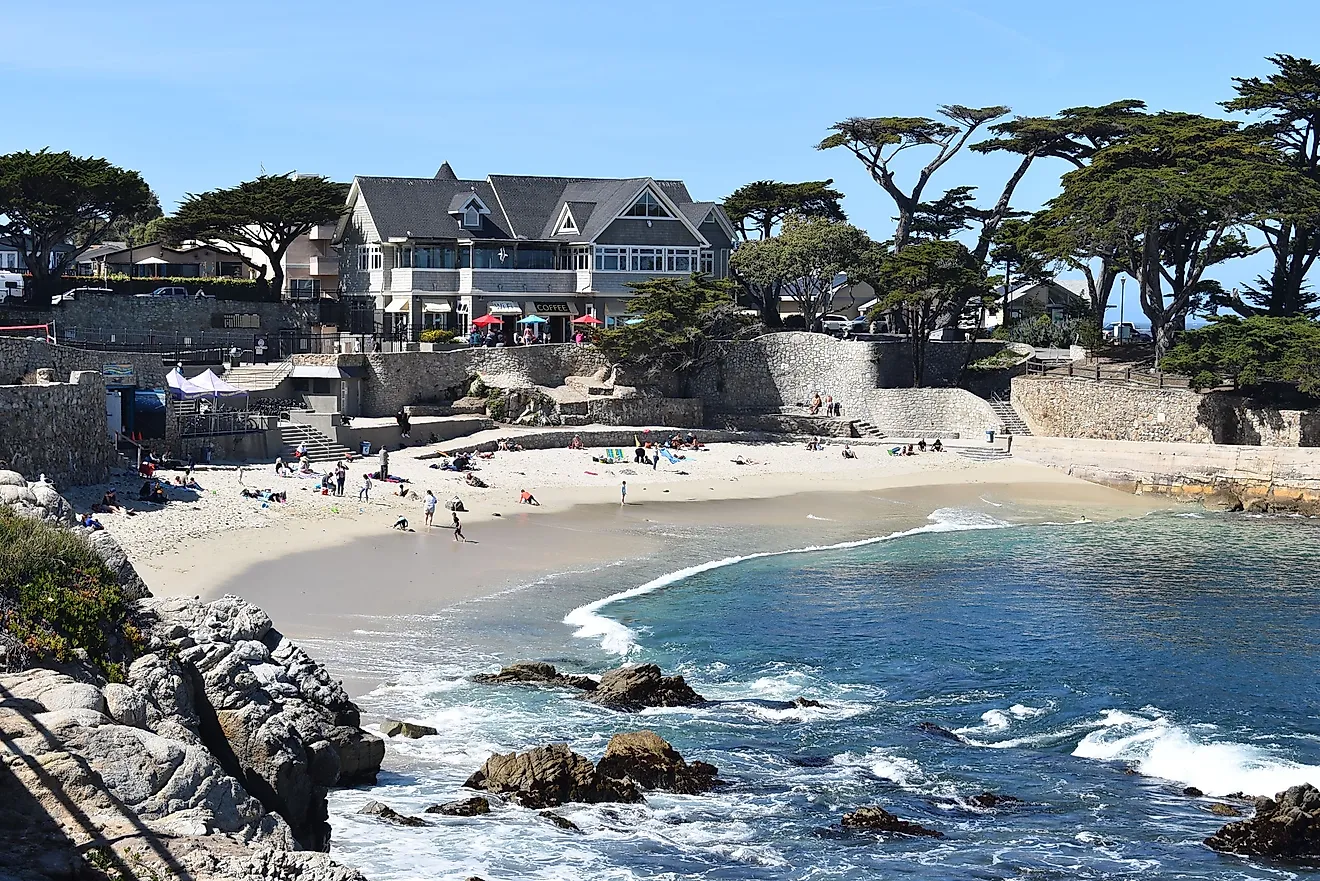
Carmel-by-the-Sea sits on coastal bluffs above a white-sand cove on the Monterey Peninsula, and its Spanish colonial mission is the oldest piece of Mediterranean architecture in town. The Carmel Mission Basilica was founded in Monterey in 1770 and moved to Carmel in 1771. Its current church, built between 1793 and 1797 from sandstone quarried in the Santa Lucia Mountains, has a domed bell tower and a star-shaped window above the entrance that would look at home in southern Spain.
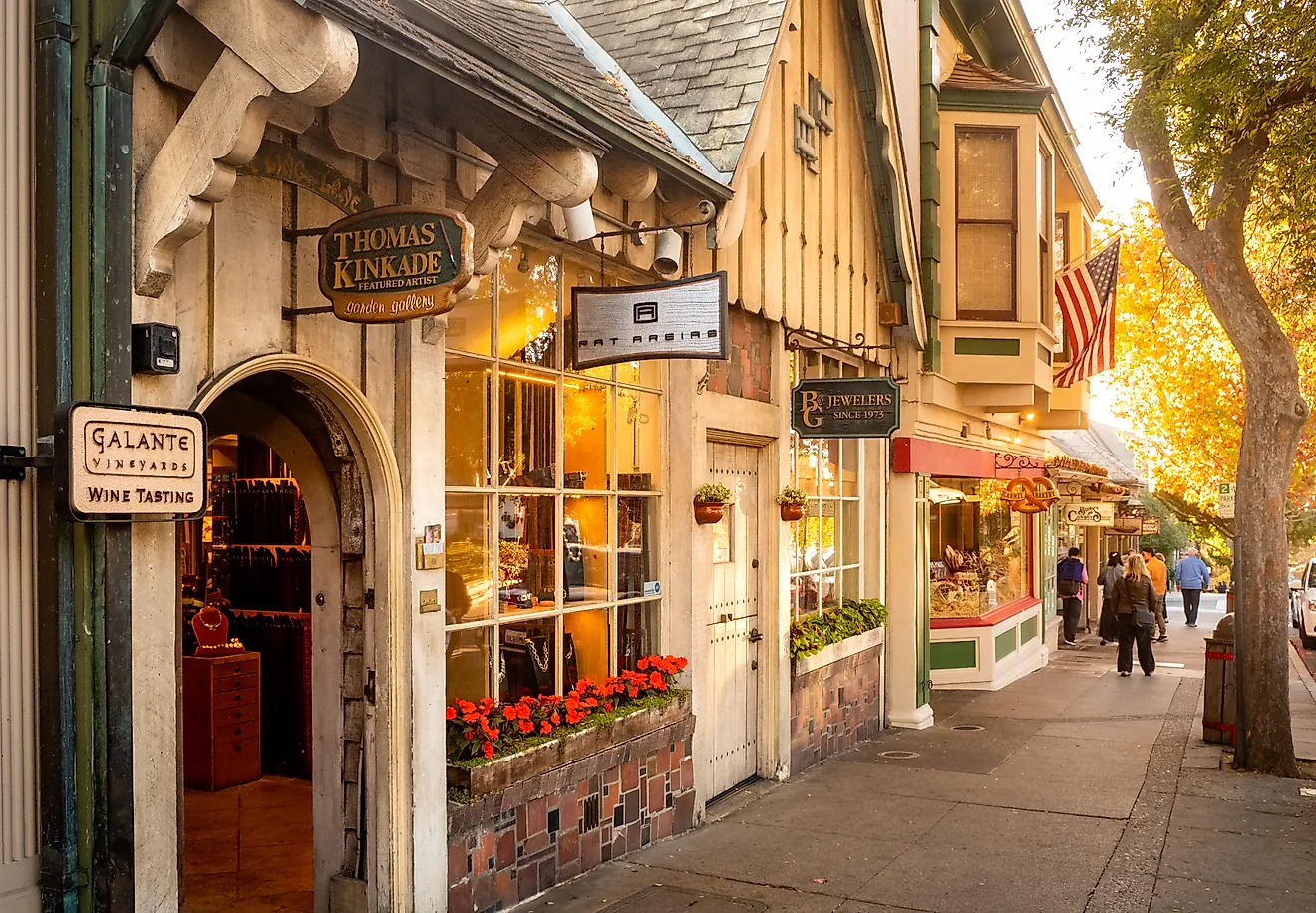
Downtown, Spanish-style courtyards sit among the Tudor-style cottages and shopfronts around Ocean Avenue and Dolores Street. The El Paseo Building at Dolores and Seventh, completed in 1928 in a Spanish Eclectic style, wraps around a courtyard with a statue by Jo Mora. Nearby, La Rambla and Plaza San Carlos hold shops and cafes around Mediterranean-style patios. Carmel Beach lies at the foot of Ocean Avenue, and a few blocks inland, Pacific Repertory Theatre productions are staged at the Golden Bough Playhouse.
Santa Barbara, California

Much of downtown Santa Barbara was rebuilt in Spanish Colonial Revival style after the earthquake of June 29, 1925, and buildings in the El Pueblo Viejo historic district still go through design review to keep the white stucco walls and red clay tile roofs. The clearest example is the Santa Barbara County Courthouse, completed in 1929. Visitors can go up its 85-foot clock tower, El Mirador, for views over the rooftops toward the Pacific and the Santa Ynez Mountains.
State Street runs through the center of town past arcaded storefronts and courtyard paseos, including El Paseo, a Spanish-style shopping arcade from the 1920s. Old Mission Santa Barbara, founded in 1786 and long called the Queen of the Missions, sits on a rise above the city. Parts of the 1782 Spanish fort, El Presidio de Santa Bárbara, have been reconstructed downtown. At the waterfront, Stearns Wharf has extended into the Pacific since 1872 and is considered the oldest working wooden wharf in California.
Venice, Florida

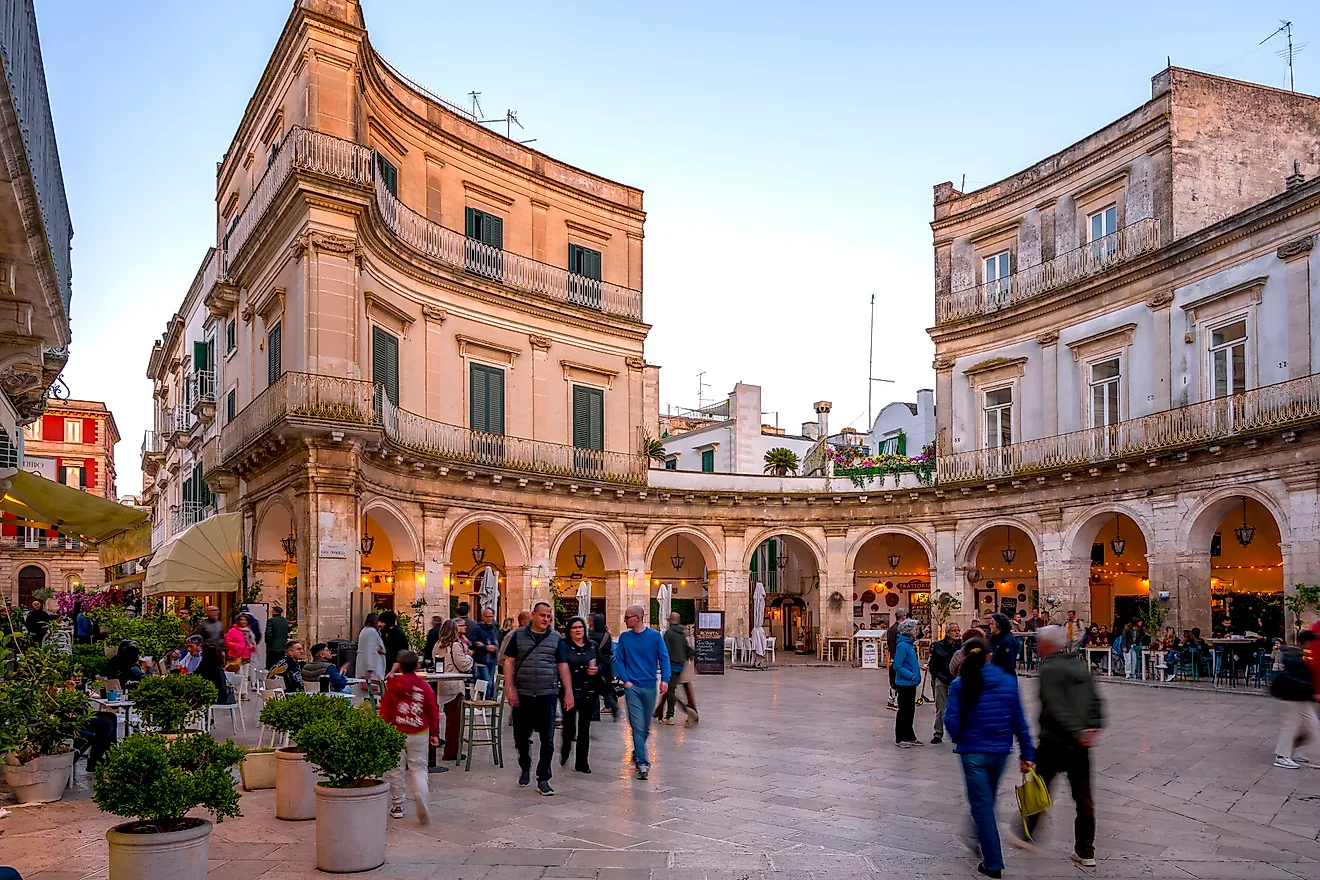
Venice sits on the Gulf Coast of Southwest Florida, and its downtown was designed from the start around Northern Italian Renaissance architecture. The land was bought by the Brotherhood of Locomotive Engineers in 1925, and Northern Italian design was required under planner John Nolen's town plan. As a result, the historic downtown along Venice Avenue still has stucco arcades and red tile roofs along palm-lined boulevards. Restored 1920s buildings in the Historic Downtown Venice district now hold boutiques and sidewalk cafes.
Venice Beach is known for the fossilized shark teeth that wash up along the shoreline, which stand out black against the light sand, and Caspersen Beach to the south is a popular spot for hunting them. Productions at Venice Theatre have continued in the smaller Pinkerton Theatre while the main stage is rebuilt after Hurricane Ian wrecked it in 2022, with a reopening targeted for early 2027.
Tarpon Springs, Florida

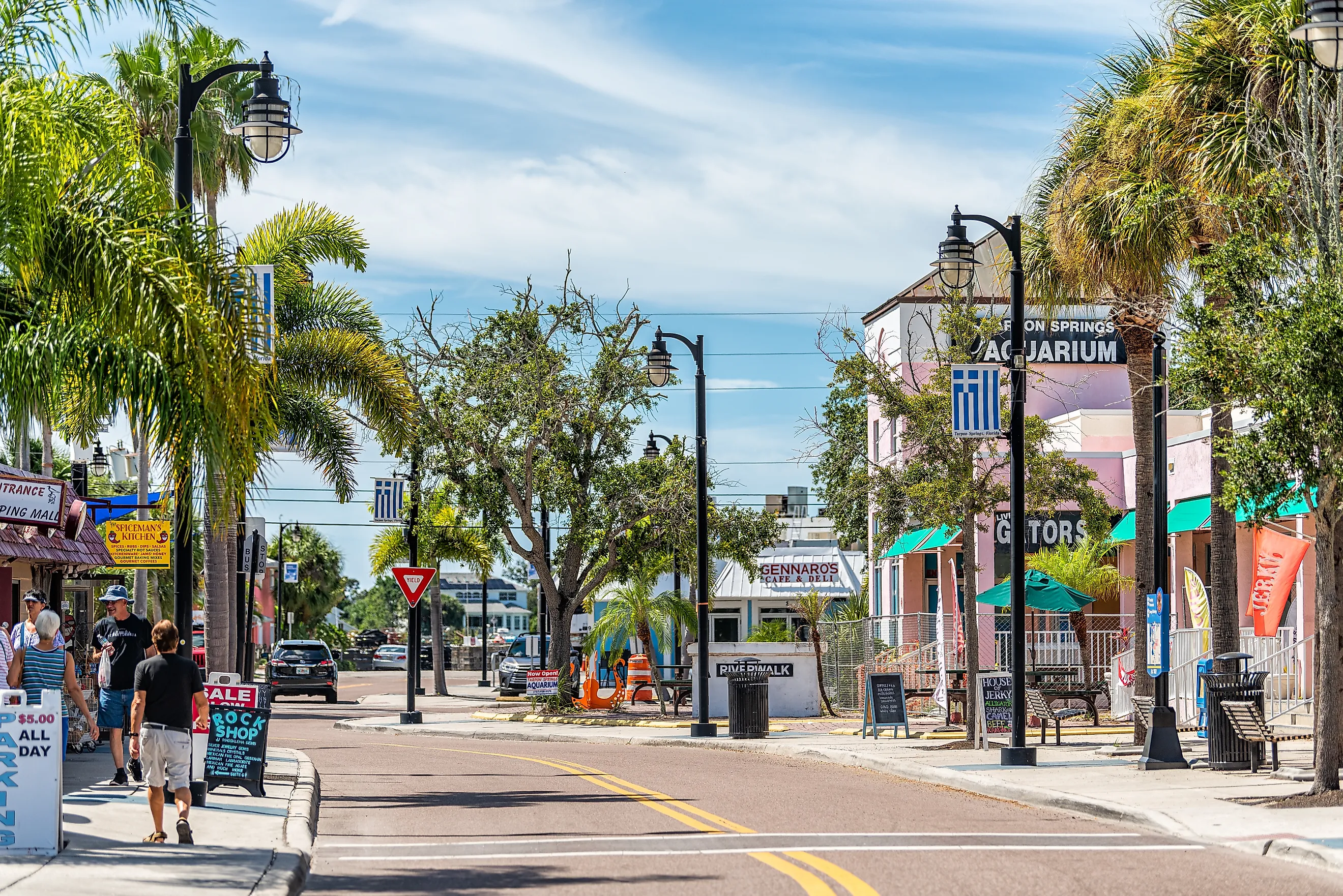
Sponge divers began arriving in Tarpon Springs in 1905, when John Cocoris recruited crews from the Greek islands. Divers from the Dodecanese islands of Kalymnos, Symi, and Halki soon made up most of the fleet. The city is widely cited as having the highest percentage of Greek Americans of any city in the US, and Greek lettering appears on shop signs along Dodecanese Boulevard by the river docks. Baklava is sold in bakeries there, and local menus include grilled octopus, spanakopita, and Greek salads.
Sponge boats still tie up at the Tarpon Springs Sponge Docks on the Anclote River, where natural sea sponges are sold in waterfront shops and guides on boat tours explain the old diving trade. St. Nicholas Greek Orthodox Cathedral, completed in 1943, is a neo-Byzantine church modeled in part on Hagia Sophia in Istanbul. Its original altar of Pentelic marble came from the Greek exhibit at the 1939 New York World's Fair. Each January, the cathedral is the center of the city's Epiphany celebration, when young men dive into Spring Bayou to retrieve a cross. For time on the Gulf, Sunset Beach is a public beach with open-water views.
St. Augustine, Florida

Spanish settlers under Pedro Menéndez de Avilés founded St. Augustine in September 1565, making it the oldest continuously occupied European-founded settlement in the continental United States. Coquina walls, red clay roof tiles, and wrought-iron balconies line the streets of the historic district near Matanzas Bay. The grandest building in town is Flagler College, which opened in 1888 as Henry Flagler's Hotel Ponce de Leon. Carrère and Hastings designed it in a Spanish Renaissance style with twin towers under red tile roofs and Tiffany stained glass in the former dining hall. The nearby Villa Zorayda Museum is an 1883 house that Franklin W. Smith modeled on the Alhambra, the 13th- and 14th-century Moorish palace complex in Granada, Spain.
The Castillo de San Marcos National Monument, built of coquina between 1672 and 1695 to defend Spanish Florida and its shipping routes, is the oldest masonry fort in the continental US. Aviles Street, billed locally as the oldest street in the nation, is a narrow lane lined with patio restaurants and art galleries. Pedestrian-only St. George Street runs through the center of the historic district.
Newport, Rhode Island

Newport's Mediterranean architecture dates to the Gilded Age, when wealthy New York families built summer mansions on the cliffs above the Atlantic in Rhode Island. The Breakers, built between 1893 and 1895 for Cornelius Vanderbilt II, is an Italian Renaissance palazzo designed by Richard Morris Hunt and inspired by the 16th-century palaces of Genoa and Turin. Its Indiana limestone walls and red terracotta tile roof sit above lawns that slope down to the ocean. The house is open for tours through the Preservation Society of Newport County.
The Cliff Walk runs about 3.5 miles between the mansions and the rocky shoreline, paved at the northern end near Easton's Beach and rough and rocky toward the south. A section between Narragansett Avenue and Webster Street has been closed since a 2022 collapse, with a marked detour around it, and repairs are expected to take until about 2029. Back in town, Bowen's Wharf has cobblestone paths, harbor-front seafood restaurants, and views of the sailboats moored in Newport Harbor.
Spanish Roots and Revival Facades
There are two kinds of Mediterranean look on this list. St. Augustine and Carmel have genuine Spanish colonial buildings, a fort and a mission church that predate American statehood. Venice, Santa Barbara, and Newport date to a later era when American architects and planners copied Spanish and Italian models on purpose. Avalon falls somewhere in between, with a 1929 Casino designed in a blend of Art Deco and Mediterranean Revival. Tarpon Springs is the outlier, a place where the Greek influence is clearest in the food and the cathedral rather than in the buildings themselves.