7 Ideal Missouri Destinations for a 3-Day Weekend in 2026
Pack the car and head into Missouri, where riverfront history and Ozark entertainment can fill a three-day weekend in 2026. Mark Twain’s boyhood home and Mississippi River views make Hannibal an easy first stop. In Ste. Genevieve, French colonial buildings turn a weekend stroll into a walk through early Missouri history. Branson shifts the tempo with Silver Dollar City and a full lineup of theaters. Then trade bright lights for the Katy Trail in Boonville or riverfront paths at Parkville’s English Landing Park. Fulton brings Churchill’s “Iron Curtain” speech into focus at the National Churchill Museum. Farther west, Lexington closes the trip with Civil War landmarks and Missouri River scenery. Museums, festivals, or a quiet trail. Missouri leaves plenty of room to choose.
Hannibal

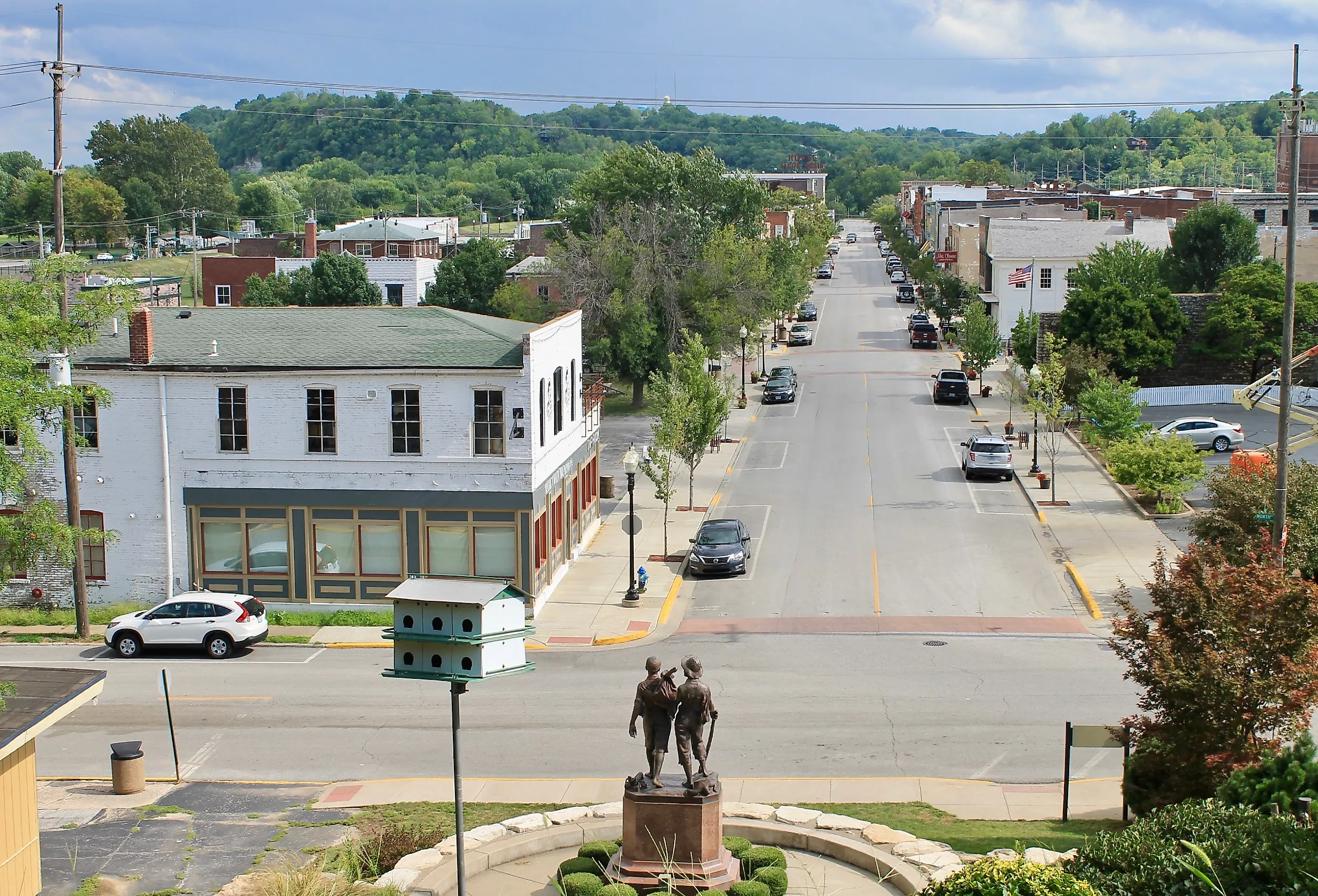
Right along the Mississippi River and close to the Illinois border, Hannibal makes an easy weekend sojourn. The town was founded in the early 1800s, has a population of about 17,000 today, and gets hot summers and cool winters. It draws most of its visitors as the childhood home of Mark Twain, one of America's most celebrated literary figures. Tour the Mark Twain Boyhood Home and Museum, pass by the Mark Twain Memorial Lighthouse on its long stairway above the river, and book a ride on the Mark Twain Riverboat for a real sense of the 19th century.
A number of events fill out the calendar for anyone looking for genuine midwestern Americana. The Harvest Hootenanny in September and the Folklife Festival in October bring music, vendors, food, and community spirit to the riverfront, while National Tom Sawyer Days takes over the July 4 weekend with a parade, fireworks, and contests lifted straight out of Twain's novels. For lodging, The Huckleberry Inn is an 1891 Victorian in the Maple District, a few blocks from Main Street, restored and reopened as a bed and breakfast in 2025.
Ste. Genevieve

Ste. Genevieve is also on the Mississippi, about an hour south of St. Louis, and it holds the largest concentration of French Colonial architecture in North America. Just under 5,000 people live in this seat of the county that shares its name, established in the 1700s by French Canadian habitants and still Missouri's oldest permanent European settlement. Ste. Genevieve National Historical Park interprets several of the surviving buildings, among them the Green Tree Tavern of about 1790, the oldest house in the state confirmed by tree-ring dating, and the 1792 Bauvais-Amoureux House with its walls of hewn logs set upright in a trench. A short walk away, the Felix Vallé House State Historic Site pairs the 1818 Federal-style Vallé house with the 1819 Shaw House, put up as a storehouse by the merchant Jean Baptiste Bossier and later a doctor's office.
Hawn State Park spreads across nearly 5,000 acres roughly half an hour southwest of town. Sandy-bottom streams run between pine and oak woods and past sandstone canyons, and the trails are open for hiking, camping, and picnicking. Back in town, the Southern Hotel occupies a Federal brick building raised in the 1790s that has been taking in lodgers since 1805. It sits on South Third Street, steps from the historic district and a couple of blocks off the river.
Branson

Branson bills itself as the Live Entertainment Capital of the World, and the Ozarks town has the theaters, museums, and parks to keep a three-day weekend full. The Titanic Museum is built as a half-scale re-creation of the ship, with the Hollywood Wax Museum a short drive away on West 76 Country Boulevard. Silver Dollar City, the 1880s-themed amusement park west of town, runs roller coasters alongside working craft demonstrations. The Branson Scenic Railway carries passengers through Ozark tunnels and over trestles on excursions out of the restored downtown depot. Boat tours work Lake Taneycomo, the stretch of the White River impounded below Table Rock Dam, and helicopter tours lift off from the strip.
Dining and shopping run the length of that strip, in as much variety as anyone could want. Crazy Craig's Treehouse serves a jungle-themed menu on West 76, and the Farmhouse Restaurant has been a home-style fixture in historic downtown for decades. The Grand Village Shops and The Shoppes at Branson Meadows cover the retail side. Lodging options include the Lodge of the Ozarks on the strip and Branson King Resort and Suites.
Boonville

Boonville stands on wooded bluffs above the Missouri River at close to the midway point between St. Louis and Kansas City, which makes it a practical weekend base from either direction. Nearly 8,000 people live in this Cooper County seat, settled in 1810 and named for Daniel Boone, whose sons had found a salt lick across the river. The city counts more than 400 properties on the National Register of Historic Places. Among them are the Andrews-Wing House of about 1855 and the Mission Revival Katy Depot, built in 1912 as one of five on the MKT Railroad and now the only one left standing. The Old Cooper County Jail held prisoners for more than 130 years before closing in 1979, and it was the site of Missouri's last public hanging.
Warm summers and cool winters keep the outdoors in play most of the year. The Katy Trail passes through town, and the Boonville trailhead is that restored depot, one of four former stations serving as trailheads along the roughly 240-mile rails-to-trails route. Cyclists, hikers, and joggers get river views for much of the local stretch. Cultural events include the Big Muddy Folk Festival at Thespian Hall, a Greek Revival theater of 1855 that served as a Civil War hospital, plus the Steam Engine Festival in September with its tractor parades and blacksmithing demonstrations, and Miracle on Main Street during the Christmas holidays. The restored Hotel Frederick sits downtown steps from the trail, and the Isle of Capri Casino Hotel is two blocks away.
Parkville

Parkville looks down on the Missouri River just northwest of Kansas City, close enough to the Kansas line for a quick escape from either side of it. Colonel George Park platted the town in 1844, and close to 9,000 people live there now. Park University's Mackay Hall, finished in 1893 out of limestone that students quarried on the grounds, still sits on the bluff above downtown. Below it, the Benjamin Banneker School of 1885 is believed to be the oldest surviving one-room schoolhouse built for Black students west of the Mississippi, and volunteers have spent years restoring it. Main Street carries facades from the mid-1800s onward, along with antique shops, galleries, and restaurants such as Prima Facie.
Outdoor lovers head straight for English Landing Park, 68 acres of riverfront below downtown with a three-mile trail, ball fields, and playgrounds. The park also holds the Waddell A Truss Bridge of 1898, a patented design preserved on site. The river gets its say too: during the Great Flood of 1993, the park and most of downtown went under more than 15 feet of water. The private National Golf Club of Kansas City, also in Parkville, offers members and their guests golf, dining, outdoor pools, tennis, and pickleball. For an overnight, the three-room Main Street Inn occupies an 1885 house a block from the shops.
Fulton

Named for Robert Fulton, the steamboat pioneer, the town of Fulton was established in the 1820s and serves as the seat of Callaway County. Just under 13,000 residents call this peaceful community home, and its colleges give it much of its character. The Missouri School for the Deaf opened here in 1851 and is among the oldest schools of its kind in the country, while the 19th-century architecture of William Woods University, founded in 1870, and Westminster College, chartered in 1851, still sets the tone of the streets around them. On the Westminster campus, America's National Churchill Museum stands beside the gymnasium where Winston Churchill delivered his Iron Curtain speech in March 1946. Eight sections of the Berlin Wall stand on the grounds as well, cut into a sculpture by Churchill's granddaughter, Edwina Sandys.
Fulton also has a number of green spaces that all ages can enjoy, including Veterans Park with its picnic areas and the Stinson Creek Trail, which follows the creek through town on an easy paved grade. Cultural events run throughout the year as well. The Central Missouri Renaissance Festival takes over weekends at nearby Kingdom City, the Morels and Microbrews Festival fills the Brick District in spring, and the Fulton Street Fair arrives each June. The Loganberry Inn, a Victorian bed and breakfast that has put up visiting dignitaries during their Westminster appearances, is a short walk from the Churchill museum, and the Baymont by Wyndham sits out toward the highway.
Lexington

A cannonball fired during the 1861 Battle of Lexington is still lodged in a column of the Lafayette County Courthouse, which has been in use since 1847. Lexington itself sits above the Missouri River at the eastern edge of the Kansas City metropolitan area, a quiet break from the busyness of the urban center, with just under 5,000 residents and a town incorporated in the 1840s. Two historic districts cover most of what visitors come to see. The Commercial Community Historic District takes in 106 contributing buildings around the central business district, while the Highland Avenue Historic District adds 64 more in the residential blocks, along with the 1928 Madonna of the Trail monument. The Lexington Historical Museum occupies an 1846 church building, and the Battle of Lexington State Historic Site preserves the Anderson House, which changed hands repeatedly while serving as a field hospital.
For those just looking to relax outdoors, time along the river is always a treat. Boating, swimming, jogging, and cycling all suit the hot summers, and the changing foliage along the bluffs draws its own traffic each fall. Bailey's Coffee House serves breakfast and lunch at 924 Main Street, Designs by Rusty carries clothing and home goods on the same street, and River Reader doubles as a bookstore and coffee shop. Hotel Lexihill, just off Highway 24 and about two miles from the battle site, keeps rates low.
Choosing Your Missouri Weekend
The great State of Missouri stands out as one of the Midwestern USA's most attractive destinations, and those looking for a truly memorable weekend excursion will love time spent here. You can enjoy loads of scenic natural wonders, intriguing stories of American history, and plenty of welcoming small town charm in visiting some of the State's smaller towns that really give one a sense of real Americana. See colonial history come to life in Ste. Genevieve, learn more about Mark Twain in Hannibal, be entertained endlessly in Branson, or simply enjoy the Missouri River in Lexington; an awesome sojourn awaits all ages. Begin packing and planning now, for Missouri is calling, and vacationing in any of these delightful communities will bring a smile to everyone for years to come!