The Emptiest County In The Lower 48
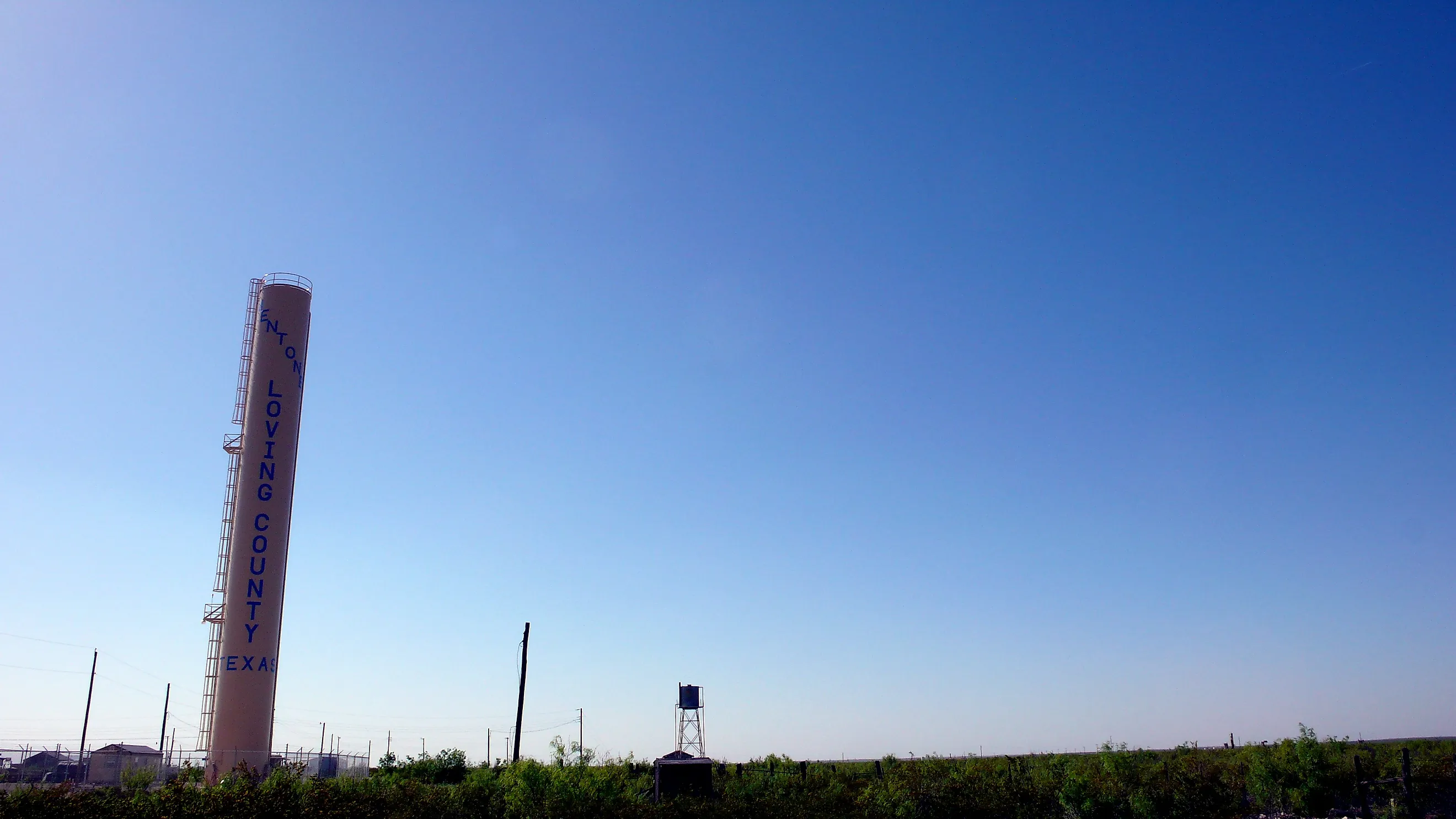
Loving County, Texas, has fewer people than many apartment buildings. The U.S. Census Bureau counted just 64 residents there in the 2020 Census, spread across 668.82 square miles of land. That works out to about 0.096 people per square mile, the lowest population density of any county in the lower 48 states. The number appears to be falling further. The Census Bureau's July 2025 estimate puts the population even lower, at 52. At that figure, there is roughly one resident for every 13 square miles.
Loving County is also currently the least populous county in the United States. Its extreme sparsity comes partly from its arid geography and partly from a local economy where considerable activity happens without many permanent residents. The county's history is notable as well. Loving is the only Texas county to have been organized twice, and its first organization grew out of an election that appears to have been fraudulent.
How Empty Is Loving?

Few other counties in the contiguous United States come close to Loving County's population density. Esmeralda County, Nevada, had 729 residents across 3,581.89 square miles of land in the 2020 Census, giving it a density of about 0.2 people per square mile. Garfield County, Montana, had about 0.25 people per square mile.
Loving County's official 2020 figure rounds to just 0.1 person per square mile. Its population has fallen further since then, while its land area remains essentially unchanged. Despite being much smaller geographically than some sparsely populated Western counties, it has so few residents that it still takes the title.
Before Loving County

The land that became Loving County was governed by Spain before Mexico gained its independence in 1821. Texas then broke away during the Texas Revolution and became an independent republic in 1836. The Republic of Texas applied for annexation soon afterward, but the issue became politically contentious in the United States, with slavery among the major points of dispute. Texas remained independent for nearly a decade before becoming the 28th state on December 29, 1845.
The Mexican-American War followed in 1846, in part because Mexico and the United States disputed Texas' southern boundary. The 1848 Treaty of Guadalupe Hidalgo ended the war, with Mexico recognizing Texas as part of the United States and the Rio Grande as its boundary. Under the treaty, a vast area farther west also passed to the United States.
A History Of Loving

Loving County sits against the New Mexico border, with the Pecos River forming much of its western edge. Spanish explorer Antonio de Espejo crossed the area in 1583, but permanent settlement remained sparse for centuries. U.S. Army Captain John Pope surveyed the region for a possible railroad route in 1854. He returned the following year hoping to drill artesian wells and established Pope's Camp in northwestern Loving County. After three years of unsuccessful attempts to find sufficient water, the project was abandoned.
Between 1837 and 1874, the future county was part of the enormous Bexar land district. It became part of Tom Green County in 1874. The Texas legislature created Loving County in 1887, named for cattleman Oliver Loving, who helped develop the Goodnight-Loving Trail. Loving was seriously wounded during a Comanche attack along the Pecos in 1867 and later died of gangrene at Fort Sumner, New Mexico.
Loving County's first attempt at local government came under unusual circumstances. In 1893, organizers of the Loving Canal and Irrigation Company petitioned for the county to be formally organized. Their petition claimed 150 qualified voters even though the 1890 Census had found only three residents in the entire county. An election followed in July 1893, supposedly drawing 83 votes. A settlement named Mentone, located about 12 miles north of today's community, became the county seat. Irrigation company organizers and several nonresidents took county offices.
Suspicions soon followed. Investigators who visited Mentone in 1894 found only three people living there, and evidence suggested that neither of the county's early elections was legitimate. By 1897, the county officials had fled. The Texas legislature deorganized Loving County that year and attached the territory to Reeves County once again.
Loving Oil

For several decades, settlement remained limited. Ranchers and irrigation crews accounted for the occasional resident, but the real change lay underground. The Toyah-Bell Oil Company drilled Loving County's first producing oil well in 1921, although it was short-lived. Commercial production began in earnest in September 1925 when the Pecos Valley Petroleum Company brought in the Wheat No. 1 well. The discovery led to development of the Wheat oilfield and brought workers into an area that had struggled to maintain even a tiny permanent settlement.
By 1930, Loving County had 195 residents. Oilfield work had drawn enough people for the county to organize again in 1931. A newer settlement originally called Ramsey was renamed Mentone and became the county seat. Loving County thus became the only county in Texas to be organized twice. Everyday life there changed quickly during the boom years. Workers built several oil camps, and by 1933 the population had reached a record of about 600.
Post-Boom Loving

The boom did not last. The 1940 Census recorded 285 residents, less than half the estimated 1933 peak. The county's population continued to fall as oil production required fewer permanent residents and large stretches of land remained devoted to ranching. Loving County still managed to make Texas history during this period. Edna Reed Clayton Dewees became sheriff in 1945 and was the first woman elected sheriff in Texas. She served through 1947 and later returned to county government as county and district clerk. By 1970, Loving County had only 73 residents. Its school closed in 1972 when enrollment fell to just two students, who were transferred to a neighboring school district. The population stood at 91 in 1980 and has remained below 100 for much of the period since.
Loving County is mostly flat, arid terrain with little rainfall. Water from the Pecos River has historically been too saline for drinking, while much of the surface land is better suited to cattle grazing than intensive agriculture. Large areas have also been held by absentee landowners. Oil and gas are another unusual factor here. Producing petroleum does not necessarily require workers to live beside the wells. Employees can commute into the county or work temporary rotations while maintaining homes elsewhere. Census business statistics counted 663 employees at employer establishments in Loving County in 2023, many times the county's permanent population.
Loving County Today
Mentone remains Loving County's only town and its county seat. It is unincorporated, surrounded by an enormous amount of open land and an active oil and gas industry. That combination is unusual even among the sparsely populated parts of the American West. Esmeralda County covers more than five times as much land, yet had more than eleven times Loving County's 2020 population. Petroleum County, Montana, another famously empty Western county, had nearly 500 residents in the same census.
Loving County's population may fluctuate by a few dozen people as Census estimates change, but its geographic extreme is unlikely to disappear quickly. More than 668 square miles of West Texas contain roughly as many permanent residents as a single school bus can carry. Oil wells, ranches, and workers remain scattered across the landscape, but very few people actually call it home.