How Many Counties Are in the United States?
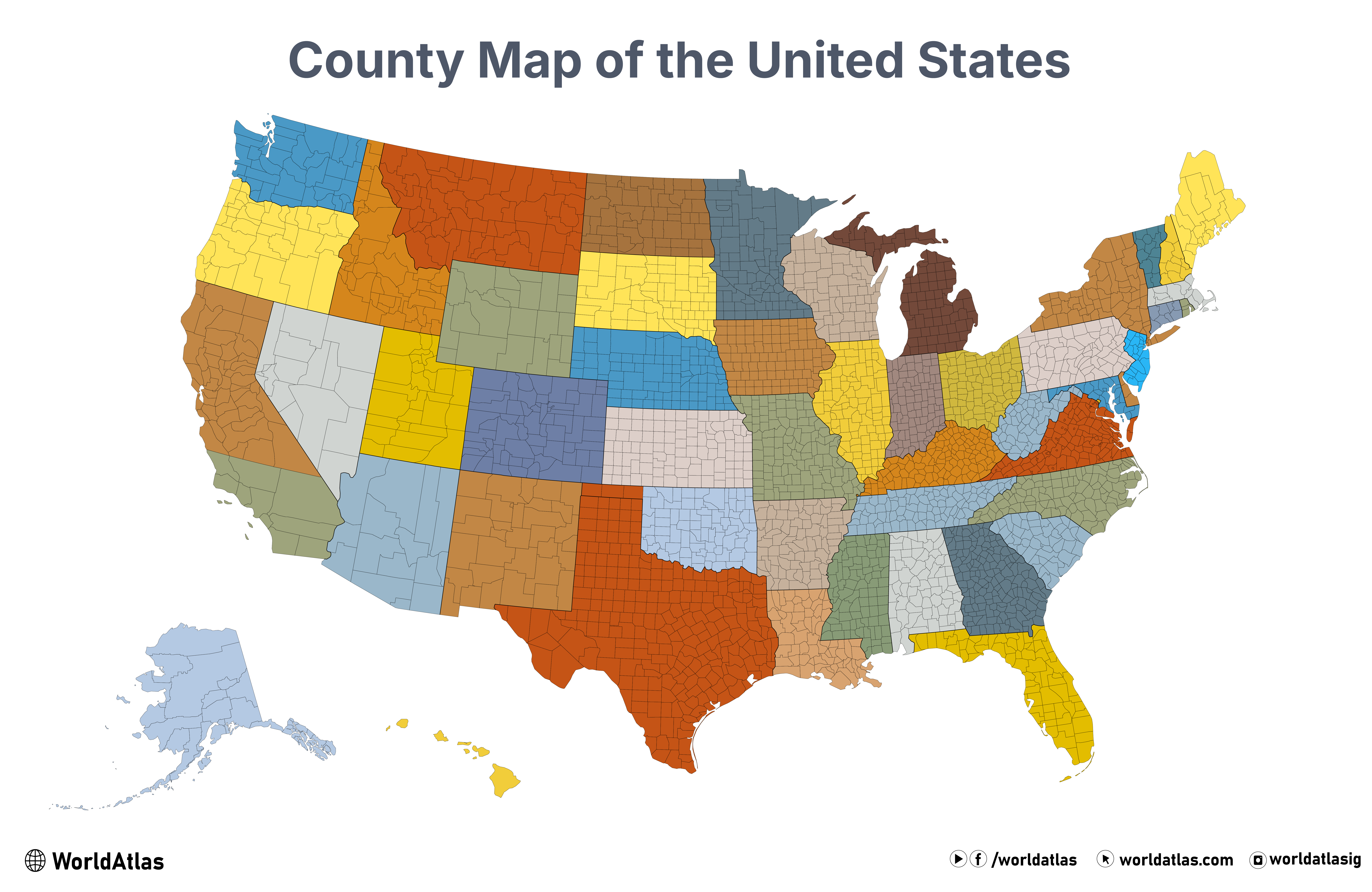
Here is the short version, for anyone who just wants the number and a snack: the United States has about 3,143 counties and county-equivalents. Here is the longer version, which is more fun: that number is a little bit made up, it shifts depending on who is counting, and a surprising number of Americans do not live in a county at all. Some live in parishes. Some live in boroughs. Some live in cities that answer to nobody. The map of how this country chops itself into pieces is stranger than the tidy grid you probably picture, so let us take the scenic route through it.
So, What Is the Actual Number?
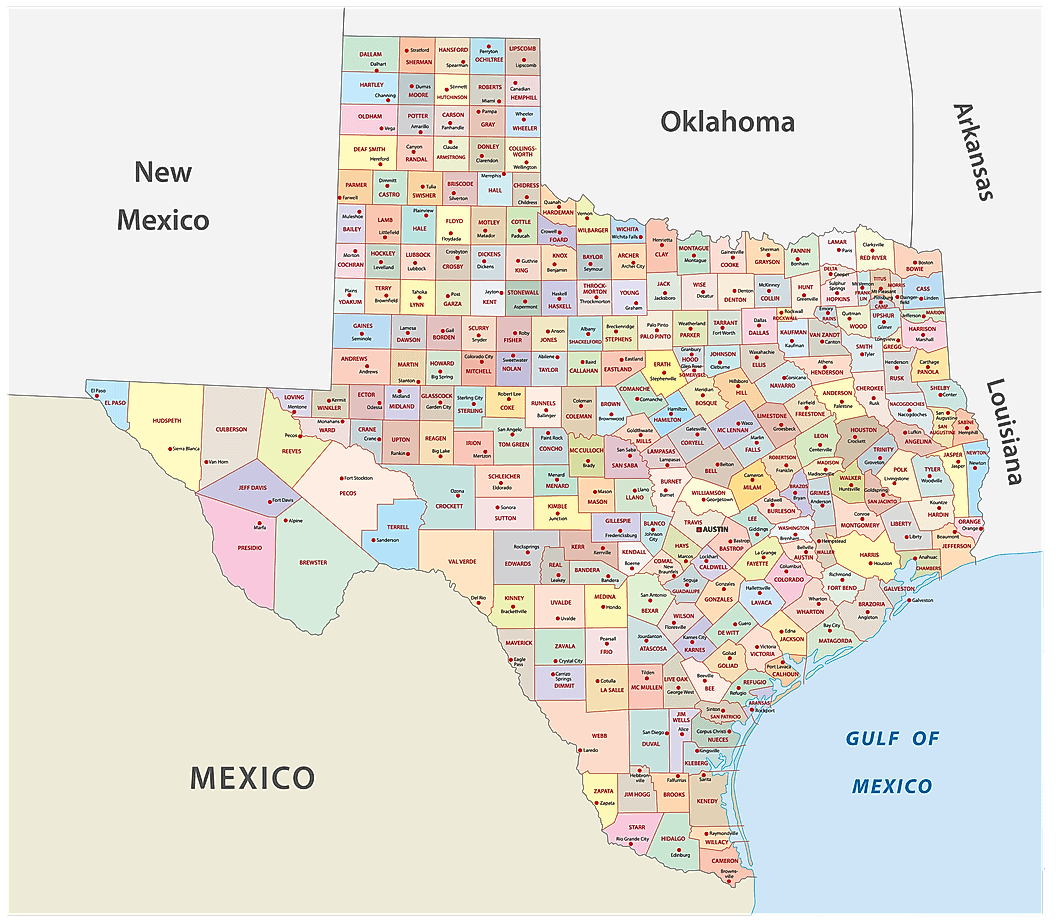
Call it 3,143 and you will be right often enough to win most bar bets. But only about 3,007 of those are literally called counties. The other 136 or so go by different names, which we will get to. The total also refuses to sit still. Depending on whether you count the District of Columbia, and on how you handle a recent shake-up in Connecticut, reputable sources will tell you 3,142, 3,143, or 3,144 in the same breath, and all of them are defensible. The bigger surprise is the spread between states. Texas alone has 254 counties, almost a hundred more than any other state, while Delaware runs the entire operation with three. The national average is around 62, which is a number almost no actual state has.
Louisiana Has Parishes, Not Counties

Louisiana skipped the word county entirely and kept parishes, all 64 of them, and the reason is older than the United States. When France and then Spain ran the territory, the Catholic Church carved it into church parishes, and those districts doubled as the practical units of local administration. By the time Louisiana drew up its civil divisions in 1807, the name was so baked in that nobody bothered to change it. So someone in Louisiana does not live in a county; they live in Jefferson Parish or Orleans Parish, where a parish president handles the work a county commissioner would do elsewhere. Same job, holier title.
Alaska Has Boroughs, and One Enormous Blank

When Alaska wrote its constitution in 1959, its founders looked at the county model, shrugged, and went with boroughs instead. There are 19 organized boroughs today. The catch is what happens to everything in between them, which is most of the state. All that leftover land, an area larger than France and Germany combined, is lumped into a single Unorganized Borough that has no local government at all, and the state of Alaska simply runs it directly. For counting and census purposes, the Unorganized Borough gets sliced into 11 census areas, and the largest of those, the Yukon-Koyukuk Census Area, covers more ground than 46 of the 50 states. Nobody is collecting your recycling out there.
The Cities That Belong to No County

Most American cities sit inside a county. A few fired their county and went solo. These are independent cities, and there are 41 of them. Virginia is the runaway champion with 38, a quirk of its 1871 constitution, which let any town that reached 5,000 residents split off and govern itself. The other three are lone wolves: Baltimore, St. Louis, and Carson City, Nevada, each a city that answers to no county in an otherwise county-covered state. The smallest of them all, Falls Church, Virginia, is barely two square miles, which makes it roughly the size of a generous golf course that happens to have its own government.
New England's Ghost Counties
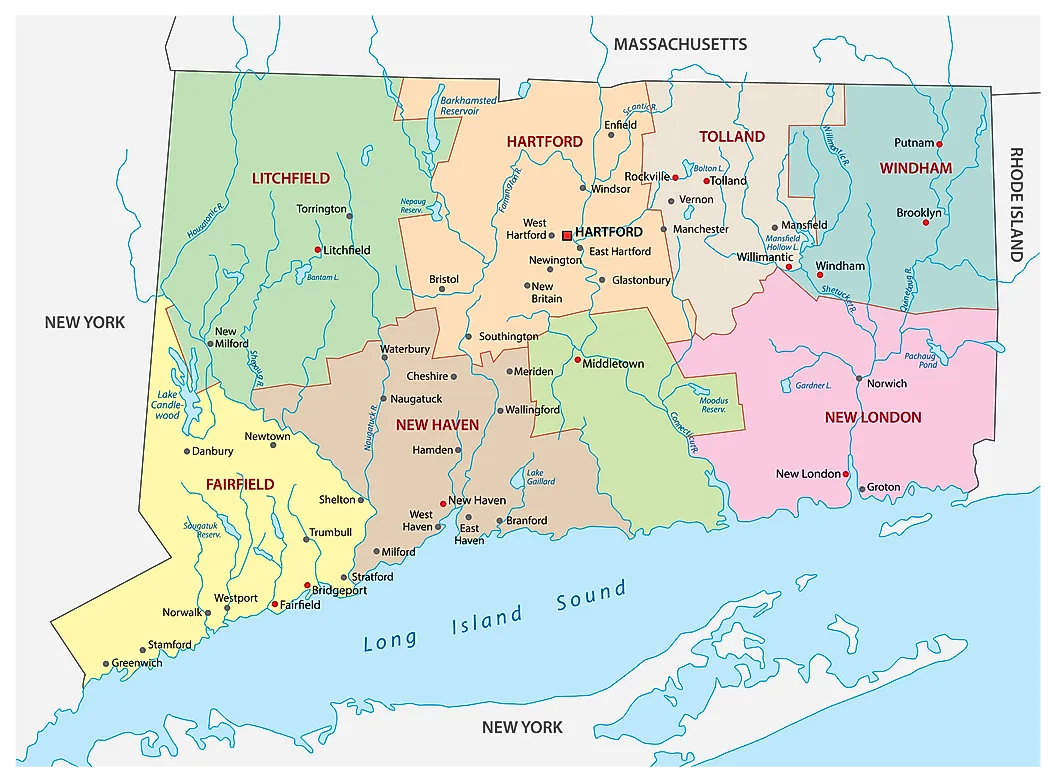
In most of the country, a county is a working government with a courthouse, a sheriff, and a budget. In parts of New England it is a line on a map and nothing more. Connecticut abolished county government back in 1960, leaving its eight counties as pure geography, handy for addressing envelopes and not much else. It got stranger in 2024, when the Census Bureau officially stopped using those eight counties for its data and switched to nine regional planning councils instead, quietly retiring boundaries that had been on the map since colonial times. Rhode Island did much the same thing, and eight of Massachusetts's fourteen counties are also governments in name only. The counties still exist. They just do not do anything.
Washington, DC, and the Far-Flung Rest
Washington, DC, is not in any state, and it is not in any county. It counts as its own county-equivalent, a city-state-county hybrid of one. Then come the territories, which the Census Bureau also has to file somewhere. Puerto Rico is divided into 78 municipios, the U.S. Virgin Islands into three main islands, American Samoa into districts and atolls, and Guam counts as a single county-equivalent all by itself. Add it up and there are another 100 county-equivalents out past the 50 states, including a few specks in the Pacific so small and so empty that the entire county is a coral reef.
The Record-Holders
If you like extremes, counties deliver. The most crowded is Los Angeles County, California, with about 9.7 million people, which is more residents than 40 entire states. The emptiest is Loving County, Texas, which by recent estimates is home to fewer than 100 people, give or take a ranch family. The biggest true county, San Bernardino in California, stretches across nearly 20,000 square miles, larger than New Jersey, Connecticut, Delaware, and Rhode Island stacked together. And the strangest may be Kalawao County in Hawaii, a former Hansen's disease settlement on a remote shelf of Molokai, which has a population in the dozens and is run not by a county board but by the state health department.
Why Any of This Matters
It is easy to treat counties as boring background, the gray lines behind the interesting stuff. But the county, or the parish, or the borough, or the independent city, is the layer of government that records your deeds, runs your elections, paves a good share of your roads, and sets your property tax. The fact that the country cannot even agree on what to call these things, or exactly how many there are, is a decent reminder that the United States was assembled piece by piece, by a lot of different people, who did not check with each other first. The map only looks tidy from far away.