The Single County That Holds More People Than 40 States
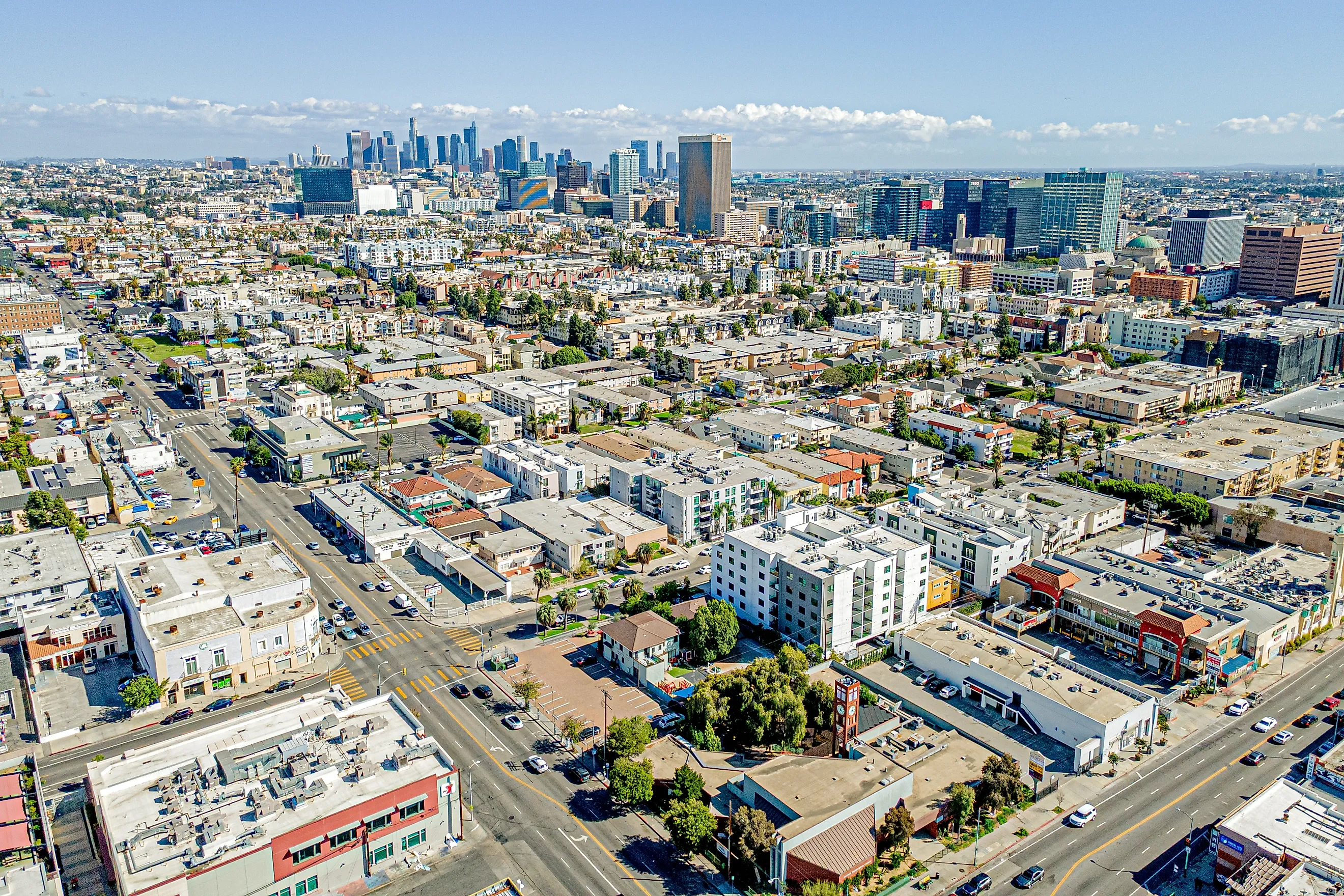
Home to nearly 9.7 million residents, Los Angeles County has a larger population than 40 individual U.S. states. If Los Angeles County became its own state, it would rank around 11th in the nation by population, placing it ahead of states such as Virginia, New Jersey, Arizona, and Massachusetts. It is made up of 88 incorporated cities spread across more than 4,000 square miles. Railways brought the first waves of new residents and later industries kept them coming. While its residents speak over 200 languages, the numbers tell only part of the story because its origin is even more fascinating.
Cities in a County

One reason Los Angeles County feels so enormous is that it is often mistaken for being the City of Los Angeles. In reality, the county is made up of 88 incorporated cities, each with its own local government, neighborhoods, and identity.
Communities such as Long Beach, Pasadena, Glendale, Santa Monica, Beverly Hills, Torrance, and Burbank are all located within Los Angeles County, yet each operates as an independent municipality. Beyond these incorporated areas, the county also oversees numerous unincorporated neighborhoods that fall under its direct jurisdiction. Rather than expanding outward from a single downtown, LA County developed as separate cities that gradually grew together over time. Today, these neighboring centers create one of the largest continuous metropolitan regions in the United States, and the county alone spans more than 4,000 square miles.
Transportation Sparked a Population Boom

Long before Southern California was famous for its freeways, it had an extensive railway system known as the Pacific Electric Railway, informally dubbed the Red Cars. Predecessor interurban lines were already running in the 1890s, and the Pacific Electric itself was incorporated in 1901, connecting agricultural towns with busy urban centers. This made travel a breeze for residents and businesses around the Los Angeles Basin, paving the way for a dynamic and connected community.
The earlier arrival of the Southern Pacific and Santa Fe railroads had already fundamentally changed the area's landscape. With reduced travel times and lower costs for moving goods and people, they fueled a surge in migration and commerce. New neighborhoods sprang up along these transportation routes, laying the groundwork for decades of continued population growth.
Industries That Attracted Millions

Economic opportunity has always attracted people to Los Angeles County. In the late 1800s and early 1900s, major oil discoveries created thousands of jobs and drew workers from across the country. Soon after, the entertainment industry transformed the area. Film studios moved from the East Coast to Southern California because of its sunny weather and diverse landscapes, which helped Hollywood become the center of American movies.
World War II led to another surge in growth. The federal government invested heavily in aerospace and defense manufacturing, turning Southern California into a key production hub. Companies working on aircraft, spacecraft, and defense technology offered stable jobs, encouraging even more people to migrate to the area.
Water Made Growth Possible

Despite its mild weather, Southern California's dry climate has always posed a challenge to supporting a growing population. Without a reliable water supply, it could never have become the urban hub it is today.
The completion of the Los Angeles Aqueduct in 1913 dramatically changed this situation by carrying water about 233 miles (375 km) from the Owens Valley. Access to this new water source allowed neighborhoods and surrounding communities to expand far beyond what local rainfall could sustain. Today, groundwater, recycled water, and captured stormwater also support the county.
A County That Functions Like a State

Los Angeles County has a huge population, with nearly ten million residents living under one county government. Despite this large number, those residents share the same two U.S. senators as every other Californian. In contrast, much smaller states with only a few hundred thousand residents receive the same Senate representation. It is a striking example of how population size and political representation do not always align in the United States.
The economy is equally remarkable. If Los Angeles County were considered its own economic entity, its gross domestic product would rank among the largest in the nation, generating more financial output than most individual states. This combination of population and economic wealth makes it unlike any other county in the country.
A Place Unlike Any Other
Los Angeles County's extraordinary population is the result of steady progression, not just a defining moment. Decades of growth from transportation, thriving industries, and migration created a boom. Rather than expanding as a single metropolis, the county developed as a network of linked communities. Few places show the power of geography and economic transition quite like it, remaining a county unlike any other in America.