These 7 Small Towns in The Rockies Have the Best Historic Districts
The Rockies wear their boom-and-bust history on their storefronts. Silver and gold built these towns fast in the 1800s, and when the ore ran out, the ones that survived kept their Victorian main streets, opera houses, and miners' cottages more or less intact. Seven of them stand out for how completely they preserve that past, each with a historic district worth slowing down for.
Estes Park, Colorado

Most people come to Estes Park for the gateway to Rocky Mountain National Park, but the town has real history of its own, settled by Joel Estes in 1859 and transformed by the arrival of the Stanley Hotel. Built in 1909 by Stanley Steamer inventor F.O. Stanley, the grand Georgian Revival landmark was one of the first fully electric hotels in the world. It later inspired Stephen King's 1977 novel The Shining after he stayed in room 217, and the 1997 TV miniseries was filmed here, though the Kubrick film was not. The hotel and its outbuildings sit on the National Register of Historic Places, as do area landmarks like the MacGregor Ranch. Wander the historic downtown along Elkhorn Avenue, and keep an eye out for the bighorn sheep, Colorado's state animal, that roam the surrounding park.
Canmore, Alberta

Long overshadowed by neighboring Banff, Canmore keeps a grittier, more lived-in history. Named for Malcolm Canmore, an 11th-century king of Scotland, it started as a Canadian Pacific Railway town in 1883 and spent nearly a century as a coal-mining community until the last mine closed in 1979. That heritage is preserved all over town: the Canmore Museum and Geoscience Centre digs into the mining era, the Miners' Union Hall still stands, and the restored North West Mounted Police Barracks, built in 1893, is one of the oldest buildings in the Bow Valley. The 1988 Calgary Winter Olympics, which staged its Nordic events here, put Canmore on the map for good, but under the resort polish it is still a coal town, framed by the Three Sisters and Mount Rundle.
Golden, Colorado

Golden packs an outsized amount of Colorado history into a compact downtown at the mouth of Clear Creek Canyon. Founded in the 1859 gold rush as a supply town, it served as the capital of the Colorado Territory from 1862 to 1867, and the legislature met in a building that now houses the Old Capitol Grill on Washington Avenue. The industrial boom of the 1870s earned Golden the nickname "the Lowell of the West" and brought the Colorado Central Railroad and the Colorado School of Mines, which still anchors the town today. Adolph Coors opened his brewery here in 1873, and it grew into the largest single brewing site in the world. Washington Avenue's preserved 19th-century storefronts, framed by the famous "Howdy Folks, Welcome to Golden" arch, make the historic core easy to read on foot.
Taos, New Mexico

Taos sits at the foot of the Sangre de Cristo Mountains, the southern tail of the Rockies, and its history runs deeper than almost anywhere else on this list. Just outside town, Taos Pueblo has been continuously inhabited for more than a thousand years, its multistory adobe now a UNESCO World Heritage Site. In town, the historic district centers on Taos Plaza, ringed by adobe storefronts, galleries, and the roughly two-century-old San Francisco de Asis Church, one of the most photographed and painted churches in the country. The Harwood Museum of Art and the Millicent Rogers Museum, opened in 1956, hold deep collections of Hispanic and Native work. Artists have flocked here for over a century, and the low adobe streetscape is a big part of the reason.
Park City, Utah

Before it was a ski town or a film-festival town, Park City was a silver camp, and its Main Street Historic District still shows it. Silver strikes in the 1870s built the place fast, and after the Great Fire of 1898 leveled the business district, including the Grand Opera House and City Hall, residents rebuilt in the brick, stone, and adobe Victorian style you see today. When the mines wound down, locals turned to the slopes, opening Treasure Mountain Resort in 1963, now Park City Mountain Resort. The Park City Museum, housed in the old City Hall on Main Street, tells the mining story, right down to the original territorial jail in the basement. It is one of the best-preserved mining-era main streets in the Wasatch.
Buffalo, Wyoming

At the foot of the Bighorn Mountains, Buffalo grew up around Fort McKinney, established in 1879 to guard travelers on the Bozeman Trail. When the fort closed, the town it spawned stayed, and its Main Street, which follows an old game trail rather than a survey grid, is now a National Register historic district of false-front brick. The centerpiece is the Occidental Hotel, opened in 1880 and a fixture of Old West lore, where Owen Wister set part of The Virginian and where the lobby still wears pressed-tin ceilings and the odd bullet hole. Buffalo also sits at the heart of the 1892 Johnson County War between wealthy cattle barons and small homesteaders, and the Jim Gatchell Memorial Museum lays out that history across tens of thousands of frontier artifacts.
Crested Butte, Colorado

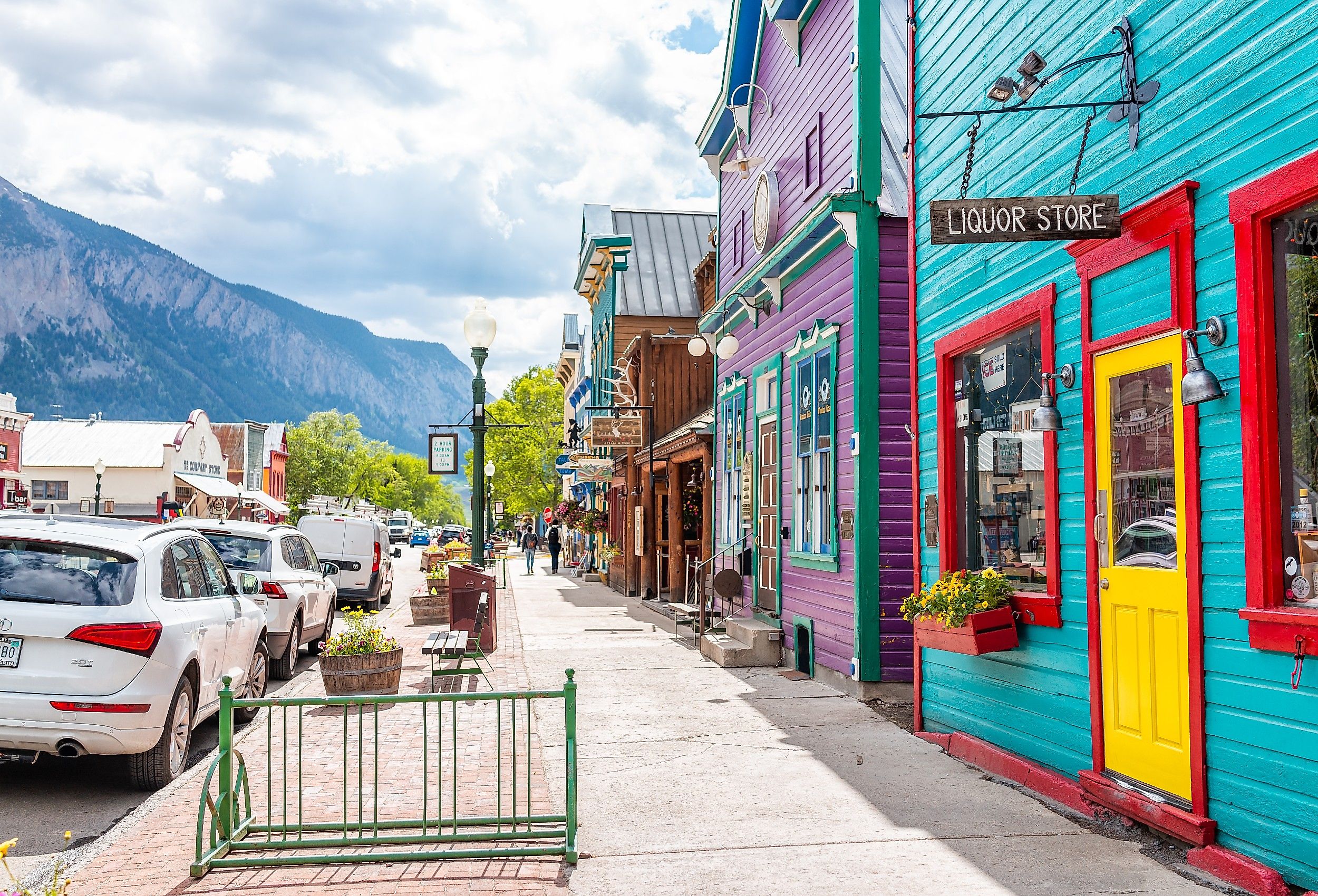
Crested Butte is famous now as a ski town and Colorado's wildflower capital, but its downtown is a designated National Historic District and one of the best-preserved coal-and-silver-era townscapes in the state. Incorporated in 1880 as a supply hub for the surrounding mines, it kept its false-front stores, clapboard cottages, and the two-story Old Town Hall along Elk Avenue, all painted in the bright colors the town is known for. You will not find chain-store sprawl downtown; the historic-district rules see to that. The Crested Butte Mountain Heritage Museum, set in an 1883 hardware store, covers the mining days and the town's claim as a birthplace of mountain biking. And Cattlemen's Days, the oldest rodeo in Colorado, keeps the ranching heritage alive each July.
History You Can Walk Through
What sets these seven apart is not just age but preservation: main streets that never got bulldozed, opera houses and miners' cottages still in daily use, and historic-district rules that keep them intact. Whether it is the adobe of Taos Plaza, the silver-boom brick of Park City, or the false fronts of Crested Butte, each town lets you read its entire history off the storefronts. For anyone who already knows the Rockies, these are the region's living museums.