11 Best Towns In The United States For Retirees
In the right small town, a fixed income can feel like a raise. Johnstown, Pennsylvania, has houses around $110,000, and Natchez, Mississippi, around $120,000. Wyoming, Tennessee, and Florida take nothing out of retirement income, and New Hampshire adds no sales tax on top. At nearly 6,000 feet in Silver City, New Mexico, summers stay mild and winters stay light, with homes in the low $200,000s. Here are eleven of the best small US towns to retire in without spending a fortune.
Pittsfield, Massachusetts

Pittsfield is the working heart of the Berkshires, a small city where a night at the theater and a morning on a quiet lake both fit the same week. The median home value is around $310,000, below the national figure and a fraction of what the same setting costs in the resort corners of the county. Downtown has two active theaters, the Barrington Stage Company and the restored 1903 Colonial, plus the Berkshire Athenaeum, the city's public library. The Ralph J. Froio Senior Center, run by the Pittsfield Council on Aging, is a four-story accessible building with programs for older residents, and Berkshire Medical Center, the region's main hospital, is right in the city.
Outside downtown, Pittsfield State Forest has trails for hiking and biking and, in winter, snow. Anglers and paddlers use Onota and Pontoosuc Lakes on the city's edges, and locals swim and picnic at both through the summer. Tanglewood and the rest of the county's summer arts scene are a short drive away, without the summer prices that come with living next to them.
Johnstown, Pennsylvania

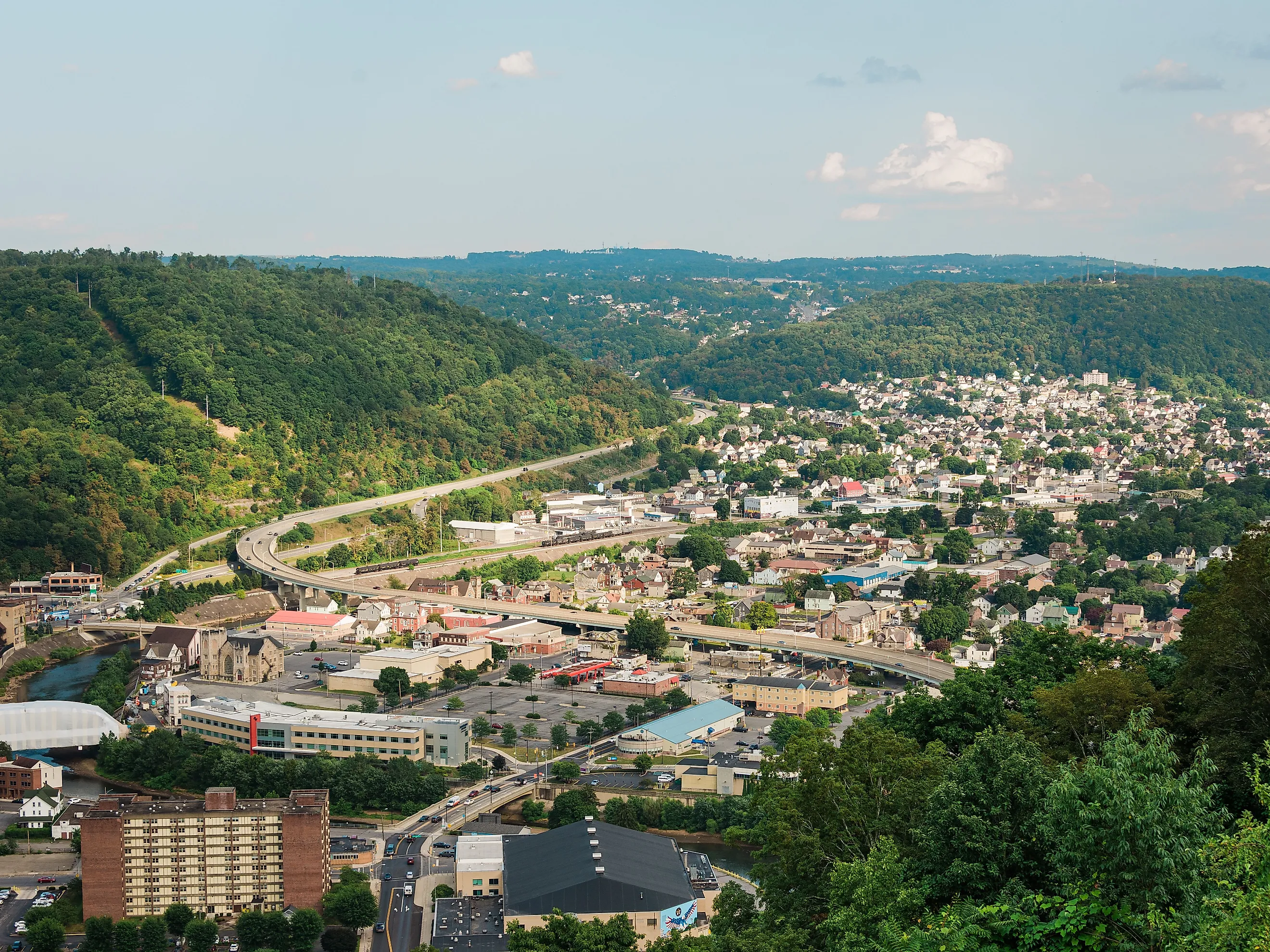
Few places in the Northeast are this affordable. In Johnstown, the median home value is near $110,000, in a tight Pennsylvania valley where the Stonycreek and Little Conemaugh meet. The steep hillsides around it are lined with old-industrial neighborhoods, and riders still take the Johnstown Inclined Plane, billed as the steepest vehicular inclined plane in the world, up Yoder Hill for a long view over the rooftops and rivers. Conemaugh Memorial Medical Center is the region's main hospital, with the John P. Murtha Neuroscience and Pain Institute on the same system.
Johnstown is known above all for the 1889 flood, when a dam failure upstream sent a wall of water through the valley and killed more than 2,200 people. That history is told at the Johnstown Flood National Memorial, at the old dam site, and at the Johnstown Flood Museum downtown, while the Heritage Discovery Center has exhibits on the immigration and steelmaking that built the city. Retirees walking for exercise use the riverfront trails and Greenhouse Park, and the Path of the Flood trail follows the water's 1889 route toward South Fork.
Silver City, New Mexico

Silver City is a Western mountain town without Rocky Mountain prices. The median home value in this southwestern New Mexico community of about 9,500 runs well below the national figure, with many houses in the low $200,000s, and at nearly 6,000 feet the climate stays mild in summer and light in winter. The Gila National Forest begins at the edge of town, and the Gila Wilderness beyond it holds more than 550,000 roadless acres of canyons, hot springs, and pine forest. It is the oldest protected wilderness on earth: the Forest Service set it aside administratively on June 3, 1924, forty years before the Wilderness Act existed, at the urging of a young ranger named Aldo Leopold. Gila Regional Medical Center is the local hospital, which matters this far into the state's remote southwest corner.
Downtown, Bullard Street runs past brick storefronts, galleries, and murals, with the 1926 Art Deco Silco Theater still open for films and the Silver City Museum, set in an 1880s Victorian house, holding a collection on the town's mining past. Western New Mexico University stands at the top of downtown, and its lectures, concerts, and college sports are open to residents. The calendar stays full: the Silver City Clay Festival each summer, the Blues Festival, and the Tour of the Gila bike race through the surrounding forest. A block off Bullard, the Big Ditch is a shaded creek-side walking path, all that remains of the Main Street a flood carved away in 1895.
Cedar Key, Florida

Cedar Key is about as quiet as coastal Florida gets, a fishing village of roughly 700 people on a cluster of islands in the Gulf, three hours north of the theme parks and a world away from them. Retirees who want salt water and slow mornings over nightlife settle here, and the population skews notably older than the state as a whole. The median home value for Cedar Key is around $330,000, and Florida has no state income tax, which helps a fixed income go further. Serious medical care means a drive, since the University of Florida's Shands hospitals in Gainesville are about an hour inland.
The surrounding islands and their bird colonies fall inside the Cedar Keys National Wildlife Refuge, and kayakers cross the shallow flats and salt marsh that make this stretch of coast more oyster reef than sandy beach. Clams and oysters, farm-raised in the surrounding waters, are the backbone of the local economy, and seafood and arts festivals mark the calendar through the year. One caution worth naming: this is a low-lying coast, and recent hurricanes, including Idalia in 2023 and Helene in 2024, flooded the town badly, so storm risk and insurance belong in any retirement math here.
Tryon, North Carolina

Tryon lies in a pocket of the Blue Ridge foothills known for mild weather, warm enough that the frost holds off longer here than in the mountains just above. Retirees and horse people have settled here for a century, drawn by that climate and homes around a $340,000 median. The singer Nina Simone was born in Tryon in 1933, and a downtown sculpture and the Nina Simone Plaza mark the connection. Trade Street downtown has independent shops, and the Tryon Fine Arts Center holds a season of music and theater.
Horses are the local currency. The Foothills Equestrian Nature Center, just outside town, has public trails and show rings, and competitions fill the calendar much of the year at the large Tryon International Equestrian Center in nearby Mill Spring. For quieter afternoons, Pearson's Falls is a private glen and waterfall a short drive out, owned and kept by the Tryon Garden Club, and there are several vineyards in the hills nearby. Older residents find programs and meals at the Polk County Senior Center in Columbus, and Tryon Estates, a continuing-care community on a landscaped campus, has independent living, assisted living, and skilled nursing.
Staunton, Virginia

Staunton has a rare combination for a small city: year-round professional Shakespeare in a mountain valley, at a price a retiree can manage. Actors with the American Shakespeare Center perform in the Blackfriars Playhouse, the only working recreation of Shakespeare's indoor theater, built downtown in 2001 from research on the 1600s original. The city lies between the Blue Ridge and the Alleghenies in the Shenandoah Valley, and its Victorian downtown came through the Civil War intact, which is why the architecture still looks the part. The median home value is around $325,000, below the Virginia average, and the nearest hospital, Augusta Health in Fishersville, is about six miles away and part of the Mayo Clinic Care Network.
Beyond the theater, downtown Staunton has restaurants and shops along Beverley Street, the Woodrow Wilson birthplace and Presidential Library, and the Frontier Culture Museum, where costumed staff work reconstructed farmsteads to show how the valley was first settled. Gypsy Hill Park covers 214 acres in the middle of the city, with a pond, gardens, walking paths, and a miniature train. Mary Baldwin University sits on a hilltop above the historic district, and its lectures and concerts are open to the public, while the Valley Program for Aging Services runs senior cafes and activities across the area. Shenandoah National Park and its Skyline Drive are a short drive east for anyone who wants a full day in the mountains.
Paris, Tennessee

A replica Eiffel Tower stands in a city park in Paris, a leftover from a college engineering project that residents adopted and later rebuilt. Residents show the same sense of humor each spring at the World's Biggest Fish Fry, when the whole county turns out for fried catfish, a parade, and a rodeo. Founded in 1823, this is one of Tennessee's more oddly named towns and the first incorporated in West Tennessee, and its downtown square still centers on an 1896 courthouse ringed by shops and murals. Homes cost well below the national median, and the local hospital, West Tennessee Healthcare's Henry County Hospital, is in town.
The bigger draw for many retirees is the water. Kentucky Lake, one of the largest man-made lakes in the country, is about a twenty-minute drive northeast, and Paris Landing State Park on its shore has a lodge, a marina, fishing, and a golf course. Back in town, concerts and community theater fill the Krider Performing Arts Center, and the Paris-Henry County Heritage Center, in a restored mansion, covers local history. It adds up to an unusually full calendar for a town this size and this affordable.
Concord, New Hampshire

Concord has the amenities of a capital city at the scale of a town of about 44,000. New Hampshire has no general sales tax and no tax on earned income, which leaves more of a fixed income intact than almost any other state. Downtown, a rebuilt Main Street has restaurants, galleries, and public art, and the Capitol Center for the Arts is the venue for concerts, films, and touring shows. The 1819 State House, the oldest state capitol where the legislature still meets in its original chambers, stands a few blocks away.
For older residents specifically, Concord Parks and Recreation runs a Senior Passport program of low-cost drop-in activities for anyone 55 and older, and Havenwood-Heritage Heights, a continuing-care community on a wooded campus, has housing with on-site support. Median home values are around $450,000, higher than some towns on this list but reasonable for a New England capital. Paddlers put in on the Merrimack River through town and the Contoocook to the north, and the White Mountains are an easy day trip for leaf season or a hike.
Natchez, Mississippi

Few historic river towns cost as little as Natchez, where the median home value is around $120,000. Founded by French colonists in 1716, two years before New Orleans, it is one of the oldest continuous settlements on the Mississippi, and it stands on a bluff high above the river with long views west into Louisiana. The compact downtown is walkable and flat, and Merit Health Natchez is the city's hospital. Retirees come for the combination, low prices and a real town to walk around in, which is what makes this one of Mississippi's can't-miss towns.
Natchez is known for its antebellum houses, built with enslaved labor before the Civil War and open now as museums. Longwood, often called the largest octagonal house in the United States, was left unfinished when its Northern workmen walked off at the war's start, its upper floors still bare framing. Stanton Hall takes up a full block in Greek Revival style, and Rosalie, on the bluff, was a Union headquarters during the occupation. Guided tours, spring and fall house tours, and riverfront walks fill out a visit, and the Natchez Trace Parkway begins here for anyone who wants a slow scenic drive north.
Paducah, Kentucky

Quilting is at the center of Paducah's identity. UNESCO named it a Creative City in 2013, one of only a handful in the United States, on the strength of a fiber-arts scene centered on the National Quilt Museum and the Paducah School of Art and Design. The clearest sign of it is the floodwall along the Ohio River, where a long series of painted murals covers the concrete downtown, one piece of Kentucky's deep craft heritage. For retirees, the practical draw is cost, since home values are around $160,000, well below the national median.
Mercy Health Lourdes Hospital is a full-service hospital, unusual for a city of about 27,000. Barkley Regional Airport handles commercial service with connections through a major hub, and Nashville's larger airport is about a two-hour drive, so check current routes before counting on either. Downtown, the Lower Town Arts District and the riverfront hold galleries, studios, and restaurants within a few walkable blocks, at the point where the Tennessee River meets the Ohio.
Evanston, Wyoming

Wyoming has no state income tax, so a retirement check stretches further in Evanston than in most of the mountain West. The median home value is around $300,000, low for the scenery, in this town of about 12,000 in the state's southwest corner. The Uinta Mountains rise to the south and the Bear River runs through town, with alpine lakes, trout streams, and open country a short drive in any direction. Evanston Regional Hospital is the local option for day-to-day medical care.
A slower day here might mean a walk along the Bear River Greenway, an afternoon among the bison and elk at Bear River State Park, or an hour with the local history collection at the Uinta County Museum, set in the old Carnegie library. Anglers fish the Bear River, and hikers, campers, and mountain bikers head into the Uintas once the weather turns warm. The restored downtown has brick storefronts, a few shops, and a couple of cafes.
Choosing Among Them
The towns here fit different versions of the same question. If the priority is stretching a fixed income as far as it will go, housing in Johnstown, Natchez, and Paris stays within reach of almost any budget. For culture close to home, the week in Staunton, Pittsfield, and Paducah is built around theaters, quilts, and Shakespeare. And for retirees who want mountains, water, or coast at the doorstep, Silver City, Evanston, and Cedar Key come with the setting and no resort-town markup. Tax treatment is worth weighing too, since Wyoming, Tennessee, Florida, and New Hampshire tax retirement income lightly or not at all. The right choice comes down to which trade-offs feel least like a compromise.