What Happens If Lake Mead Drops Below Its Power Intakes
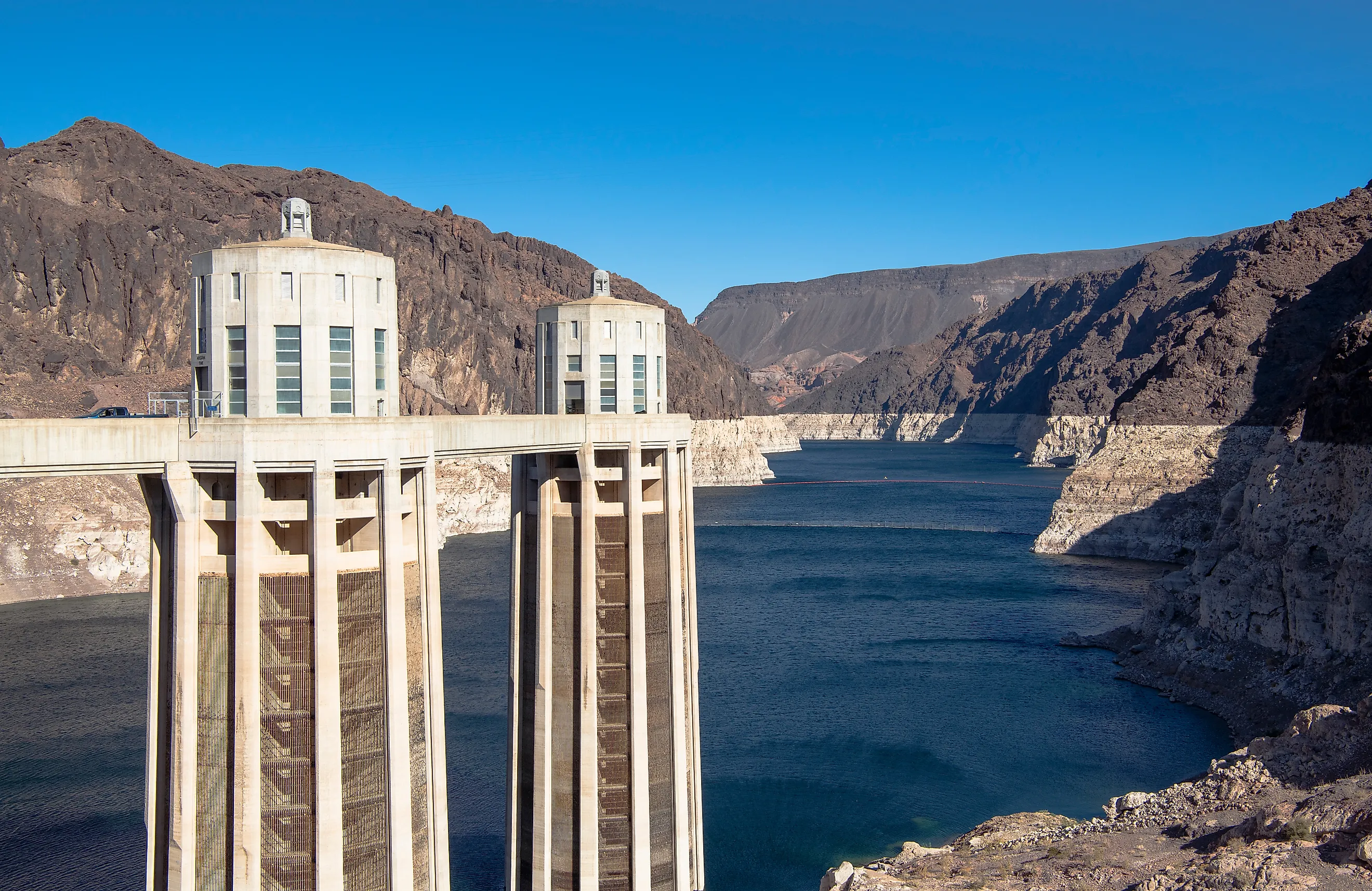
The number everyone quotes is 950 feet, the elevation at which Hoover Dam can no longer turn its turbines. It is the wrong number to worry about first. The threshold that actually decides what happens to Hoover's output is 1,035 feet, roughly 85 feet higher, because that is where most of the dam's turbines start taking damage and have to be shut down. Reclamation's own updated assessment puts capacity at that elevation somewhere near 382 megawatts, against earlier estimates of 1,302. So the interesting question is not whether the lights go out when Lake Mead crosses a line. It is what a dam looks like when it keeps working at a fraction of its rating, which is roughly what Hoover has been doing for years already.
What Minimum Power Pool Means
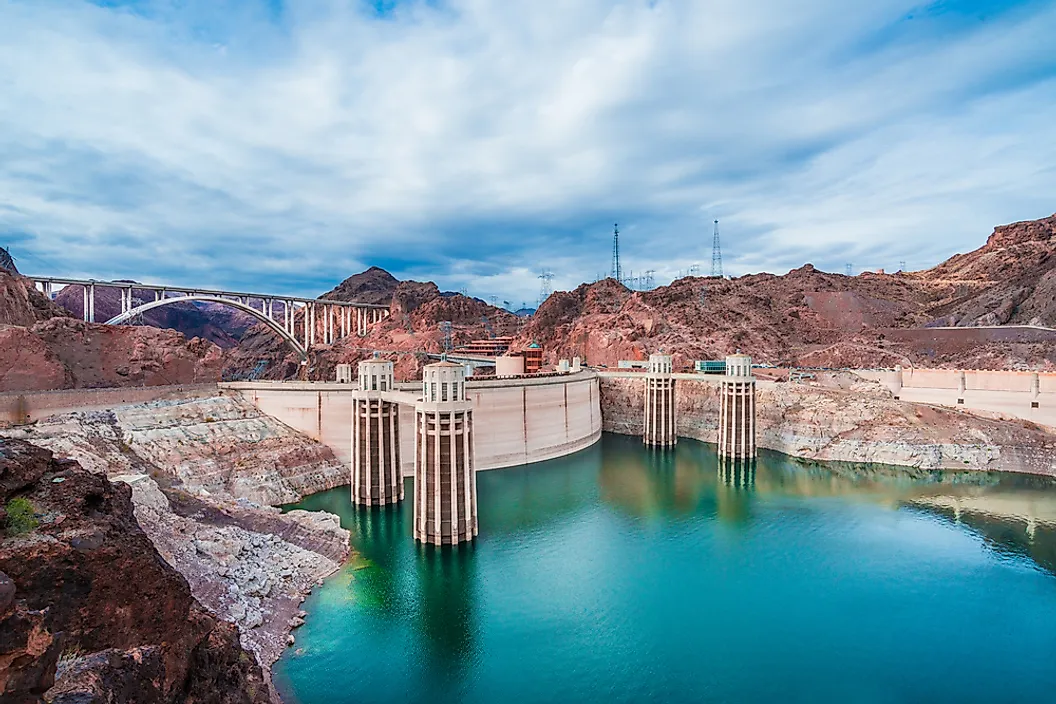
A hydroelectric dam does not run on water alone, it runs on the weight of water stacked above the turbines. That vertical distance is called head, and the pressure it produces is what spins the machinery. Hoover has a maximum hydraulic head of about 590 feet when the reservoir is full.
As the reservoir falls, head falls with it, and the turbines produce less for every gallon passing through. Minimum power pool is the elevation below which there is not enough head to generate at all. For Hoover that sits at 950 feet, and below it the penstocks still work as plumbing but not as a power plant.
The Threshold Above The Threshold
Here is the part most coverage leaves out, and it is the reason 950 feet is a misleading headline. Hoover runs 17 main turbines, and only five of them are the newer wide-head units designed for low water. Technical assessments indicate the older machines suffer severe cavitation damage when Lake Mead drops below 1,035 feet, which means they have to come offline well before the reservoir approaches minimum power pool.
The arithmetic of that is stark. Reclamation's updated figures suggest capacity at 1,035 feet falls to roughly 382 megawatts, where earlier estimates had assumed 1,302. Below that point the dam is effectively running on five machines out of seventeen.
What 950 Feet Would Actually Produce
If the lake did reach minimum power pool, the plant would not switch off abruptly at the last moment. It would wind down to almost nothing on the way there.
Reclamation's technical appendix for the post-2026 planning process puts the estimated physical capacity at minimum power pool at 117 megawatts. Set that against a nameplate capacity of 2,080 megawatts, which is comparable to a large coal or nuclear station, and the scale of the decline is clear.
A dam producing 117 megawatts is not a major regional generator. That is about 5.6 percent of nameplate, or a medium-sized power station attached to a very large piece of concrete.
Hoover Has Already Lost Half Its Output
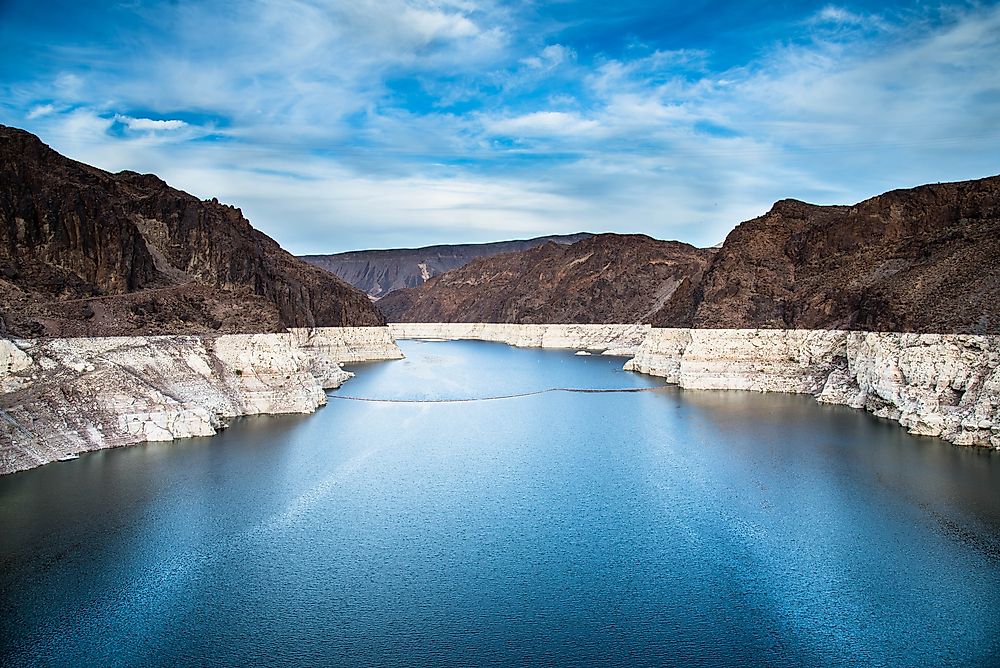
This is the fact that should calm the conversation down, because it shows how the decline actually behaves. Generation at Hoover in 2023 was roughly half what it was in 2000, the last year Lake Mead was effectively full. That is an enormous reduction in output, spread across two decades, and it happened without blackouts, emergency measures or most people in the Southwest noticing.
The loss of a hydroelectric plant's capacity is not a switch being thrown. It is a long slope, and the region has already walked a considerable distance down it without incident.
The Wide-Head Turbines
The reason 950 feet is even available as a threshold is a piece of engineering finished within the last decade. Before the upgrade, Hoover's minimum power pool sat at 1,050 feet. Between 2011 and 2016 Reclamation installed five wide-head turbines designed to run efficiently at lower head and to resist the cavitation that destroys conventional runners in those conditions. That work lowered the generating floor by a full 100 vertical feet.
It is worth appreciating what that bought. A hundred feet of Lake Mead elevation is an enormous volume of water and, at recent rates of decline, a substantial number of years.
More Turbines Are Being Replaced Now
The response to the 1,035-foot problem is already funded and underway, which is a detail the gloomier accounts tend to skip. In May 2026 Reclamation released 52 million dollars to replace three more of Hoover's older turbines with wide-head units. The stated purpose is exactly the issue described above: keeping the plant generating as the reservoir sits at levels that would damage the original machines.
One complication is worth noting. One of the existing five wide-head turbines has been offline, and Reclamation has not given an estimate for when it returns, which reduces the low-water capacity the dam can actually deliver right now.
Who Loses The Power

Hoover's electricity is allocated under long-standing contracts rather than sold on an open market, and the split is heavily weighted toward one state. California takes roughly 56 percent, Nevada about 25 percent and Arizona around 19 percent, distributed among municipal utilities, irrigation districts and private power companies. Los Angeles and the Metropolitan Water District of Southern California are among the largest individual customers.
That last one matters more than it looks. Metropolitan uses Hoover power to run the pumps that lift Colorado River water over the mountains to the coast, so reduced generation at the dam raises the cost of moving the water the dam releases.
Why The Grid Would Cope
The reassuring context is a matter of proportion, and it is worth stating plainly because this topic attracts a great deal of overstatement. Federal dams on the Colorado account for just over 4 percent of Arizona's generating capacity. Hoover is a significant plant and a symbolically important one, but the Southwestern grid is not built on it, and the region has added enormous amounts of solar and gas generation during the same decades Hoover's output has been halving.
The consequence of losing Hoover is not darkness. It is expense, because the utilities holding those contracts have to buy replacement power at market rates, and hydropower is among the cheapest electricity available.
The Money Runs Backwards Too
There is a second financial effect that is easy to miss and genuinely important to how the river gets managed. Revenue from federal hydropower helps fund Colorado River programs, including environmental compliance and infrastructure maintenance. Less generation means less revenue, which means less money for the very system that is trying to manage the shortage.
That feedback loop is why Reclamation treats protecting generation as a management objective rather than a nice outcome, and why emergency releases in recent years have been framed around keeping reservoirs above power thresholds.
Where The Lake Sits Now

As of September 2026 Lake Mead is sitting near 1,039 feet, somewhere around a quarter to a third of capacity depending on the measure used.
That puts it roughly 89 feet above minimum power pool and only a few feet above the 1,035-foot line where the older turbines have to stop. A recent Reclamation update put the chance of breaching 1,035 feet in spring 2027 at around 10 percent.
Ten percent is not a forecast of disaster. It is also not a rounding error for a threshold this consequential, which is why the turbine money was released.
What Would Actually Happen
Put the thresholds in order and the picture becomes a sequence rather than an event. Below 1,035 feet the older turbines shut down and capacity drops sharply, with the five wide-head units carrying the load. Between there and 950 feet output continues falling as head decreases, reaching around 117 megawatts at the bottom. At 950 feet generation stops entirely, though the dam can still release water downstream through its outlet works for another 55 feet of elevation, until dead pool at 895 feet.
Throughout all of that, water deliveries to Arizona, California and Mexico continue. Power fails a long way before water does, and that gap is the single most useful thing to understand about this dam.
The Honest Answer
If Lake Mead dropped below its power intakes, Hoover Dam would stop generating electricity and the Southwest would keep the lights on. Utilities in three states would buy replacement power at higher prices, Southern California would pay more to pump its water uphill, and the federal programs funded by hydropower revenue would have less to work with.
The more useful framing is that this is not a cliff waiting in the future. It is a slope the region has been descending since 2000, during which Hoover has already given up half its output, and the response so far has been new turbines rather than emergency generators. The threshold worth watching is 1,035 feet, and it is closer than the one in the headlines.